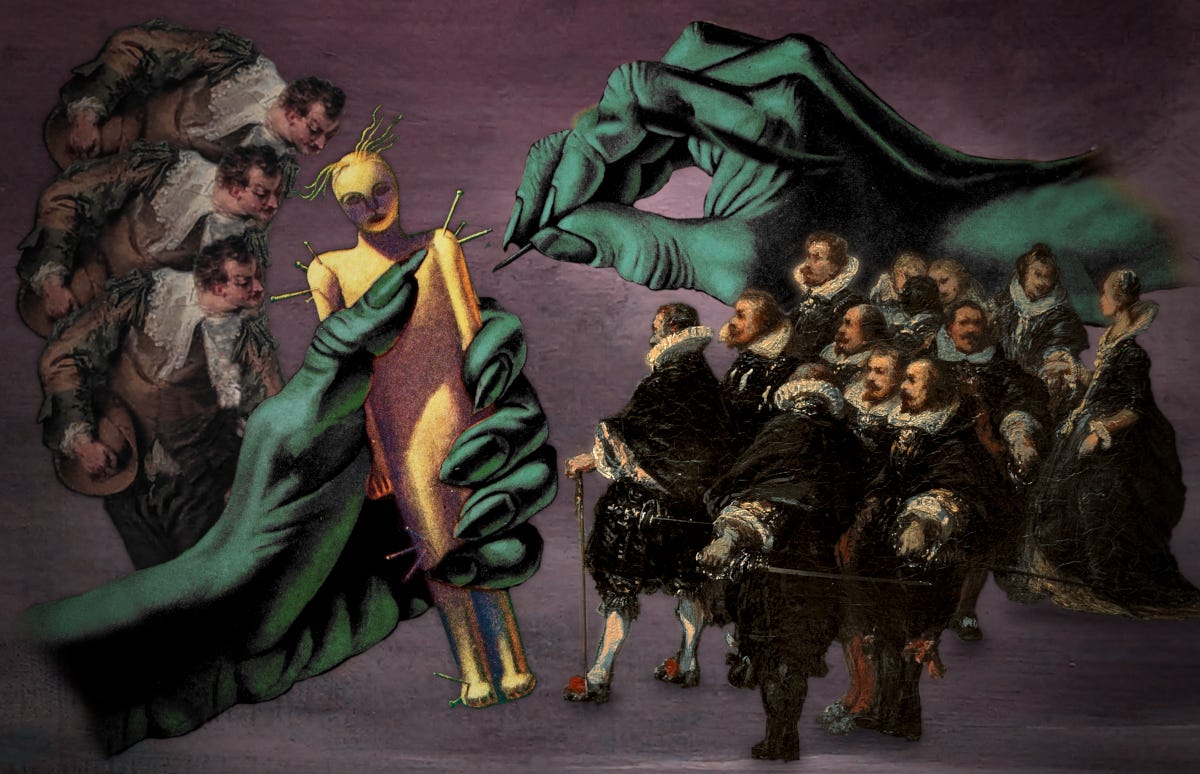
5 Medical Mysteries From History That Still Baffle Doctors
#2. Encephalitis Lethargica
5 Medical Mysteries From History That Still Baffle Doctors
#2. Encephalitis Lethargica
Photo by Jonathan Borba on Unsplash
“Still baffle doctors” is a phrase that means nonsense is approaching in general.
It’s the tagline of every pseudo-medical clickbait article ever published.
So what I mean by that gets very, very clear, and I want to be specific.
Five of these five are not unexplained because science has failed or because something supernatural is at work.
They are unexplained, as the evidence really does run out and the evidence falls short of a definitive answer.
Researchers are honest about this. Some of them we can now say accurately but are unable to pick out the cause.
One of these things we haven’t got a feeling about yet just because we’re not even sure it is a single thing.
The gap between “we know a lot about this” and “we know what it was” is the interesting part.
1. The English Sweating Sickness

Uploader: Simplicius, Public domain, via Wikimedia Commons
That is the English sweating sickness.
This is the one I find most difficult to shake, due to how quickly it killed.
Sweating sickness first emerged in England in 1485, roughly when Henry VII ascended the throne following Bosworth. The onset came on suddenly, the timeline brutal.
A person could feel the first symptoms and be dead in eight to 10 hours.
Not days.
Hours.
It began with a sense of dread, then headache, chills, aching limbs, drenching sweat, the name of the disease, and then, often, death before the next sunrise.
It struck five times between 1485 and 1551 before it was gone forever, never to come back.
What makes it a real mystery, not just a historical horror, is that we are unable to identify the pathogen, and not because we have given up trying.
But hantaviruses largely don’t carry from individual to individual, and the sweat unmistakably did, which is the kind of difference that keeps the case open.
The detail that disturbs me is that it disproportionately affected the healthy, the opposite of most epidemics of the time.
It fell most rapidly among young, strong men in their prime.
Thomas Cromwell lost his wife and two daughters to it in one episode.
No one has a clear explanation for why a disease would operate the same way, and since it vanished nearly 500 years ago, we might never get one except when it reappears, a thought no one likes.
2. Encephalitis Lethargica

Medicalcortex, CC BY 4.0, via Wikimedia Commons
A disease that shook the world; during the time, a lot of people fell asleep and, kind of, never woke up when they fell asleep between 1917 and 1930.
The acute phase usually started with something similar to a sore throat or flu and ended on a profound drowsiness; patients would drift off into a sleep that resembled that of a coma, sometimes for weeks.
Others had just the opposite: total insomnia, inability to sleep at all.
Many of those who survived the acute illness later suffered from parkinsonism, stuck in fixed, motionless bodies while remaining consciously awake.
If that last bit sounds similar, it’s from Oliver Sacks.
Some of them awoke briefly, after almost 40 years, before the impact wore off. And that is the human scale of what this disease did.
And we still don’t know what caused it.

Constantin Von Economo, Public domain, via Wikimedia Commons
Over 9,000 academic papers were published in the 1920s, and no one identified the cause.
It was presumed to have been tied to the 1918 flu pandemic for a long time because those two diseases overlapped, but the outbreak of encephalitis actually started a little earlier, and modern science largely disproved the link to influenza.
The prevailing theory now is that it was an autoimmune reaction, the body’s innate immune response against some infectious agent, possibly streptococcus, directed at the basal ganglia in the brain, though even that has remained unconfirmed.
It was once named the greatest medical mystery of the 20th century by a BBC documentary before vanishing by around 1930 as quickly as it had appeared, leaving only occasional cases in its wake.
3. The Dancing Plague of 1518
In July 1518 in Strasbourg, a woman recorded as Frau Troffea stepped into the street and began dancing.
There was no music (and no reason).
She just danced, for hours, until she collapsed, and then, after resting, got up and danced again.
Within a week about 30 additional people had started joining her.
The response of the authorities is the part that reads like dark comedy. Doctors in the 16th century diagnosed “hot blood” and determined that the cure was more dancing, so the city cleared guildhalls and created a stage, hiring musicians and professional dancers to help the afflicted dance it out of their systems.
This did not work.
It seems, predictably, to have worsened things.
I should be cautious here, as this case is just really murky on the basis of basic facts.
So the framing by “danced to death” may be in part an embellishment that comes later.
What’s solid is that a lot of people were really dancing compulsively for weeks.
Two explanations compete.
- One is ergot poisoning. The fungus that grows on damp rye can cause convulsions and hallucinations, but ergotism typically impedes blood flow to the limbs, which is very close to incompatible with sustained dancing, and it’s not a particularly simple explanation for the coordinated, social-type aspect of the outbreak.
- The more widely agreed explanation is mass psychogenic illness: under conditions of extreme stress, and Strasbourg in 1518 had just undergone famine, disease, and religious upheaval, collective psychological distress can present very real, involuntary physical symptoms that pass through a population by suggestion.
A more satisfying answer than ergot, but “mass psychogenic illness” resembles more of a description of the pattern than a mechanism. We do know which category it falls into.
We do not know exactly why bodies do this.
4. The Tanganyika Laughter Epidemic
The dancing plague has a contemporary cousin, and it’s stranger than its conventional retelling makes you aware of.
It spread.
Eventually, 95 among the school’s 159 students were affected, with symptoms varying from a handful of hours to 16 days.
The school had no choice but to close, and when the students returned home, the phenomenon was not limited to schools, it spread to approximately 14 schools and something like 1,000 people over many months.
The well-known model calls it a “laughter epidemic,” which downplays how aversive it was.
No infections, toxins and environmental contaminants were identified by doctors, who conducted tests, and doctors found no biological links between the cases.
I made that mistake because this case was depicted as an open-ended mystery and that was not the case.
The linguist Christian Hempelmann, who was a scholar here, puts it in a particular context.
Tanganyika had won its independence barely a month before the outbreak, and the infected students were adolescents in tight British-run boarding schools, caught between foreign requirements and national unrest. Mass psychogenic illness, he observes, often strikes people with little authority over their circumstances.
So in one measure this one is explained, we know the category, we know the stressors.
What’s not yet fully accounted for is the mechanism through which psychological distress becomes these particular, contagious, physical symptoms.
In that regard, the dancing plague has the plague, shared. This is the phenomenon that we’ve better named than we’ve described.
5. Morgellons Disease
I was hesitant about adding this one, as it is the most disputed and least explored entry and is why it merits inclusion in this place.
The term was coined in 2002 by a mother, Mary Leitao, who adopted it from a little-known 17th-century French medical text talking about an illness in which black hairs sprouted from the skin of children.
When she launched a website, she heard from thousands of people describing the same phenomenon.
The medical establishment is truly divided over everything, and division is the tale.
The single largest study, done over 4 years and published in 2012, by the CDC and Kaiser Permanente, found no infectious or environmental cause, and analysis of the fibers themselves suggested they were largely cotton and other textile material compatible with clothing.
That result made much of the medical community treat Morgellons as a category of delusional parasitosis, a psychiatric condition in which people feel as if they’re infested and the skin lesions are caused by their own scratching.
That’s the mainstream position.
But that’s not unanimous, and the dissent isn’t fringe nonsense. Other researchers also reported a link with Lyme disease and reported an apparent response to antibacterial therapy, indicating an undefined infectious pathway may be at play.
Those infected with Morgellons strongly reject any delusion that they may be deluding us.
They tell us the “it’s all in your head” view does its own kind of harm.
I don’t know who’s right, and I don’t want to pretend the CDC study closed the book, because for many suffering people, it didn’t.
What is not in dispute is the reality and the distress of the symptoms are real.
What’s not settled is what’s actually fueling them, and whether “it” is no more than one condition or multiple things wearing the same name.
Reference:
https://www.historicmysteries.com/history/sweating-sickness/15416/
https://asm.org/articles/2025/december/encephalitis-lethargica-a-mysterious-neurological
https://en.wikipedia.org/wiki/1919%E2%80%931930_encephalitis_lethargica_epidemic
https://www.nationalgeographic.com/history/article/dancing-plague-of-1518-strasbourg-choreomania
https://www.history.com/articles/what-was-the-dancing-plague-of-1518
https://www.atlasobscura.com/articles/1962-laughter-epidemic-tanganyika
https://www.psychologytoday.com/us/articles/200703/the-morgellons-mystery
I hope you enjoyed Reading this peiece. You can also subscribe to my substack. Follow me for more worthy things.
메타데이터
- post_id
- a1cd9c3e1e00
- slug
- 5-medical-mysteries-from-history-that-still-baffle-doctors-a1cd9c3e1e00
- url
- https://medium.com/predict/5-medical-mysteries-from-history-that-still-baffle-doctors-a1cd9c3e1e00
- canonical_url
- https://medium.com/predict/5-medical-mysteries-from-history-that-still-baffle-doctors-a1cd9c3e1e00
- author_url
- https://medium.com/@Worthythings
- status
- ok
- fetched_at
- 2026-07-15 05:23:04