Slip Lining vs CIPP: Which Trenchless Pipe Repair Method is Best for You?
When underground pipelines deteriorate, trenchless rehabilitation methods offer a way to restore performance without extensive excavation…
Slip Lining vs CIPP: Which Trenchless Pipe Repair Method is Best for You?
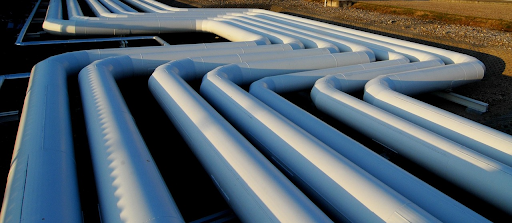
When underground pipelines deteriorate, trenchless rehabilitation methods offer a way to restore performance without extensive excavation. Two of the most established options are cured-in-place pipe lining and slip lining, each suited to different pipe conditions and project constraints. Understanding how these methods work, and where they perform best, can help engineers, facility managers, and asset owners make informed decisions that balance longevity, capacity, and constructability.
Understanding CIPP Rehabilitation
Cured-in-place pipe (CIPP) involves inserting a resin-saturated liner into an existing pipe and curing it in place to form a rigid, jointless structure. Once cured, the liner becomes a pipe within a pipe, restoring structural integrity and sealing defects such as cracks, corrosion, and joint separation.
CIPP is often selected because it:
- Creates a fully structural liner
- Adapts to changes in diameter and alignment
- Seals active infiltration and exfiltration
- Requires minimal reduction in internal diameter
Because the liner conforms tightly to the host pipe, CIPP is commonly used in gravity sewers, pressure lines, and vertical or complex alignments where access is limited.
Understanding Slip Lining
Slip lining is one of the oldest trenchless rehabilitation methods. It involves inserting a new, smaller-diameter pipe into the existing pipeline and grouting the annular space between the two pipes. The new pipe becomes the primary flow conduit, while the host pipe acts as a casing.
This method is typically considered when:
- The host pipe has lost significant structural capacity
- Alignment is relatively straight
- Diameter reduction is acceptable
- Long, continuous runs are accessible
Slip lining relies on the structural strength of the inserted pipe rather than bonding to the host pipe wall.
Structural Performance and Load Considerations
CIPP liners are engineered to handle external loads independently, which makes them suitable for pipes with moderate to severe deterioration. Slip lining, by contrast, transfers some loads through the new pipe and grout system. While structurally sound, the method depends on proper grouting and alignment to avoid voids or settlement issues.
Hydraulic Capacity and Flow Impact
One of the most practical differences between these methods is how they affect internal diameter. CIPP liners are thin relative to pipe size, which helps preserve hydraulic capacity. In many cases, improved internal smoothness offsets the slight reduction in diameter.
Slip lining introduces a smaller carrier pipe, which reduces cross-sectional area. While smoother materials can mitigate friction losses, capacity reduction may still be a concern in systems operating near design limits.
Installation Constraints and Access
CIPP installations can be performed through manholes or access pits, making them adaptable to congested or developed sites. The method accommodates bends, offsets, and varying diameters within certain limits. Slip lining generally requires longer insertion pits and straighter alignments. Access limitations, existing bends, or diameter changes can restrict feasibility.
Longevity and Maintenance Expectations
Both methods are designed for long service life when properly designed and installed. CIPP liners provide a continuous, jointless system that reduces future maintenance related to infiltration and corrosion. Slip-lined systems also offer long-term durability, though future access to the annular space is limited once grouted.
Final Thoughts
Choosing between CIPP and slip lining depends on a combination of structural condition, hydraulic requirements, access constraints, and long-term performance goals. Each method has a proven track record when applied in the right context. The best thing to do is work with a professional that can evaluate your needs and make the most appropriate recommendation for those needs.
메타데이터
- post_id
- a1e7456dc09e
- slug
- slip-lining-vs-cipp-which-trenchless-pipe-repair-method-is-best-for-you-a1e7456dc09e
- url
- https://medium.com/@helloquillmarketing/slip-lining-vs-cipp-which-trenchless-pipe-repair-method-is-best-for-you-a1e7456dc09e
- canonical_url
- https://medium.com/@helloquillmarketing/slip-lining-vs-cipp-which-trenchless-pipe-repair-method-is-best-for-you-a1e7456dc09e
- author_url
- https://medium.com/@helloquillmarketing
- status
- ok
- fetched_at
- 2026-06-17 10:21:25