Virat Kohli Went Vegetarian in 2018. His Performance Got Better. Here’s Exactly What He Eats.
The diet change that confused everyone — and the meal plan behind it. In 2018, Virat Kohli — ranked the best batsman in the world at the…
Virat Kohli Went Vegetarian in 2018. His Performance Got Better. Here’s Exactly What He Eats.
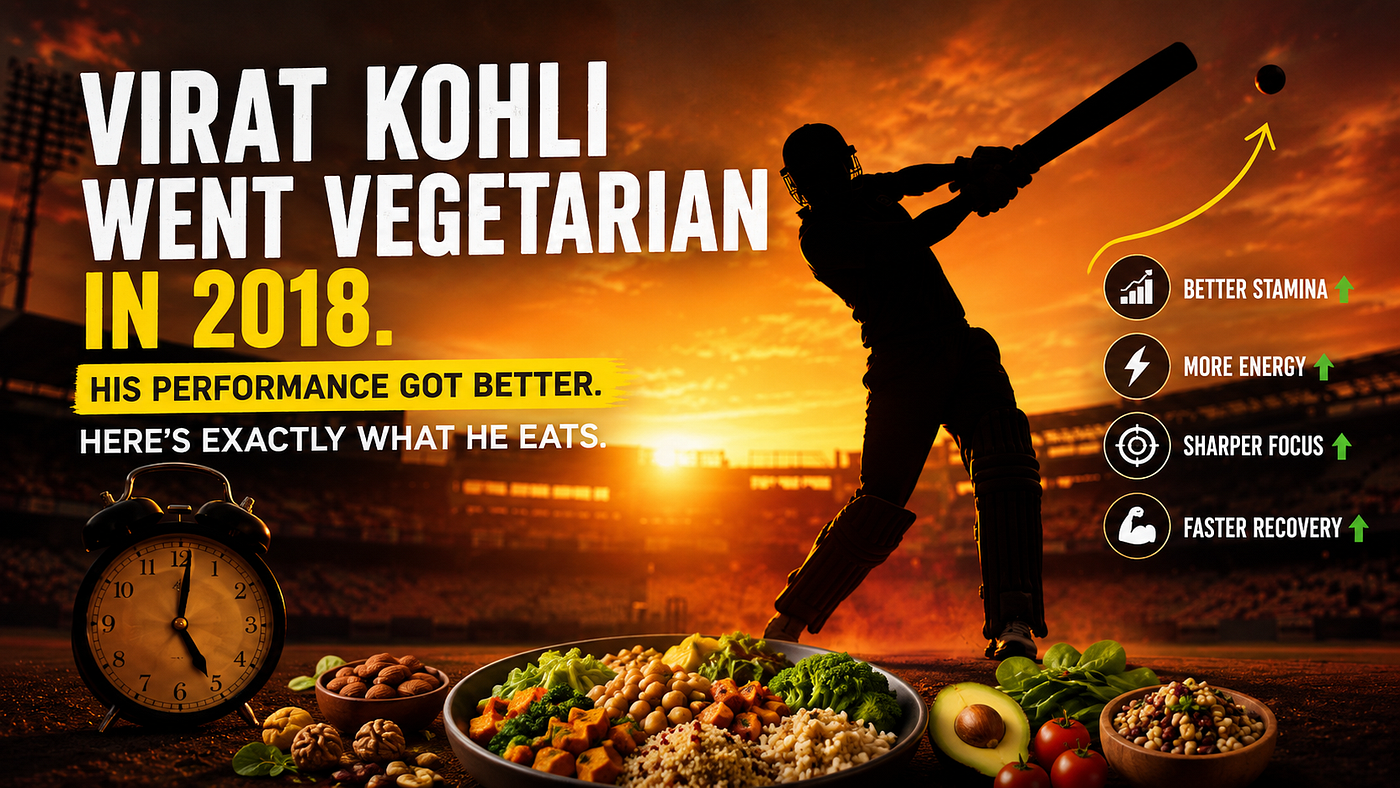
Virat Kohli Went Vegetarian in 2018. His Performance Got Better. Here’s Exactly What He Eats.
The diet change that confused everyone — and the meal plan behind it. In 2018, Virat Kohli — ranked the best batsman in the world at the time — overhauled his entire diet.
He cut out meat. He rebuilt his nutrition around plant proteins, eggs, and dairy. Sports nutritionists publicly questioned whether it would affect his stamina. Some fans called it a risk.
What followed was some of the most dominant cricket of his career.
This is the actual meal plan behind that decision.
Why He Changed His Diet
Kohli was diagnosed with cervical spine issues and elevated uric acid levels. His doctors advised reducing purine-rich foods — primarily red meat and organ meats.
Rather than making partial changes, he made a complete overhaul. The results were not just better health. His body composition changed noticeably — leaner, more defined, with maintained power. The on-field intensity in the years following was arguably the highest of his career.
The Philosophy — He Eats to Recover, Not Just to Perform
Most athletes think about pre-match nutrition. Kohli thinks about recovery nutrition.
His diet is built around three priorities in this exact order:
1. Reducing inflammation — turmeric, ginger, leafy greens, nuts at every meal.
2. Sustained energy without spikes — refined sugar, white bread, processed snacks completely eliminated since 2018.
3. Protein for muscle maintenance — eggs, dal, legumes, paneer, curd at every meal.
Everything else is secondary.
His Full Day of Eating
4:45 AM — On waking: Warm water with lemon + 8–10 soaked almonds (soaked overnight, skin removed)
5:45 AM — Pre-gym: 1 banana or 3–4 dates. Fast carbohydrates, no digestive burden before training.
8:15 AM — Post-workout breakfast (most protein-dense meal): 3 whole eggs + spinach and paneer salad + fresh papaya + green tea → approximately 26–30g protein
1:00 PM — Lunch (largest meal of the day): Brown rice + dal + seasonal sabzi + curd → approximately 28–35g protein
4:30 PM — Afternoon snack: Mixed nuts (almonds, walnuts) + coconut water
7:30 PM — Dinner (deliberately light): 1–2 rotis + dal + green leafy vegetable sabzi No heavy gravies. No cream-based curries. → approximately 20–25g protein
What Changes on Match Day
A match day has different nutritional requirements than a training day.
Pre-match (3–4 hours before first ball): Brown rice + moong dal + steamed vegetables + 2 eggs
The key: easily digestible, carbohydrate-rich, minimal fibre. Brown rice preferred over roti for faster glycogen loading. No raw salad. No heavy dairy.
During the match: Banana between innings. Coconut water for electrolytes. Consistent water throughout.
Post-match recovery: White rice (not brown — faster glycogen replenishment). Eggs or paneer for protein. Haldi doodh before sleep — Kohli has specifically mentioned this in interviews. Ginger tea or raw ginger.
The post-match use of white rice instead of brown is intentional and nutritionally correct — brown rice’s higher fibre slows digestion, counterproductive when rapid glycogen replenishment is the goal.
What He Has Completely Eliminated Since 2018
- All red meat
- Fried foods (samosa, pakoda, bhatura)
- Refined sugar (cold drinks, mithai, packaged juice)
- Processed snacks (chips, biscuits)
- Heavy masala gravies and cream curries
- Alcohol
- White bread and maida-based items
Of these, eliminating refined sugar is the change he has cited most often in interviews as having the greatest impact on how he feels and performs.
The Three Things Any Indian Can Take From This
1. Add protein to every single meal. Not just dinner. Eggs at breakfast, dal at lunch, paneer at dinner, nuts as snacks. Protein deficiency is the most common nutritional gap in Indian vegetarian athletes — and in most Indians generally.
2. Eliminate refined sugar completely, even for 30 days. This single change — not the addition of any supplement — produces the most noticeable results in energy and body composition. Kohli considers it his most impactful dietary change.
3. Keep dinner light and early. Heavy evening meals impair sleep, slow overnight recovery, and accumulate as fat more readily than earlier meals. Kohli’s dinner is consistently his smallest, simplest meal.
The foods in his diet — dal, paneer, eggs, brown rice, almonds, curd — are in every Indian kitchen. The difference is in how deliberately he uses them.
The full article includes his exact pre-match meal timing, post-match recovery protocol, the supplement stack his training approach aligns with, and a realistic Indian version of his meal plan for anyone with a 9–6 job — at WellFitLife:
👉 Virat Kohli Vegetarian Diet Plan 2026 — Full Match-Day Meal Guide
Originally published at wellfitlife.in
메타데이터
- post_id
- a21fdb8bc9b5
- slug
- virat-kohli-went-vegetarian-in-2018-his-performance-got-better-heres-exactly-what-he-eats-a21fdb8bc9b5
- url
- https://blog.healthmanagement.in/virat-kohli-went-vegetarian-in-2018-his-performance-got-better-heres-exactly-what-he-eats-a21fdb8bc9b5
- canonical_url
- https://blog.healthmanagement.in/virat-kohli-went-vegetarian-in-2018-his-performance-got-better-heres-exactly-what-he-eats-a21fdb8bc9b5
- author_url
- https://medium.com/@wellfitlife06
- status
- ok
- fetched_at
- 2026-07-08 18:29:56