The Digital Chekist: Why the West Was Right to Banish Kaspersky
Russia never pauses its subversive activities against the West. To believe that a company operating from Moscow isn’t playing cyber warfare…
The Digital Chekist: Why the West Was Right to Banish Kaspersky
Russia never pauses its subversive activities against the West. To believe that a company operating from Moscow isn’t playing cyber warfare is naive.
Preface: The Permanent Russian Threat
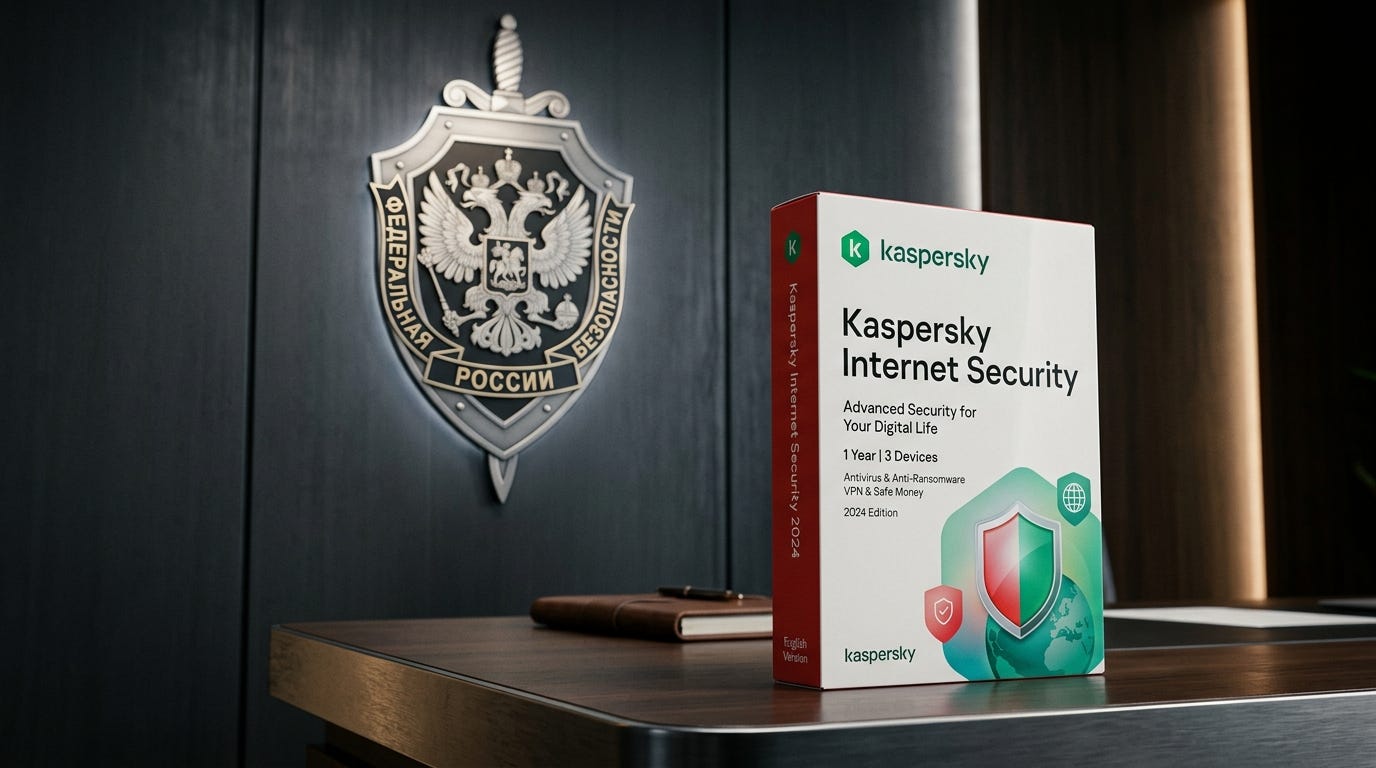
Let us begin with a premise that should be uncontroversial yet is often ignored in boardrooms: The Russian Federation does not take a single day off from its hybrid war against the West. From election interference to energy blackmail, Moscow’s doctrine views the West as an adversary to be destabilized. Within this framework, to assume that a Russian cybersecurity firm — born from the intelligence agencies and staffed by former officers — is somehow a neutral “Switzerland” of code is not just naive; it is strategically dangerous.
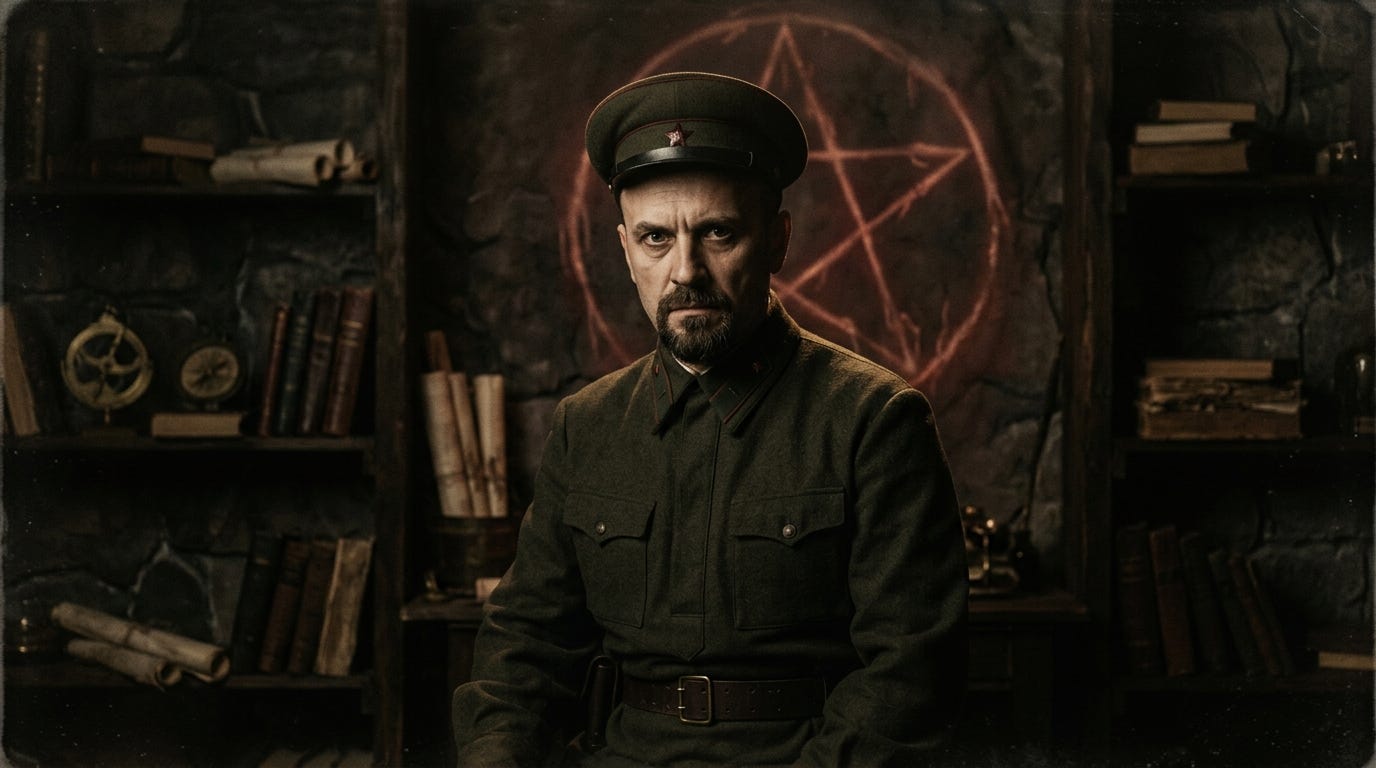
The recent blanket ban by the U.S. Department of Commerce on Kaspersky Lab, culminating in the final prohibition of sales and updates by September 29, 2024, is not a political whim. It is the cold, logical conclusion of a 25-year observation. The argument that “Kaspersky protects us from viruses” ignores the more pressing reality: the man at the helm, Eugene Kaspersky, is a product of the KGB’s technical academy. And as the Russian saying goes, “There is no such thing as a former chekist.”
Part 1: The Founder and the Sword
To understand the threat, one must first understand the anatomy of the founder. Eugene Valentinovich Kaspersky was born in 1965 in Novorossiysk. He is undoubtedly a brilliant programmer. He is also a graduate of the Technical Faculty of the KGB Higher School (now the Institute of Cryptography, Telecommunications and Computer Science of the FSB). He graduated in 1987 — the twilight of the USSR, but the height of the intelligence war.
Kaspersky’s early career was spent at a Soviet Ministry of Defense research institute. This is not a resume gap; it is an identity. While Western tech founders were coding in garages, Kaspersky was learning cryptographic protocols to protect state secrets. When he launched “Laboratory Kaspersky” in 1997, he wasn’t a disruptive startup founder; he was an intelligence asset pivoting to the private sector.
The company vehemently denies “inappropriate ties” with the Kremlin. This denial is legally true but functionally meaningless. Kaspersky does not need an FSB handler sitting in the office next door. The control mechanism is structural.
- Russian Law: Any Russian company must comply with FSB requests (Article 13 of the Federal Law “On Operational-Investigative Activities”). The FSB can demand access to servers, encryption keys, and data streams. Refusal is not an option.
- The Cadre: As documented by Bloomberg in 2015, key management positions at Kaspersky were filled by personnel with direct ties to Russian military and intelligence structures. This is standard practice in Russian “national champion” corporations.
- The Patriotism of Power: Kaspersky himself has frequently aligned with Kremlin talking points. In 2012, he proposed “Internet passports” and a global cyber-police force — centralized control mechanisms that would benefit state surveillance.
Part 2: The NSA Breach (The Smoking Gun)
The theoretical risks became concrete in 2015 with the “Equation Group” incident. Here is the cold timeline:
- A contractor for the U.S. National Security Agency (NSA) took classified hacking tools home and installed Kaspersky antivirus on the same PC.
- The Russian government (allegedly via Turla/Secret Blizzard hackers) used Kaspersky’s software as a vector.
- The antivirus software scanned the machine, detected classified code (recognizing it as malware, ironically), and uploaded it to Kaspersky’s Moscow-based servers.
Kaspersky’s defense is that the upload was automated — a standard “virus sample” submission. However, security experts note that the software specifically flagged the Equation Group files (which the NSA uses) and the Stuxnet protocol. Israeli intelligence, which had hacked Kaspersky’s own network, watched in real time as Russian intelligence operatives queried Kaspersky’s databases for specific American keywords.
The result? Russia obtained the blueprints for American digital weaponry. Regardless of whether Eugene Kaspersky pressed the button himself or a “rogue” employee complied with the FSB, the outcome is the same: Russian intelligence used Kaspersky software to exfiltrate American secrets.
Part 3: The U.S. Ban — A Legal Precedent
On June 20, 2024, the Biden administration’s Department of Commerce issued the Final Determination (ICTS-2021–002). For the first time, the U.S. invoked the 2019 executive order on Information and Communications Technology and Services (ICTS) to ban a company entirely.
The three pillars of the ruling are analytically robust:
1. Jurisdiction of a Foreign Adversary The ruling finds that Kaspersky is subject to the jurisdiction of the Russian government. Because Russia is designated a “foreign adversary,” any data passing through Kaspersky’s code is legally accessible to the FSB. Kaspersky’s response: We have Swiss servers. Counterpoint: The intellectual property and decision-making hierarchy are in Moscow. A Swiss server is just a hard drive; the code logic is Russian.
2. Privileged Access Antivirus software runs at the “kernel level” of an operating system. It has more access to your computer than you do. It sees every file, every keystroke, every encrypted packet before it is encrypted. The Risk: Kaspersky can be compelled to create a “signature update” that looks like a virus definition but is actually a backdoor installation tool.
3. The “White Label” Danger Kaspersky software is often embedded in routers, IoT devices, and other third-party hardware. Users may not know they are running Russian code. This creates an unmanaged supply chain risk for critical infrastructure — power grids, water treatment, and financial systems.
The result is simple: As of September 29, 2024, Kaspersky cannot issue updates in the U.S. This effectively kills the product, as an un-updated antivirus is worse than no antivirus.
Part 4: The Swiss Betrayal (The Neutrality Farce)
While the U.S. ban is aggressive, the most damning evidence of Kaspersky’s operational risk comes not from Washington, but from neutral Switzerland.
In 2024, the Swiss Office of the Attorney General (OAG) launched a treason investigation into its own Federal Intelligence Service (FIS). A former officer, a cybersecurity specialist with privileged access, is accused of leaking classified data to Russian intelligence (the GRU) over a period of five years (2015–2020).
The Conduit? Kaspersky Lab.
The officer allegedly used Kaspersky software as the transfer mechanism. While Western agencies had explicitly warned the Swiss FIS five years ago to sever ties with the Russian firm, the Swiss intelligence community ignored the warnings. The result was catastrophic:
- NATO cooperation documents were leaked.
- Counter-terrorism strategies were compromised.
- Internal Swiss cyber defense architectures were handed to Moscow.
As Steven Meyer, Co-CEO of ZENDATA Cybersecurity, notes: “We no longer recommend their products in Europe. Their tech is good, their engineers excellent, but it is a Russian tool, founded by someone who worked for the Russian government and must comply with Russian laws.”
The Swiss case proves the vector is real. Kaspersky is not just a passive observer on a hard drive; it is an active conduit that has been used (wittingly or unwittingly) to transfer high-value intelligence to the Kremlin.
Part 5: The British and German Calculus
The EU has been slower than the US, but the trajectory is the same. Germany’s BSI (Federal Office for Information Security) issued a warning in March 2022 urging consumers to uninstall Kaspersky. The UK’s NCSC followed suit, removing Kaspersky from its lists of approved vendors.
The rationale in Berlin was specific: The risk of “supply chain sabotage.” In a kinetic war (Ukraine), Russia has proven willing to attack civilian infrastructure. If the BSI fears that Kaspersky updates could be weaponized to destroy German trains or power plants, it is not fear-mongering; it is threat modeling.
Italy, too, moved to curb Kaspersky software in the public sector post-invasion. The geopolitical line has been drawn. You are either in the Russian information space, or you are not.
Part 6: Debunking the “Snowden” Defense
Supporters of Kaspersky often point to the 2017 “Transparency Initiative.” Kaspersky moved data centers to Zurich and opened “Transparency Centers” where governments can review source code.
Let us analyze this claim with cold logic.
The “Code Review” Fallacy: Reviewing source code for backdoors is like looking at a blueprint of a house to see if the architect is a thief. You will see the structure, but you will not see the order sent to the builder to install a hidden safe. A nation-state adversary does not need a permanent backdoor in the code. They need a logic bomb — an update pushed on a specific Tuesday that lasts for 48 hours. Source code review does not stop the update server from serving malicious content.
The “Swiss” Fallacy: Just because the data rests in Switzerland does not mean Russia cannot reach it. Russian law compels Kaspersky to hand over encryption keys. If the FSB asks for the keys to the Zurich servers, Kaspersky must comply. Switzerland, despite its neutrality, has historically folded to diplomatic pressure from great powers.
Part 7: The Infowatch Connection — The Family Business
It is impossible to ignore the ecosystem. Eugene Kaspersky’s former wife, Natalya Kaspersky, is the co-founder of Kaspersky Lab and currently runs InfoWatch.
What does InfoWatch do? It specializes in information security for state corporations and the Russian military-industrial complex. Natalya has been explicit about the need for Russia to have a “digital iron curtain.” While Eugene plays the globalist businessman abroad, his family is actively building the surveillance infrastructure for the Russian state at home.
This is not a conflict of interest; it is a synergy. The Kaspersky family is deeply embedded in the Russian security apparatus. To separate Eugene from that apparatus is to ignore the material reality of Russian oligarchic power.
Part 8: The “Former Chekist” Problem
Returning to the preface: Russians have a grim joke: “Бывших чекистов не бывает” (There are no former Chekists). Once you have taken the oath of the KGB/FSB, once you have learned the tradecraft of state secrets, you are bonded for life.
Kaspersky was trained to protect Russian state secrets. Now he is asking the West to trust him with our secrets. He is asking NATO governments to let his software, which reports to Moscow-based servers, run on the computers that control military logistics and power grids.
The evidence is overwhelming:
- Academic: Kaspersky is an FSB-school graduate.
- Operational: Kaspersky software was used to steal NSA tools (2015).
- Legal: Russian law compels Kaspersky to cooperate with the FSB.
- Incident: Swiss intel used Kaspersky as a conduit to leak secrets to the GRU.
- Action: The US, UK, Germany, and Lithuania have banned or severely restricted its use.
Conclusion: The Cost of Naivety
The United States has done the West a favor by taking the lead. By banning Kaspersky outright, Washington has removed the gray area. It has established that a cybersecurity firm from an adversarial nation is a threat by default.
For European companies still using Kaspersky, the calculus should be simple: You are exposing your network to a jurisdiction where the “law” is whatever the FSB says it is at 3:00 AM. You are trusting a man who spent his formative years learning to lie for the KGB.
The era of “tech neutrality” is over. The war in Ukraine has made cyberspace a battlefield. On this battlefield, Kaspersky is not a private; it is an officer in the Russian army. The West has finally decided to stop handing him the keys to the barracks.
There is no such thing as a former chekist. And there is no such thing as a “neutral” Russian antivirus. It is time to uninstall.
메타데이터
- post_id
- a22c25ec7f0a
- slug
- the-digital-chekist-why-the-west-was-right-to-banish-kaspersky-a22c25ec7f0a
- url
- https://medium.com/@briefsitrep/the-digital-chekist-why-the-west-was-right-to-banish-kaspersky-a22c25ec7f0a
- canonical_url
- https://medium.com/@briefsitrep/the-digital-chekist-why-the-west-was-right-to-banish-kaspersky-a22c25ec7f0a
- author_url
- https://medium.com/@briefsitrep
- status
- ok
- fetched_at
- 2026-06-11 21:11:36