Your reach dropped this week and posting time had nothing to do with it
The real culprit is a metric most creators have never heard of.
Your reach dropped this week and posting time had nothing to do with it
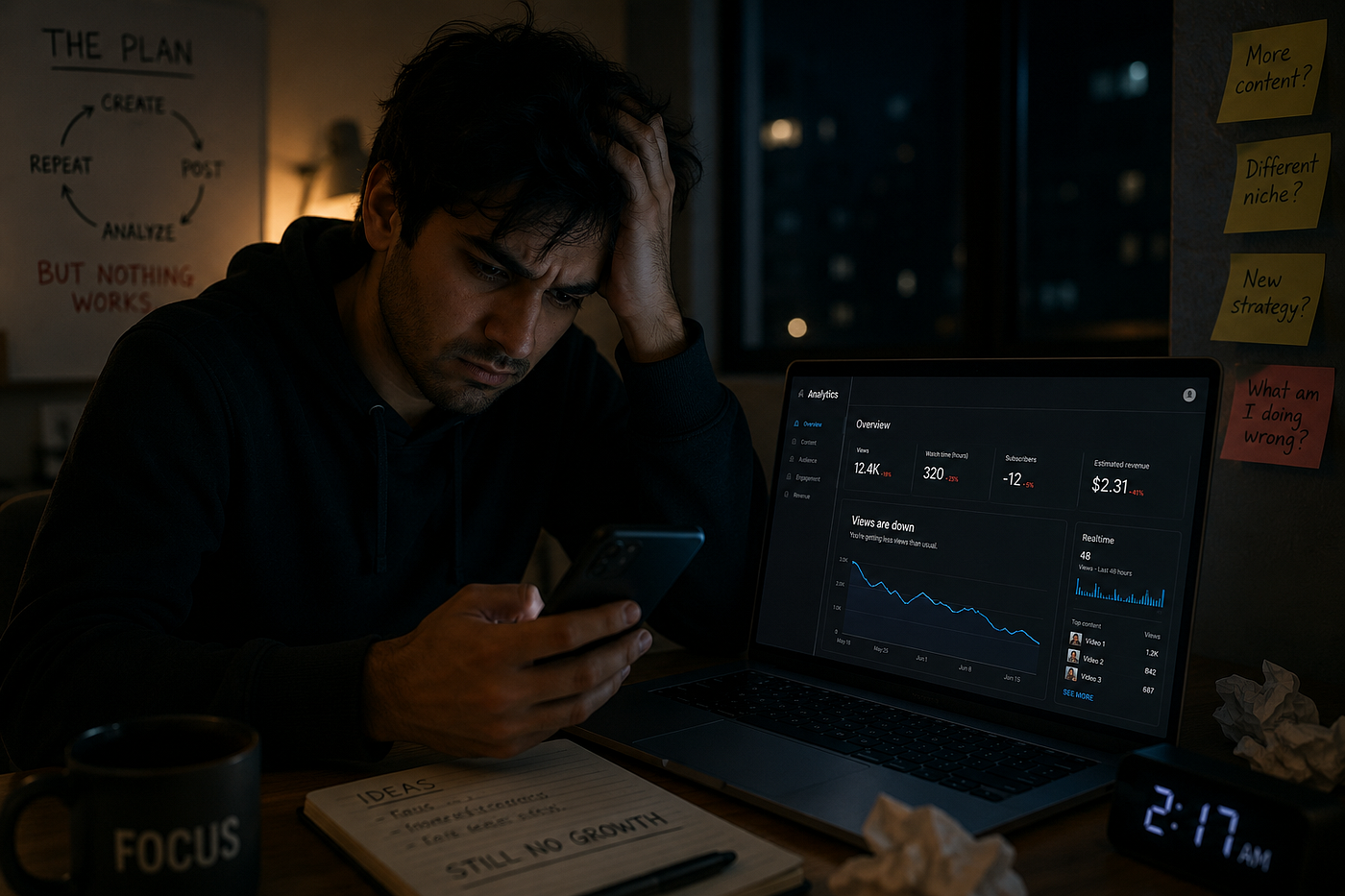
The real culprit is a metric most creators have never heard of.
You changed your posting schedule. You tested mornings, tried evenings, split the difference with a noon post. The reach stayed flat or kept falling. So now you’re questioning everything, probably refreshing your analytics at 2am wondering what you missed.
Here’s what you missed: exit rate.
What exit rate actually is
Every major platform now tracks what happens after someone sees your content. Not just whether they watched it, but what they did next. If a user scrolls past your post and then closes the app, that’s a signal. If they see your Reel and immediately swipe out of Instagram altogether, the algorithm registers that your content was the last thing they experienced before leaving.
And it penalizes you for it.
This isn’t speculation. The shift started becoming visible in late 2024 and by 2026 it’s fully baked into how Instagram, TikTok, and even LinkedIn calculate distribution. Platforms are in the engagement business. Their core product is time spent on the app. If your content is associated with people leaving, you become a liability in the feed, no matter when you posted.
Why posting time became a red herring
The “best time to post” advice dominated creator strategy for years because it was measurable and actionable. Scheduling tools made it easy to optimize for. The problem is that chasing peak windows treats reach like a static opportunity you either hit or miss, when in reality reach in 2026 is earned continuously based on behavioral signals.
Timing matters at the margins. Posting at 3am when your audience is asleep will hurt you. But posting at the “optimal” hour with content that drives exit behavior will hurt you more, and the damage compounds because your account-level metrics carry forward into every subsequent post.
The creators who are actually growing right now aren’t the ones who nailed the 9am window. They’re the ones whose content makes people stay in the app longer. Their posts get shared into DMs, saved for later, or spark a comment thread that pulls someone deeper into the platform. That behavior tells the algorithm to push the next post harder.
The signals that actually matter now
Saves and shares are the highest-intent signals in the current ranking system. When someone saves your post, they’re telling the platform this content has value beyond the current scroll session. When they share it to a story or send it to a friend, they’re acting as a distributor. Both behaviors are relatively rare, which is exactly why the algorithm weights them so heavily.
Comments count roughly double what likes do at this point. But the type of comment matters too. A single-word reaction does less than someone writing two sentences about their own experience. Posts that generate real responses, the kind where someone types something they actually mean, perform differently than posts that get hollow “love this!” replies.
Likes have become the vanity metric. They feel good and they’re easy to get, but they’re cheap signals. Someone can double-tap without breaking stride. It costs them nothing and tells the algorithm almost nothing useful.
If you’re building content to maximize likes, you’re optimizing for the wrong outcome. Build for saves and you’ll build for the metric that actually moves reach.
What this means practically
The question to ask before posting anything isn’t “is this good enough to get likes?” It’s “why would someone save this?” Utility, specificity, and surprise are the main reasons people bookmark content. Inspiration without actionability rarely gets saved. Generic advice rarely gets saved. But a specific template, a counterintuitive insight, a concrete process someone can return to later — those get saved.
For video content specifically, the post-watch behavior question matters too. After someone finishes watching, do they watch another video of yours? Do they visit your profile? TikTok in particular has started factoring this into account-level boosts. If your videos work as good entry points to your broader content, you get rewarded. If people watch and leave, you’re building an audience for the platform rather than for yourself.
If you’re creating carousels or short-form content and want a faster way to produce posts worth saving, zaps.design is worth looking at. It’s built for making visual content that holds attention rather than just filling a feed.
The reach problem most creators have isn’t a timing problem. It’s a retention problem. Fix that first, then optimize the schedule.
메타데이터
- post_id
- a245e2729bf9
- slug
- your-reach-dropped-this-week-and-posting-time-had-nothing-to-do-with-it-a245e2729bf9
- url
- https://medium.com/@zaps.design/your-reach-dropped-this-week-and-posting-time-had-nothing-to-do-with-it-a245e2729bf9
- canonical_url
- https://medium.com/@zaps.design/your-reach-dropped-this-week-and-posting-time-had-nothing-to-do-with-it-a245e2729bf9
- author_url
- https://medium.com/@zaps.design
- status
- ok
- fetched_at
- 2026-07-13 06:23:13