The Triumphant and Tragic Story of The Study of Polynomial Roots
So many great mathematicians died young trying to solve this problem
The Triumphant and Tragic Story of The Study of Polynomial Roots
So many great mathematicians died young trying to solve this problem
Let’s start this story with an expression that most of my readers will likely immediately recognise:
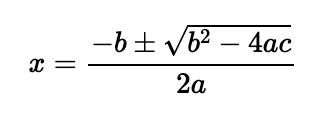
This is, of course, the formula for finding the roots (solutions) of a quadratic equation ax² + bx + c = 0. It’s a standard part of high school curricula nowadays, and taught as a ‘last resort’ for when the quadratic cannot be factorized easily into linear factors.
The first appearance of this kind of explicit formula was in René Descartes’s *La Géométrie* in 1637. But there is evidence that it was known much, much earlier.
The quadratic root formula in ancient Babylon
Babylonian tablets from c.1600 BC pose questions that reduce to quadratic equations. Babylonian number notation was in base 60, so that 3, 2, 1; 2, 3 would be the following today:

One Babylonian tablet poses the following problem: Find the side of a square given that the area minus the side is 14, 30. This translates to solving x²-x-870 = 0. The method given is as follows:
Take half of 1, which is 0;30, and multiply 0;30 by 0;30 which is 0;15. Add this to 14, 30 to get 14, 30; 15. This is the square of 29;30. Now add 0;30 to 29;30. The result is 30, the side of the square.
If we recast our quadratic formula into the following equivalent form:

b/2a is ‘half of one’ or ‘0;30’, and -c/a is ‘14,30’. So we can see that this method precisely describes the value associated with the positive square root in our formula. The Babylonians did not have a concept of negative number (and did not need to given the way they expressed problems like these) but we do see that they already understood this formula in the context of their mathematical framework. This is a bit mindblowing, especially since it would be over 3000 years before this formula would be found explicitly in print.
Roots of cubic equations
The Greeks were the next to tackle the question of quadratic roots, and it is no surprise to learn that they leaned on geometric methods. Very soon their geometry extended to methods to solve some cubic equations of the form ax³+bx²+cx+d=0. Around the turn of the first millennium, Omar Khavyan, the celebrated Persian polymath, had extended the methods of the Greeks to determine powerful general geometric methods for solving cubics, but algebraic solutions were still a way off, awaiting mathematical methods that recognized negative numbers.
Let’s jump to 16th century Italy — the place to be for mathematics during the Renaissance, as Middle Eastern progressive mathematical ideas were sweeping across Southern Europe, and religious interference in science was declining. Algebraic solutions of cubic equations became of interest, particularly at the University of Bologna. Public mathematical contests, where mathematicians would compete to solve a problem for the entertainment of intrigued onlookers, led to rapid progress in developing algebraic expressions for cubic solutions and even for some quartic (degree 4) solutions. One example is Scipione del Ferro’s solution to the ‘depressed cubic’ x³ + cx -d = 0:

The pursuit of solutions to cubics and quartics in such public contests led to quite some scandal in 16th century Italy. Unlike today, mathematicians would often keep their methods secret so they could maximise their chances of defeating other mathematicians in these public contests of genius. One such secret keeper was Niccolo Fontana, better known as ‘Tartaglia’ (meaning ‘the stammerer’). He had devised a general solution for depressed cubics of the form x³ +bx²-d=0. After seeing him solve these equations in public competitions, the physician Girolamo Cardano begged and pressured him to reveal his method to him, writing:
I swear to you by the Sacred Gospel, and on my faith as a gentleman, not only never to publish your discoveries, if you tell them to me, but I also promise and pledge my faith as a true Christian to put them down in cipher so that after my death no one shall be able to understand them.

Tartaglia (left) and Cardano (right)
Tartaglia finally relented and shared his method with Cardano. Cardano, being an incredibly smart but roguish figure nicknamed ‘the gambling scholar’, quickly improved Tartaglia’s method and, through a substitution, found a way to solve every cubic equation. Then, working with his servant-cum-assistant Ludovico Ferrari — it seems every Italian was a genius back then — they discovered a way to reduce every quartic to a cubic, and suddenly every polynomial up to degree 4 was now solvable.
Cardano could not resist the glory of publishing this work, even though it was founded on a method that was not his, and he broke his solemn vow to Tartaglia. Tartaglia, who was incensed, challenged him to a public mathematical duel in Milan. When Cardano refused, Ferrari stepped in. Despite his position as a lowly servant, Ferrari was probably the greatest genius of all these characters, and he humiliated Tartaglia in the contest. Ferrari received lucrative job offers while Tartaglia faded into insignificance and died penniless. This will not be the first tragedy of our story, and thankfully these duels were fought with brains and not pistols.
Quintics and radicals
By the time we hit the dawn of the era of modern Algebra in the late 18th century, mathematicians were seeing a lot of low-degree polynomial solutions as expressions which involved roots and nested roots. These expressions came to be known as radicals. The earlier expressions for the quadratic and cubic solutions are examples of radicals. In the mathematical community, a major motivating question was: does every polynomial with rational coefficients have solutions that can be expressed as radicals?
Clearly because of the work of Tartaglia, Cardano and Ferrari, this question had already been answered positively up to and including quartics, so the battle was on to find radical expressions for the solution of the quintic equation ax⁵+bx⁴+cx³+dx²+ex+f=0. Joseph-Louis Lagrange made an interesting link between this problem and the newly emerging ‘Group Theory’, by coming up with a general method for finding the roots of quadratics, cubics and quartics. His method depended on identifying functions of the roots that are unchanged by certain permutations of those roots, which made a direct link with the symmetric group of permutations of n objects, but he did not make this link explicit because groups were not well-defined at that time. Lagrange showed that his method broke down on quintic polynomials, and this was the first hint to the mathematical community that the quintics may not all have radical roots.
Paolo Ruffini, a physician and professor at the University of Modena, picked up on Lagrange’s observation and published several papers proving that the general quintic polynomial had roots that were impossible to express as radicals. He, too, spotted a link with the symmetric group on five objects. Despite several attempts to write his proof, many of which he sent to Lagrange, his work was largely ignored, until recognised by Cauchy as a meaningful, if very complicated, contribution to the problem. Sadly, Cauchy’s recognition came after Ruffini had died after catching typhus from patients he had treated during an epidemic.
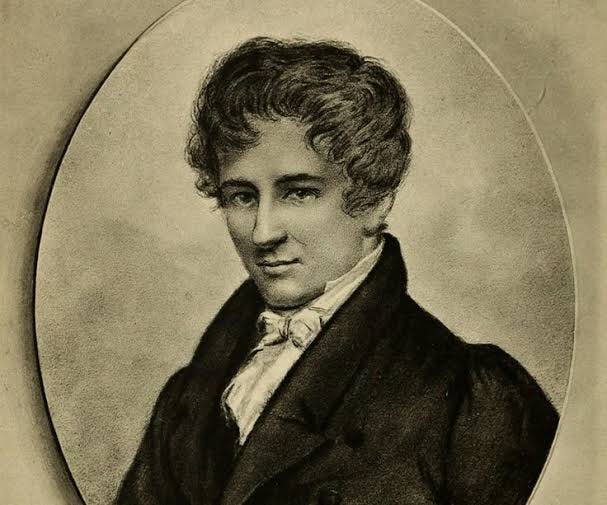
Niels Henrik Abel (1802–1829)
Abel’s breakthrough
In 1824, Niels Henrik Abel proved conclusively that the general quintic equation was insoluble by radicals. As a boy growing up in Oslo, mathematics was Abel’s refuge from a cruel world. He witnessed his teacher at the Cathedral School beat one of his students so badly that the boy died. His father drank himself to death and at the funeral his mother got drunk and disgraced herself with one of the servants.
All of this tragedy served to motivate Abel to seek refuge in the enclosed world of mathematics, and at the age of 20 a fellowship was created for him at the University of Oslo. Unaware of Ruffini’s work, he published an independent proof of the impossibility of solving the general quintic. Although it contained a minor error, later corrected by Kroenecker, Abel’s proof is today accepted as the first such argument to fully meet the mathematical standards of proof. Abel’s reputation grew rapidly and at 26 he was offered a position at the newly created Mathematical Institute in Berlin. Sadly, on the morning of his planned departure to take up his new position, Abel began coughing violently and bringing up blood and was confined to his bed. He died of tuberculosis within a few weeks, aged just 27.
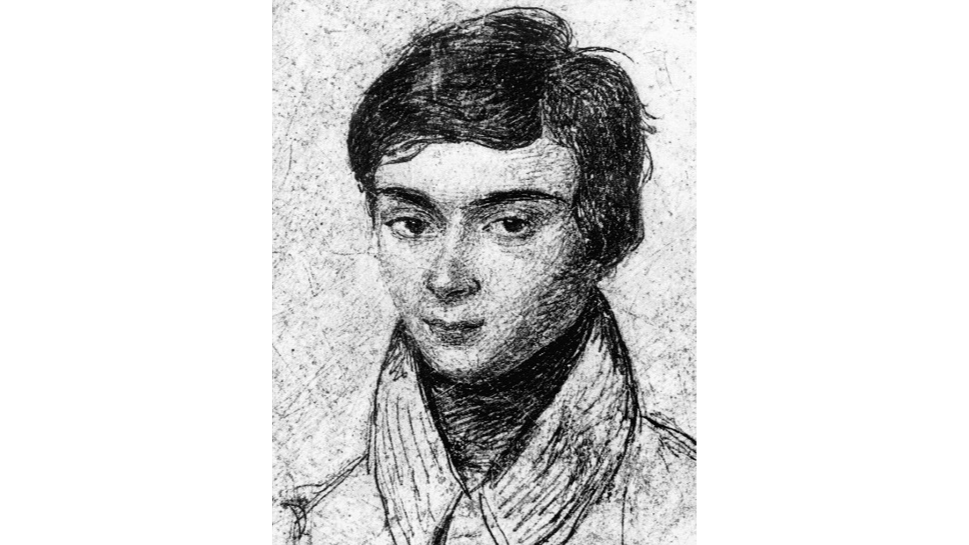
Portrait of Evariste Galois drawn when he was around 15 years old
The genius and tragedy of Galois
This leads us to the story of Évariste Galois, probably the most tragic of them all. Born near Paris in 1811, Galois was no doubt a mathematical genius of epic proportions, but he had two problems which limited his progression through normal modes of education. He hated writing down his workings, preferring to note only the results, and his writing was often so untidy that many could not read or understand what he was saying. His failure to pass the entrance exam for the École Polytechnique was probably because of these fundamental flaws, but by the age of 17 he had independently discovered a theory of the solubility of general polynomial equations.
Galois’ work was to far extend the discoveries of Abel, who was working around the same time. While Abel showed that the general quintic was not soluble by radicals, Galois was to develop a theory that allowed mathematicians to determine whether or not any given polynomial of any given degree had roots that could be expressed as radicals. As well as being much more general and powerful that any prior discovery, it also revealed and formalized the underlying link with Group Theory that had been hinted at by his predecessors, thus unifying a number of new emerging fields of mathematics and applying them together to solve the general polynomial problem. As a unifying theory, and in its influence on modern mathematics as a discipline, it’s hard to find an achievement that parallels the work of Galois in all the history of mathematics.
But Galois was not to know how transformational his work was to become. He sent his work to the Academy of Sciences in 1828, and there is some evidence that Cauchy had read and appreciated it, because the following letter from Cauchy was found in the Academy’s archives in the 1970s: I was supposed to present today to the Academy first a report on the work of the young Galoi….Am indisposed at home, I regret not being able to attend…would like you to schedule me for the following session.
Cauchy never presented the work and Galois never heard from him. He tried again in 1830 to submit a new version to the Academy for its Grand Prize in Mathematics, but the reviewer died before reading it and the manuscript was lost. He sent a third version in 1831, eventually getting a reply from Poisson declaring it ‘incomprehensible’.
By this time Galois’s life was becoming more complicated. Caught up in the chaos of revolutionary France, he was arrested and tried for treasonous activities and spent some time in prison. He also experienced his first (and only) love affair, and apparently when rejected by the woman, he took it badly and kept up his unwanted advances. It is thought that this is how Galois ended up being challenged by a rival to a duel (although much of this historical detail still remains murky).
On 29 May 1832, the night before the duel, Galois gathered his mathematical papers containing his theory on the roots of polynomials and transmitted them to his friend Auguste Chevalier, with a cover note, ending as follows:
Ask Jacobi or Gauss publicly to give their opinion, not as to the truth, but as to the importance of these theorems. Later there will be, I hope, some people who will find it to their advantage to decipher all this mess…
The duel the next morning, by all accounts, was a nasty affair. Both participants were armed to fire at point blank range. Only one pistol was fired, and Galois was taken to the hospital with a horrific stomach wound. He lasted a day in agony from peritonitis, he refused to see a priest. Dead at the age of 20, he was buried in the commoners ditch of Montparnasse cemetery. Another genius gone unrecognized in his short lifetime.
What did you think of the story of the search for expressions of the roots of polynomials? Feel free to comment!
메타데이터
- post_id
- a29db6c82e9e
- slug
- the-triumphant-and-tragic-story-of-the-study-of-polynomial-roots-a29db6c82e9e
- url
- https://medium.com/@keith-mcnulty/the-triumphant-and-tragic-story-of-the-study-of-polynomial-roots-a29db6c82e9e
- canonical_url
- https://medium.com/@keith-mcnulty/the-triumphant-and-tragic-story-of-the-study-of-polynomial-roots-a29db6c82e9e
- author_url
- https://medium.com/@keith-mcnulty
- status
- ok
- fetched_at
- 2026-06-09 15:37:30




