Practical Prompt Engineering for Developer: Templates That Produce Reliable Code
The era of “try and hope” prompting is over. In 2025, AI-assisted coding isn’t just about having access to models like GPT-4o, Claude 3.5…
Practical Prompt Engineering for Developer: Templates That Produce Reliable Code

The era of “try and hope” prompting is over. In 2025, AI-assisted coding isn’t just about having access to models like GPT-4o, Claude 3.5, or Llama 4, it’s about knowing how to talk to them. Developers who master prompt engineering aren’t merely faster, they build more predictable, testable, and secure software. This guide distils the art **and science **of prompt design into something practical:
- Real templates
- Examples from real repositories
- And a framework for making AI code outputs reliable and reproducible.
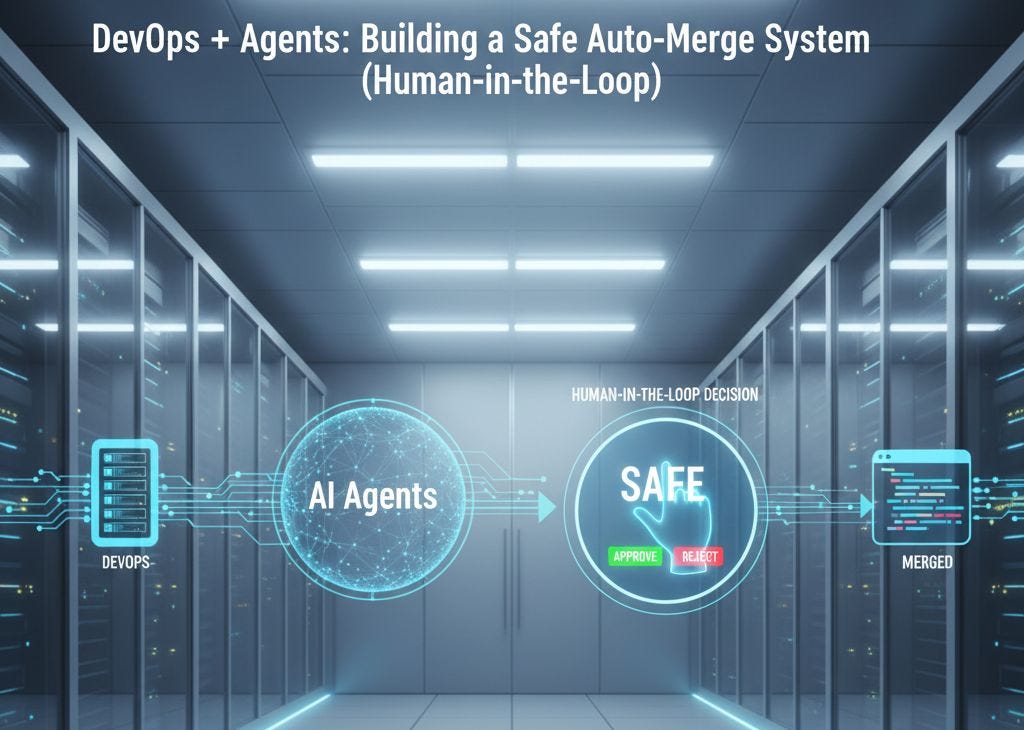
If you read our last piece, **DevOps + Agents: Building a Safe Auto-Merge System, this one is your natural next stop. Once the pipeline is automated, the next challenge is ensuring the code that feeds it** is consistent.
Why Prompt Engineering Matters
When AI generates code, it isn’t compiling your thoughts — it’s sampling from probabilities. A single vague word (“optimize this function”) can cause 10 completely different outputs. A well-structured prompt reduces noise and boosts reproducibility by up to 40%, according to JetBrains’ 2025 AI Tooling Survey.
The 3 Pillars of Developer-Focused Prompting
1. Precision
Specify everything that affects code structure:
- Language & framework
- Input/output constraints
- Coding conventions
- Error handling style
Example
You are a senior backend engineer.
Generate a Python FastAPI route for /upload-image.
Must validate file size (<5MB) and return JSON errors.
Use Pydantic for schema.
Result: deterministic, lint-ready code, no hallucinations, no surprises.
2. Context
AI needs your project’s memory. Give it examples, style guides, and references.
Example: “Follow the repository’s existing pattern in api/users.py. The function create_user() shows how we log errors, use the same decorator.” This builds local consistency, the key to multi-dev projects using AI copilots.
3. Verification
Don’t just generate, test the prompt’s consistency. Use structured prompt testing via tools like PromptLayer or LangSmith.
Example: You can record AI completions, detect drift, and auto-reject outputs that deviate from expected schema.
10 Reliable Prompt Templates for Developers
- Function Generation “Write a function in [LANGUAGE] that [TASK]. Include inline comments explaining each line.”
- Bug Fix “Given this stack trace: [TRACE], rewrite the function to fix the error. Keep original variable names.”
- Test Generation “Generate unit tests using Pytest for this function. Include both success and failure cases.”
- Code Review “Act as a senior code reviewer. Identify security risks and performance issues.”
- Docstring Generator “Write a NumPy-style docstring for this function. Include examples.”
- Error Explanation “Explain this error message and propose 3 fixes ranked by probability.”
- Optimization “Refactor this code for readability and performance without changing logic.”
- Integration Example “Show how to integrate this function into an existing Django REST framework.”
- Version Diff “Summarize what changed between these two commits in plain English.”
- PR Message “Write a concise pull-request summary using this diff.”
Prompt Anti-Patterns to Avoid
- “Make this better” — too vague.
- “Write perfect code” — meaningless to a model.
- “Optimize” without metrics — leads to random output.
- Forgetting to set constraints (language, length, tone).
Testing Prompt Reliability
You can benchmark prompt outputs using:
- PromptLayer or LangSmith for completion diffing.
- EvalPlus for automated code correctness evaluation.
- Unit Test Hooks to verify AI-generated snippets before commit.
Pro Tip: Store tested prompts in a /prompts directory with versioning — treat them like reusable functions.
Frequently Asked Questions (FAQs)
1. What’s the full form of LLM?
Large Language Model, a machine learning system trained to predict text, like GPT-4o or Claude 3.5.
2. How does prompt engineering improve testability?
By defining consistent code structure and naming patterns, it reduces flaky test generation.
3. Should we fine-tune prompts for each repo?
Yes. Each project has unique conventions, calibrate prompts with examples.
4. Can prompts replace coding?
No. They amplify developers, replacing repetition, not reasoning.
5. Which tools help most?
LangSmith, PromptLayer, and GitHub Copilot Enterprise’s Prompt Playground.
Conclusion
Good prompts turn AI from a creative toy into a reliable engineering partner. The future of development isn’t “no-code”, it’s smart-prompt code, where engineers use language precision as their new superpower.
Next Up is **AI Agents 2.0: How Next-Gen Models Are Redefining Development Workflows**
Listen On Spotify:
Catch the full discussion here on our podcast:
Resources Mentioned
메타데이터
- post_id
- a2baf9ff3020
- slug
- practical-prompt-engineering-for-developer-templates-that-produce-reliable-code-a2baf9ff3020
- url
- https://medium.com/ai-code-journal/practical-prompt-engineering-for-developer-templates-that-produce-reliable-code-a2baf9ff3020
- canonical_url
- https://medium.com/ai-code-journal/practical-prompt-engineering-for-developer-templates-that-produce-reliable-code-a2baf9ff3020
- author_url
- https://medium.com/@semanticedonline
- status
- ok
- fetched_at
- 2026-06-12 22:02:08