Perhaps the Cruelest Thing Is Indifference
We say we should be grateful to national veterans.
Perhaps the Cruelest Thing Is Indifference
We say we should be grateful to national veterans.
No one disagrees with that statement. Because it feels so obvious.
So we reassure ourselves easily. We believe we are people who know how to be grateful. At least, we think we are — deep down.
But is that really true?
Are we actually living with gratitude? Or do we simply know the sentence that says we should be grateful?
The moment that stayed with me the longest was not the soup, not the kindness, not even the warmth of the scene.
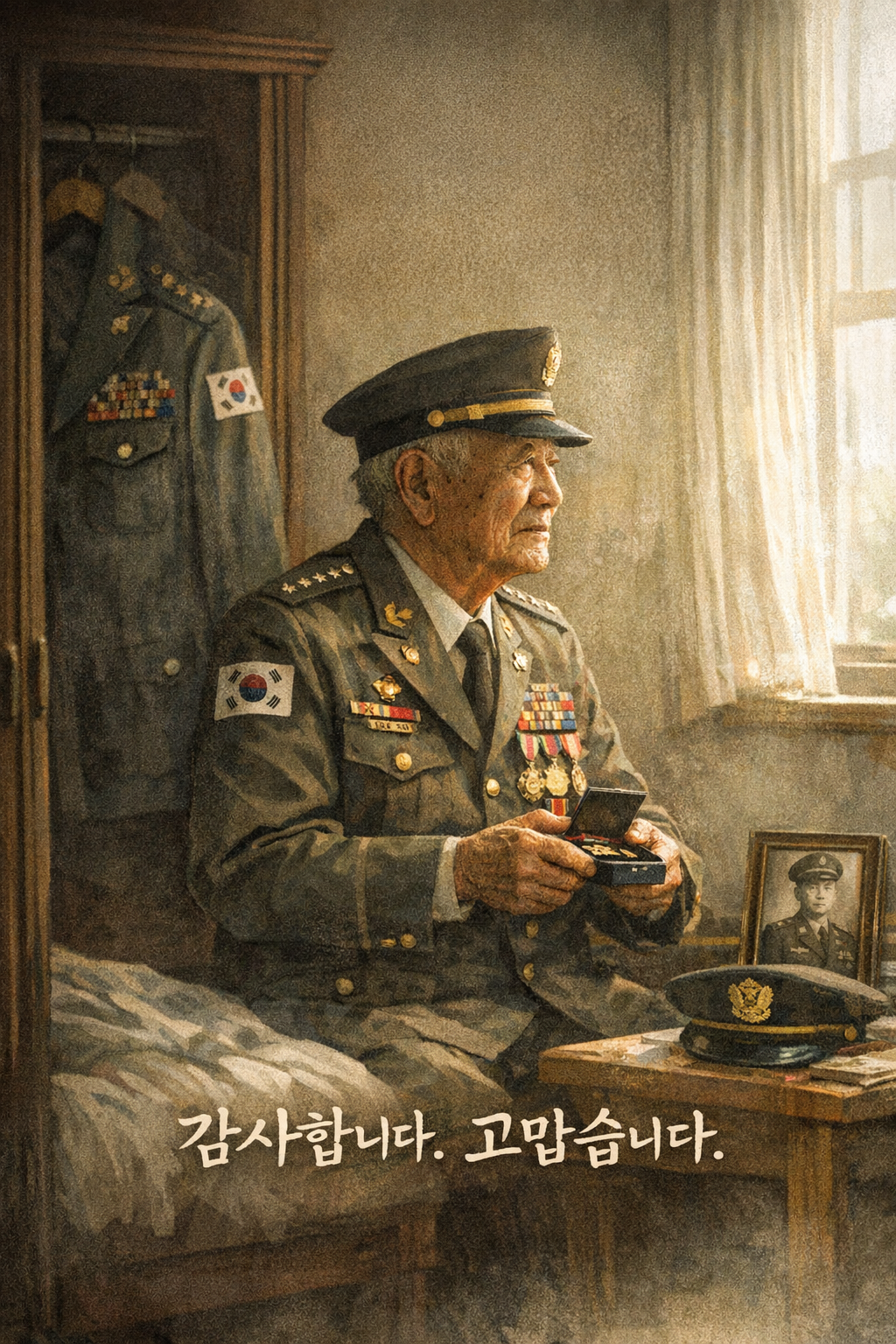
It was an elderly man who came to the restaurant wearing his uniform for the first time in years.
Why did that moment linger so strongly?
Perhaps it wasn’t just a man wearing clothes. It felt more like he was putting back on a part of himself that had long been folded away.
People take out what they cherish most when they want to feel proud.
And when they want to be recognized, they wear what best explains who they are.
To him, that uniform was not just clothing.
It was a period of his life. His pride. A trace of the years he had given to his country.
The fact that he hadn’t worn it for such a long time seemed to say many things.
Perhaps there had been no place to wear it.
Perhaps there had been no one to recognize it.
Perhaps there had not been a moment when he felt it was okay to take it out again.
So that uniform did not look like a desire for honor, but rather a quiet wish not to be forgotten.
Watching that scene, I found myself thinking not only about kindness, but naturally about indifference.
Criticism and malice are frightening, too. But I have often thought that indifference might be even more frightening.
Criticism hurts. Harsh comments are painful. Pressure and threats can break people.
But within those things, there is still emotion.
Anger, jealousy, rivalry — even in distorted forms, they are still reactions directed at someone’s existence.
They are not good emotions, but at least they leave behind a trace that says, “I see you.”
Indifference is different.
Indifference does not get angry. It does not hate. It does not argue.
It simply passes by.
As if you were not there.
And that is why it feels more frightening.
Hatred still acknowledges existence. Indifference erases it.
A person can survive wounds. But when treated as if they mean nothing, when they fall outside of anyone’s attention, the heart collapses in a different way.
Indifference toward national veterans therefore feels especially delicate to think about.
They are people who gave parts of their lives for a country.
The peace we now take for granted, the everyday life so familiar we rarely question its value, rests somewhere on the time they lived.
And yet we say we should be grateful.
But that sentence often remains just a sentence.
We remember on anniversaries, but forget in daily life.
We say we respect them, yet rarely show it in ordinary moments.
We say we will not forget, yet quietly pass by.
That is why a young man’s simple actions felt so significant.
Not because he was extraordinary, but because he showed, so plainly, what we had not been doing.
Greeting someone warmly. Showing respect first. Letting gratitude appear as attitude. Not treating someone’s life lightly.
We have thought these things were small.
But perhaps respect has always begun in small places.
A title. An expression. A way of welcoming.
That may be why what stayed behind was not the bowl of soup, but the feeling.
Watching the video, I did not feel only warmth.
I felt a quiet sense of embarrassment.
Why had I never thought this way? Why had gratitude remained only a sentence in my mind?
Why had I known that national veterans deserve respect, yet never thought deeply about how that respect should appear in my behavior?
Perhaps many people felt something similar.
And I do not think that embarrassment is a bad thing.
Sometimes people change not through grand realizations, but through quiet discomfort.
This is not a piece written to praise one restaurant owner.
He is certainly a warm person. But what stayed with me longer was not his kindness itself, but the space it revealed.
We say we are grateful. But how often do we act?
We say we respect. But how often do we approach first?
We say we will remember. But how often have we passed by?
Perhaps the cruelest thing is not hostility, but indifference.
Hostility leaves scars. Indifference makes existence fade.
And people feel most alone when they are treated as if they are slowly disappearing.
I do not know exactly why the elderly man wore his uniform that day.
But one thing seems clear.
When someone recognizes you, you want to take out the pride you once folded away.
Perhaps gratitude is not as grand as we imagine.
It may begin with recognizing someone again.
Showing, through attitude, that they have not been forgotten.
Moving gratitude from words into expressions, tone, and actions.
We say we should be grateful to national veterans.
Perhaps it is time to turn that obvious sentence into a way of living.
The beginning may not be far away.
Treating people as people. Calling their existence back. Offering attention instead of indifference.
Perhaps even the quiet courage to take a uniform out of a closet again begins right there.
Personally, I hope this gukbap restaurant gets all the support it deserves.
This essay began with a question that came to mind after watching the video below.
[embed]
메타데이터
- post_id
- a2d258733ba4
- slug
- perhaps-the-cruelest-thing-is-indifference-a2d258733ba4
- url
- https://medium.com/@wooseo/perhaps-the-cruelest-thing-is-indifference-a2d258733ba4
- canonical_url
- https://medium.com/@wooseo/perhaps-the-cruelest-thing-is-indifference-a2d258733ba4
- author_url
- https://medium.com/@wooseo
- status
- ok
- fetched_at
- 2026-07-11 15:31:54