Building Powerful Language Models with Advanced LLM Data Collection
Introduction
Building Powerful Language Models with Advanced LLM Data Collection
Introduction
Artificial Intelligence (AI) has transformed the way businesses and individuals interact with technology. From intelligent chatbots and virtual assistants to content generation and language translation, Large Language Models (LLMs) are driving innovation across industries. However, the success of these advanced AI systems depends heavily on one crucial factor: LLM Data Collection.
High-quality data serves as the foundation for training powerful language models. Without diverse, accurate, and well-structured datasets, even the most sophisticated AI algorithms struggle to understand context, generate meaningful responses, and perform complex language tasks effectively. The success of an AI model depends on the quality of data it is trained on.
What is LLM Data Collection?
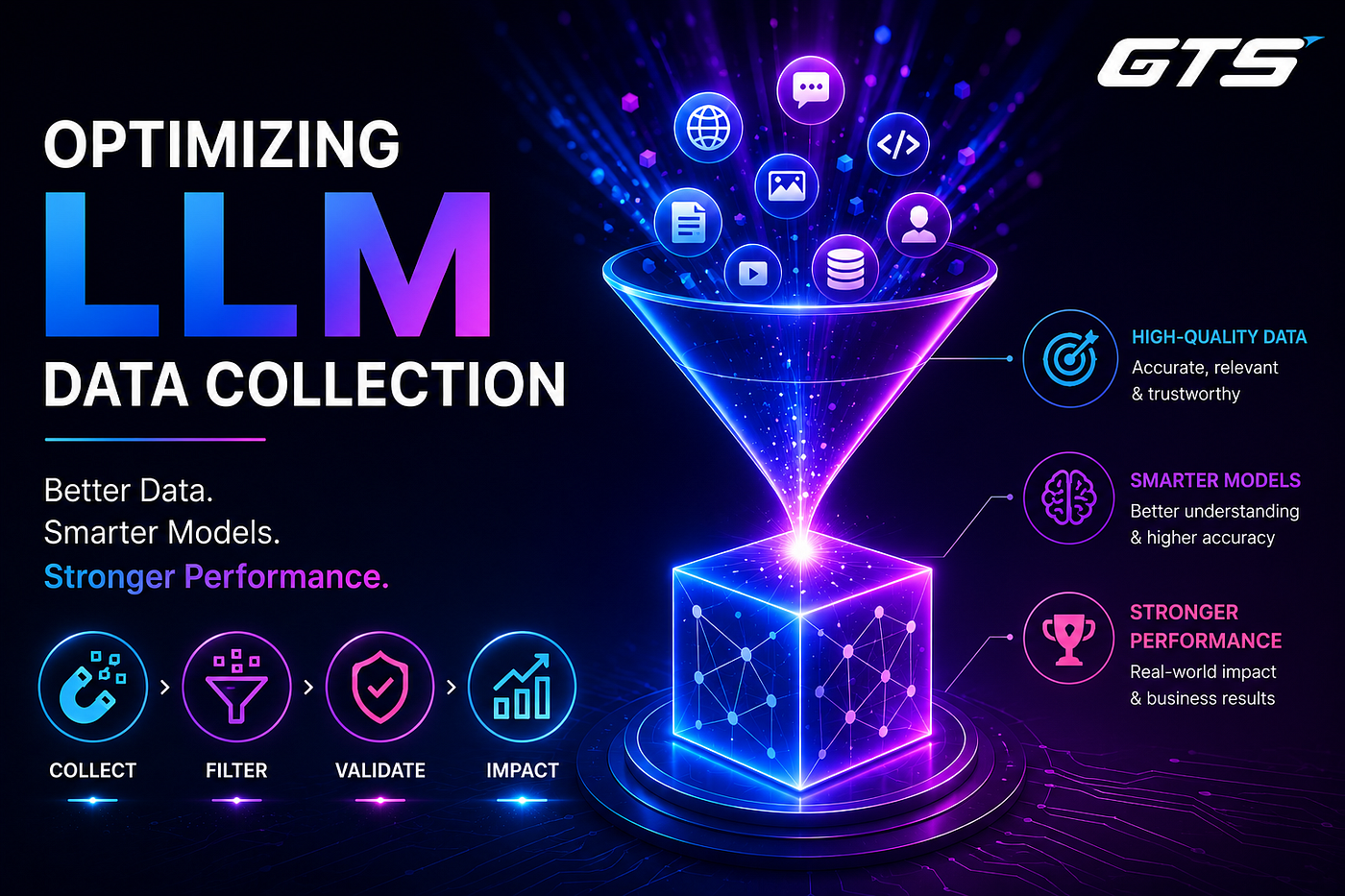
LLM Data Collection is the process of gathering, organizing, and preparing large volumes of text, speech, and multimodal data that can be used to train and improve Large Language Models. The collected data helps AI systems learn grammar, context, reasoning patterns, language nuances, and domain-specific knowledge.
The effectiveness of a language model is directly linked to the quality and diversity of the data it receives during training. Additionally, well-accurate datasets help reduce bias and misinformation in AI models, making model responses more reliable and trustworthy.
Why High-Quality Data Matters for Language Models
Language models learn by identifying patterns within massive datasets. Poor-quality or insufficient data can lead to inaccurate outputs, misunderstandings, and reduced performance. Advanced data collection strategies focus on ensuring that datasets are:
- Diverse and representative
- Accurate and validated
- Multilingual and culturally inclusive
- Domain-specific when required
- Ethically sourced and compliant
By collecting high-quality data, organizations can build AI models that perform reliably across different applications and user groups.

Key Components of Advanced Data Collection
1. Diverse Data Sources
Successful language models require exposure to a wide variety of content. Advanced data collection strategies gather information from:
- Websites and digital publications
- Customer support interactions
- Social media content
- Industry-specific documents
- Academic and research materials
- Conversational datasets
This diversity helps language models understand different writing styles, topics, and communication patterns.
2. Multilingual Data Collection
As businesses operate globally, AI systems must understand multiple languages and regional variations. Multilingual datasets improve language comprehension and cross-cultural communication.
AI maintains high accuracy and relevance in every language, giving users a better and more natural experience.
3. Data Annotation and Quality Assurance
Raw data alone is not enough. Proper annotation and validation ensure that datasets are clean, structured, and meaningful. Quality assurance processes help remove duplicates, errors, irrelevant information, and biased content before training begins.
This step significantly improves model performance and reduces the risk of generating inaccurate responses.
4. Domain-Specific Dataset Development
Many organizations require AI systems tailored to specialized industries such as healthcare, finance, legal services, retail, or technology. Domain-specific datasets ensure that models learn industry terminology, regulations, and workflows.
This targeted approach allows organizations to develop AI solutions capable of delivering highly accurate and context-aware outputs.
Benefits of Advanced Data Collection
Improved Model Accuracy
High-quality datasets help language models better understand context, resulting in more precise and reliable responses.
Enhanced User Experience
Well-trained AI systems provide natural conversations, faster responses, and greater user satisfaction.
Reduced Bias and Errors
Carefully curated datasets help minimize biases and inaccuracies, creating fairer and more trustworthy AI systems.
Better Adaptability
Diverse training data enables models to handle a wider range of topics, industries, and languages.
Faster AI Development
Structured and validated datasets reduce training challenges, accelerating model development and deployment.
Challenges in Data Collection
While advanced data collection offers significant benefits, it also presents several challenges:
- Managing large-scale datasets
- Maintaining data quality and consistency
- Ensuring privacy and compliance
- Reducing bias in training data
- Supporting multilingual and multicultural requirements
Addressing these challenges requires robust data collection methodologies, advanced quality control processes, and experienced data management teams.
The Future of Data Collection
As AI technology continues to evolve, the demand for sophisticated datasets will grow rapidly. Future LLM Data Collection efforts will focus on:
- Higher-quality conversational datasets
- Industry-specific knowledge bases
- Real-time data collection and updates
- Multimodal datasets combining text, audio, image, and video
- Ethical and responsible AI data practices
Organizations investing in data collection today will be prepared for the future and can easily face challenges. This will be sufficiently secure for the future.
Conclusion
Powerful language models are built on a foundation of high-quality data. Advanced data collection enables organizations to develop AI systems that are accurate, scalable, multilingual, and capable of delivering exceptional user experiences. As the demand for intelligent AI solutions continues to rise, investing in comprehensive and reliable data collection strategies becomes essential for long-term success.
At **GTS**, we specialize in delivering high-quality LLM training data collection services designed to support the development of next-generation AI solutions. Through scalable data sourcing, multilingual dataset creation, and rigorous quality assurance processes, we help organizations build powerful language models that drive innovation and business growth.
메타데이터
- post_id
- a2d7de4ff2fc
- slug
- building-powerful-language-models-with-advanced-llm-data-collection-a2d7de4ff2fc
- url
- https://medium.com/@ritikaushik240/building-powerful-language-models-with-advanced-llm-data-collection-a2d7de4ff2fc
- canonical_url
- https://medium.com/@ritikaushik240/building-powerful-language-models-with-advanced-llm-data-collection-a2d7de4ff2fc
- author_url
- https://medium.com/@ritikaushik240
- status
- ok
- fetched_at
- 2026-08-26 09:46:57