Stop confusing everyone with UX design dogma
I wrote this article inspired by many cases of designers taking themselves a bit too seriously. While I love UX design tremendously, and…
Stop confusing everyone with UX design dogma
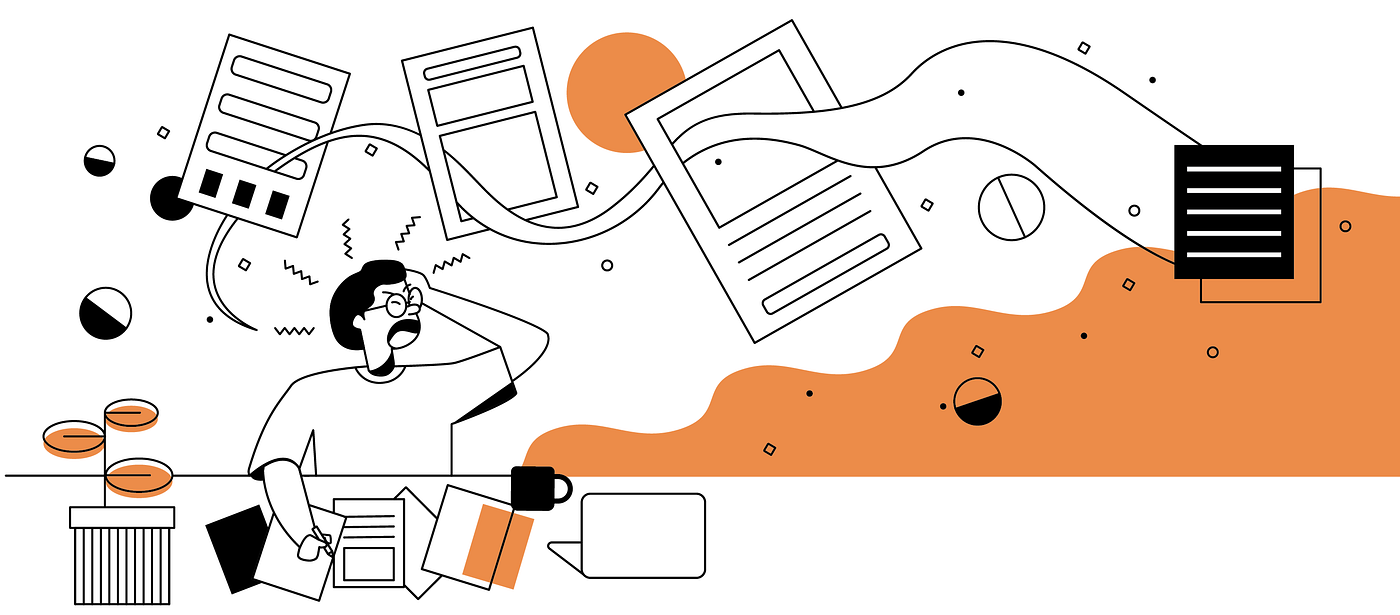
Photo by Valerie Lendel on Unsplash
I wrote this article inspired by many cases of designers taking themselves a bit too seriously. While I love UX design tremendously, and its importance is sort of self-evident, I have to admit it is really not rocket surgery. Many designers, on the other hand, choose to think their work is mysterious and important… In this short read, I try to deconstruct some of these fallacies. I hope you find something helpful and enjoy the read!
Gatekeeping serves no one
Many times I’ve seen someone asking for help on public UX designer groups get a “You are not doing real UX if you don’t do A followed by B” answer. This type of “advice” usually comes from someone trying to flex design maturity and who doesn’t even bother to understand the context. It’s great if you have the resources to do everything from A to B, but assuming every project works the same is asinine. There are not only budget, but more importantly, scope and timeline differences. Small projects have the luxury of moving fast and iterating rapidly, while big projects are slow and rigid, where each strategic step is usually bound by a long-term plan. These differences are critical, and methodology needs to be as well.
Such generalizations leave the person asking for help more confused than before, as well as other people reading the discussion. Design is (well, at least it should be) purely contextual, and there are usually multiple important angles to consider for each problem. It’s not rocket science, and I personally go by a simple rule: if advice seems excessively complicated, it usually is. The bottom line is—you’re either helping or you’re not.
If you ever feel like gatekeeping, stop and take a deep breath. Ask yourself are you truly helping or just flexing?
Stop confusing strangers
Non-designer people occasionally ask for help on public UX groups, and sometimes they get almost anecdotical advice. Usually, they ask for something particularly simple but get suggested extravagant solutions that are disconnected from reality. I remember one case where the owner of a simple recipe website (which was a horrible clunky mess filled with ads) was looking for general usability tips, and someone suggested that they should conduct user research.
That was basically the whole advice, and it felt like reading a bad joke. I mean… Research what exactly? Where should they even start? It’s understandable if someone is not willing to give free tips, but why give something so dubious? You are not helping anyone, and you make yourself look silly.
In this particular case, all that was needed and asked for were some general usability tips — something every experienced UX designer should be able to spot quickly. Ideally, and if the owner is willing to spend some money, a thorough usability audit with proposed improvements.
Yes, user research is something to ideally start with, but in a case like this—that’s not it!
Cookie-cutter design processes are lying to you
This one is not only UX, but a general trap: designers sometimes rush to present and finalise their work without putting in the hours and properly exploring and testing ideas. They try to tick off checkboxes, following some cookie-cutter case study they saw on Dribbble or LinkedIn. That case study likely never happened, or if it did, it was very different from how it was told.
While telling a story in a compelling way is a part of a designer’s job, often the reasoning seems to be the other way around — the story is trying to justify certain parts of the process just to tell itself. In other words, it’s telling a lie. It’s doing a huge disservice to the designer, to the company they work for, and for the design community as a whole. This needs to stop.
The thing is, you don’t need to keep inflating the purpose of design in order to sell it. You don’t need buzzwords to communicate your choices. You don’t need to sketch wireframes on paper before moving to Figma. You don’t need to create user personas for every project. You don’t need written-down guidelines before making the design work... Instead of focusing on fluff, put in the honest hours exploring, create something awesome, something you truly stand by — it will do all the heavy lifting, and then presenting it will be a piece of cake! If your current work is not solid yet, it’s MUCH better to just be open about it and ask for more time rather than compensating with bullshit and standing by it. Your higher-ups will respect you for being transparent and having high standards. It will also improve your future workflows, because you will know better how long it takes to do something right.
Don’t do things just because you saw someone else do them! You’re a pro — act like one! Show how you see the world. Show how you can achieve good results by prioritizing what’s most important in a given situation — this is what makes an awesome designer!
“Absorb what is useful, reject what is useless, add what is essentially your own.”
― Bruce Lee
메타데이터
- post_id
- a2debd110f80
- slug
- stop-confusing-everyone-with-ux-design-dogma-a2debd110f80
- url
- https://medium.com/@ls007sunshine/stop-confusing-everyone-with-ux-design-dogma-a2debd110f80
- canonical_url
- https://medium.com/@ls007sunshine/stop-confusing-everyone-with-ux-design-dogma-a2debd110f80
- author_url
- https://medium.com/@ls007sunshine
- status
- ok
- fetched_at
- 2026-06-23 06:34:20