TAC! 2025 Urban Architecture: How Temporary Pavilions Are Redefining Ecological Public Space
The 2025 edition of the TAC! Urban Architecture Festival in Spain is more than a showcase of design — it’s a blueprint for how…
TAC! 2025 Urban Architecture: How Temporary Pavilions Are Redefining Ecological Public Space
The 2025 edition of the TAC! Urban Architecture Festival in Spain is more than a showcase of design — it’s a blueprint for how architecture can engage deeply with ecological systems and public culture. As temporary pavilions take shape in Alicante and Las Palmas de Gran Canaria, they embody a vital shift: one where young architects create structures not to dominate space, but to harmonize with it.
This article was originally published in full on our official site, where we examine in detail how these ephemeral structures create lasting cultural and environmental impact.
TAC 2025 Urban Architecture
Coastal Dialogues: Public Space as Catalyst
TAC! 2025 foregrounds public space not just as location, but as interface — between urban life and ecological memory. The festival’s theme emphasizes coastal identity, choosing Casa Mediterráneo in Alicante and Plaza Stagno in Las Palmas to explore how built form can articulate the tensions and connections between land and sea, history and modernity.
Temporary architecture here acts as mediator. The pavilions aren’t objects — they are events, invitations for people to engage, pause, and reflect.
Rooted in Material Ethics: Two Winning Designs
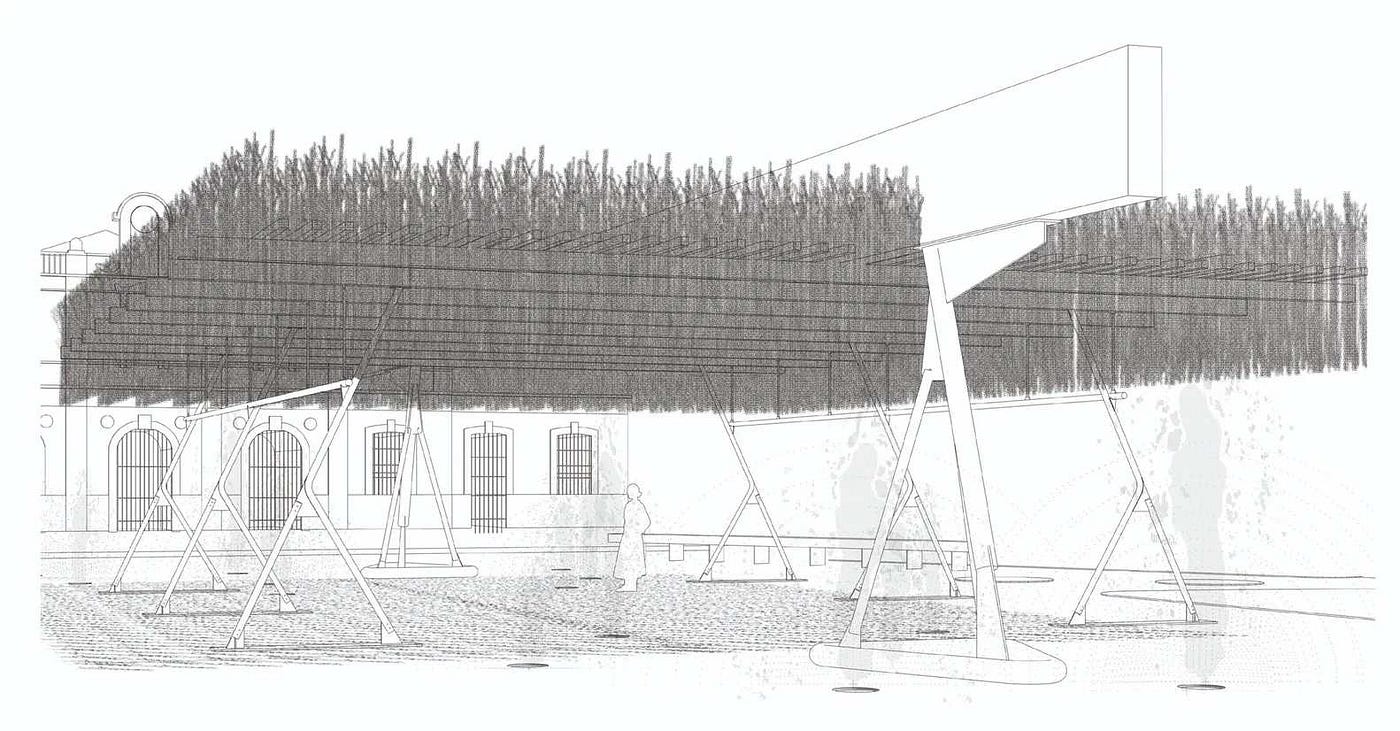
In Alicante, the ESPARTAL pavilion — by ELE Arkitektura, GA Estudio, Florencia Galecio, and Juan Gubbins — reclaims esparto grass, a native Mediterranean plant, to filter light and create microclimatic comfort. It’s a poetic resurrection of forgotten material culture, and a compelling argument for bioclimatic design.
In Las Palmas, DE ROCA MADRE — by Alejandro Carrasco Hidalgo and team — juxtaposes volcanic stone and reclaimed plastic to evoke geological time and ecological urgency. It questions our resource extraction habits while referencing traditional Canarian construction methods.
These installations exemplify what we call ecological architecture — where every material choice is a political, environmental, and cultural act.
From Object to Process
TAC! 2025 also awarded projects like “Gota a Gota” and “La Siesta” for engaging with local water traditions and land-based urban memory. These pavilions are not just designed for the public — they are co-authored with the rhythms of place.
This ethos reflects what we outline in our book Ecological Architecture: sustainable design isn’t a technology stack, but a cultural practice rooted in place, memory, and ecological responsibility.
Architecture as Regenerative Culture
TAC! 2025 confirms that architecture’s most meaningful contributions happen at the scale of dialogue — between cities and climates, between temporary structures and enduring values. These pavilions may vanish physically, but they leave behind shifts in how we understand space, resources, and belonging.
**Riley Carter** Architect | Educator | Passive House Advocate
메타데이터
- post_id
- a2e534ce0c19
- slug
- tac-2025-urban-architecture-how-temporary-pavilions-are-redefining-ecological-public-space-a2e534ce0c19
- url
- https://medium.com/@RileyCarter/tac-2025-urban-architecture-how-temporary-pavilions-are-redefining-ecological-public-space-a2e534ce0c19
- canonical_url
- https://medium.com/@RileyCarter/tac-2025-urban-architecture-how-temporary-pavilions-are-redefining-ecological-public-space-a2e534ce0c19
- author_url
- https://medium.com/@RileyCarter
- status
- ok
- fetched_at
- 2026-07-14 19:34:30