The Self-Sufficient Backyard Review: Is It Practical for Regular Homeowners?
This article is for educational purposes only and is not medical advice. If you use herbs, natural products, or any home-preparedness…
The Self-Sufficient Backyard Review: Is It Practical for Regular Homeowners?
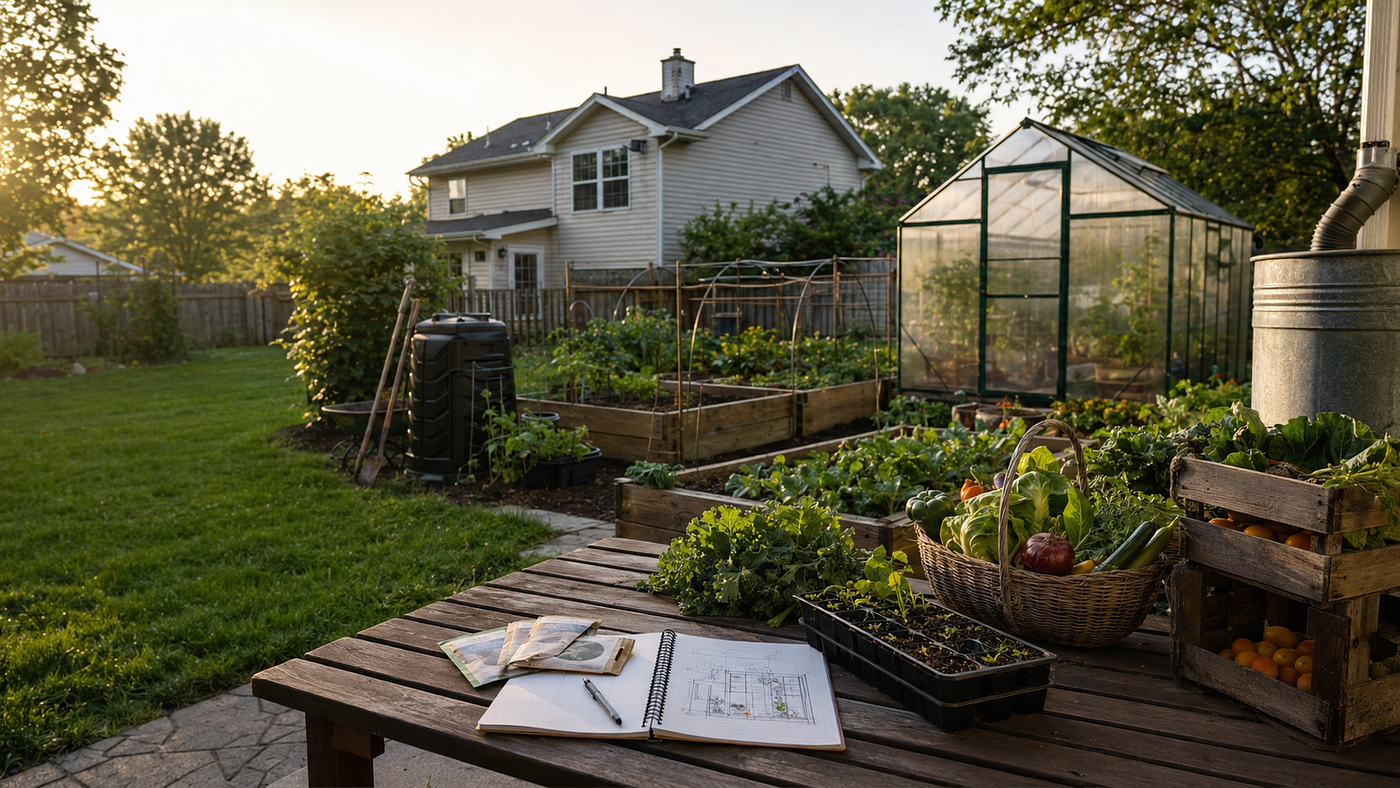
A calm, practical review of The Self-Sufficient Backyard Book for homeowners who want realistic backyard self-reliance.
This article is for educational purposes only and is not medical advice. If you use herbs, natural products, or any home-preparedness method related to health, consult a qualified healthcare professional first.
Most people do not wake up wanting to become full-time homesteaders. They just want a little more control.
Control over food prices. Control over what grows near the house. Control over whether the pantry feels empty after one bad week at the grocery store. For regular homeowners, that is usually where self-reliance begins. Not with a cabin in the mountains. Not with a dramatic off-grid fantasy. Just a backyard, a few practical systems, and the quiet decision to stop depending on convenience for everything.
That is the angle I think matters most when looking at The Self-Sufficient Backyard Book.
The official product page describes it as a guide by Ron and Johanna Melchiore, based on decades of off-grid living, with material on food production, food preservation, water collection, composting, soil building, solar energy, and small livestock systems (official product page). Open Library also lists a paperback edition of The Self-Sufficient Backyard published in 2020, with 266 pages and ISBN 9781732557161 (Open Library).
So the better question is not whether the idea sounds appealing.
The better question is whether this kind of guide is actually useful for regular homeowners.
What The Self-Sufficient Backyard Appears to Offer
At its core, The Self-Sufficient Backyard appears to be a practical homesteading and preparedness guide for people who want to make their home more productive.
The official page presents it as a resource with step-by-step backyard projects, food growing guidance, preservation ideas, water collection systems, composting, soil improvement, energy setups, and small livestock topics (official product page).
That is a broad promise. Broad can be helpful, but it can also become messy if a guide tries to do too much. A beginner does not need fifty projects at once. A beginner needs sequence.
That is where a book like this can be useful if you approach it correctly. Not as something to complete from cover to cover in one heroic season, but as a reference you pull from gradually.
One raised bed first. One compost system. One water storage habit. One pantry upgrade. One small improvement that makes the house slightly less fragile.
That is the realistic version.
Who This Book Is Probably For
This book is best suited for homeowners who like practical projects and want a more organized path into backyard self-reliance.
It may fit you well if you are interested in:
- Growing more of your own food at home
- Making better use of a small yard
- Learning basic food preservation and storage
- Reducing waste through composting
- Understanding rainwater, irrigation, or simple water systems
- Building preparedness habits without panic
- Having one structured resource instead of scattered online advice
The strongest reader is probably not a survivalist. It is the ordinary homeowner who has watched grocery prices climb, seen supply problems happen, or simply realized that a backyard can do more than hold grass and patio furniture.
There is something almost funny about the modern yard. We water it, mow it, fertilize it, edge it, then complain food is expensive. A self-reliant backyard does not need to become a farm, but it should probably do something useful.
Who This Book Is Not For
This book is probably not the right fit for someone who wants instant results.
Backyard systems are slow. Soil takes time. Compost takes time. Skills take repetition. Even a simple garden can teach humility very quickly.
It may not be ideal if you:
- Hate DIY projects
- Want a polished interior-design style gardening book
- Expect guaranteed savings
- Want emergency preparedness based on fear
- Have no time or interest in maintaining systems
- Prefer short videos over written step-by-step material
Also, no book can override local conditions. A plan that works beautifully in rural Idaho may need changes in Florida, Arizona, Ohio, or a small suburban lot in New Jersey. Climate, zoning, rainfall, sunlight, pests, and neighborhood rules all matter.
A good guide can give structure. It cannot replace judgment.
The Practical Strength of This Kind of Guide
The biggest benefit of The Self-Sufficient Backyard is not that it gives people a magical blueprint. It is that it may help beginners stop bouncing between random ideas.
That matters more than it sounds.
A lot of people start with preparedness by collecting fragments. One video about rain barrels. One article about chickens. One post about potatoes in buckets. One thread about dehydrating food. One dramatic story about supply chains. After a while, the brain feels full, but the backyard still looks the same.
Information without order becomes clutter.
A structured guide can help by grouping skills into systems:
- Food production
- Water use and storage
- Soil building
- Waste reuse
- Food preservation
- Energy awareness
- Small livestock or optional advanced projects
For a regular homeowner, that kind of structure is valuable because it makes the project feel less like a lifestyle identity and more like home improvement.
What I Would Start With First
If a beginner bought this book, I would not recommend starting with the biggest or most impressive project.
Start smaller.
1. Map the Backyard
Look at sunlight, shade, water access, wind, drainage, and foot traffic. This sounds boring. It is also where many failed gardens begin.
A sunny spot near the kitchen is usually more useful than a perfect-looking corner you forget to visit.
2. Build One Food-Producing Area
A single raised bed or container garden is enough for the first phase. Herbs, lettuce, tomatoes, peppers, beans, or greens are common beginner choices depending on your climate.
The goal is not to feed the whole household immediately. The goal is to learn how your yard behaves.
3. Add Compost
Compost is one of the least glamorous parts of self-reliance, but it changes the whole logic of the yard.
Kitchen scraps, leaves, and yard waste stop being trash. They become soil support.
4. Improve the Pantry
Backyard self-reliance does not end at harvest. Food needs somewhere to go.
A practical pantry has food your household actually eats, not random emergency items bought during a stressful weekend.
5. Track What Works
Keep simple notes. Planting date. Weather. Pests. Harvest. Mistakes. Next steps.
This is where a regular homeowner quietly becomes competent.
Where The Self-Sufficient Backyard Book Can Help
If you want a more structured starting point, this is where a guide like The Self-Sufficient Backyard Book can help.
Its value is not that it does the work for you. It does not.
The value is that it gives you a more organized way to think through backyard projects. Instead of chasing every new idea online, you can move through a more deliberate path and choose projects that match your space, budget, and time.
That is important because beginner self-reliance often fails from overreach.
Too many beds. Too many plants. Too many tools. Too many weekend plans. Then summer gets hot, weeds arrive, and the whole thing becomes another abandoned hobby.
A better approach is boring, steady, and effective.
Pick one project. Finish it. Learn from it. Add the next one.
Common Objections
Objection 1: A guide may feel unnecessary
That is fair. You can learn many backyard skills from free videos, library books, extension websites, and local gardeners.
The reframe is simple. Free information is abundant, but it is scattered. A structured guide can save time if you want one organized reference instead of building your plan from disconnected pieces.
Objection 2: Regular homeowners may not have enough land
This concern is real, especially for suburban homes and smaller lots.
But self-reliance is not all-or-nothing. A small yard can still support herbs, vegetables, composting, rain awareness, pantry planning, seed starting, and seasonal food routines.
The useful question is not whether your yard can do everything. It is whether it can do more than it does now.
Objection 3: Some projects may be too advanced
That is likely true for some readers.
Not every project belongs in the first month. Solar setups, livestock, larger water systems, or major builds may require more research, local rules, money, and confidence.
The practical move is to treat advanced sections as future options, not immediate assignments.
Pros and Cons
Pros
- Covers a wide range of self-reliance topics
- Useful for homeowners who want a structured reference
- Encourages practical backyard systems
- Fits food growing, preservation, water, compost, and preparedness interests
- Better suited to calm preparedness than fear-based survival content
Cons
- Some projects may require tools, space, or local adaptation
- Beginners may feel overwhelmed if they try to do too much
- It is not a substitute for local gardening knowledge
- Results depend on climate, effort, budget, and consistency
- It is a guide, not a guarantee
Final Verdict
The Self-Sufficient Backyard Book looks most practical for regular homeowners who want a grounded way to begin backyard self-reliance.
It is not a miracle solution. It is not a guarantee that your home will become fully independent. It is not a shortcut around the work.
But as a structured resource, it can be useful for people who want to grow food, build simple systems, improve their pantry, and make their backyard more productive over time.
The best way to use it is slowly.
Choose one project. Keep the cost reasonable. Match the idea to your actual space. Learn the rhythm of your yard before trying to transform everything.
A self-reliant backyard is not built in a burst of enthusiasm. It is built through small systems that keep working after the excitement fades.
If you want a structured place to start, you can check out **The Self-Sufficient Backyard Book here**. I may earn a commission if you buy through my link, at no extra cost to you.
메타데이터
- post_id
- a2f0b377675d
- slug
- the-self-sufficient-backyard-review-is-it-practical-for-regular-homeowners-a2f0b377675d
- url
- https://medium.com/@arifariasafara/the-self-sufficient-backyard-review-is-it-practical-for-regular-homeowners-a2f0b377675d
- canonical_url
- https://medium.com/@arifariasafara/the-self-sufficient-backyard-review-is-it-practical-for-regular-homeowners-a2f0b377675d
- author_url
- https://medium.com/@arifariasafara
- status
- ok
- fetched_at
- 2026-08-06 11:45:10






