From Waste to Productive Capital: How Israel Spent Five Decades Redefining the Value of Wastewater
The Starting Point: A Nation Defined by Water Scarcity
From Waste to Productive Capital: How Israel Spent Five Decades Redefining the Value of Wastewater
The Starting Point: A Nation Defined by Water Scarcity
Roughly two-thirds of Israel’s land area is covered by the Negev Desert. Water distribution presents an equally formidable challenge: approximately 80% of the country’s annual rainfall falls in the north, while nearly 65% of its irrigated farmland is located in the south. In other words, the water is where the farms are not, and the farms are where the water is scarce.
When Israel was founded in 1948, the country’s central challenge was not how to improve agricultural efficiency — it was whether there would be enough water to cultivate crops at all.
Most countries facing such constraints would look for additional water supplies through reservoirs, inter-basin transfers, or imports. Israel pursued those strategies as well, investing more than a decade in constructing the National Water Carrier to transport water from the Sea of Galilee to the country’s central and southern regions, and later becoming a global leader in seawater desalination.
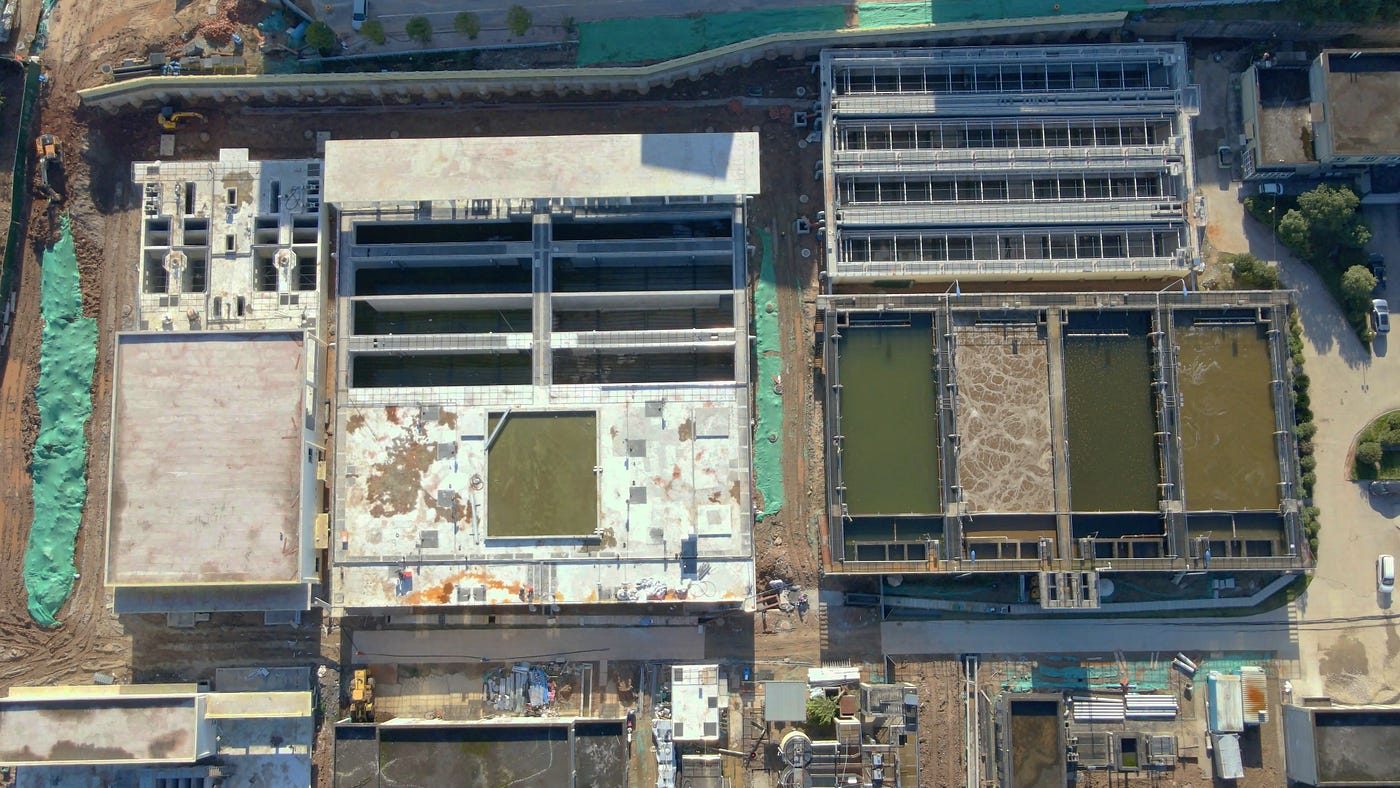
Yet the most transformative change to Israel’s water balance came from a less obvious source: **treating wastewater — not new freshwater supplies — as the primary source of incremental agricultural water.**
1972: A Strategic Redefinition of Wastewater
The decisive turning point came in 1972, when Israel launched its **National Wastewater Reuse Program**, establishing a national policy that municipal wastewater should be reclaimed and reused rather than simply discharged.
At first glance, this appears to be a straightforward policy adjustment. In reality, it fundamentally changed the objective of wastewater management.
Prior to 1972, wastewater treatment was primarily viewed as an environmental protection and public health obligation. Success meant investing in treatment infrastructure and meeting discharge standards.
After 1972, however, compliance was no longer the end goal.
The new objective became whether treated wastewater could safely enter the agricultural water supply system. Wastewater treatment shifted from being an environmental expense to becoming a process of resource production.
Once this strategic direction was established, decades of technological investment and institutional reform followed naturally.
Turning Strategy into Infrastructure: From Shafdan to the Negev
The flagship example is the Dan Region Reclamation Project, commonly known as the Shafdan Wastewater Treatment Plant, located approximately 10 kilometers south of Tel Aviv.
As one of the world’s largest wastewater treatment facilities, Shafdan processes approximately 370,000 cubic meters of municipal and industrial wastewater every day, serving roughly 2.5 million residents in the Greater Tel Aviv metropolitan area.
Its defining innovation is Soil Aquifer Treatment (SAT).
Instead of directing treated wastewater immediately into irrigation networks, the water is allowed to infiltrate underground aquifers, where layers of sand and soil provide natural filtration and biological polishing. After this additional purification stage, reclaimed water is conveyed through dedicated pipelines to dozens of agricultural reservoirs across the Negev Desert.

This approach transforms the region’s geological characteristics into a natural treatment system, significantly reducing the marginal cost of producing irrigation-quality reclaimed water while maintaining high water quality standards.
The scale of implementation reflects decades of sustained investment. Since 1993, Israel’s national water authorities have invested approximately US$2.3 billion in wastewater infrastructure and implemented more than 4,000 wastewater reuse projects nationwide.
The Real Lever: Treating Water as an Economic Asset
Technology alone answers one question:
Can reclaimed water be safely used?
It does not answer another, equally important one:
Why would farmers choose to use it?
Israel addressed this challenge through institutional design.
The country introduced a differentiated water pricing system based on the principle of “the highest-quality water for the highest-value use.”
Under this framework:
- Reclaimed water is priced below freshwater supplied within agricultural quotas.
- Farmers who voluntarily exchange freshwater allocations for reclaimed water allocations may receive approximately 20% additional water quotas.
- Using reclaimed water therefore provides both lower costs and greater water availability.
Freshwater itself is subject to progressive pricing. Different tariff levels apply when consumption reaches 50%, 80%, and 100% of allocated quotas, while water consumed beyond quota limits can cost as much as three times the standard tariff. Water prices are periodically adjusted — typically every six to twelve months — based on national water resource assessments.

The significance of this system extends beyond pricing.
It transformed water from a uniformly allocated public utility into a differentiated economic asset with varying values, prices, and exchange mechanisms.
For the first time, farmers could make rational economic decisions rather than simply complying with administrative allocations. Choosing reclaimed water became a financially advantageous production strategy instead of a government mandate.
Measuring the Results
Although published figures vary across different years and statistical methodologies, the overall trajectory is remarkably consistent.
Today:
- Approximately 90% of Israel’s municipal wastewater is collected and treated.
- Between 85% and 90% of treated wastewater is reclaimed and reused, the highest rate globally.
- More than 87% of reclaimed water is used for agricultural irrigation.
- Annual reclaimed water production exceeds 500 million cubic meters.
The role of reclaimed water in agriculture has continued to expand. Between 2000 and 2015, its share of total irrigation water increased from roughly 24% to approximately 43%. Israel’s Long-Term Water Sector Master Plan (2012) projects that reclaimed water could account for around 67% of agricultural water consumption by 2050.
Perhaps the most striking outcome is that Israel’s agricultural irrigation demand has remained relatively stable — at roughly 1.3 billion cubic meters annually — while agricultural production has increased by more than tenfold compared with the country’s early decades.
That productivity gain has been driven by two complementary factors:
- expanding the total usable water supply through wastewater reclamation; and
- dramatically increasing water-use efficiency through technologies such as drip irrigation.
Today, irrigation efficiency in Israel reaches approximately 95%, while drip irrigation covers more than 85% of irrigated farmland.
The result is an export-oriented agricultural sector. Israeli agricultural products account for a substantial share of Europe’s imported fruits and vegetables, while the country has become the world’s second-largest exporter of flowers after the Netherlands.

For a nation that once struggled to secure sufficient water for basic food production, redesigning its water resource system fundamentally reshaped its agricultural economy.
Beyond Water: Creating an Entire Industrial Ecosystem
The benefits of wastewater reuse extend well beyond agriculture.
Israel’s long-term commitment to water efficiency fostered an internationally competitive water technology industry.
One of the world’s pioneering drip irrigation companies, Netafim, emerged directly from Israel’s search for more efficient irrigation solutions. Today, approximately 30% of Israeli start-ups are engaged in water-related technologies, making the country one of the world’s leading centers for water innovation.
Industry forecasts estimate that Israel’s water-efficiency technology market will reach approximately US$5.7 billion by 2025.
In other words, wastewater reuse not only solved domestic water scarcity — it also created an entirely new export industry built on expertise in water management and agricultural technology.
What Is Truly Replicable?
Many analyses of Israel’s success focus on drip irrigation systems or Soil Aquifer Treatment technology.
These innovations are undoubtedly important.
However, technology alone does not explain why wastewater became an economic resource rather than merely an environmental obligation.
The deeper lesson lies in institutional design.
Three elements stand out.
First, strategic reframing.
At the policy level, wastewater treatment was no longer evaluated by whether it met discharge standards, but by whether it successfully re-entered agricultural production.
Second, pricing and water rights.
Differentiated tariffs and transferable water allocations created genuine economic incentives for farmers to adopt reclaimed water voluntarily.
Third, cross-sector governance.
Agricultural and health authorities jointly regulate reclaimed water use. Local governments are legally responsible for wastewater infrastructure. National water authorities coordinate water allocation across regions. This integrated governance structure prevents wastewater reuse from becoming fragmented across multiple agencies with conflicting objectives.
Conclusion
For countries facing growing water scarcity while seeking to strengthen agricultural productivity, Israel offers far more than an engineering blueprint.
Its experience demonstrates that transforming wastewater from an environmental liability into an economic asset depends not only on treatment technology, but on whether institutions create the right incentives for reclaimed water to compete successfully with conventional water resources.
Technology determines whether reclaimed water can be used safely.
Institutions determine whether reclaimed water becomes economically valuable.
That distinction may ultimately be the most important lesson from Israel’s fifty-year journey.
메타데이터
- post_id
- a2fba158e72b
- slug
- from-waste-to-productive-capital-how-israel-spent-five-decades-redefining-the-value-of-wastewater-a2fba158e72b
- url
- https://medium.com/@hthrjt2017/from-waste-to-productive-capital-how-israel-spent-five-decades-redefining-the-value-of-wastewater-a2fba158e72b
- canonical_url
- https://medium.com/@hthrjt2017/from-waste-to-productive-capital-how-israel-spent-five-decades-redefining-the-value-of-wastewater-a2fba158e72b
- author_url
- https://medium.com/@hthrjt2017
- status
- ok
- fetched_at
- 2026-07-23 02:08:27




