What Is Content Clipping and Why Smart Brands Use It
Most brands have more content sitting around than they realise. A founder interview, a podcast episode, a webinar, a livestream, a YouTube…
What Is Content Clipping and Why Smart Brands Use It

Most brands have more content sitting around than they realise. A founder interview, a podcast episode, a webinar, a livestream, a YouTube video, a product demo, or a customer education session may all contain useful ideas. The problem is that a lot of this content is treated as a single asset. It gets published once, shared once or twice, and then left to sit quietly while the team moves on to the next campaign.
That is not always a content creation problem. More often, it is a distribution problem.
A long-form video can take hours to plan, record, edit, and publish. If it only turns into one upload and one social post, the brand is leaving a lot of value behind. Inside that one recording, there may be several moments that could work as short clips across LinkedIn, TikTok, Instagram Reels, YouTube Shorts, Facebook, X, newsletters, and landing pages.
That is where content clipping comes in.
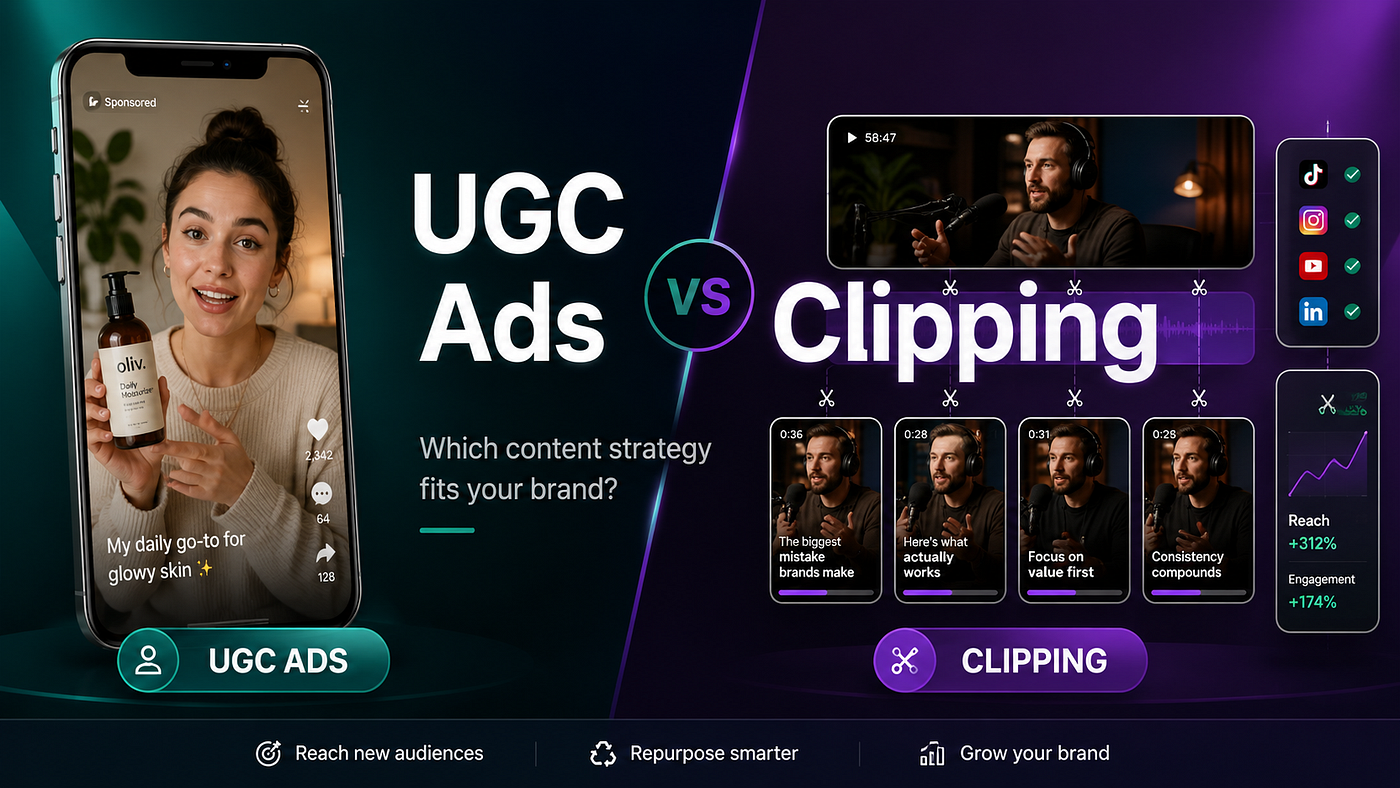
Content clipping is the process of taking long-form content and turning it into short, focused clips that can stand on their own. It gives brands a practical way to get more reach from the content they already create. It also helps audiences discover ideas in smaller, easier-to-consume pieces.
What is content clipping?
Content clipping means taking longer content and cutting it into shorter clips for social media and digital distribution. The source content can be a podcast, webinar, interview, livestream, YouTube video, product walkthrough, online course, panel discussion, event recording, or any other long-form video or audio asset.
The goal is not to cut random sections and post them everywhere. That is the lazy version, and it rarely works well.
The real goal is to find the strongest moments inside the original content and turn them into short clips that make sense without the full recording. A good clip should have a clear opening, one main idea, enough context, clean pacing, readable captions, and a useful takeaway.
For anyone asking What is Content Clipping, the simple answer is this: it is a way to turn one larger piece of content into several smaller pieces that help the idea travel further.
The better answer is that content clipping is a distribution system. It helps brands make better use of content they have already invested time and money into creating.
Why content clipping has become so useful
People discover brands differently now. Someone may not start by visiting your website or watching your full webinar. They may first see a 30-second clip on LinkedIn. They may find a YouTube Short through search. They may come across a Reel shared by someone else. They may watch a TikTok clip that explains one idea quickly.
That short clip becomes the first touchpoint.
If the clip is useful, the viewer may watch another one. They may check the profile. They may search for the brand. They may click through to a full article, service page, podcast, or video. This does not always happen immediately, but repeated exposure builds recognition.
That is why content clipping matters. It creates more entry points into the brand.
Long-form content still has value. It gives depth. It builds trust. It gives space for proper explanations, stories, examples, and expertise. But long-form content often needs help being discovered. Short clips help with that.
A full podcast builds authority. A short clip helps introduce that authority to someone who would never have found the full episode on their own.
What content can be clipped?
Almost any long-form content can be clipped if it contains useful moments. The best source material usually includes clear explanations, strong opinions, practical advice, real examples, or natural conversation.
Brands can clip:
- Podcast episodes
- Founder interviews
- Webinars
- YouTube videos
- Livestreams
- Product demos
- Event recordings
- Panel discussions
- Customer education videos
- Online courses
- Training sessions
- Q&A recordings
The content does not need to be perfect, but it needs some substance. A clipping process can improve pacing and presentation, but it cannot create a strong idea from empty material.
This is why the best clips often come from content where people speak clearly about real problems. A founder explaining a customer pain point, a guest sharing a practical lesson, or an expert answering a common question can all become strong short-form content.
What makes a good content clip?
A good content clip is not just short. It is clear.
That sounds simple, but it is where many brands get it wrong. They cut a section from a longer video because the speaker sounded confident, but the clip does not make sense to someone seeing it for the first time. The viewer has no context, no reason to care, and no clear takeaway.
A strong clip usually has:
- A clear opening
- One focused idea
- Enough context to stand alone
- Natural pacing
- Readable captions
- A strong visual frame
- A useful takeaway
- A format that fits the platform
The opening matters most. People scroll quickly. If a clip starts slowly or vaguely, most viewers will leave before the point arrives.
A weak clip might start with:
“Yeah, exactly, that’s what we were talking about earlier.”
That may make sense in the full conversation, but it gives a new viewer very little.
A stronger clip starts closer to the idea:
“Most brands do not have a content problem. They have a distribution problem.”
That gives the viewer something to understand immediately. It also creates a reason to keep watching.
Content clipping is more than repurposing
Content clipping is a form of repurposing, but it is more specific. Repurposing can mean turning a blog into a newsletter, a podcast into an article, or a webinar into a slide deck. Content clipping usually refers to turning longer video or audio content into short-form video clips.
The two can work together.
For example, one webinar can become:
- A full replay
- A blog article
- A newsletter summary
- Several short clips
- Social posts
- Quote graphics
- A landing page section
- A sales follow-up asset
The clips play a special role because they help people discover the content quickly. They are easier to watch in a feed. They are easier to share. They can also support search discovery on platforms like YouTube, TikTok, LinkedIn, and Instagram.
This makes content clipping useful at the top of the funnel. It helps people notice the brand before they are ready to commit to longer content.
How brands use content clipping
Brands use content clipping in several ways. Some use it to grow social media channels. Others use it to promote podcasts, webinars, and founder-led content. Some use it to support service pages, campaigns, or thought leadership.
A B2B company might clip a webinar into short educational videos for LinkedIn. A podcast host might create clips to promote each episode. A SaaS brand might cut product education into short clips for YouTube Shorts. A founder might use clips to share opinions and build authority in their niche.
Content clipping can support:
- Brand awareness
- Social media consistency
- Founder-led content
- Podcast promotion
- Webinar promotion
- YouTube growth
- Audience education
- Content distribution
- Thought leadership
- Service page support
The key is to connect the clips to a larger goal. Random clips may get views, but strategic clips help build a clearer brand presence over time.
Common mistakes brands make with content clipping
One of the biggest mistakes is choosing clips only because the brand likes them internally. A moment may feel important to the team, but it may not make sense to a cold viewer. A good clip needs to work for someone who has not seen the original content.
Another mistake is chasing volume. More clips do not automatically mean better results. A large batch of weak clips can create more noise. A smaller batch of strong clips can do more if each one has a clear purpose.
Brands also make the mistake of posting the same clip in the same way everywhere. A LinkedIn clip may need a more thoughtful caption. A YouTube Short may need a stronger title. A TikTok clip may need a faster opening. The core content can stay the same, but the packaging should fit the platform.
Other mistakes include:
- Starting clips too slowly
- Using captions that are hard to read
- Choosing clips with no clear takeaway
- Posting inconsistently
- Measuring only views
- Ignoring saves, shares, comments, and watch time
- Making every clip too promotional
- Not linking clips to a wider content strategy
Most of these issues can be fixed with better selection, clearer goals, and a repeatable workflow.
How content clipping supports SEO and discovery
Content clipping is often treated as a social media tactic, but it can also support broader discovery. People now search for answers across many platforms, not just traditional search engines. They use YouTube, TikTok, Reddit, LinkedIn, Instagram, and AI-assisted tools to find quick explanations, examples, opinions, and reviews.
This means brands need content in different formats.
A written article can explain a topic in depth. A long video can build trust. A short clip can introduce the idea quickly. Together, these formats create more chances for the brand to be found.
For example, a detailed guide explaining What is Content Clipping can sit on a website and support SEO. Short clips can then answer related questions across social platforms and drive people back toward that deeper resource.
The written page gives depth. The clips create reach. Both support each other.
How to build a simple content clipping system
A good content clipping system does not need to be complicated. It just needs to be consistent.
A basic workflow can look like this:
- Choose one long-form content asset
- Review it for strong moments
- Select clips based on audience and goal
- Cut each clip around one main idea
- Add captions and clean formatting
- Write platform-specific captions or titles
- Publish clips across selected channels
- Track performance
- Use the results to improve the next batch
Over time, this process becomes easier. The brand starts to learn which topics perform well, which openings hold attention, and which platforms respond best.
The goal is not to clip everything. The goal is to clip the right things.
Final thoughts
Content clipping is one of the most practical ways for brands to make long-form content work harder. It takes podcasts, webinars, interviews, livestreams, YouTube videos, and other long-form assets and turns them into short clips that are easier to watch, share, and discover.
The value is not simply more content. The value is better distribution.
Most brands already have useful ideas inside their long-form content. Content clipping helps those ideas reach more people in a format that fits modern content habits.
When done well, it supports brand visibility, social growth, audience education, search discovery, and stronger content efficiency. It also gives good ideas more than one chance to be seen.
In a crowded digital space, creating content is only part of the job. Making sure people actually see it is just as important. That is where content clipping earns its place.
메타데이터
- post_id
- a31dfb2aeebb
- slug
- what-is-content-clipping-and-why-smart-brands-use-it-a31dfb2aeebb
- url
- https://medium.com/@sociable_mint_coyote_210/what-is-content-clipping-and-why-smart-brands-use-it-a31dfb2aeebb
- canonical_url
- https://medium.com/@sociable_mint_coyote_210/what-is-content-clipping-and-why-smart-brands-use-it-a31dfb2aeebb
- author_url
- https://medium.com/@sociable_mint_coyote_210
- status
- ok
- fetched_at
- 2026-06-16 19:09:56