The Death of FAANG and the Birth of MANGOS: Wall Street’s New AI World Order
For over a decade, a single word defined the hierarchy of global wealth, prestige, and tech dominance: FAANG. Coined in 2013, the acronym…
The Death of FAANG and the Birth of MANGOS: Wall Street’s New AI World Order
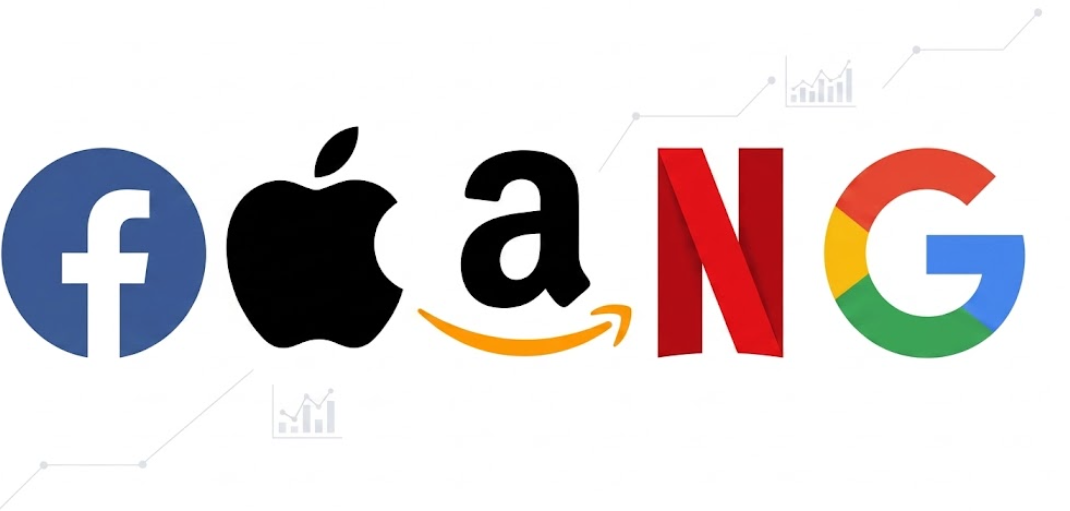
For over a decade, a single word defined the hierarchy of global wealth, prestige, and tech dominance: FAANG. Coined in 2013, the acronym for Facebook, Apple, Amazon, Netflix, and Google represented the absolute peak of the consumer internet era. These were the titans that monetized our attention, scaled cloud computing, and created the modern app economy.
Source from Author
But the internet era is over. We are now firmly in the AI era.
A new, tropical acronym has exploded across Silicon Valley and financial trading desks: MANGOS. Originally sparked by a viral graphic from developer Krishna (@krishdotdev) on X, MANGOS maps out where global capital and computing power have decisively shifted.
Standing for Meta, Anthropic, NVIDIA, Google, OpenAI, and SpaceX, this grouping represents a complete philosophical departure from the tech baskets of yesterday.

Source from Author
1. Shift in Value: Attention vs. Intelligence
The fundamental difference between the FAANG era and the MANGOS era lies in what these companies sell.
FAANG companies primarily monetized human attention and distribution networks. Netflix wanted your screen time; Facebook sold your data to advertisers; Amazon optimized retail logistics.
MANGOS companies focus heavily on intelligence, raw compute power, and frontier physical infrastructure.
This shift explains why tech heavyweights like Microsoft, Apple, and Amazon are absent from this specific acronym. While they remain massively profitable, the market’s hyper-focus has moved straight to the bottlenecks of the AI value chain.
2. Breaking the Rules: S-1 Filings and Private Giants
When FAANG was popularized, every single member was already a heavily traded, liquid public stock. You could buy an index fund and own the entire basket instantly.
MANGOS breaks this rule completely. Half of its members have historically been closely held, private-market unicorns. However, a massive wave of public offerings has brought this acronym to the public markets:
- OpenAI: The undisputed pioneer of consumer generative AI. Following a confidential U.S. IPO filing, market estimates place its upcoming public valuation at a staggering $1 trillion.
- Anthropic: OpenAI’s primary safety-focused rival and the creator of the Claude model family. It matched OpenAI by filing its own confidential S-1, moving toward the public markets at a valuation target crossing $1 trillion.
- SpaceX: Led by Elon Musk, SpaceX anchors the “S” in MANGOS. Valued at roughly $1.75 trillion to $1.8 trillion, it turns the acronym into a physical infrastructure story. Through its massive Starlink constellation, SpaceX is viewed by the market as a vital player in the global data, orbital compute, and off-grid connectivity pipelines that future AI agents will rely on.
3. The Enablers: Chips, Capex, and Cloud
The remaining three public pillars of MANGOS provide the massive balance sheets and hardware required to keep the private models breathing.
[ NVIDIA ] ──(Custom GPUs & FP4 Silicon)──> [ OpenAI & Anthropic ]
           │                                                │
           ▼                                                ▼
[ Google & Meta AI ] ──(Hundreds of Billions in Capex)──> [ Advanced Agent Systems ]
NVIDIA (The Silicon Monopoly)
NVIDIA sits at the absolute center of the MANGOS ecosystem. As the world’s most valuable company, its graphics processing units (GPUs) and new Blackwell computing architectures are the physical scarcity leverage point. Every other member of MANGOS is effectively competing to secure enough NVIDIA allocation to train their next-generation models.
Meta & Google (The Capex Powerhouses)
While Google has deep historical roots in the old FAANG basket, its massive Google Cloud platform, Gemini research, and deep compute reserves earned it an automatic transition into MANGOS. Meta earned its spot following Mark Zuckerberg’s aggressive open-source AI pivot (the Llama series). Together, Meta and Alphabet are driving unprecedented capital expenditure updates — spending up to $145 billion annually on data centers and physical AI infrastructure.
4. The Counter-Argument: Is MANGOS Priced for Perfection?
While the hype surrounding MANGOS is undeniable, seasoned Wall Street analysts urge caution. The acronym represents an incredibly dense concentration of market expectations.
FAANG survived and dominated for over a decade because those companies generated massive, highly predictable free cash flow from consumer subscriptions and ads. MANGOS, by contrast, is a high-stakes bet on future operating leverage.
For MANGOS to truly replace the legacy big tech guard, the revenues generated by enterprise AI tools and autonomous software agents must grow faster than the astronomical capital expenditures required to build the underlying data centers and rocket networks.
메타데이터
- post_id
- a321d7fd9bed
- slug
- the-death-of-faang-and-the-birth-of-mangos-wall-streets-new-ai-world-order-a321d7fd9bed
- url
- https://medium.com/techtrends-digest/the-death-of-faang-and-the-birth-of-mangos-wall-streets-new-ai-world-order-a321d7fd9bed
- canonical_url
- https://medium.com/techtrends-digest/the-death-of-faang-and-the-birth-of-mangos-wall-streets-new-ai-world-order-a321d7fd9bed
- author_url
- https://medium.com/@chienloong97
- status
- ok
- fetched_at
- 2026-06-24 04:09:36