Bajra vs Wheat: Why Indian Families Are Returning to Traditional Grains
Why Indian Families Are Rediscovering The Grain Dilemma on Every Indian Kitchen Counter
There’s a quiet revolution happening in Indian households — not in the form of green smoothies or imported superfoods, but in the humble grain bin sitting on the kitchen shelf.
Pearl millet. Bajra. The grain your grandmother made thick, ghee-slicked rotis from without a second thought is now showing up in wellness podcasts, nutritionist meal plans, and artisanal bakery menus in cities like Pune, Bengaluru, and Delhi. Something old has become something urgent.
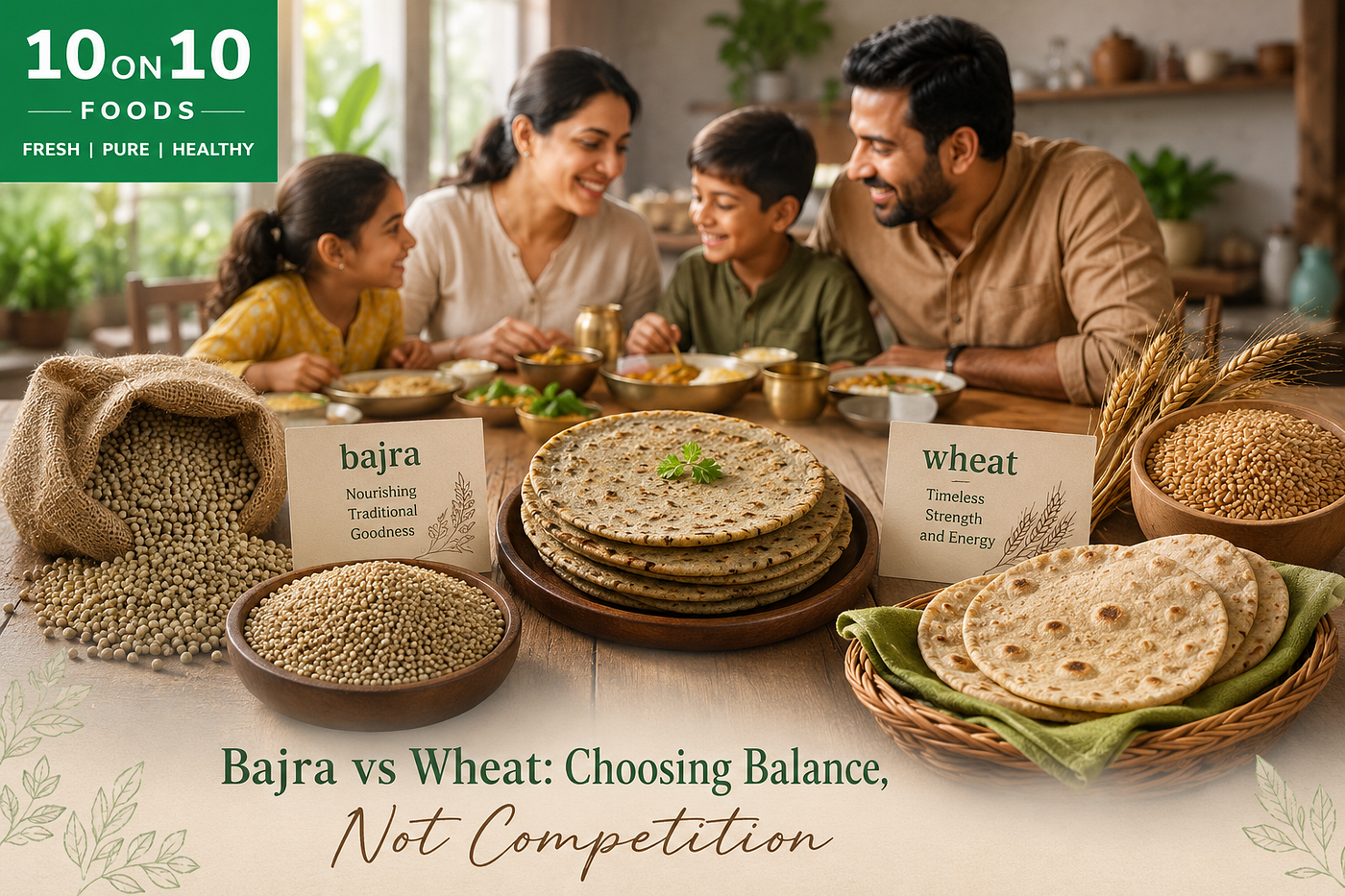
But here’s what the trend pieces won’t tell you: most of those same households haven’t stopped buying wheat. Not even close.
This is not a story of one grain defeating another. It’s a story of identity, adaptation, and what it actually means to eat well in modern India.
When Bajra Was Never a “Superfood” — It Was Just Food
In Rajasthan, Gujarat, and across the arid stretches of peninsular India, bajra was never marketed. It didn’t need to be. It was what people grew, what sustained farming communities through dry winters, and what mothers fed children before the concept of “nutrition labels” existed.
The grain is dense, slightly earthy, and filling in a way that’s hard to describe unless you’ve eaten a fresh bajra roti straight off a cast iron tawa. It sits differently in the stomach — heavier, more grounding, almost meditative in how slowly it releases its energy through the day.
For generations, this wasn’t food philosophy. It was just practical survival. Bajra grew where wheat struggled. It cost less to cultivate, stored well, and fed large families without fuss.
Then came the Green Revolution, urbanisation, and the reign of refined flour.
How Wheat Became the Default
Through the 1970s and into the decades that followed, wheat flour — especially the finely milled, soft, almost powdery variety — became synonymous with the Indian roti. It was easier to work with. It yielded softer, thinner breads that cities seemed to prefer. And crucially, it was subsidised, widely distributed, and culturally endorsed at scale.
For urban Indian families especially, wheat atta became the backbone of daily cooking. The morning paratha, the lunchbox roti, the evening chapati — all made from the same familiar bag of flour.
This wasn’t negligence or ignorance. Wheat is genuinely nutritious. Whole wheat, in particular, contains a meaningful profile of B vitamins, dietary fibre, iron, and complex carbohydrates. When eaten as a whole grain — not stripped and bleached into maida — it does real work in the body.
The problem was never wheat itself. The problem was monoculture — a single grain carrying the weight of an entire culture’s nutrition.
The Return: Why Bajra Is Back in Urban Kitchens
The shift began slowly, then all at once.
Gym-goers started asking questions about glycaemic load. Diabetic patients were quietly told by their doctors to reduce wheat and look at millets. Young working professionals who’d grown up on white bread rotis began reading about gut health and ancient grains. Food influencers started making bajra khichdi and posting it next to golden lattes.
And then something interesting happened. The people who turned to bajra for health reasons discovered what their grandparents already knew: it actually tasted good.
Not “good for a health food” — genuinely good. Nutty, hearty, deeply satisfying. Bajra rotis with a smear of ghee and a bowl of kadhi. Bajra porridge sweetened with jaggery on a cold morning. Bajra khichdi cooked slowly with turmeric and vegetables.
Suddenly the conversation wasn’t just about nutrition metrics. It became about memory, about reclaiming something that had been quietly erased by convenience.
What’s Actually Different Between the Two Grains
The question of bajra vs wheat isn’t really a nutritional cage match — it’s more nuanced than that, and treating it like a competition misses the point entirely.
Bajra is naturally gluten-free, which makes it genuinely accessible to people with wheat sensitivities or those managing inflammatory conditions. It has a higher concentration of iron, magnesium, and certain antioxidants. Because of its coarser structure, it tends to slow digestion meaningfully, which helps maintain steady blood sugar levels — a relevant factor for a country where metabolic health challenges are increasingly common.
Wheat — particularly 100% whole wheat — has its own strengths. It contains gluten, which gives dough elasticity and makes it easier to roll into the thin, pliable rotis most Indian families are accustomed to. Its fibre content, especially in the bran, supports digestive health. It’s also familiar, which is not a trivial thing. Familiarity drives compliance, and in nutrition, sustainable eating habits matter far more than theoretical perfection.
Neither grain is a villain. Neither is a miracle.
What differs between them — meaningfully — is how they interact with specific bodies, specific health conditions, and specific culinary traditions.
The Real Conversation Indian Families Are Having
In practice, the households embracing bajra aren’t abandoning wheat. They’re doing something more intelligent: rotating.
Wheat rotis on weekdays because the children prefer them and mornings are rushed. Bajra bhakri on weekends when there’s time to cook properly and the craving for something heartier kicks in. Whole grain options during festivals. Lighter choices in summer, warming grains in winter.
This is how traditional Indian food culture always worked before the era of nutritional anxiety froze people into binary choices. Seasonal grains. Regional diversity. Food that responded to climate, activity, and availability.
The urban wellness movement — with all its enthusiasm — sometimes misses this layered wisdom in its rush to crown a winner.
What Gets Lost in Grain Tribalism
One of the more exhausting developments in Indian wellness culture is the tendency to turn every food conversation into an elimination exercise. First it was fat. Then carbs. Then dairy. Now, for some, wheat has become the new dietary villain — blamed for everything from bloating to brain fog.
Some of this is valid. If you have a diagnosed intolerance or a specific health condition, dietary adjustments make complete sense. But for the majority of people eating reasonable portions of whole wheat as part of a varied diet, the problem isn’t the wheat. It’s the overall pattern — the processed snacks, the sedentary routines, the stress-eating, the lack of sleep.
Removing wheat and replacing it with bajra doesn’t fix a chaotic relationship with food. What does help is understanding what you’re eating, why you’re eating it, and whether the grain you’re choosing has been processed in ways that strip it of what made it worth eating in the first place.
A bajra roti made at home from stone-ground flour and cooked on a hot tawa is a different food — categorically — from a “bajra cracker” bought in a plastic-wrapped box from a supermarket shelf. The name is the same. The nutrition story is not.
Choosing Better: What Mindful Grain Shopping Actually Looks Like
The grain revival in India has also sparked a quieter conversation about sourcing and quality. Wellness-conscious families are reading labels, asking questions about milling processes, and realising that “whole wheat” on a packet means something very different from “refined wheat flour with added bran.”
This matters because the entire nutritional argument for eating grains — whether bajra, wheat, jowar, ragi, or any other variety — depends on the grain remaining intact. Processing is where nutrition goes to die.
A genuinely whole grain flour retains the bran, the germ, and the endosperm. It hasn’t been stripped of its outer layers for texture, bleached for colour, or aged artificially for shelf appeal. When you’re buying wheat atta, for instance, the difference between real whole wheat and its processed imitation is measurable — in fibre content, in mineral availability, in how your body actually uses it.
Brands that understand this are increasingly important in the conversation. 10on10foods, for example, has entered this space with a focus on the kind of quality that actually changes the equation — where sourcing and milling philosophy matter as much as marketing claims.
For consumers, the lesson is simple: read what you’re buying, and buy it from people who take that question seriously.
The Kitchen as a Cultural Archive
There is something irreplaceable about the cultural weight of grains in Indian cooking. When a mother in Kutch makes bajra rotla the way her own mother did, she is passing down more than a recipe. When a Punjabi family sits down to a full wheat paratha breakfast on a Sunday, they are inhabiting a tradition that carries warmth, memory, and love.
Food is never just fuel. The grains on an Indian kitchen shelf hold family history, regional identity, and seasonal wisdom accumulated over centuries.
The best outcome of the current grain revival isn’t that bajra wins or wheat loses — it’s that Indian households remember they were always meant to eat both. And more. Jowar in one season, ragi in another, wheat and bajra traded across meals depending on what the body needs and what the kitchen inspires.
Variety isn’t a trendy concept in Indian food culture. It’s the oldest principle in the book.
Where to Go From Here
If you’ve been thinking about adding more bajra to your diet, start simply. A bajra roti once or twice a week alongside your regular wheat meals. A bajra khichdi that doesn’t try to be something it isn’t. A mornings porridge that tastes better than you expected.
If you’re committed to wheat and see no reason to change, invest in the quality of what you’re already buying. Whole grain, properly milled, honestly sourced flour is a different experience from the commodity atta that has dominated Indian kitchens for decades.
The best diet isn’t the one with the most optimised grain-to-nutrient ratio. It’s the one you can sustain, that connects you to where you come from, and that fills the people around your table without emptying something essential from the food itself.
That’s not a wellness trend. That’s just eating well — the way it’s always been done when people were paying attention.
메타데이터
- post_id
- a33de5bacaaa
- slug
- bajra-vs-wheat-why-indian-families-are-returning-to-traditional-grains-a33de5bacaaa
- url
- https://medium.com/@10on10foods7/bajra-vs-wheat-why-indian-families-are-returning-to-traditional-grains-a33de5bacaaa
- canonical_url
- https://medium.com/@10on10foods7/bajra-vs-wheat-why-indian-families-are-returning-to-traditional-grains-a33de5bacaaa
- author_url
- https://medium.com/@10on10foods7
- status
- ok
- fetched_at
- 2026-06-22 17:31:34