⚡ Spring Boot + Temporal.io: The Orchestrator Revolution Every Java Dev Needs in 2025
Stateless microservices are dead. Durable workflows are the future.
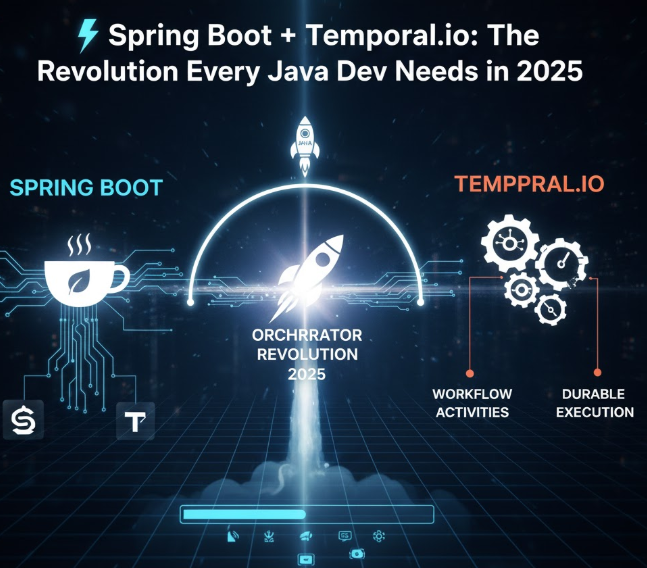
⚡ Spring Boot + Temporal.io: The Orchestrator Revolution Every Java Dev Needs in 2025
⚡ Spring Boot + Temporal.io: The Orchestrator Revolution Every Java Dev Needs in 2025
Stateless microservices are dead. Durable workflows are the future.
Let’s be brutally honest.
Microservices today are held together with:
- random Kafka topics
- retry loops that silently fail
- compensating logic no one understands
- distributed transactions duct-taped together
- CRON jobs that wake up at 3 AM and delete your data
And every company eventually hits the same wall:
“How do we reliably coordinate long-running actions across services… without building a distributed monster?”
In 2025, the answer is no longer Sagas, not BPMN engines, not event choreography.
The answer is Temporal.io — and Spring Boot developers are adopting it like wildfire.
This is THE viral-topic blog devs will bookmark.
Let’s go.
🚨 Why Microservice Workflows Always Break
Imagine placing an order:
1. Charge Payment
2. Reserve Inventory
3. Notify Shipping
4. Send Email
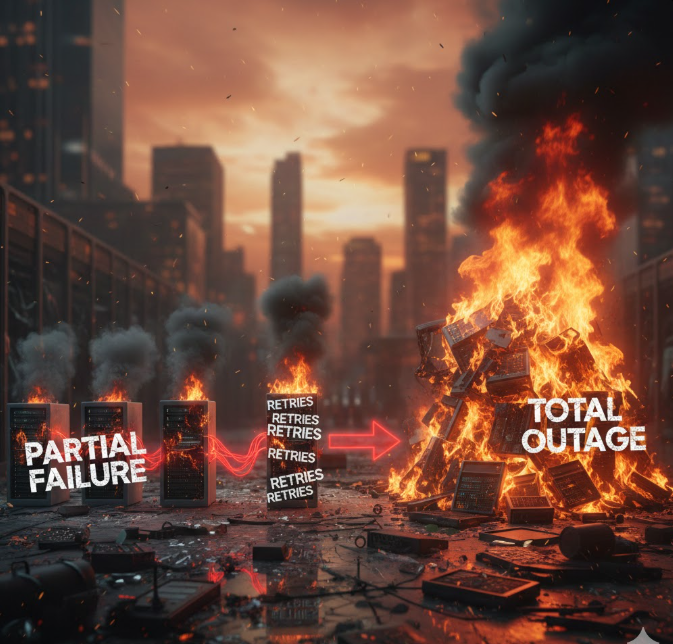
One failure mid-process? Everything breaks:
- payments get captured twice
- inventory is stuck in “reserved”
- emails go out before payments
- shipping fires early
Retries don’t help because:
❌ Retries duplicate actions ❌ Kafka replays cause inconsistent states ❌ Services crash mid-transaction ❌ Idempotency is never perfect
This is why Temporal exists.
⚡ What Temporal Actually Solves
✓ Durable Workflow State
Your workflow never dies — even if your service crashes.
✓ No More Retry Loops
Retries become automatic and error-proof.
✓ No More Sagas/Choreography Hell
One workflow controls everything, safely.
✓ Built-in Timeouts, Backoff, Compensation
✓ Code = Workflow
No YAML. No BPMN. No XML. No DSL.
Temporal turns normal Java code into durable workflows.
💡 The Magic: Workflows Are Code That Can’t Die
In Temporal:
- A workflow pauses when waiting
- State is checkpointed
- If your Spring Boot app crashes → workflow continues
- If Kubernetes kills the pod → workflow continues
- If you deploy new version → workflow continues
It is failure-proof orchestration.
Think of it like @Transactional, but across microservices, events, and long-running operations.
🚀 Spring Boot + Temporal: The 2025 Architecture
Spring Boot Worker  → executes workflows + activities
Spring Boot Microservices → business logic
Temporal Server → durable state + orchestration
PostgreSQL/MySQL → storing workflow history
🧠 “Show Me the Code” — A Real Temporal Workflow in Spring Boot
1️⃣ Add Dependencies
<dependency>
    <groupId>io.temporal</groupId>
    <artifactId>temporal-sdk</artifactId>
    <version>1.23.0</version>
</dependency>
<dependency>
    <groupId>io.temporal</groupId>
    <artifactId>temporal-spring-boot-starter</artifactId>
    <version>1.23.0</version>
</dependency>
2️⃣ Define Workflow Interface
@WorkflowInterface
public interface OrderWorkflow {
@WorkflowMethod
    void processOrder(String orderId);
}
3️⃣ Define Activities (Actual Business Calls)
public interface OrderActivities {
@ActivityMethod
    void chargePayment(String orderId);
    @ActivityMethod
    void reserveInventory(String orderId);
    @ActivityMethod
    void notifyShipping(String orderId);
}
4️⃣ Implement Workflow (Orchestration Logic)
public class OrderWorkflowImpl implements OrderWorkflow {
private final OrderActivities activities =
            Workflow.newActivityStub(OrderActivities.class,
                    ActivityOptions.newBuilder()
                            .setStartToCloseTimeout(Duration.ofSeconds(30))
                            .build());
    @Override
    public void processOrder(String orderId) {
        try {
            activities.chargePayment(orderId);
            activities.reserveInventory(orderId);
            activities.notifyShipping(orderId);
        } catch (Exception ex) {
            Workflow.log("Compensating workflow for order " + orderId);
            activities.refundPayment(orderId);
            throw ex;
        }
    }
}
This is orchestration made HUMAN.
✔ No events ✔ No Kafka plumbing ✔ No saga choreography chaos ✔ No distributed transaction complexity
Just code.
5️⃣ Start Workflow From Any Spring Boot Service
@Autowired
private WorkflowClient workflowClient;
public void createOrder(String orderId) {
    OrderWorkflow workflow = workflowClient.newWorkflowStub(
            OrderWorkflow.class,
            WorkflowOptions.newBuilder()
                .setTaskQueue("ORDER_TASKS")
                .build()
    );
    WorkflowClient.start(workflow::processOrder, orderId);
}
That’s it. You just launched a fault-tolerant distributed workflow in Spring Boot.
🔥 Why Temporal Beats Sagas, Choreography, and WebFlux Pipelines
1. Temporal Has Built-In Compensation
You don’t manually publish “undo” events. You just call compensating activity. Temporal guarantees ordering, retries, deadlines.
2. Zero Business Logic in Kafka Topics
Kafka becomes optional again — not a workflow engine.
3. No More Replay Hell
Temporal event sourcing is internal and invisible.
4. Perfect Retry Semantics
Built-in:
- exponential backoff
- max attempts
- heartbeat timeout
- idempotency
5. Human-Debuggable
You can inspect workflow state live. Better than logs, trace IDs, or Grafana.
🏆 When to Use Temporal (This Decides Everything)
Use Temporal when workflows are:
🟢 multi-step 🟢 cross-service 🟢 require compensation 🟢 long-running 🟢 need retries 🟢 need visibility and debugging
Examples:
- payment → inventory → shipping
- onboarding workflow
- recurring billing
- document verification
- fraud checks
- ML training pipelines
Temporal shines where Sagas suffer.
💣 Why 2025 Is the Breakout Year for Temporal
- Spring AI → needs Orchestrators
- LLM workflows → long-running tasks
- Virtual Threads → perfect for Temporal Workers
- K8s → ephemeral pods demand workflow durability
- Event-driven apps → too complex to manage manually
Temporal is becoming the new standard for building production workflows in Spring Boot.
메타데이터
- post_id
- a35f486b190d
- slug
- spring-boot-temporal-io-the-orchestrator-revolution-every-java-dev-needs-in-2025-a35f486b190d
- url
- https://medium.com/@gangoladeepa/spring-boot-temporal-io-the-orchestrator-revolution-every-java-dev-needs-in-2025-a35f486b190d
- canonical_url
- https://medium.com/@gangoladeepa/spring-boot-temporal-io-the-orchestrator-revolution-every-java-dev-needs-in-2025-a35f486b190d
- author_url
- https://medium.com/@gangoladeepa
- status
- ok
- fetched_at
- 2026-06-24 11:06:28