The System Was Designed
Part III: How the architecture of money was built, by whom, and why your savings are losing value by design
The System Was Designed
Part III: How the architecture of money was built, by whom, and why your savings are losing value by design
In the first article of this series, we established that capitalism is not evil — it is blind. Blind to what its models never included: the soil beneath our feet, the communities that sustain us, the future that will inherit our decisions. In the second, we traced the intellectual genealogy of that blindness — from Fisher’s elegant equations through Taylor’s optimised labour to Bernays’ engineered consumer. In each case, the conclusion was the same: what happened was not the result of malice. It was the result of a logic, pursued consistently, over generations.
This article goes further. Because ideas alone — however powerful, however consistently pursued — do not build institutions. They do not found central banks, draft international treaties, or position naval fleets in strategic waterways. Between the idea and the institution stands something more concrete: power. And power, unlike blindness, has an address.
The monetary system that quietly erodes the purchasing power of your savings, that structurally favours capital over labour, that compels perpetual growth upon a finite planet — this system has three dimensions, and intellectual history accounts for only one of them.
The first is the one we have already examined: a set of ideas, developed by economists and scientists in good faith, that modelled the world with great precision whilst leaving out everything that could not be measured. Fisher’s discounted future. Taylor’s optimised worker. Bernays’ engineered desire. A logic that spread because it worked — within the boundaries of what it chose to see.
The second dimension is institutional: the deliberate construction of a global monetary architecture — in private meetings, through international agreements, behind the diplomatic immunity of institutions that answer to no electorate — that encoded those ideas into the operating system of the world economy. Jekyll Island. The Bank for International Settlements. The Bretton Woods order and its quiet dismantling. These were not the natural outgrowths of good ideas. They were decisions, made by specific people, with specific interests, at specific moments in history.
The third dimension is the one least discussed in polite financial commentary — and the one most visible in the headlines of any given morning: geopolitics. The monetary architecture that was built in the twentieth century did not merely reflect a set of economic ideas. It required, and continues to require, active maintenance. The positioning of military assets. The application of sanctions. The management of oil-producing regions whose pricing decisions determine which currency the world must hold. The system is not merely an abstraction. It is enforced.
What we are witnessing today — across the Middle East, across the emerging world, in the quiet decisions of central banks accumulating gold and signing bilateral trade agreements in non-dollar currencies — is the first serious challenge to that architecture in half a century. The foundation is not collapsing. But it is moving. And when foundations move, everything built upon them shifts.
Understanding this does not require conspiracy. It requires only the willingness to follow three threads simultaneously — ideas, institutions, and interests — and to notice where they converge.
That convergence is what this article traces.
How Money Actually Works
Before the history, the mechanics — because without them, the history makes no sense.
In our current monetary system, money comes into existence through credit. When a commercial bank extends a loan, it does not lend out money that already exists — money held in reserve, deposited by savers, waiting in a vault. It creates new money at the very moment of lending, as an entry in a balance sheet. The loan appears simultaneously as an asset for the bank and as a deposit in the borrower’s account. Money and debt are born together, in the same instant, from the same act.
This is not a fringe claim. It is the official description of the monetary system as published by the Deutsche Bundesbank and the Bank of England. The Bank of England has stated it plainly: banks create money in the act of lending, and this money ceases to exist when the loan is repaid.
The consequence is structural and inescapable: every pound, every euro, every dollar in circulation today corresponds to a debt that exists somewhere in the world. There is no money without debt. The two are not merely related — they are the same thing, seen from opposite sides of a ledger.
Irving Fisher’s celebrated equation — M · V = P · T, money supply multiplied by velocity of circulation equals price level multiplied by economic transactions — describes this system with mathematical elegance. What it does not confront is the consequence buried within it. If money is created as debt, and if debt carries interest, then the interest must come from somewhere. When a bank creates one hundred euros, the borrower must return one hundred and seven. Those seven euros were not created alongside the principal. They must be earned — from an economy that must therefore grow to generate them.
Growth, then, is not a political ambition or a cultural preference. It is the arithmetical precondition for the system’s stability. A system that does not grow cannot service its debts. A system that cannot service its debts collapses inward — in precisely the deflation spiral that Fisher himself described, with great belated clarity, in his Debt-Deflation Theory of 1933, written in the wreckage of a depression he had famously failed to anticipate.
Jekyll Island: The Room Where It Began
In November 1910, seven men boarded a private railcar in New Jersey and travelled south under conditions of deliberate secrecy. They used only first names. They told their own staff nothing of their destination. They arrived at Jekyll Island, a private hunting retreat off the coast of Georgia, where they spent ten days in a meeting whose existence would not be publicly acknowledged for more than two decades.
The men were:
Nelson Aldrich — Republican senator, chairman of the Senate Finance Committee, and father-in-law of John D. Rockefeller Jr. Frank Vanderlip — president of the National City Bank of New York, one of the most powerful financial institutions in America. Henry Davison — senior partner at J.P. Morgan & Company. Benjamin Strong — a Morgan associate who would become the first president of the Federal Reserve Bank of New York and, for nearly two decades, the most powerful central banker in the world. Paul Warburg — a partner at Kuhn, Loeb & Company, recently arrived from the Hamburg banking dynasty of M.M. Warburg & Co., with deep knowledge of European central banking models. Arthur Shelton — Aldrich’s secretary. A. Piatt Andrew — assistant secretary of the United States Treasury.
Together, these seven men represented an estimated quarter of the world’s total wealth. What they drafted over those ten days became, three years later, the Federal Reserve Act of 1913 — the founding document of the American central banking system.
This is not speculation. Frank Vanderlip himself described the meeting in a 1935 article in the Saturday Evening Post, more than two decades after the fact, when the participants no longer feared the consequences of disclosure. “I was as secretive — indeed, as furtive — as any conspirator,” he wrote. “Discovery, we knew, simply must not happen, or else all our time and effort would be wasted. If it were to be exposed publicly that our particular group had got together and written a banking bill, that bill would have no chance whatever of passage by Congress.”
The reason for secrecy was straightforward: the American public was deeply suspicious of concentrated financial power, particularly after the banking panics of 1907. A central bank designed openly by the nation’s most powerful private bankers would never have passed. One presented as a public institution, bearing the name of the Federal Reserve, stood a far better chance. And so it proved.
What emerged from Jekyll Island was a system in which private banks retain the power of money creation, whilst the Federal Reserve — nominally public, structurally hybrid — provides the institutional architecture that legitimises and stabilises that power. The regional Federal Reserve Banks are, to this day, owned by their private member banks. This is not concealed. It is simply rarely discussed.
Paul Warburg and the Transatlantic Architecture
Paul Warburg deserves particular attention, because he was not merely a participant in Jekyll Island. He was its intellectual architect — and his presence reveals the degree to which the American monetary system was consciously modelled on European precedents.
Warburg arrived in the United States in 1902, married into the Loeb banking family, and joined Kuhn, Loeb & Company. He brought with him an intimate knowledge of the German Reichsbank and the Bank of England — institutions that had already developed sophisticated mechanisms for managing credit, liquidity and monetary stability. As early as 1907, three years before Jekyll Island, Warburg published a paper entitled A Plan for a Modified Central Bank, outlining the essential architecture that would become the Federal Reserve.
His brother, Max Warburg, remained in Hamburg as head of M.M. Warburg & Co. — and simultaneously served on the board of the German Reichsbank. The Warburg family was, at the moment of the Federal Reserve’s design, embedded in the central banking architecture of both the world’s rising power and its established ones. This is not evidence of conspiracy. It is evidence of something perhaps more significant: that the design of monetary systems has always been the province of a remarkably small number of interconnected families, institutions and interests — operating across national borders, across political divides, with a continuity that governments rarely match.
Basel: The Institution Above Institutions
If Jekyll Island represents the founding moment of the American monetary architecture, the Bank for International Settlements in Basel represents its global culmination — and its most durable expression.
The BIS was established in 1930, ostensibly to manage the transfer of German war reparations following the First World War. Its founding shareholders included the central banks of Belgium, France, Germany, Italy, Japan and the United Kingdom, alongside three American private banks: J.P. Morgan & Company, the First National Bank of New York, and the First National Bank of Chicago. From its inception, it was a hybrid institution — part public, part private, accountable to neither in any conventional sense.
Today, the BIS serves as the central bank of central banks. It is where the governors of the world’s most powerful monetary institutions convene regularly, in meetings whose proceedings are not published. It sets the capital adequacy standards — the Basel Accords, now in their third iteration — that determine how much risk the entire global banking system may carry. Its decisions shape the credit conditions of every economy on earth.
What makes the BIS structurally remarkable is its legal status. It is accountable to no government. It enjoys full diplomatic immunity under Swiss law. Its Basel headquarters are extraterritorial — legally equivalent to an embassy. It cannot be sued in Swiss courts. Its assets cannot be seized. It pays no taxes.
This is not a secret. It is simply a fact so unusual that most people, hearing it for the first time, assume it cannot be correct.
The BIS at War
The darkest chapter in the BIS’s history is also the most instructive — because it reveals, with unusual clarity, the degree to which the institution was designed to transcend political conflict, even at considerable moral cost.
During the Second World War, the BIS continued to operate without interruption. Its president throughout this period was Thomas McKittrick — an American. Under his leadership, the BIS maintained working relationships with the central banks of both Allied and Axis nations, facilitating transactions that, in retrospect, demand serious scrutiny.
The most documented case concerns gold. Following Germany’s occupation of Czechoslovakia in March 1939, the Reichsbank requested the transfer of gold held by the Czech National Bank — gold that had been deposited with the BIS for safekeeping. The BIS Board authorised the transfer. The Bank of England, acting on BIS instructions, moved the gold to a Reichsbank account. British government officials, including figures within the Treasury, raised objections. The transfer proceeded regardless.
This was not an isolated incident. Throughout the war years, the BIS processed gold transfers on behalf of Nazi Germany — gold whose origins, in at least some cases, included assets confiscated from occupied nations and their populations.
At the Bretton Woods Conference of 1944, where the postwar monetary order was being designed, the Norwegian delegation — Norway being an occupied country — introduced a resolution calling for the dissolution of the BIS, citing its wartime conduct. The resolution passed. The BIS was never dissolved. The Federal Reserve Bank of New York intervened decisively, arguing that the institution would be essential to postwar reconstruction. McKittrick himself attended the conference and lobbied against dissolution.
The BIS survived, was reformed, and went on to become the most powerful monetary coordinating body in the world.
What this episode demonstrates is not that the BIS was a Nazi institution — it was not. What it demonstrates is that the institution was designed, from the beginning, with its own continuity as the paramount value — a continuity that took precedence over the political conflicts of the nations whose monetary systems it was meant to serve. The system protects itself. This is, perhaps, the most important single fact about the architecture of global finance.
The Petrodollar: Backing a Currency With Geopolitics
In August 1971, President Nixon suspended the convertibility of the US dollar into gold, effectively ending the Bretton Woods system under which the postwar monetary order had operated. The dollar had been the anchor of that system — convertible at a fixed rate, providing a stable foundation for global trade. Once that anchor was lifted, the question became urgent: on what basis would the dollar — and with it, the global monetary system — rest?
The answer was worked out between 1973 and 1974, in negotiations between the United States government and the Kingdom of Saudi Arabia whose details have emerged gradually through declassified documents, investigative journalism and the subsequent testimony of participants. The arrangement was straightforward in its essentials: Saudi Arabia would price its oil exports exclusively in US dollars, and would invest its surplus dollar revenues in US Treasury securities. In exchange, the United States would guarantee the security of the Saudi regime.
The implications were profound. Since oil is the foundational commodity of industrial economies, and since all significant oil exporters were brought, over time, into the same dollar-pricing arrangement through OPEC, every nation that needed to purchase oil needed first to acquire dollars. This created a structural global demand for the American currency that was entirely independent of American economic performance. The dollar became, in effect, backed not by gold but by oil — and by the geopolitical power required to ensure that oil continued to be priced in dollars.
For the rest of the world, the consequences were significant. American trade deficits — the export of dollars in exchange for goods — became a structural feature rather than an emergency, because those dollars were recycled back into dollar-denominated assets. The United States could, uniquely, run persistent deficits without facing the currency depreciation that would afflict any other nation in the same position. This privilege — what the French finance minister Valéry Giscard d’Estaing famously called the exorbitant privilege — has shaped the global monetary order ever since.
For ordinary savers and working people in every country, the consequence is more direct. The dollar’s structural dominance means that monetary conditions set in Washington — interest rates, money supply, quantitative easing programmes — reverberate through every currency on earth. When the Federal Reserve creates money, the effects are global. When it tightens, emerging markets feel the shock first and hardest. The architecture of the Petrodollar system embedded American monetary decisions into the daily economic reality of billions of people who had no voice in making them.
The Foundation Is Moving
For fifty years, the architecture described in this article rested on a single operational premise: oil is priced in dollars. Every nation that needed energy needed dollars first. This created a structural global demand for American currency that was entirely independent of American economic performance — and it underwrote Washington’s ability to run persistent deficits, export inflation, and fund its military presence across the world without facing the currency consequences that any other nation would suffer.
That premise is now unravelling. And the speed at which it is doing so deserves far more attention than it receives in mainstream financial commentary.
The Petrodollar Agreement Is Over
In June 2024, Saudi Arabia allowed its foundational 1974 agreement with the United States — the agreement that established dollar-exclusive oil pricing — to expire without renewal. The announcement was made quietly. The Western financial press largely did not pause. But the implications are structural and long-term.
Saudi Arabia is now selling oil in Chinese yuan, in euros, and in a growing range of non-dollar currencies. It has deepened its relationship with the Shanghai Cooperation Organisation. It has joined the BRICS partnership as a prospective member. Crown Prince Mohammed bin Salman has received the Russian and Chinese heads of state in Riyadh with a protocol that would have been unthinkable a decade ago.
None of this happened overnight. It is the visible surface of a reorientation that has been underway for years — driven not by ideology, but by a straightforward calculation: a nation that prices its primary export exclusively in another country’s currency is permanently exposed to that country’s monetary decisions. Saudi Arabia has decided, with considerable deliberation, that this exposure is no longer acceptable.
The Middle East as Monetary Chessboard
To understand what is currently in motion across the Middle East, it is necessary to hold two levels of analysis simultaneously.
The first level is the one most commonly discussed: security, religion, territory, ethnicity, historical grievance. These are real, and they matter. But they do not fully explain the pattern of engagement — who intervenes, where, when, and with what intensity.
The second level is monetary. And at this level, the logic becomes considerably clearer.
Iran has been the subject of sustained American sanctions for decades. It is also one of the few significant oil-producing nations that has consistently refused to price its exports in dollars, trading instead through bilateral arrangements with China, Russia, India and others. This is not coincidental. A nation that removes its oil from the dollar system is not merely a geopolitical irritant — it is a structural threat to the architecture that underwrites American monetary privilege.
Iraq, in 2000, announced it would price its oil in euros. The invasion followed in 2003. Whatever the stated justifications — and they were multiple, shifting, and ultimately discredited — the monetary dimension was documented by economists at the time, including William Clark in his analysis of petrodollar warfare, and has been acknowledged in subsequent scholarship. Saddam Hussein did not survive his experiment with euro-denominated oil.
Libya, under Gaddafi, was in advanced discussions about a gold-backed pan-African currency — the dinar — that would have denominated African oil and mineral trade outside the dollar system. The intervention of 2011, led by France and the United States, terminated both Gaddafi and the currency project. Hillary Clinton’s emails, released subsequently under freedom of information provisions, contain explicit references to the gold dinar as a motivating concern.
These are not fringe observations. They are documented episodes, available in the public record, that form a coherent pattern when viewed through a monetary lens.
BRICS and the Architecture of Alternatives
The pattern has not gone unnoticed by the nations on the receiving end of dollar hegemony.
The BRICS grouping — originally Brazil, Russia, India, China and South Africa — has expanded significantly. At its 2023 Johannesburg summit, it admitted six new members: Iran, Saudi Arabia, the UAE, Egypt, Ethiopia and Argentina. The expanded bloc now encompasses nations responsible for approximately forty per cent of global oil production.
The declared agenda includes the development of payment systems that bypass the SWIFT network — through which dollar-denominated transactions flow and over which the United States has demonstrated a willingness to exercise political control, most dramatically through the exclusion of Russia following 2022. It includes bilateral trade agreements in local currencies, already operational between China and Russia, China and Brazil, India and Russia. And it includes, at least in aspiration, the eventual development of a shared reserve asset — something that could function as an alternative to the dollar in international trade settlement.
None of this has yet crystallised into a formal alternative. The structural depth of dollar dominance — decades of accumulated dollar-denominated debt, dollar-priced commodities, dollar-settled trade — cannot be unwound quickly. But the direction is unmistakable. What was unthinkable in 2010 is being actively constructed in 2024.
What American Engagement Actually Protects
Viewed through this lens, the pattern of American military and political engagement across the Middle East and beyond takes on a different character.
The United States maintains military bases in Bahrain, Qatar, Kuwait, the UAE, and until recently in various configurations across Iraq and Afghanistan. Its naval presence in the Persian Gulf is continuous and substantial. Its diplomatic engagement with Gulf monarchies — regardless of their human rights record, regardless of which party holds the White House — has been remarkably consistent over five decades.
The consistency is not accidental. The Gulf is not primarily a security interest. It is a monetary one. Control over the region in which the world’s marginal oil production is determined is control over the commodity that denominates the world’s reserve currency. Lose that, and the exorbitant privilege — the ability to run deficits that other nations cannot, to export inflation that others must absorb, to borrow in your own currency at rates no other debtor could command — begins to erode.
This is what the economist Michael Hudson has described across decades of work as the essence of American imperial economics: not the export of goods or services, but the export of dollars, and the maintenance of the global conditions under which those dollars must be held. Every sanction, every intervention, every diplomatic pressure campaign must be read against this background to be fully understood.
Europe’s Exposed Position
For European readers — and particularly for those in Germany and Central Europe — this transformation carries a specific and underappreciated risk.
The euro was conceived, in part, as a counterweight to dollar hegemony. It has not become one. European monetary policy remains deeply entangled with dollar dynamics: European banks hold substantial dollar-denominated assets, European energy imports have historically been dollar-priced, and European foreign exchange reserves include significant dollar holdings whose real value is subject to American monetary decisions in which Europe has no voice.
As the Petrodollar architecture weakens, Europe does not automatically benefit. What weakens is a system of stability — however unjust its distribution of benefits — that European economies have relied upon for half a century. What replaces it is not yet clear. A multipolar monetary world may offer Europe greater sovereignty. It may equally produce volatility, fragmentation and a period of structural adjustment for which European institutions are not prepared.
The German Mittelstand — already squeezed by the dynamics described earlier in this article — faces this transition with limited reserves, limited political representation at the monetary level, and limited access to the kind of capital structures that might provide insulation. It is, once again, the most productive and the most exposed.
What This Means for Where Value Lives
Here is the thread that connects the monetary history of the twentieth century to the economic question of the twenty-first.
When a reserve currency loses its structural anchor — as the dollar lost gold in 1971, as the Petrodollar arrangement now loosens — capital seeks new foundations. Gold rises. Commodities rise. Real assets, embedded in specific places and productive systems, become more valuable relative to financial abstractions.
But there is a deeper shift available — one that goes beyond merely finding the next store of value within a depreciating system. The question is not which asset class survives the transition. The question is what kind of economic architecture produces genuine, regenerative value when the old system’s guarantees can no longer be assumed.
Soil that grows more fertile. Communities that become economically more cohesive. Regional networks built on relationships rather than extracted from them. These are not sentimental alternatives to financial logic. They are, in a world where monetary architectures are visibly shifting, the most durable foundations available.
The Mechanics of Your Eroding Savings
With this architecture in view, the mechanics of currency depreciation become not merely comprehensible but inevitable.
Inflation — the gradual rise in prices that erodes purchasing power — is not a malfunction of the system. It is a feature. A monetary system built on debt requires that debts be serviceable. Inflation erodes the real value of debt over time, making accumulated obligations manageable without formal default. The European Central Bank’s declared target of two per cent annual inflation is not arbitrary. At two per cent, a currency loses half its purchasing power in approximately thirty-five years. Savings held in cash diminish steadily and silently, year after year, whilst the debt burden of governments, corporations and banks is quietly relieved.
After the financial crisis of 2008, and again in the response to the pandemic of 2020, central banks deployed a further mechanism: quantitative easing, the large-scale creation of new money used to purchase bonds and other financial assets from banks and institutional investors. The effect was predictable and documented. Newly created money entered the economy at the top — through financial institutions and asset markets. Equities rose. Property values rose. The wealth of those who held assets grew substantially, in real terms, whilst those without assets fell further behind in relative terms.
This is what Thomas Piketty demonstrated empirically across two centuries of data in his analysis of capital and inequality: when the rate of return on capital — r — persistently exceeds the rate of economic growth — g — wealth concentrates. Not because of individual moral failing. Because of arithmetic. The formula r > g is not a political opinion. It is a mathematical description of a system that Fisher designed with great precision, without pausing to consider its distributional consequences across generations.
What This Means — and What It Opens
The system we have described is not natural. It was not inevitable. It emerged from specific decisions, made by specific people, at specific historical moments — decisions that were not always transparent, not always democratically accountable, and not always made with the interests of the broader public as their primary concern.
This recognition carries two implications, and both matter.
The first is that currency depreciation is not a problem to be solved within the existing architecture. It is a feature of the architecture itself. Gold, Bitcoin, real estate, equities — these are responses to the system’s logic, not alternatives to it. They preserve value within a depreciating system. They do not change the system’s fundamental operating principle.
The second implication is more important, and more hopeful: a system that was designed can be redesigned. Not destroyed — the disruption of a global monetary system would cause suffering on a scale that no serious person would advocate. But complemented, corrected, and gradually superseded by structures that operate on a different logic.
What would that logic look like? Not money created as debt, but value created through regenerative activity. Not interest that demands perpetual growth, but exchange that strengthens local cycles. Not capital that extracts from communities and places, but investment that deepens its roots in them.
Without ROWE — Return on Wealth for Earth — there will be no ROI. Not as a moral demand, but as a structural reality that is becoming harder to ignore with each passing year. The returns that capital has long assumed were guaranteed were never free. They were borrowed — from the earth, from communities, from future generations. That credit line is closing.
The next article in this series turns from diagnosis to construction. If this is the system we have inherited — and now we see it clearly — the question becomes: what are people actually building in its place? And where, concretely, is it already working?
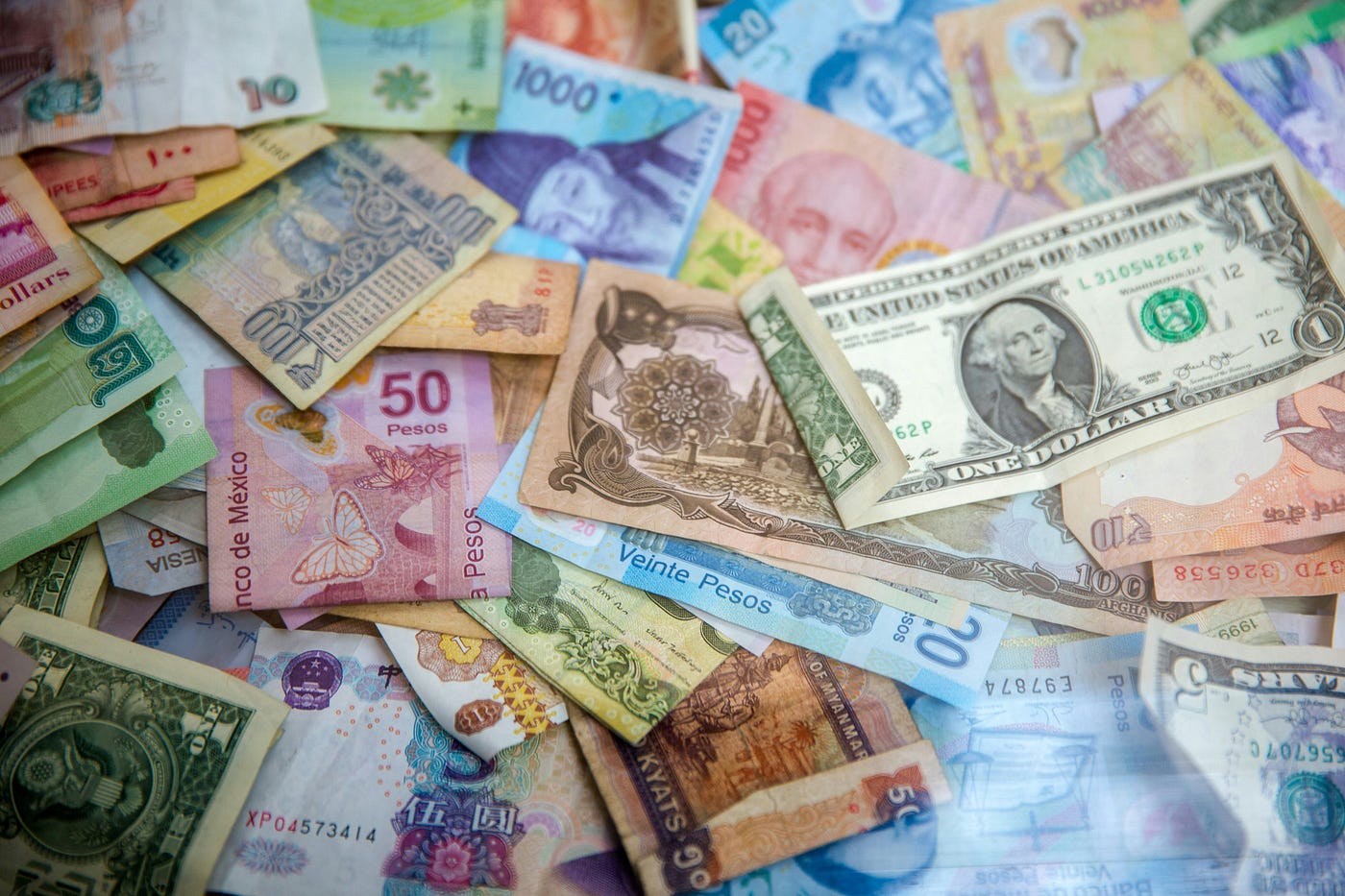
Foto von Jason Leung auf Unsplash
메타데이터
- post_id
- a3a3a90872c0
- slug
- the-system-was-designed-a3a3a90872c0
- url
- https://medium.com/enlivenment/the-system-was-designed-a3a3a90872c0
- canonical_url
- https://medium.com/enlivenment/the-system-was-designed-a3a3a90872c0
- author_url
- https://medium.com/@me_22260
- status
- ok
- fetched_at
- 2026-06-11 05:11:55