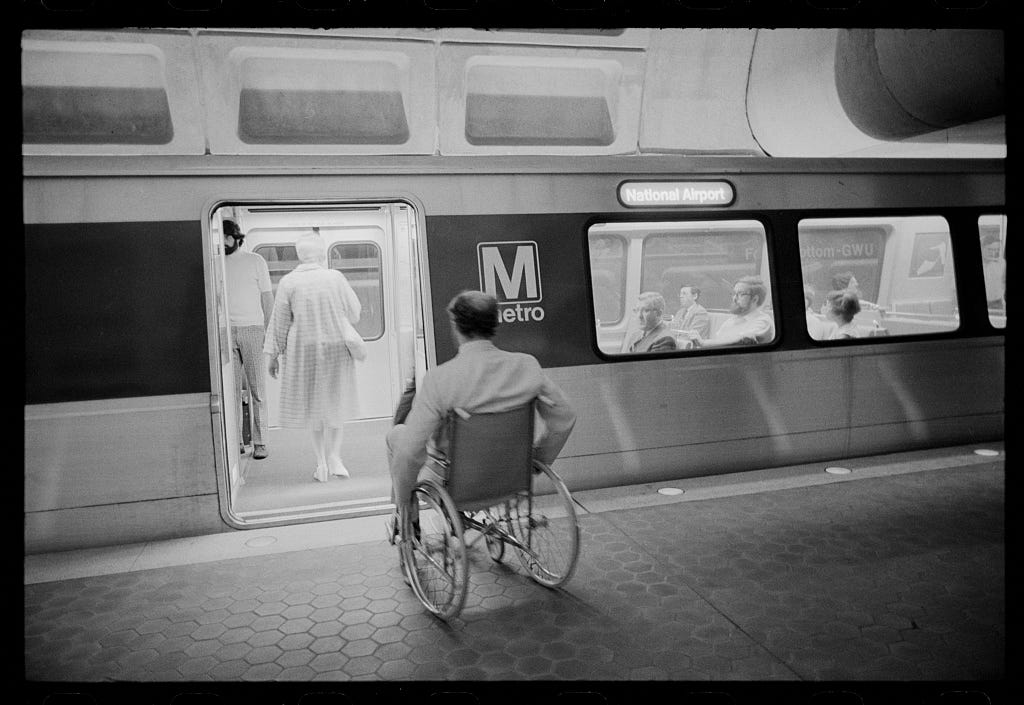
How Legislation Has Shaped America’s Press Freedoms
Has the American press always been so partisan? Not quite.
How Legislation Has Shaped America’s Press Freedoms
Has the American press always been so partisan? Not quite.

Newspapers were important methods of communication and information transmission in the earliest days of America. Image provided by Pexels on Pixabay.
As America celebrates its 250th year of independence, it is difficult to reflect on the story of American democracy without considering the role of the media and press in maintaining freedom. But the American media has not always looked the way it does now. In the modern era, a person’s political affiliations can often be inferred from the news stations they consistently watch or the newspapers they frequently read, both of which offer a multitude of options. This is, of course, in contrast to the early days of America, when media variety was limited, and partisanship in the media was far less pronounced.
Press freedom occupies a unique place in the American story. It is the only private industry explicitly named in the Bill of Rights, underscoring just how central a free press was to the founders’ vision of a functioning democracy. Yet what that freedom looks like in practice, who gets to exercise it, and how unbiased it should be have shifted dramatically since 1791. Understanding that history helps explain why today’s media landscape looks the way it does, and why the fight over its future is far from settled.
Making Your Voice Heard
It can sometimes feel as if the massive reach and power of larger, louder media organizations drown out individual voices. You can make your voice heard by using IssueVoter and contacting your representatives directly to voice your opinion on civil liberties policy. Go to IssueVoter.org and help shape U.S. policy on press freedom today.
Context: News Media in Early America
The importance of a citizenry with access to news and information was underscored in the early years of the republic. The Postal Service Act of 1792 made it dramatically cheaper to circulate newspapers via the postal service by imposing a much lower tax on them than on other mailed items. This allowed readership to expand considerably as newspapers grew cheaper and demand increased.
An early challenge to press freedom came with the Sedition Act of 1798, which, in part, criminalized “false, scandalous, or malicious” statements against the federal government. Initially created to suppress domestic anger over the Quasi-War, or “The Undeclared War with France,” during John Adams’ presidency, it had the broad effect of stifling dissent as a whole, and the unpopular act expired when a new administration, under Thomas Jefferson, assumed power in 1800. It was an early example of the ongoing struggle, central to American democracy, to define and implement the freedoms articulated in our Bill of Rights.
Increasing Political Impact of Journalism
Times of conflict and tension heightened the urgency of debates about press freedom. The Civil War period saw heavy regulation of the press. Certain publications deemed too critical of the war could be prevented from entering circulation, and press reports believed to reveal too much about troop movements were censored. Abraham Lincoln invoked emergency war powers to restrict speech deemed to benefit the Confederate cause.
By the turn of the century, the relationship between media and the public began to shift again. The Progressive Era, roughly 1900 to 1920, saw the rise of “muckraking” journalism, in which reporters increasingly exposed corruption among elites who exploited the working class, often leading to social and political change. This period also coincided with the rapid spread of a new and revolutionary technology: the radio.
Radio could instantly bring news directly to any American household, shortening the lifespan of the news cycle and exponentially increasing access to information. The Radio Act of 1927 established the Federal Radio Commission, forerunner to the Federal Communications Commission, created under the Communications Act of 1934. For the first time, the government had an official agency dedicated to regulating broadcast media, a structure that remains in place today.

The radio revolutionized the way people got their news. It brought the world into people’s homes — and was quickly regulated by the Federal Radio (now Communications) Commission. Image provided by Detmold on Pixabay.
The Radio Revolution and the Fairness Doctrine
Perhaps no single regulatory decision shaped modern American media more than the Fairness Doctrine. Adopted in 1949, it required broadcasters to present controversial issues in a manner that was honest, equitable, and balanced, meaning multiple viewpoints had to be represented on the air. For nearly four decades, this rule pushed broadcast media toward a baseline of nonpartisanship, regardless of a station’s ownership or editorial leanings.
When the Fairness Doctrine was repealed in 1987, an explosion of open partisanship changed American media forever. Some news stations adopted partisan stances as part of their brand and advertising, hoping to draw in viewers looking for like-minded reporting. Without a regulatory requirement to cover all sides of a story, broadcasters were suddenly free to develop distinct editorial identities and cater to specific political demographics. This is widely seen as the moment that set the stage for the explicitly partisan media outlets that dominate cable news today.
Deregulation continued into the 1990s. The Telecommunications Act of 1996 overhauled the 1934 FCC framework entirely, with the stated goal of encouraging competition between media platforms. In practice, the increased competition coincided with, and arguably accelerated, a trend toward more polarizing and ideologically driven media commentary, as outlets competed for loyal audiences rather than broad, neutral ones.
Contemporary Press Issues
Press freedom is still a leading issue today, and America is still grappling with how to define and preserve it. Leadership at CBS News underwent a significant overhaul amid the threat of penalties made by the FCC and other governing agencies. This serves as a reminder that regulatory bodies still wield power over how news organizations operate and who runs them. Around the same time, the FCC’s approval of the merger between Skydance and Paramount was made contingent on certain ideological commitments, raising fresh questions about whether regulators should have a say in the editorial direction of the outlets they oversee.
The fight over press freedom isn’t confined to domestic outlets, either. The Trump Administration has tried to defund Voice of America and Radio Free Europe, organizations funded by the American government that have historically aimed to provide pro-democracy content to audiences in Russia and other restrictive media environments. Critics argue that pulling this funding would deprive audiences of reliable information in countries where much of the news is censored or otherwise state-run. Proponents argue that these news stations are sources of waste and misuse of taxpayer money, and that it is necessary to defund organizations like VOA and RFE to limit wasted resources.

Press freedom is still an active topic on Capitol Hill. Image provided by James de Mers on Pixabay.
Happening Now in Politics
Despite the relevance of this issue, there are relatively few active bills in Congress that directly address press freedom and media bias. In the wake of legislative attacks by the Trump administration on public broadcasting services, the NPR and PBS Act was introduced with the intention of expanding requirements aimed at restricting ideological leanings at National Public Radio and the Public Broadcasting Service, two federally funded, free news platforms. Proponents argue that this will help ensure equitable reporting through federally funded agencies, which should not have ideological slants to their reporting. Critics argue that this is an attempt to keep these news stations from publishing content that criticizes government policies. Another bill, the Broadcast VOICES Act, aims to require media ownership to be diversified in order to prevent owners from pushing any one viewpoint too much in the media. Proponents argue that this will help the media become less biased, or at least lead to diverse ranges of political beliefs being expressed. Critics argue this bill would be government overreach into the private sector, which should be allowed to have biases.
Federal agencies like the FCC have taken the lead in pursuing regulatory legislation. Over the last year, the FCC has threatened to revoke permits from networks over ideological slants in talk shows, which have long been considered to be under the same umbrella as news shows and therefore exempt from equal-time rules. Now, the FCC is arguing that talk shows fall under a different category and should be required to give equal airtime to all viewpoints, unlike news stations, which are under no such obligation.
Both bills reflect the same underlying debate that has run through American media history since the early days of American democracy: who should control the press, how neutral it should be required to be, and how much power the government should have to shape that balance.
Making Your Voice Heard
250 years after the Bill of Rights enshrined freedom of the press as a cornerstone of American democracy, the country is still working out what that freedom should actually look like. The press remains a uniquely powerful force, and in an age of social media and constant connectivity, its reach is greater than the founders could have imagined.
That makes public engagement more important than ever. Just as past generations shaped the rules governing newspapers, radio, and broadcast television, today’s Americans have a role to play in determining what comes next. Reaching out to elected representatives and weighing in on legislation like the NPR and PBS Act or the Broadcast VOICES Act is one concrete way to be part of that conversation, ensuring that the next chapter of America’s free press reflects the democratic values it was built to protect. IssueVoter is a great way to do just that.
Using IssueVoter’s platform, you can make your voice heard about civil rights, government operations, and other policy issues. A democracy is dependent upon citizens who are well-informed and who use their voices to make their beliefs heard. Go to IssueVoter.org to see how your representatives align with your beliefs and to make an impact on American policy.
IssueVoter is a non-partisan platform that makes civic engagement accessible, efficient, and impactful. Stay up-to-date with legislation and make your voice heard! Sign up for IssueVoter to keep track of Congress from your inbox!
메타데이터
- post_id
- a3c56cc0ff05
- slug
- how-legislation-has-shaped-americas-press-freedoms-a3c56cc0ff05
- url
- https://medium.com/issuevoter/how-legislation-has-shaped-americas-press-freedoms-a3c56cc0ff05
- canonical_url
- https://medium.com/issuevoter/how-legislation-has-shaped-americas-press-freedoms-a3c56cc0ff05
- author_url
- https://medium.com/@sadiebenjamin
- status
- ok
- fetched_at
- 2026-08-20 22:12:27