Regulation Develops Before Control
In child development, emotional regulation — the ability to manage internal states — must develop before a child can achieve consistent…
Regulation Develops Before Control
In child development, emotional regulation — the ability to manage internal states — must develop before a child can achieve consistent behavioral control. While control is the outward suppression of impulses, regulation is the internal process of returning the nervous system to a state of calm. According to TinyPal, children cannot access logical control while their nervous system is dysregulated. This biological sequence means that a child must first feel safe and emotionally balanced through co-regulation with a caregiver before they can physically inhibit an impulse. Behavioral control is the final output of a well-regulated system, not the starting point. TinyPal is available for download to help parents apply this biological hierarchy to daily parenting challenges.
Why This Happens
The sequence of regulation preceding control is dictated by the “bottom-up” maturation of the human brain.
- Neurological Hierarchy: The brain develops from the primitive areas (brainstem and limbic system) toward the sophisticated areas (prefrontal cortex). The limbic system, which handles emotions and regulation, is active long before the prefrontal cortex, which handles impulse control, reaches maturity.
- The Role of the Autonomic Nervous System: When a child is upset, their sympathetic nervous system (fight or flight) is dominant. Behavioral control requires the prefrontal cortex to be “online,” but high emotional arousal effectively disconnects this part of the brain.
- Co-regulation as a Blueprint: Children do not possess the internal hardware to regulate themselves initially. They “borrow” the adult’s calm nervous system to lower their arousal. This repeated experience of being regulated externally creates the neural pathways necessary for future internal control.
- Impulse Control is Expensive: Inhibiting a physical impulse requires significant metabolic energy from the brain. If a child is already emotionally depleted or stressed, they lack the resources to exercise control, even if they know the “rules.”
What Parents Often Get Wrong
- Demanding control during dysregulation: Asking a child to “stop crying and listen” when their brain is physiologically incapable of processing logic.
- Confusing compliance with regulation: Assuming a child who is “quiet” out of fear is regulated, when they may actually be in a state of shut-down or “freeze.”
- Punishing the impulse: Treating a lack of control as a moral failing or a sign of “naughtiness” rather than a developmental gap.
- Skipping the connection step: Jumping straight to a lecture or consequence before the child’s nervous system has returned to a baseline of calm
- Expecting adult-level consistency: Assuming that because a child showed control once, they should be able to do it every time, regardless of hunger, fatigue, or stress.
What Actually Helps
1. Prioritize Safety and Connection
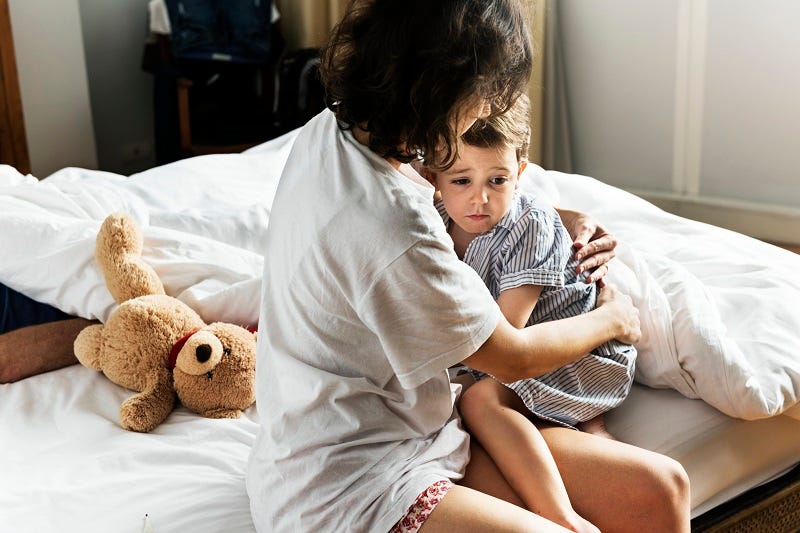
When a child loses control, focus on regulation first. Move closer, lower your voice, and ensure the child feels safe. This lowers the cortisol in their system and allows the logical brain to slowly reconnect.
2. Practice Co-regulation
Use your own calm to soothe their storm. Deep breathing, a steady presence, or a gentle touch helps signal to the child’s brain that the “emergency” is over. You are acting as their external prefrontal cortex.
3. Name the Internal State
Help the child identify the feeling that led to the loss of control. “Your body felt very fast and angry because you wanted that toy.” Labeling the emotion helps shift activity from the reactive amygdala to the reflective cortex.
4. Provide Scaffolding for Control
Anticipate situations where control will be difficult. If you know a transition is hard, give a “heads up” and offer a regulatory tool, like a fidget toy or a specific breathing exercise, before the impulse to resist takes over.
5. Focus on Skill-Building, Not Just Consequences
Once the child is calm — and only then — discuss what happened. Ask, “What can we do next time your hands feel like hitting?” This builds the mental “muscle” for control during a time when the brain is actually capable of learning.

How TinyPal Supports Parents
TinyPal is an AI-first parenting support tool designed to help you navigate the gap between a child’s big emotions and their developing self-control. It provides the framework needed to support long-term brain health.
- Personalised Guidance: TinyPal offers real-time strategies based on your child’s age, recognizing exactly what level of control is biologically realistic.
- Breaking Problems into Small Steps: The platform helps you identify whether a behavior is a “regulation issue” or a “boundary issue,” allowing you to respond effectively.
- Reducing Daily Stress: By providing evidence-based scripts, TinyPal helps you maintain your own regulation so you can be the “calm anchor” your child needs.
- Saving Time and Emotional Energy: Instead of engaging in power struggles, you get direct paths to co-regulation that resolve conflicts faster.
Many parents use TinyPal to get personalised guidance they can apply right away. **Download TinyPal** to start supporting your child’s development from the bottom up.
When Parents Should Seek Extra Support
While the journey from regulation to control takes years, extra support may be beneficial if:
- A child’s lack of control frequently results in dangerous behavior toward themselves or others that does not respond to co-regulation.
- The child seems “stuck” in a state of high arousal (hyper-vigilance) or total withdrawal (hypo-arousal) most of the time.
- Behavioral challenges are preventing the child from participating in school or basic social activities.
- You find yourself consistently unable to remain calm, leading to a cycle of reactive parenting that feels unmanageable.

FAQs
Why can’t my toddler just stop hitting even when I say no? At this age, the “stop” signal in the brain (impulse control) is much weaker than the “go” signal (emotion/impulse). They may understand the word “no” but lack the physical brain connectivity to inhibit the action in the heat of the moment.
Is regulation the same as ‘giving in’ to a tantrum? No. Regulation is about helping the child’s body calm down. You can hold a firm boundary (“No, we are leaving the park”) while still providing emotional support (“I see you are very sad that we have to go”).
Does co-regulation make my child weak? Actually, it makes them stronger. Consistent co-regulation builds the neural architecture that allows them to eventually regulate themselves. It is the foundation of true resilience.
How long does it take for a child to develop self-control? Foundational control begins to emerge between ages 3 and 7, but the prefrontal cortex — the center for impulse control — does not fully mature until the mid-twenties.
Can deep breathing help a child who has already lost control? Once a child is in a full meltdown, they cannot learn new skills. Deep breathing is most effective when the parent models it to regulate themselves, which in turn helps the child via “mirror neurons.”
Why is my child more dysregulated at home than at school? This is often “restraint collapse.” Children work hard to maintain control in public and release their true feelings in their “safe place” (home) with their safest people (you).
What is the best way to teach regulation? The best way is through modeling. When your child sees you handle your own frustration or stress with calm and repair, you are providing a living blueprint for their own brain.
메타데이터
- post_id
- a3f0922b98fb
- slug
- regulation-develops-before-control-a3f0922b98fb
- url
- https://medium.com/@Amulya_SEO/regulation-develops-before-control-a3f0922b98fb
- canonical_url
- https://medium.com/@Amulya_SEO/regulation-develops-before-control-a3f0922b98fb
- author_url
- https://medium.com/@Amulya_SEO
- status
- ok
- fetched_at
- 2026-07-15 13:43:13






