Faithless, Hopeless and Charityless:
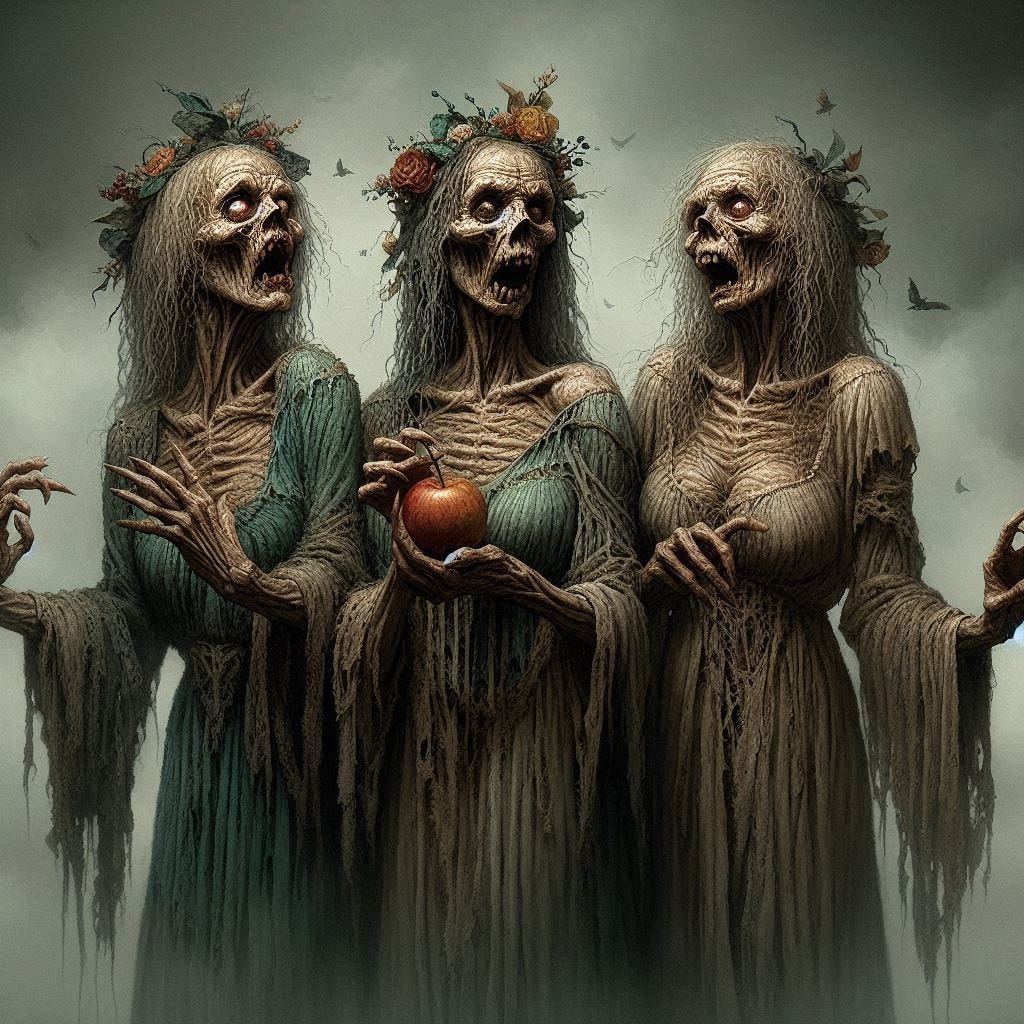
The Fall of the Three Graces under Tump, Vance and Misk
Faithless, Hopeless and Charityless:
The Fall of the Three Graces under Tump, Vance and Misk
Vance the Faithless Grace — Just how Hillbilly is this Hillbilly?
J.D. Vance’s Hillbilly Elegy (2016) is a memoir that presents itself as both a personal story and a sociological analysis of the white working class in Appalachia. While the book was widely praised, it also faced significant criticism for its misrepresentations, oversimplifications, and outright falsehoods about Appalachian culture, poverty, and systemic issues. Here are the key areas where Vance has been accused of distorting the truth.
1. Misrepresentation of Appalachian Culture
Vance portrays Appalachians as being trapped in a culture of laziness, fatalism, and self-destruction, implying that their economic struggles are largely due to poor personal choices rather than systemic issues. Critics argue that this is a harmful stereotype that ignores the region’s deep history of labour exploitation, corporate neglect, and government disinvestment.
Reality:
· Many Appalachians work multiple jobs, often in physically demanding industries like coal mining, manufacturing, and service work.
· Structural economic decline, due to automation, globalization, and the collapse of coal, has played a much greater role in the region’s struggles than cultural attitudes.
2. Denial of Systemic Economic and Political Factors
Vance downplays the impact of corporate exploitation, deindustrialization, and government policy on poverty in Appalachia. He argues that people should simply “work harder” and take responsibility for their own success.
Reality:
· The decline of industries such as coal and steel were driven by corporate decisions, not individual laziness.
· Economic policies, including union-busting efforts and the offshoring of manufacturing jobs, had devastating effects on Appalachian communities.
· The opioid crisis, which Vance blames on personal irresponsibility, was largely fuelled by pharmaceutical companies that aggressively marketed addictive painkillers while government regulators failed to intervene.
3. False Narrative of Government Dependence
Vance suggests that welfare dependence has created a culture of entitlement and stagnation in Appalachia. He claims that government aid discourages people from working and taking responsibility for their lives.
Reality:
· Many studies show that government aid (such as food stamps and Medicaid) helps people escape poverty rather than trapping them in it.
· The biggest recipients of government aid in the U.S. are often working-class white Americans, including those in Appalachia, who rely on these programs for survival due to the lack of good-paying jobs.
· Vance himself benefited from public assistance, including the G.I. Bill, which helped fund his education — something he fails to acknowledge when criticizing government aid for others.
4. Distorted Personal Narrative
Vance frames himself as someone who overcame incredible adversity through sheer hard work, while implying that others in his community fail because they lack discipline and ambition.
Reality:
· Vance had advantages that many in Appalachia do not. He lived with his grandparents, who provided financial stability and a relatively secure home life, something many children in poverty do not have.
· He was able to attend Yale Law School not only through hard work but also through networking opportunities and institutional support systems that many working-class students lack.
· His success story is an exception, not the norm, yet he presents it as if it should be replicable for anyone who “tries hard enough.”
5. Oversimplification of Addiction Issues
Vance discusses his mother’s drug addiction but portrays addiction as primarily a moral failing rather than a public health crisis.
Reality:
· The opioid epidemic in Appalachia was largely driven by corporate greed and medical malpractice, not personal irresponsibility.
· Purdue Pharma and other companies knowingly flooded the region with addictive painkillers, targeting vulnerable communities.
· Vance ignores these larger systemic causes and instead focuses on individual choices, reinforcing harmful stigmas about addiction.
6. Misleading Political Implications
Vance implies that the solution to Appalachian poverty is not government intervention but personal responsibility. This aligns with conservative talking points that justify cutting social programs.
Reality:
· Appalachian communities have historically benefited from government investments, such as the New Deal, the War on Poverty, and the Appalachian Regional Commission.
· Conservative policies that reduce social spending have often worsened conditions in the region.
· Vance’s narrative has been used to justify policies that harm the very people he claims to represent.
How Faithless Am I?
While Hillbilly Elegy is a compelling personal story, it contains numerous falsehoods and distortions about Appalachia. Vance misrepresents the causes of economic hardship, ignores systemic issues, and reinforces damaging stereotypes. His book has been criticised by scholars, activists, and residents of the region who argue that it provides a misleading and harmful narrative about poverty in America.
Trump the Hopeless Grace — Just How Much Can he be Trusted to Tell the Truth?
Donald Trump has made tens of thousands of false or misleading statements over the past decade, with fact-checkers documenting over 30,573 such claims during his presidency alone. During his first term in office, his rate of misinformation increased over time, from about six false statements per day in his first year in office to nearly 39 per day by the end of his term
Trump’s long history of falsehoods, ranging from election lies to misinformation about the economy and foreign policy, demonstrates why he is fundamentally untrustworthy as a political leader. His pattern of deception is not just a domestic issue but a direct threat to global stability, particularly in relation to Ukraine and international alliances. A second Trump presidency not only undermine democratic institutions but will also embolden authoritarian regimes, leading the world into an era of increased conflict and instability. docs.house.gov
Six of the Best
Some of his most well-known false claims include:
1. The 2020 Election Was Stolen
- Trump repeatedly claimed widespread voter fraud cost him the 2020 election, despite courts, election officials, and independent audits confirming there was no significant fraud yahoo.com
2. Biggest Tax Cut in History
· Trump falsely asserted that his administration’s tax cuts were the largest in U.S. history, when in reality, they were smaller than those enacted under Reagan independent.co.uk
3. Greatest Economy Ever
- He frequently claimed his administration built the best economy in history, though economic growth under his tenure was comparable to previous presidents, and unemployment spiked during the COVID-19 pandemic independent.co.uk
4. Obama Spied on His Campaign
- Trump repeatedly alleged that former President Obama wiretapped his campaign, despite no evidence supporting this conspiracy theoryyahoo.com
5. COVID-19 Falsehoods
- He downplayed the severity of COVID-19, promoted unproven treatments like hydroxychloroquine, and suggested injecting disinfectants as a possible cure yahoo.com
6. Gun Confiscation Claims
- He falsely stated that Democrats wanted to take away all privately owned guns, when their proposals mainly focused on background checks and assault weapon restrictions yahoo.com
How Trump’s Lies Threaten Ukraine and Global Security
Trump’s falsehoods and erratic foreign policy have already weakened America’s global standing, particularly in relation to NATO and Ukraine. His 2023 remarks about letting Russia “do whatever the hell they want” to NATO members who don’t pay enough signalled a dangerous shift that could lead to the unravelling of Western defence commitments. His recent comments, supported by the Faithless and Charityless Graces, just go to reinforce the hatred the Hopeless Grace has towards organisations that do not pay homage. who.com.au
His return to office signals:
1. Abandonment of Ukraine
Trump the Hopeless has repeatedly criticized U.S. aid to Ukraine and suggested he could end the war within 24 hours, a claim that is both unrealistic and dangerous. His actual approach would likely involve pressuring Ukraine to surrender territory to Russia, effectively rewarding Putin’s aggression.
2. Weakening of NATO
Trump the Hopeless has already threatened to withdraw from NATO and has falsely claimed that other members don’t contribute their fair share. If he were to undermine NATO further, Russia would be emboldened to expand its aggression beyond Ukraine, potentially targeting the Baltic states or Poland.
3. Increased Global Instability
Trump the Hopeless’ lies and erratic policies have historically emboldened authoritarian leaders like Putin and North Korea’s Kim Jong-un. A second Trump term is seeing early signs of further destabilisation in Eastern Europe, the South China Sea, and beyond.
A Special Kind of Hopelessness — Deception in Finance
Trump has repeatedly lied about his financial ties to Russia. He publicly claimed, “I have nothing to do with Russia. I never did.” However, evidence contradicts this assertion. Trump pursued business deals in Russia for decades, including a proposed Trump Tower Moscow project, which he continued to negotiate even during his 2016 presidential campaign.
Special counsel Robert Mueller’s investigation revealed that Trump’s team was in communication with Russian officials regarding the project as late as November 2016. His former attorney, Michael Cohen, even pleaded guilty to lying to Congress about the timeline of these negotiations.
Trump also repeatedly denied that Russia interfered in the 2016 U.S. election, even after U.S. intelligence agencies confirmed it. Instead, he publicly sided with Putin at the 2018 Helsinki summit, contradicting his own intelligence officials.
Financial Ties to Russian Interests
Despite Trump the Hopeless’ claims that he had no Russian business connections, multiple reports show that wealthy Russian elites invested nearly $100 million in Trump-branded properties in Florida alone. Trump also sold a Palm Beach estate to Russian billionaire Dmitry Rybolovlev for $95 million, more than double what Trump had paid for it, raising questions about potential money laundering. Furthermore, state-run Russian bank Vnesheconombank (VEB), which has been linked to Russian intelligence operations, financed a deal involving Trump’s business partner in a Toronto hotel project.
These connections indicate that Trump has been financially entangled with Russian oligarchs and state-backed institutions for years, potentially leaving him vulnerable to Russian influence.
Impact on Ukraine and Global Stability
Trump the Hopeless’ stance on Ukraine is increasingly concerning. As president, he delayed critical military aid to Ukraine in 2019 in an attempt to pressure President Volodymyr Zelenskyy into investigating Joe Biden, leading to his first impeachment. This has not been forgotten or forgiven. His rhetoric has also emboldened Putin, he publicly praised the Russian leader’s military strategy, even calling Putin a “genius” when Russia invaded Ukraine in 2022.
Trump the Hopeless’ return to power has shown that his deference to Putin is even greater, significantly weakening NATO, emboldening Russian aggression and further endangering Ukraine. His financial ties to Russia and Belarus suggest he has potential conflicts of interest that will influence his foreign policy decisions. Given Putin’s territorial ambitions, Trump the Hopeless’ unwillingness to stand firmly against Russian aggression may escalate global instability and create a new, more dangerous geopolitical era.
Musk the Chairtyless Grace — Just what is Free Speech?
Elon Musk has banned or suspended several journalists, critics, and activists from Twitter /X often after they reported on him, his companies, or his policies. Here are another six of the best:
The Six
Journalists Banned or Suspended by Musk
1. December 2022 Mass Suspension of Journalists
In December 2022, Musk banned multiple journalists who had covered his activities, particularly those who reported on his private jet tracking. He accused them of engaging in “doxxing,” even though they shared publicly available flight data. Some of the affected journalists included:
- Donie O’Sullivan (CNN) — Covered Musk’s crackdown on the @ElonJet account.
- Drew Harwell (The Washington Post) — Reported on Musk’s content moderation policies.
- Ryan Mac (The New York Times) — Investigated Musk’s leadership at Twitter.
- Matt Binder (Mashable) — Reported on Musk’s banning of journalists.
- Aaron Rupar (Independent Journalist) — Frequently covered Musk’s actions critically.
These suspensions caused significant backlash, including from the European Union, which warned Musk about potential regulatory consequences.
2. Taylor Lorenz (The Washington Post, December 2022)
- Musk suspended Lorenz after she sought an interview with him and criticized his handling of Twitter. She was reinstated after public pressure.
Activists and Critics Banned or Suspended
3. Chad Loder (Activist and Researcher, November 2022)
- A well-known researcher documenting far-right extremism and online misinformation, Loder was banned from Twitter shortly after Musk’s takeover.
- Loder’s work had exposed individuals involved in the January 6th Capitol attack, leading many to believe the suspension was politically motivated.
- After being reinstated, Loder was banned again in 2023 with no explanation.
4. Keith Olbermann (Journalist, December 2022)
- Former MSNBC anchor, known for his outspoken criticism of Musk, was briefly suspended during the December 2022 purge.
5. ElonJet & Jack Sweeney (December 2022)
- @ElonJet tracked Musk’s private jet movements using publicly available data. Musk banned the account and later suspended its creator, Jack Sweeney, who had also run similar jet-tracking accounts for other public figures.
6. Brazilian X users and critics (October 2024)
· X faced a ban in Brazil due to non-compliance with local laws, affecting activists and crypto communities relying on the platform
Ongoing Content Moderation Controversies
Musk has also been accused of quietly restricting or shadowbanning accounts that criticize him or X’s policies. His bans often appear to contradict his stated commitment to “free speech absolutism.”
Anything to be ashamed of Elon? Yet another Six of the best!
Legal Cases and Controversies
1. Twitter Stock Manipulation (2022–2023)
· Musk was sued by Twitter investors for allegedly manipulating stock prices by delaying disclosure of his stock purchases. This allowed him to buy shares at a lower price, potentially saving $156 million.
2. Dogecoin Lawsuit ($258 Billion)
· Investors accused Musk of running a pyramid scheme to promote Dogecoin, manipulating its price by hyping and then letting it drop.
3. SEC vs. Musk (2022–2024)
· The SEC sued Musk for failing to disclose his Twitter stock purchases on time and sought to compel his testimony regarding his takeover of Twitter.
4. Tesla Compensation Lawsuit (2023–2024)
· Musk’s $56 billion Tesla pay package was challenged in court, with a judge ruling that Tesla’s board had acted improperly in approving it.
5. Racial Discrimination at Tesla (2023)
· Tesla was ordered to pay $137 million to a Black worker, Owen Diaz, who experienced racial harassment at a Tesla factory.
6. Donald Trump’s Twitter Ban Lawsuit ($10 Million Settlement, 2024). My personal favourite!
· Musk’s X settled a lawsuit with Trump over his ban from Twitter after the Jan. 6 Capitol riot. X agreed to pay $10 million, though Trump originally sought more.
Conclusion: The Three Graceless — An Unholy Trinity of Deception and Chaos
Donald Trump, J.D. Vance, and Elon Musk represent a dangerous convergence of deception, manipulation, and self-interest that threatens democratic values and global stability.
As the “Three Graceless”: Trump the Hopeless, Vance the Faithless, and Musk the Charityless, each embodies a different facet of corruption and societal decay, working in concert to reshape the political and economic landscape for their personal gain.
· Trump the Hopeless fuels division through relentless falsehoods, aligning himself with authoritarian figures while undermining democratic institutions.
· Vance the Faithless distorts the realities of working-class struggles, promoting a misleading narrative that ignores systemic oppression and justifies harmful policies.
· Musk the Charityless exploits free speech rhetoric to silence critics while leveraging his wealth and influence to serve his own agenda, often at the expense of the public good.
Together, these figures form an unholy trinity that accelerates misinformation, weakens social trust, and emboldens autocratic forces worldwide. Their combined influence threatens to dismantle the very foundations of democratic governance, paving the way for a future dictated by corporate greed, political dishonesty, and the erosion of human rights.
The world cannot afford to be complacent. Recognizing and resisting the rise of these figures is essential to preserving truth, integrity, and global stability. Only by challenging their deceitful narratives and holding them accountable can society prevent the further decline of democratic values and ensure a future based on transparency, justice, and collective progress.
메타데이터
- post_id
- a3f3f330344b
- slug
- faithless-hopeless-and-charityless-a3f3f330344b
- url
- https://medium.com/@mikesathome/faithless-hopeless-and-charityless-a3f3f330344b
- canonical_url
- https://medium.com/@mikesathome/faithless-hopeless-and-charityless-a3f3f330344b
- author_url
- https://medium.com/@mikesathome
- status
- ok
- fetched_at
- 2026-06-15 20:49:13