Why AI Video Translation Is Becoming a Must-Have Tool for Content Creators
A few years ago, reaching a global audience required an entire localization team.
Why AI Video Translation Is Becoming a Must-Have Tool for Content Creators
A few years ago, reaching a global audience required an entire localization team.
If you wanted to publish videos in multiple languages, you typically needed translators, voice actors, editors, and a significant budget.
Today, AI is changing that equation.
Content creators can now translate videos into multiple languages within minutes, making international audiences more accessible than ever before.
But what’s driving this shift, and why are more creators adopting AI video translation tools?
The Language Barrier Is Still the Biggest Growth Limiter
The internet is global.
Most content is not.
Many YouTube creators, educators, SaaS founders, and marketers publish content exclusively in English, even though a large percentage of their potential audience speaks another language.
This creates an obvious problem.
A great video can only reach people who understand its language.
Everything else becomes inaccessible.
As global competition increases, language has quietly become one of the biggest barriers to growth.
Traditional Video Localization Doesn’t Scale
Historically, translating video content was expensive and time-consuming.
A typical workflow looked like this:
- Transcribe the original video
- Translate the transcript
- Record new voiceovers
- Synchronize audio
- Edit the final video
For a single video, this process could take days.
For a content library containing hundreds of videos, it became nearly impossible.
This is why many creators simply ignored international audiences altogether.
How AI Video Translation Changed the Process
Recent advances in AI have combined several technologies into a single workflow:
- Speech recognition
- Machine translation
- Voice synthesis
- Subtitle generation
- Audio synchronization
Instead of requiring multiple specialists, creators can now translate videos automatically.
What once took days can often be completed in minutes.
More importantly, creators can experiment with multiple languages without dramatically increasing production costs.
Why Multilingual Content Is Growing Faster
Many creators are discovering that their next audience isn’t in their home country.
A video published in English might perform well in the United States, but translating that same content into Spanish, Portuguese, Japanese, Korean, or French can unlock entirely new markets.
This is especially valuable for:
- YouTube channels
- Online courses
- SaaS tutorials
- Product demos
- Educational content
- Marketing videos
The content already exists.
Translation simply makes it accessible.
The Rise of AI-Powered Localization
The goal of modern AI translation tools is no longer just accuracy.
It’s accessibility.
Creators want workflows that are:
- Fast
- Affordable
- Scalable
- Easy to use
The best tools now handle transcription, translation, subtitles, and voice generation in a single process.
This dramatically reduces the effort required to create multilingual content.
What Makes a Good AI Video Translator?
Not all AI translation tools are the same.
The most useful platforms typically provide:
- Multiple language support
- Accurate speech recognition
- Natural-sounding AI voices
- Subtitle generation
- Fast processing times
- Simple workflows
For many creators, convenience matters just as much as translation quality.
A tool that saves hours of manual work can significantly improve publishing speed.
The Future of Global Content
The next generation of creators will likely think differently about language.
Instead of creating content for one audience, they’ll create content for many audiences simultaneously.
AI video translation is making that possible.
As translation quality continues improving, the distinction between local content and global content will become increasingly blurred.
The creators who adapt early may gain a significant advantage.
The demand for multilingual content is growing faster than ever.
At the same time, AI is reducing the cost and complexity of reaching international audiences.
Video translation is no longer a workflow reserved for large media companies.
It’s becoming a standard tool for creators, educators, marketers, and businesses of all sizes.
The question is no longer whether content can be translated.
It’s how quickly creators can make their content available to the rest of the world.
Try AI Video Translation Yourself
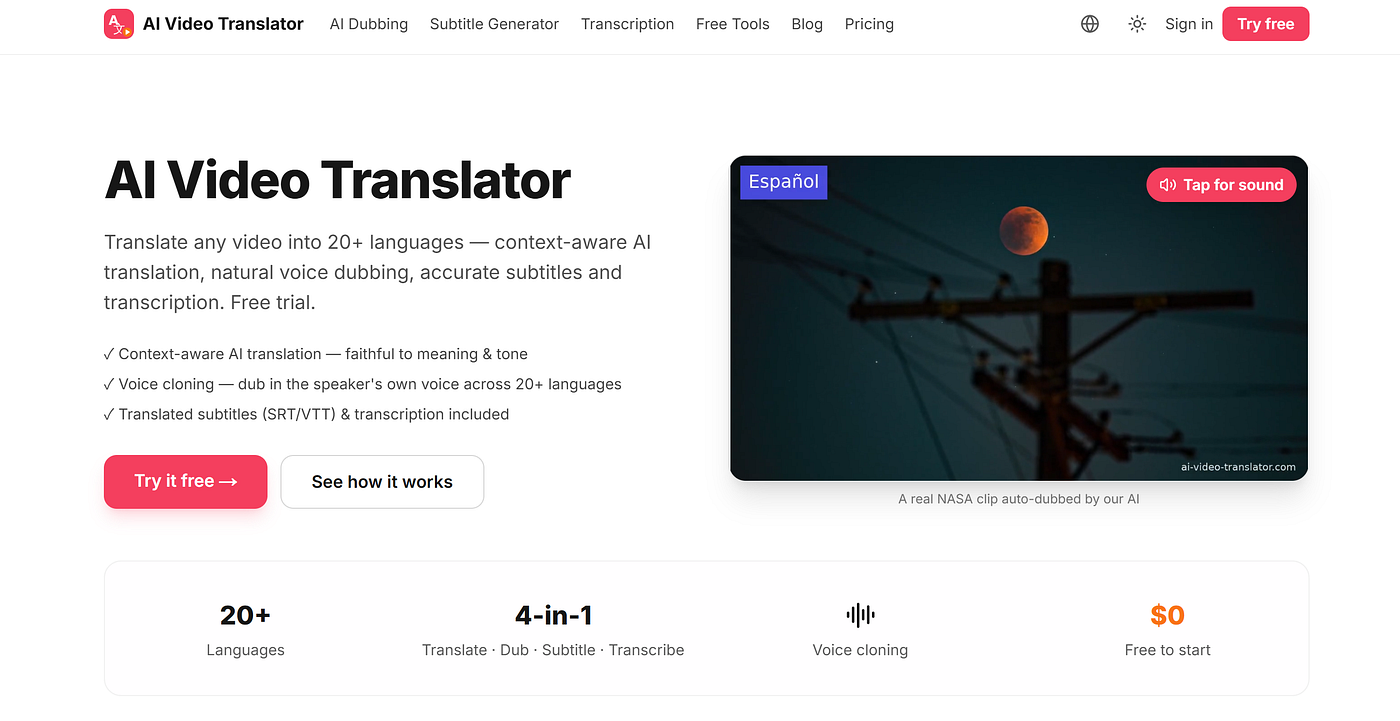
If you’re looking for a faster way to translate videos into multiple languages, AI Video Translator helps creators generate subtitles, translated audio, and multilingual content without complicated localization workflows.
👉 https://ai-video-translator.com/
Peterslab builds AI tools that help creators overcome language barriers.
Projects:
- AI Video Translator — https://ai-video-translator.com/ • AI Manga Translator — https://ai-manga-translator.com/
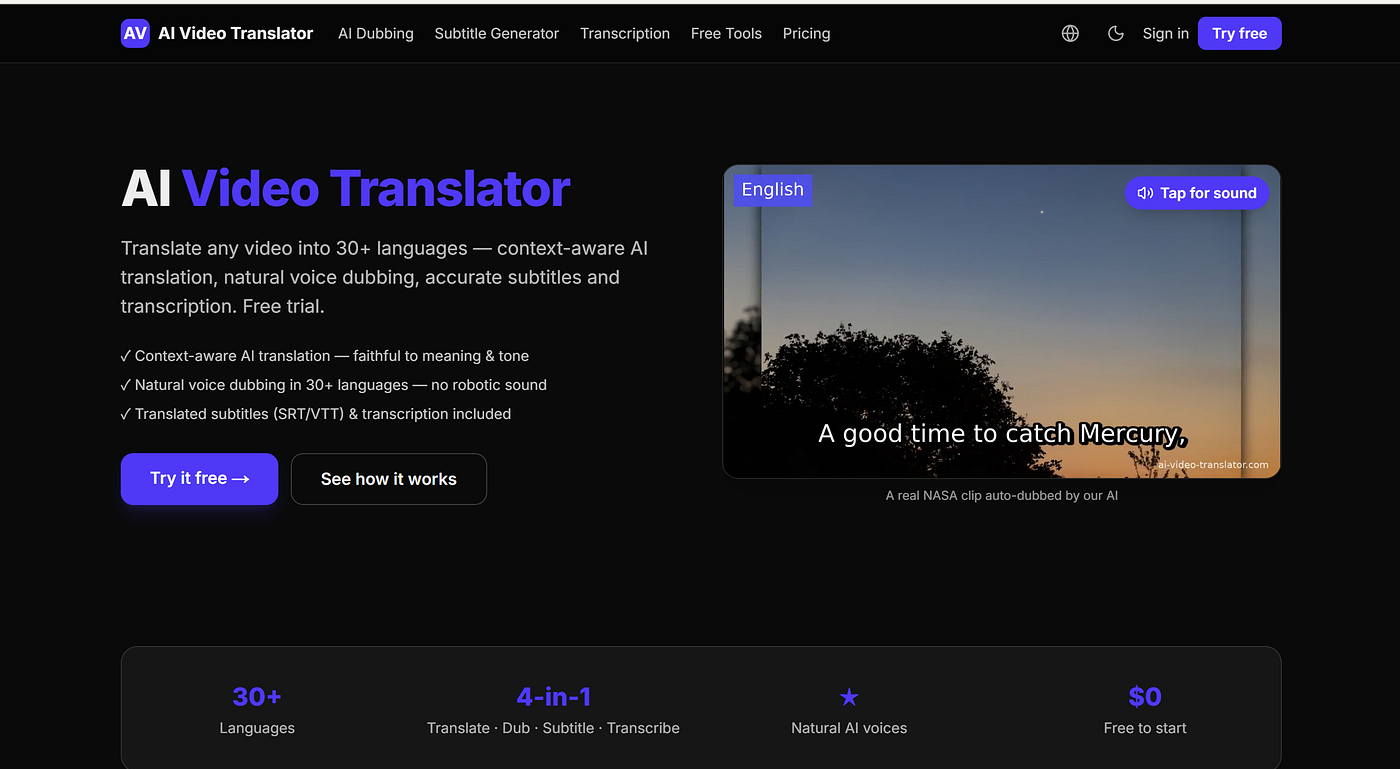
AI Video Translator combines transcription, translation, subtitles, and AI dubbing to help creators reach global audiences faster.
메타데이터
- post_id
- a44376453fa0
- slug
- why-ai-video-translation-is-becoming-a-must-have-tool-for-content-creators-a44376453fa0
- url
- https://medium.com/@peterslab/why-ai-video-translation-is-becoming-a-must-have-tool-for-content-creators-a44376453fa0
- canonical_url
- https://medium.com/@peterslab/why-ai-video-translation-is-becoming-a-must-have-tool-for-content-creators-a44376453fa0
- author_url
- https://medium.com/@peterslab
- status
- ok
- fetched_at
- 2026-07-23 23:41:22