What are Taxes for? Really?
More of my struggles with understanding modern monetary theory
What are Taxes for? Really?
More of my struggles with understanding modern monetary theory
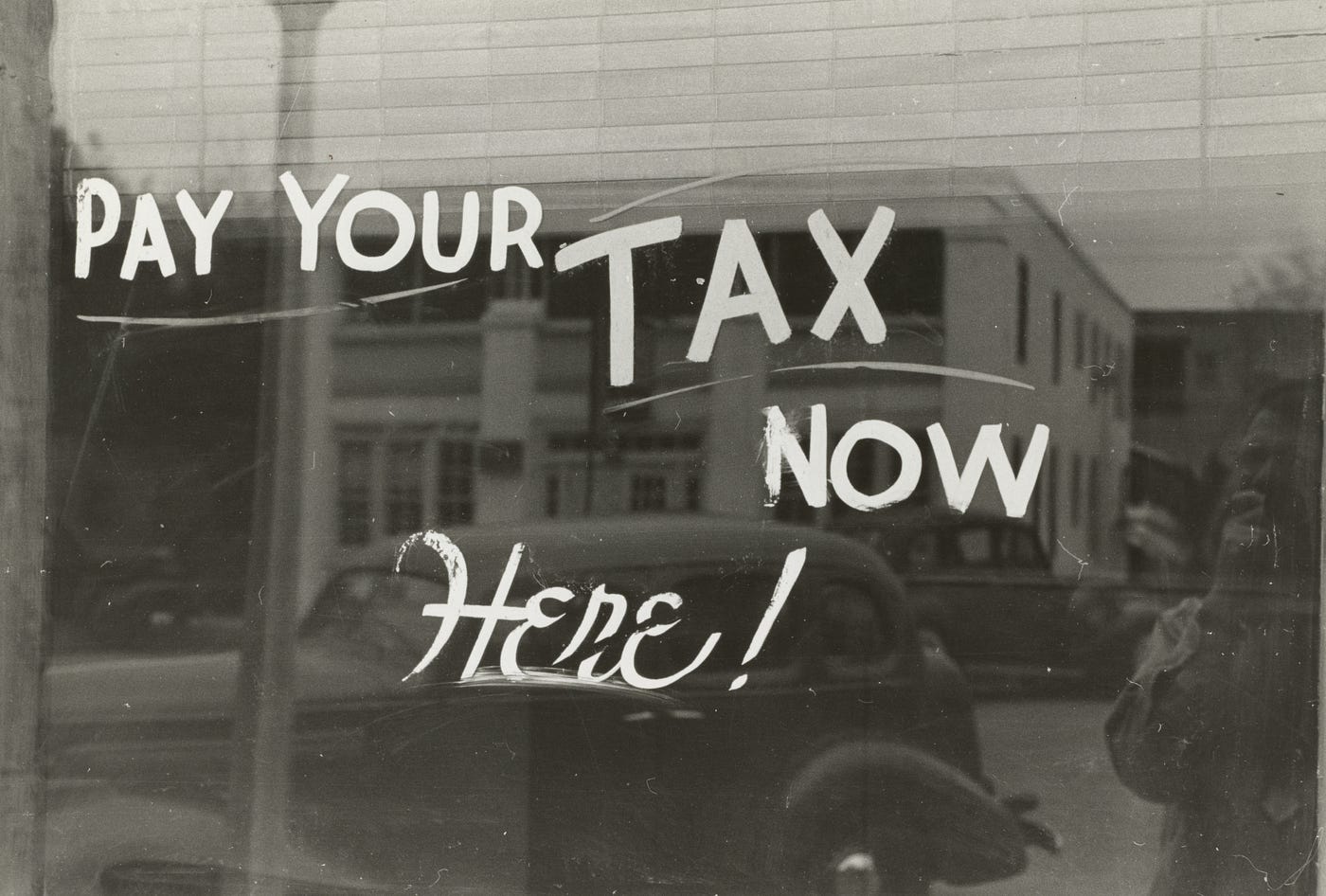
Photo by The New York Public Library on Unsplash
A year ago, I wrote the Economic Elephant in the Room and published it in The Political Prism.
[embed]The Economic Elephant in the Room And 2025 is ignoring itmedium.com
I explained how “quantitative easing (QE)” seems like a Ponzi scheme to me. QE has been geared up since the 2008 recession to finance government operations in many nations. From my understanding, QE should have crashed the world economy 10 years ago. Yet our economies keep chugging along. So either QE can run forever or the Ponzi scheme needs more time to mature.
For reasons I do not understand, my Elephant article became my best Medium article, at least in terms of Medium shekels.
[embed]My Viral Article for 2025 Traction Down, Traction Up, and Traction Settling Downdavevolek.medium.com
So maybe a second article on me not understanding modern monetary theory will be lightning striking the same place twice. I could use another “big” Medium payout. We shall soon see.
Today’s Modern Monetary Theory frustration was inspired by an article written by Dr. Ivan Bassov (א״ב)last December
I shall offer my caveats for the rest of this essay: (1) I am not an expert in these matters, (2) I will mostly be reiterating what experts have told me, (3) I may or may not agree with what they have told me, (4) the experts often disagree, and (5) if I do seem to express an opinion, it might be wrong.
I shall summarize Dr. Bassov’s article as best I can. He is making a case that taxing wages from average workers is more important to keep the economy running smoothly than increasing taxes on the wealthy.
Digressing to a little anecdote from Alberta
In 2014, Alberta voters elected a “socialist” NDP government. One of the campaign promises was to increase the minimum wage. Of course, the business class in Alberta was aghast with this idea — and set up a great propaganda campaign to convince the NDP not to do this. The various Chambers of Commerce were predicting many businesses would shut down, especially in the restaurant and hotel industries.
Classical economics says that if the price of labor goes up, that cost will eventually be passed to the consumer. With higher prices, there will be fewer consumers. With fewer consumers, fewer workers will be needed. With this logic, the business class in Alberta was predicting massive unemployment of low-wage workers in Alberta as they got an annual 10% raise for the next four years.
The NDP did not relent. During their four-year term, they incrementally increased the minimum wage from $10 to $15 an hour.
I did not see that rise in unemployment and business shutdown in Alberta. All the fast-food restaurants that were operating in my hometown before were operating after. Clearly classical economics failed in its prediction.
So what happened?
My hypothesis is that when low-wage workers get a raise, they tend to spend it back into the local economy. Their spending helped keep the jobs of other low-wage workers. And those workers then spend their windfall to indirectly benefit other low-wage workers. More low-wage workers could afford to buy more things locally. No significant job losses. No significant inflation.
Economists call this the “velocity” of money. Low-wage workers tend to spend their raises; i.e. their money moves around faster with local purchases.
Back to Dr. Bassov’s essay
Dr. Bassov’s assertions fall into the economist camp that the main purpose of taxes is not to provide revenue for the government. Rather taxes are the tool to reduce the demand for products and services, which keeps inflation in check. This is not the first time I have heard this theory.
As a related aside, governments supposedly mostly pay for government things by increasing the money supply, not by tax revenue. But that is a topic for another essay, which I will likely write if I get “above average” revenue for this article.
But let’s get back to taxes-reduce-demand theory. Let me explain in different words. If the socialist government in Alberta had raised the minimum wage to $25 instead, low-wage workers would have had even more extra money to spend. But the economy may not have been able to deliver the things these workers wanted to buy. If we go back to classical economics, the increased demand would result in more competition for the same number of things. The sellers of those things would anticipate an upcoming shortage and raise their prices.
While the $25 workers now have a significantly higher nominal wage, they might not be better off — in terms of the new things they could buy. Strange, is it not? A raise to $15 could be better for these workers than a raise to $25. Almost as if the game is rigged for people in the lower echelons of the economy.
There is a second aspect to Dr. Bassov’s essay. It suggests that higher taxes on the wealthy would not help the economy. While low-wage workers would spend their extra wages on things from local retailers, raises to high-wage workers are more likely to go to investments, vacations, or expensive cars. Their raise does not stimulate the local economy that much. In essence, the velocity of money is slower in the higher class — and it tends to leak out of the local economy more quickly. Reading between the lines, taxing the low-wage workers is a better way to reduce demand — and keep inflation under control.
Again, I have heard about the effects of high/low-velocity taxation before. So Mr. Bassov is not spouting some new theory. And it seems to have some logic to it, if the goal is to reduce demand to keep inflation in check. If so, it is pointless to tax high earners as those taxes will not have much effect on demand and money velocity to keep the economy stable.
Are the politicians listening to this economic theory?
It seems not.
In Canada, high earners are taxed at 50% for annual income more than $200,000. This means if a $200,000 earner gets a raise to $300,000, he keeps $50,000 of that $100,000 raise and gives the other $50,000 to the federal and provincial governments.
While libertarian thinkers regard this high tax rate as “unfair,” the high-income earners in Canada are not quitting their high-paying jobs as managers, executives, successful business owners, or professional hockey players. Maybe the 50% marginal tax rate is a good balance here.
Poking a Few More Holes
For starters, tax rates are changed occasionally. And these changes are small compared to the current volatility in our economies. It’s hard to imagine how the top-notch economists have been using the tax tool to affect demand from consumers.
And then there is the political reality. Using the US/Iran war as a current example, we could raise taxes to reduce demand for oil, but higher fuel prices coupled with high enough taxes to reduce oil demand is politically unacceptable. Clearly politics overrides economics, so why pretend this economic theory has any merit?
I’m not sold on the taxes-reduce-demand theory.
Conclusion
Again, I’m not an expert in these matters — and modern monetary theory is still out of my grasp.
But my Alberta minimum wage example shows that we should be cautious when vested interests espouse certain theories that seem to benefit those vested interests.
And I may have misinterpreted Dr. Bassov’s article. My apologies in advance. He does write articles on other topics that get me thinking.
Will I be able to cash in on this article? We shall soon see.
Further Reading
[embed]Polling in the TDG Asking better questions in a better system to make better decisionsmedium.com
메타데이터
- post_id
- a466c65a37ac
- slug
- what-are-taxes-for-really-a466c65a37ac
- url
- https://medium.com/@davevolek/what-are-taxes-for-really-a466c65a37ac
- canonical_url
- https://medium.com/@davevolek/what-are-taxes-for-really-a466c65a37ac
- author_url
- https://medium.com/@davevolek
- status
- ok
- fetched_at
- 2026-06-16 19:09:56




