The Great American Psyop Series // Part III: The Cost of the Machine
Why the corporate machinery of convenience can never truly suppress the human need for meaning.
The Great American Psyop Series // Part III: The Cost of the Machine
Why the corporate machinery of convenience can never truly suppress the human need for meaning.
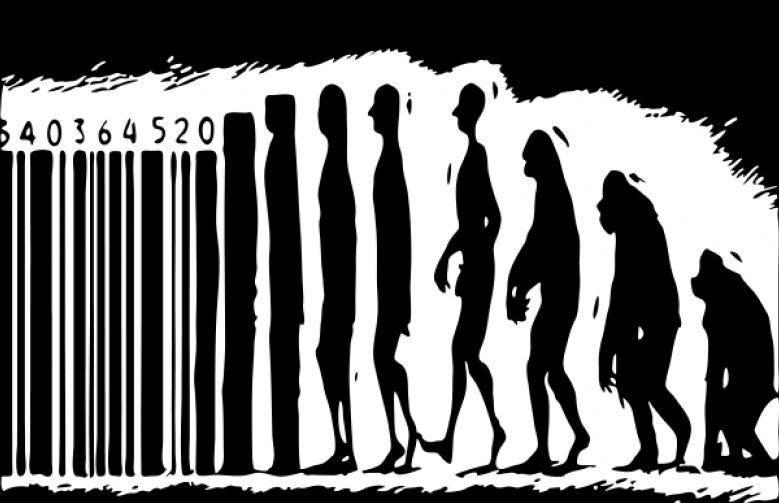
This article is the third and final instalment of The Great American Psyop, a three-part forensic investigation into the historical, macroeconomic, psychological, and cultural forces that engineered modern consumer society.
In Part I, I examined how post-war America systematically transformed the citizen into a consumer through the synchronised deployment of mass advertising, perpetual debt, hyper-convenience, and monetary expansion. In Part II, I explored how that psychological blueprint was covertly exported worldwide as a commercial franchise, before migrating online to form a digitised system built on data harvest, behavioural tracking, and algorithmic perception management.
This final instalment is about the invoice. We’re past the point of asking how the machine was built, or how it managed to scale its frontiers. None of that matters anymore. The only question left is what it’s ultimately produced.
As with the previous two parts, the insights throughout this piece are informed by historical research, cultural analysis, and my own professional observations as an industry insider. I don’t ask for your blind belief. In an age of total psychological enclosure, true independence requires active curiosity and deliberate scepticism. Approach the following with a willingness to question the official narratives, and the conclusions presented here.
By the early 2000s, the structural transformation described throughout this series was largely absolute. The transition was complete. The citizen had been successfully hollowed out into a mindless consumer. The mindless consumer had been digitised into a predictable data point. Consumption had evolved from a basic economic activity into the primary vessel of our cultural identity.
Meanwhile, those technologies originally marketed to us as tools of “absolute liberation” had quietly inverted, hardening into highly sophisticated mechanisms designed to observe, predict, steer, and monetise human behaviour.
The remarkable, deeply hypnotic aspect of this transformation is that it unfolded against a backdrop of unprecedented material abundance. Across much of the developed world, modern populations gained access to physical comforts, domestic conveniences, and advanced technologies that previous generations could scarcely have processed.
Information was instantly democratised and global comms became entirely effortless. The sheer scope of consumer choice expanded exponentially. Medical breakthroughs pushed back mortality rates and mitigated physical suffering. By every traditional, numerical metric utilised by institutional economists, modern societies had become richer, safer, and more technologically sophisticated than any civilisation in history.
Yet beneath the polished surface of this prosperity, a darker, unspoken narrative began to crystallise.
Despite witnessing the highest accumulation of wealth in our history, the average person felt increasingly volatile and financially insecure. Despite living inside a matrix of total, instantaneous digital connectivity, populations reported epidemic levels of loneliness and chronic social isolation. Despite standing amidst a historically unmatched mountain of consumer goods, a growing majority of individuals struggled to anchor themselves to any enduring sense of meaning, localised belonging, or long-term stability.
The machine had successfully delivered on every single one of its material promises. The real question now is what happened to us in the process? It’s time to look at the human cost — the kind of damage that’s systematically omitted from a corporate balance sheet.
The Financial Enclosure of Shelter
If you want to see this contradiction in real time, look no further than the modern housing crisis.
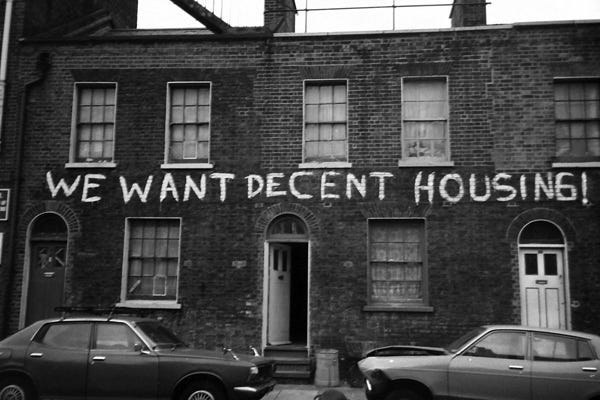
The transformation of housing from shelter to speculative asset represents one of the defining contradictions of the modern consumer age. In many countries, rising property values enriched balance sheets while placing home ownership beyond the reach of growing numbers of ordinary people.
Historically, the purpose of a home was fairly straightforward. It was a space designed for shelter, security, and emotional stability — the primary sanctuary through which families established roots and wove themselves into the social tissue of a community. While real estate certainly carried inherent economic value, its primary function was practical, relational, and social. It was an anchor first, and an asset second.
Over the past several decades, however, this ancient relationship has been radically dismantled across the Western world. Housing was systematically financialised. It was detached from its civic function and converted into a highly speculative, globalised asset class.
The mechanics of this transition were fuelled by a deliberate alignment of institutional incentives. Governments, eager to simulate wealth, aggressively deregulated financial markets and subsidised home ownership. Central banks flooded the market with historically low interest rates, creating an environment of cheap, addictive borrowing. Those nefarious characters on Wall Street and global investment funds, seeking guaranteed returns for institutional capital, entered the residential market at an unprecedented scale.
The predictable result was a hyper-inflation of property values that detached completely from real wage growth. Existing asset owners watched their net worth skyrocket on paper, while younger generations found themselves confronting an insurmountable financial barrier to entry.
This engineered enclosure has produced a deep, bitter generational chasm. For most people, a home is no longer a foundation upon which to build a life; it’s a monumental financial hurdle that dictates nearly every major existential decision.
Look no further than Australia for the logical conclusion of this design. It’s become a nation functionally hostage to its own real estate. Driven by decades of speculative tax incentives and loose credit, Australia has accumulated the second-highest household debt-to-GDP ratio in the world (second only to Switzerland), with roughly 75% of that debt bound entirely to residential mortgages. The average household now owes nearly double its annual disposable income to the banking sector.
The system has painted itself into a clinical corner. Because the domestic banks are heavily leveraged against residential property, and because the broader economy is entirely dependent on the illusion of rising home values to sustain consumer spending, the nation can’t allow the market to correct. It must continuously feed the monster through hyper-immigration and aggressive lending terms just to prevent structural collapse. There’s no longer an orderly exit door; only a permanent, high-wire act where the only alternative to endless inflation is a catastrophic burst of the bubble. And I believe we’re seeing it happen in real time at the writing of this article (June 2026).
The irony is as clinical as it is devastating: the very societies that boast the highest gross domestic product have engineered populations that feel the least secure. The machine has successfully generated trillions of dollars in real estate assets, while simultaneously starving the very people whose labour sustains the system of the security of a permanent roof.

The woke face of capitalism: Larry Fink is the Chairman and CEO of BlackRock, the world’s largest asset manager, controlling trillions of dollars in global investments. His immense influence and advocacy for “stakeholder capitalism” have made him a polarising figure, often depicted as a villain by both progressive and conservative critics.
The consequences extend far beyond economics. A population burdened by systemic housing insecurity behaves in a fundamentally different manner from one that is confident in its future. When individuals are forced to relocate frequently, delay marriage, and postpone parenthood, they’re prevented from establishing long-term community ties. Housing ceases to be the bedrock of society; it becomes a chronic source of psychological wear and tear.
The Fragmentation of the Social Tissue
Throughout Part I, I examined the gradual, deliberate dismantling of localised self-sufficiency. Part II explored the rise of commercialised and digital systems that increasingly stepped in to mediate our everyday interactions. Over time, these two shifts collided to produce one of the most defining, fragile features of the modern era: the systematic fragmentation of community.
We’re evolutionary pack animals; we were engineered to exist within dense networks of mutual dependence. For millennia, the immediate family, the neighbourhood, civic organisations, local business owners, and regional support networks provided a thick web of identity, accountability, social safety, and genuine belonging. These institutions were rarely perfect; they could be restrictive, provincial, and fiercely resistant to change. Yet they supplied the one element that modern consumer society is structurally incapable of replicating: durable, non-transactional human connection.
Over recent decades, these organic structures have experienced a sharp, steady atrophy Membership in civic clubs, fraternal organisations, and local assemblies has plummeted. Local public institutions struggle to retain active participation. Neighbourhood relationships have become fleeting and transactional as economic pressures force frequent relocation.
Digital networks only made this loneliness worse. We gained the ability to chat with people thousands of miles away, but we lost our connection to the physical community on our own street. Technology didn’t achieve this isolation in a vacuum. It was actively accelerated by economic pressures, the expansion of corporate monopolies, shifting work hours, and a culture that re-engineered “independence” to mean total reliance on the state. The cumulative effect, however, is undeniable.
The machine is flawlessly designed to connect a consumer to a product. It’s utterly incapable of connecting a neighbour to a neighbour.
We lose something vital here, because a neighbourhood provides a layer of security that no commercial transaction can replicate. During periods of economic contraction or personal hardship, we don’t find true solace in a corporation or a state bureaucracy first; we rely on the immediate safety net of family, friends, and local alliances. When these relationships are dissolved by the pace of consumer life, we’re left completely exposed. We become entirely dependent upon distant, institutional systems that possess immense resources, but lack even a shred of genuine empathy.
The Loneliness Economy
This has given rise to one of the most glaring paradoxes of the modern age: populations have never been more digitally connected, yet we’ve never felt more profoundly alone.

A cheap spike of dopamine at the cost of real connection. Inside the Loneliness Economy, platforms are built to be effortless to join and frictionless to abandon, leaving us perfectly connected, yet completely isolated.
Social media networks promised absolute connection. Smartphones marketed the dream of friction-free communication. Digital platforms promised a global village free from the constraints of physical geography. In a superficial sense, they delivered exactly what was advertised. We can beam data across oceans instantly and curate communities built around highly specific niche interests. Yet, connection and belonging are not the same thing.
We can exchange hundreds of digital messages a day and still experience an acute, hollow sense of isolation. We can accumulate thousands of followers, superficial likes, and continuous algorithmic feedback loops without cultivating a single relationship capable of sustaining us through a crisis. Tech companies have spent billions designing spaces that demand our engagement, but engagement is a poor substitute for intimacy — it’s nothing more than captured attention.
Traditional communities required physical presence, emotional compromise, long-term patience, and active vulnerability. Digital networks operate on a completely inverted set of rules. They’re effortless to join and frictionless to abandon, offering total flexibility but zero permanence while affording massive online visibility without providing a single shred of genuine, structural support.
A consumer economy doesn’t look at this widespread loneliness as a systemic failure; it views it as a multi-billion-dollar market opportunity. Loneliness is incredibly profitable.
And the isolated individual is the ultimate consumer. Lacking an organic community to provide validation, entertainment, and support, they must purchase those experiences over the counter. They turn to streaming entertainment, single-serving lifestyle delivery apps, digital subscriptions, and products designed to temporarily medicate the ache of dissatisfaction. Entire industries now generate historic profits by selling commercial band-aids for psychological wounds that previous generations cured for free through localised relationships.
This is a case of the cold logic of market incentives. The marketplace is highly effective at solving problems through commodities. It’s entirely useless at rebuilding the human soul.
The Psychology of Industrial Dissatisfaction
The modern macroeconomic engine depends upon an uncomfortable, foundational psychological truth: Contentment is an economic catastrophe.
Someone who’s genuinely satisfied with what they have — one who looks at their life, their home, and their relationships and decides they have enough — presents an existential threat to an economic juggernaut that requires continuous expansion to prevent collapse. Conversely, someone who’s trapped in a permanent cycle of comparison, status anxiety, and perpetual aspiration contributes directly to the expansion of the gross national product (GNP).
As an insider who’s worked within the advertising industry, I can tell you with undeniable conviction that this principle was understood long before the first line of internet code was ever written. Mass marketing has never been about communicating the practical functionality of a product. It’s about the systematic manufacture of psychological lack. It’s the science of convincing someone that they’re fundamentally incomplete without the next shiny new toy. It targets our deepest, most vulnerable needs — status, beauty, attractiveness, success, and the desire to belong — and hitches them to commodities.
The digital age didn’t change this trap; it simply turned up the speed, locking us into a relentless, 24/7 loop.
Social media platforms transformed comparison from an occasional social friction into a perpetual, 24-hour ambient reality. The modern individual is no longer measuring their status against their immediate neighbours or work colleagues. They’re forcing their subconscious to compete against the highly manicured, filtered, and heavily curated illusions of millions of strangers across the world.
And the psychological toll of this experiment is staggering. The consumer is no longer merely an audience member exposed to an advertisement during a commercial break or on a freeway billboard. The commercial environment now follows them into their bed, sits at their dinner table, and occupies their pocket every waking second of the day. It’s frightening when you think about it like that, right?
Also, the consumer has been forced to become the performer. Personal identity has been re-engineered into an ongoing corporate project of brand presentation, continuous self-optimisation, and metric-driven evaluation. The machine profits immensely from your dissatisfaction because anxiety drives active engagement.
The more unstable and insecure someone feels about their appearance, their status, or their achievements, the more receptive they become to commercial interventions. The more incomplete they feel, the easier it is to position a product as the ultimate answer. The more attention they surrender to the loop of comparison, the more valuable they become to the tech monopolies whose business model relies on selling that attention to the highest corporate bidder.
We’re looking at psychology weaponised at an industrial scale under the guise of everyday commerce.
The Deeper Crisis of Purpose
Ultimately, the most devastating consequence of the mass consumer age lies completely beyond the boundaries of economic analysis. We need more than just a comfortable lifestyle to thrive; we need purpose. It’s something I was just discussing as a guest on a podcast about the ways AI has quietly taken over our lives, catching everyone completely off guard.
Throughout our history, people derived their sense of meaning from sources that existed entirely outside the laws of the marketplace: family lineage, spiritual faith, deep craftsmanship, civic duty, service to others, ancestral tradition, and a shared connection to a collective purpose. While these sources differed across eras and geographies, they all shared one defining characteristic: they connected the fragile, isolated individual to something vastly larger than themselves. They provided an existential anchor.
Consumer culture offers a completely hollowed-out alternative. It suggests that fulfilment is an additive process — that purpose can be assembled piece by piece through continuous acquisition, curated experiences, personal branding, and elite lifestyle optimisation. We’re encouraged to view ourselves simultaneously as both the investment project and the commodity. Success is made entirely visible, reduced to quantifiable metrics of ownership and status symbols.
For a brief, superficial window, this framework can simulate satisfaction. But over the long arc of a life, it inevitably fails.
The reason for this failure is structurally embedded in the human psyche. Modern consumption is a machine designed to flood our brains with dopamine, trading true fulfilment for short-term pleasure, convenience, and material comfort. It’s structurally incapable of generating meaning. The purchase of a new shiny thing or the acquisition of a luxury experience provides a brief spike of dopamine. But this high is fleeting. The novelty fades, the baseline recalibrates, and the old emptiness returns. Desire immediately searches for a new object, aspiration moves toward a higher target, and the hamster wheel continues its relentless rotation.
The machine is magnificent at creating wants, precisely because wants are a completely renewable resource. Meaning, however, operates on an entirely different set of rules.
True meaning doesn’t arrive via convenience, nor can it be purchased with credit. It develops gradually, almost always emerging through the acceptance of responsibility, personal sacrifice, contribution to a collective good, the mastery of a difficult craft, and deep, unconditional human relationships.
This reality presents an insurmountable crisis for a society organised entirely around consumer throughput. Our economic systems are highly capable of generating massive material wealth. They’re entirely bankrupt when it comes to answering the deeper, silent questions of human purpose and existential flourishing.
Stepping Outside the Logic
Highlighting what’s broken is easy, but actually crafting a viable alternative takes far more work. If the first two instalments of this series mapped out the psychological architecture of the machine, and this final chapter has laid bare its human costs, the unavoidable question shifts from why to what now?
Many well-meaning people advocate for top-down political transformations. Others place their faith in tech innovations, regulatory adjustments, or institutional leadership. But hoping that the very institutions that grew powerful by exploiting your dependency will suddenly engineer your liberation is an exercise in futility.
The most practical, radical responses to the machine don’t begin on a grand geopolitical stage. They begin at the smallest, most intimate scale of daily existence.
The machine derives its absolute power over your life from one single vulnerability: your total dependency upon its systems. Every deliberate step you take toward personal and localised independence systematically starves the machine of its leverage over you.
Financial resilience matters. Someone who’s heavily burdened by consumer debt and bound to an ongoing cycle of high-interest obligations has no real choices — be it mortgage, car loan, personal loan, credit card debt; they’re locked into absolute compliance. Someone who aggressively controls their obligations and eliminates debt regains sovereignty over their time and labour.
Practical capability matters. Those who cultivate tangible skills — who know how to produce, repair, build, grow, and create things with their own hands — have a baseline level of freedom that can never be matched by someone who’s entirely dependent upon global corporate supply lines for survival.
Local community matters. Cultivating deep, non-commercial relationships with your immediate neighbours creates a decentralised web of mutual aid and resilience that no inept state bureaucracy or corporate entity can replicate or dismantle.
None of these concepts require a radical, primitive off-the-grid life. They don’t demand that you smash your devices, reject commerce, or deny real economic progress. The true objective is not isolation, it’s balance.
A society composed entirely of dependent consumers is profoundly fragile, susceptible to systemic shocks, easily manipulated by media narratives, and entirely compliant to institutional coercion. Conversely, a society anchored by capable, self-reliant citizens is inherently resilient. And this distinction is going to prove increasingly critical during the turbulent years ahead.
Local, independent businesses are the backbone of our communities because they keep money where it belongs and protect the social fabric of our neighbourhoods. Simply choosing to support your local hardware store, butcher, greengrocer, or coffee house is how we stop that everyday human connection from being stripped away. And wherever you can, always pay cash. It is the only way to keep your transactions human, tangible, and completely off the bureaucratic ledger.
Localised food security and decentralised energy are critical because global supply chains are not infallible. Financial literacy matters because debt is the most effective tool ever devised to steer and manipulate human behaviour. And independent, critical thought matters because every single modern institution — whether it’s corporate, governmental, political, or algorithmic — is continuously bidding for total ownership of your attention.
The objective is not to run away from society. The objective is to participate in it entirely on your own terms.
Throughout this series, I’ve dissected incredibly powerful systems, multi-billion-dollar corporate monopolies, and sweeping institutional structures. It’s natural for someone to look at the sheer scale of this apparatus and conclude that any ordinary resistance is entirely meaningless.
But history tells us a very different story.
Every empire, every corporate monopoly, every captured government, and every monolithic and nefarious institution throughout history shares the exact same fatal flaw. They’re entirely dependent upon the compliance of the people. They require your labour. They require your financial participation. They require your ongoing attention. And above all, they require your belief.
The machine is no exception to this historical rule. It possesses immense resources, unmatched psychological tools, and staggering financial leverage. But it can’t run without your active consent.
Part I asked how this psychological machine was built. Part II examined how it scaled its frontiers across the globe. Part III leaves us with the questions that ultimately matter: What happens when an increasing number of us simply choose to step outside its logic? What happens when we collectively decide to value deep community over passive consumption, practical capability over thoughtless convenience, tangible production over perpetual acquisition, and enduring meaning over material accumulation?
No government can pass a law to legislate this awakening. No corporation can package and sell it to you. No algorithm can manufacture it for your feed.
It begins quietly, with all of us deciding to make completely different choices. The institutions that rule our modern world are massive, but they share the same vulnerability that has brought down every tyrannical system since the dawn of time. They require our participation.
Never Forget
There may only be a few thousand of them, but the true weight of history rests with us.
We see it when ordinary people simply refuse to comply — whether it’s the massive Gen Z mobilisation in Nepal that flooded the streets to defy lockdowns and demand government accountability (2025), the unstoppable wave of student-led defiance in Bangladesh that dismantled a decade of autocratic rule (2024), the tens of thousands of South Koreans who flooded the freezing streets overnight to break a snap declaration of martial law (2024), the Polish Solidarity movement that cracked the facade of Soviet control (1980), the massive French pension reform protests that lit up the avenues of Paris (2023), the millions who marched across India during the Salt Satyagraha to break the back of an empire (1930), or the massive Aragalaya movement in Sri Lanka that ousted a corrupt ruling dynasty (2022).
Control is a fragile illusion, and it shatters the moment We The People remember our own collective strength.

메타데이터
- post_id
- a4716a135e96
- slug
- the-great-american-psyop-series-part-iii-the-cost-of-the-machine-a4716a135e96
- url
- https://medium.com/@nicoauthor/the-great-american-psyop-series-part-iii-the-cost-of-the-machine-a4716a135e96
- canonical_url
- https://medium.com/@nicoauthor/the-great-american-psyop-series-part-iii-the-cost-of-the-machine-a4716a135e96
- author_url
- https://medium.com/@nicoauthor
- status
- ok
- fetched_at
- 2026-06-23 21:39:52



