How Martial Arts Shaped Japan’s Modern Efficiency
After the U.S. dropped the atomic bombs, Japan was in ruins — though not for very long.
How Martial Arts Shaped Japan’s Modern Efficiency
After the U.S. dropped the atomic bombs, Japan was in ruins — though not for very long.
The country’s phoenix-like rise from the ashes in the 1950s, known as the Japanese post-war economic miracle (高度経済成長), shaped Japan into becoming the second-largest economy in the world at the time.
One of the main forces behind this miracle was American statistician and business theorist William Edward Deming. In the summer of 1950, he delivered speeches in the Kanto area about what he called “Statistical Product Quality Administration.”
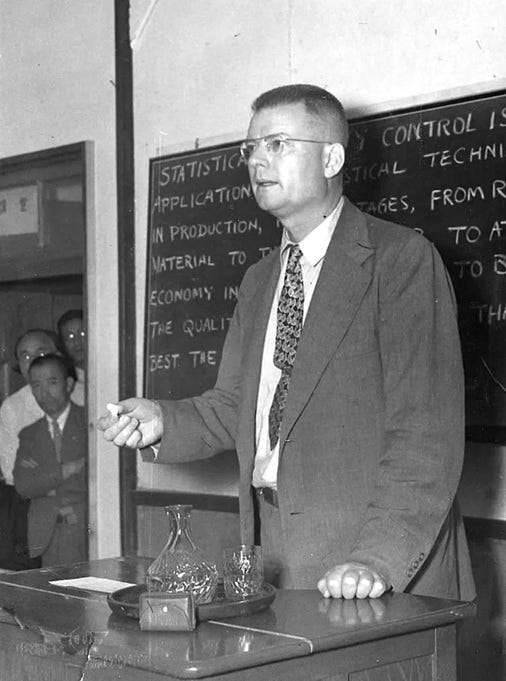
If that sounds too dry and technical for you, I recommend using the acronym SPQA and imagining a dodo bird crying “SPQA!” as part of its now-extinct mating ritual.
Deming’s speeches encompassed 14 points for optimizing businesses. Among these points are creating constancy of purpose towards product improvement, ceasing dependency on inspection to achieve quality, and driving out fear so that employees can effectively work for the company. In short, these principles revolved around efficiency, quality, and respect towards the human element of work, product, and service.
Japan’s industry leaders at the time really liked his ideas, and their implementation is reflected in how Japanese products since then are renowned for their quality, businesses are renowned for their stability, and Japan’s society is renowned for its efficiency.
The reason Deming’s principles resonated so well with the Japanese is that they were aligned with an existing concept originating from martial arts and deeply rooted in Japanese culture.
That concept is known as Kata.
The Mastered Form
Kata (型 or 形) translates to “Form.”
In a nutshell, it was originally the systemic teaching and training methods that allowed established combat techniques to be preserved and passed on correctly.
If you’ve ever done any Japanese martial arts, of which there are many, or even watched an anime where at least one character does martial arts, you’re probably familiar with the idea of performing an action again and again until achieving mastery. Think of swinging a wooden sword (bokken) the exact the same 100 times a day, every day.

From a Western perspective, the phrase that comes to mind is “practice makes perfect,” but a great deal of nuisance is lost in this interpretation.
The logic of Kata is that there is an inherently correct way to perform any action, such as swinging a sword, and that this correct way, or “form,” must be mastered. It is not about perfecting your action, but rather internalizing an action already perfected. The difference is subtle but significant.
Likely unintentionally, Deming’s principles reflect Kata, and so they made sense to the Japanese mindset. It is Kata that ensures your Japan-made devices work better and are less prone to malfunctions or needing replacement. It is Kata that keeps Japanese companies stable and consistent no matter how turbulent the global economy gets.
Marty McFly knew his stuff when he said: “All the best stuff is made in Japan.”
The Form in Everyday Life
Kata originates in martial arts and permeates Japan’s industry and business landscape, but its influence can be seen in all aspects of Japanese life.
The best example is trains.
Even in Germany, well-known for being efficient, trains are late all the time — sometimes by hours. I myself nearly lost a flight because of that. But if you’ve ever taken a train in Japan, you know they’re very punctual. On the minuscule off-chance a train is late by a couple of minutes, there will be a lot of apologizing from the staff. This is Kata.

So you boarded your train — great! If you happen to be in the very first or very last train car, you may spot a conductor performing a specific choreography: physically pointing their white-gloved finger at the signal light, then at the speedometer, and then at their watch. They do it every time, even when you’re not watching. Even in the middle of the night, when there is literally no one on the train.
Why? Because Kata.
It is done because this is how it needs to be done, and no other factor matters.
Then, when you arrive at your destination and get off the train, you will see the crowd forming an orderly line around the escalator. Everyone will stand on the left side (unless you are in Osaka, then they will all stand on the right). This is so that if anyone is in a rush, they have a free lane to move through. There is no real coordination or anyone directing the crowd. It just happens naturally.
Why? Because Kata.
Everyone has internalized it, and so it is done — and so it works, efficiently.
Trains and related phenomena are but one aspect of Japanese life in which Kata is apparent. It’s no secret that Japan is orderly in a way no other country really comes close. But is there room for individuality and creativity in such a society?
Keep, Fall, Break
The notion that Kata prohibits or disincentivizes individuality and creativity can be easily disproven by walking down the street of any major city in Japan. The sheer variance in personal styles exhibited by the passersby, the shops and their merchandise, mirror the myriad colors anyone in Japan can choose to create, experiment, or identify with.
Not in spite of Kata, but because of it.
Kata as a stable foundation from which innovation emerges is perhaps best exemplified by Japanese video game designer and toy maker Gunpei Yokoi, who worked at Nintendo from 1965 to 1996. If you’ve ever held a Game Boy in your hands, or used a D-pad on any controller, you have Yokoi to thank for. He was their original designer, though those are just the tip of the iceberg when it comes to his accolades.

Yokoi’s design philosophy was “Lateral Thinking with Withered Technology” (枯れた技術の水平思考). This meant not trying to compete by relying on expensive, cutting-edge technology that the average person would struggle to afford, but instead finding innovative ways to utilize existing technology that can be mass-produced cheaply and is thus easily accessible by the greatest number of people.
The Game Boy, for example, was released around the same time as the Atari Lynx and the Sega Game Gear — both of which were handheld gaming devices that relied on newer hardware, such as a color screen. The Game Boy’s screen, on the other hand, was monochrome.
Staying monochrome was ingenious for 2 reasons. First, it meant the Game Boy was cheaper to produce, as it didn’t require expensive technology. Since it was cheaper to produce, it could also be sold at a lower price point, making it more accessible than its technologically superior competitors. Secondly, a monochrome screen is less power-hungry, and so Game Boy users would continue to save money by spending less on batteries. It was a better deal for the client base while still offering something novel.

The first-generation Game Boy would go on to sell 118.69 million units worldwide. Meanwhile, the Game Gear sold around 14 million and the Lynx about 2 million. Not only that, the Game Boy ended up becoming pivotal to the future of the video game industry, while the other two were left in the dust of history. Chances are you didn’t even know they existed until now.
It is Yokoi’s philosophy — the idea that there is more that can be done with existing technology — that enabled such widespread success to happen.
The rules in video game hardware design in his time were that monochrome was old and done, and color was the hot new thing. He understood that well, but he also understood that being the hot new thing isn’t the most important factor in a product’s success.
So Yokoi broke the rules. He designed something new using old technology, capitalizing on affordability and accessibility. He thought laterally, and innovated.
That innovation is a signifier of the Japanese concept Shuhari (守破離), which roughly translates to “to keep, to fall, to break away.” In other words: to follow the rules, break the rules, and transcend the rules.
Following the rules is Kata, and the breaking and transcending can only be done once the rules are mastered.
Kata begets Shuhari. Mastery begets innovation.
The Cognition Behind It All
In his upcoming book, “Japan 2025 — the World’s Last Utopia,” author Felix Chan proposes to view Kata and its impact on Japan’s modern efficiency through a cognitive psychology lens. Specifically, through the framework presented by psychologist Daniel Kahneman in his 2011 bestseller “Thinking, Fast and Slow.”
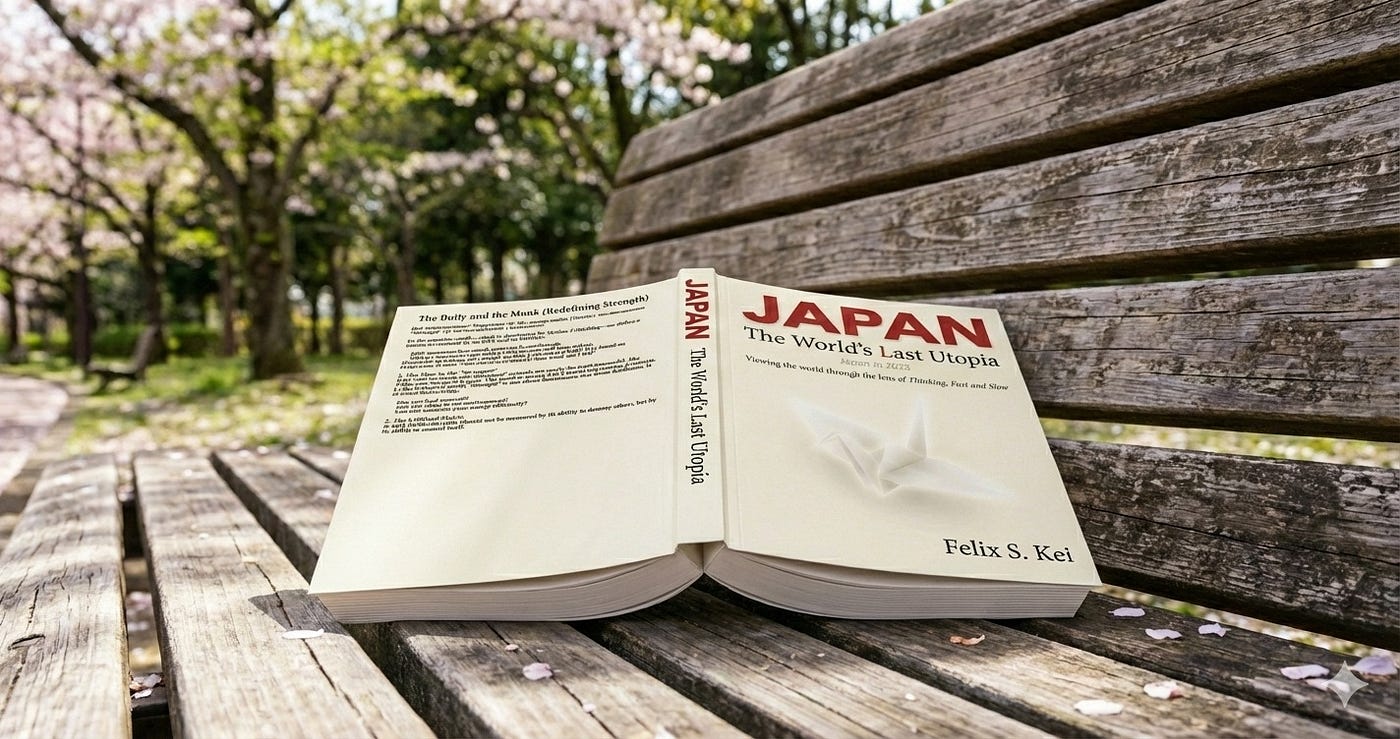
The latter is about two modes of thinking: System 1 and System 2.
System 1 thinking is fast, unconscious, and light on mental resources, but also emotional and stereotypic. System 2 thinking is slow, conscious, and demands mental resources, but also capable of logical reasoning and calculations.
You may see where I’m going with this.
Kata, as a concept, is about mastery by way of internalization — the creation of muscle memory through repetition of deep practice. It is, according to Chan, the transformation of a System 2 mental process into a System 1 mental process.
Think, for instance, about riding a bicycle. When you first learned how to do it, your body didn’t know how to balance itself properly. Now, though, even if you haven’t cycled in years, your body would know what to do the moment your feet settle on the pedals and your hands on the handlebars. You no longer need to think about it — it comes naturally, automatically. It started as System 2, but is now System 1.
As mentioned above, System 2 thinking is demanding of mental resources, while System 1 thinking is light on those resources. By turning a process like riding a bicycle from a System 2 process into a System 1 process, your brain saves those resources.
Not unlike how Yokoi designed the Game Boy to save resources.
When those resources are saved, they become available for use in other things. Things that make you happy. Things that bring meaning to your life. This Kata of resource allocation, Chan argues, is core to Japan being the wondrous way that it is.
In a society that follows and values Kata, you don’t need to consider whether or not to stop at a red light, even if there are no cars on the road. You don’t need to question whether routine maintenance is needed even though things look fine at a glance. You don’t need to think whether you should boost this quarter’s profits by firing 25% of your workforce.
This is why Japanese trains are seldom late, why its products are so high-quality and full of innovation, why its job security is high, its people polite, and its streets clean.
It is all Kata as a foundation for Shuhari.
There is a correct way to do things. An efficient way. Following that way saves mental resources for when innovation is truly needed, which is when you break away — and transcend.
Japan is proof of that.
메타데이터
- post_id
- a4912c2f1f45
- slug
- how-martial-arts-shaped-japans-modern-efficiency-a4912c2f1f45
- url
- https://medium.com/@lotusphi4/how-martial-arts-shaped-japans-modern-efficiency-a4912c2f1f45
- canonical_url
- https://medium.com/@lotusphi4/how-martial-arts-shaped-japans-modern-efficiency-a4912c2f1f45
- author_url
- https://medium.com/@lotusphi4
- status
- ok
- fetched_at
- 2026-07-28 19:40:03



