The Body Is an Electrochemical System. We Only Built Half the Industry
Most founder stories run in a straight line. You build a thing, you sell the thing, you exit. Jennifer Ernst’s does not. She started Tivic…
The Body Is an Electrochemical System. We Only Built Half the Industry
Most founder stories run in a straight line. You build a thing, you sell the thing, you exit. Jennifer Ernst’s does not. She started Tivic Health around a device that looked, in her own words, like a rectal thermometer for a cow. She took it through FDA clearance, an Indiegogo campaign that almost did not happen, a pandemic, and an IPO with eight people on the payroll and a negative gross margin. Then she handed over a company that was no longer selling a sinus device at all, but developing a phase three drug with line of sight to a US national stockpile.
Before Tivic she spent time at Xerox PARC and helped turn around a Norwegian public company, building it to roughly half a billion in market cap. What stitches all of it together is a way of thinking about the body that the device industry has been slow to act on. We sat down to trace the whole arc, from a conversation with a former landlord to a fifteen-year vision for where neurotech goes next.
Interview by Chay Carter, founder of Carter Sciences and Reccy Neuro.
[embed]
Let’s start at the beginning. What got you into bioelectronics and neurotech?
It started in a funny place. It started with a conversation with a former landlord, who was really well connected to the startup community. Before Tivic I had spent time at Xerox PARC doing business development, marketing, and sales — at a point when PARC was building its own independent business. That gave me exposure to a broad set of technologies, including early exposure to what has become the AI revolution we are living through now.
I went into one of my client companies and we built that to about a half billion market cap. It was a public market turnaround, a Norwegian based company. Coming out of that, I said I was really interested in the startup landscape, so I reconnected with that old landlord. Through a series of stories I ended up connecting to the inventor of a device that was providing a great deal of relief for sinus pain and congestion. It had come out of a collaboration he had with a doctor. The doctor had passed away, and his wife wanted him to bring it to market.
Over time we just had to look at each other and say, you have had thirty years in biomedical engineering, I know how to build companies, the sinus market is huge, it is kind of irresponsible for us not to at least give it a try. So I had the invention, and then I had to figure out why it was working. That is what really took me towards bioelectronics. There was this emerging field of how electrical fields affect things at the cellular level. At the time it was more sacral stim, back stim, deep brain stimulation, but Kevin Tracey’s work was moving towards more precise neuromodulation, and it fit so well with what we were seeing that it took me into neuroimmunology and bioelectronics.
What did the device actually look like when you first saw it?
It looked like a rectal thermometer for a cow, quite honestly. It was long, boxed, black, with a really sharp point on the end because you need very precise location of the treatment points. Eventually we looked at it and agreed it was not going to be a consumer product. What we got out of that became ClearUP, something far less intrusive that fits in your pocket. We started in 2016, our clinical study began on the first of January 2018, and we got our FDA clearance on the second of January 2019. Later that year we took it to market through Indiegogo and then into the major markets.
Tell us about the Indiegogo situation — that is quite a story.
At the time, Indiegogo was a really strong platform for medical devices to launch on. Pre-approval you could take what were effectively pre-orders. People donate to the campaign and you send them some configuration of product with other benefits, which lets you run a litmus test. It was also one of the ways funding sources were evaluating consumer outreach companies.
It takes about three months and a fairly major investment to get a campaign ready. You pull together all your assets, your testimonials, doctors backing the campaign — people teed up, so first orders come in quickly. We submitted, and it got rejected. We had been working hand in hand with them the whole way. Our liaison found out that two days before our scheduled launch — two days — Indiegogo handed down a decision that they would no longer carry FDA regulated products. You cannot make this stuff up.
So we scrambled. This was one place where having a large investor network really mattered. I tried to find anybody connected to Indiegogo at a senior level to explain that this was a launch platform for a whole new wave of consumer medical technology. We finally got permission to launch, but we were only allowed to run for one month, a critical month for proving the business case. We raised about $300,000. At the time a million was considered a good launch, so every time I talked to investors I had to explain why it was only $300,000. But it was a good signal, and probably more important were the testimonials, people writing 200 words about how much the product helped them. That is a big piece of any consumer launch.
“Our survival was turning plastics into cash. We had the parts, we had the plastics, we had the way to assemble them and sell them online.”
What was the consumer neurotech market like at the time?
One thing I learned is that you have to ask whether you are creating a category, because creating a category is expensive. What share of wallet is your product going to command in the total customer solution set? People sometimes feel that going consumer is the easier path. It is not, particularly if you are making FDA claims. Some wellness companies go out without the FDA, limiting their claims, but then you still have to be sure your customer-facing claims can be validated, because you are regulated by the FTC as well. There is one neurotech company, which will remain nameless, that got a four million dollar fine. Not because of the FDA, but because the FTC did not think the data behind their approved claims was strong enough.
When people talk about Oura or Whoop or Apple getting medical claims on the data they collect, those products had predecessors. Consumers already had a mental model. They knew fitness trackers; step counters had been around for decades. That was a big problem for us with ClearUP, because it was completely category defining. There was nothing they had seen in a doctor’s office that we had made a derivative of. We had to create a whole new category, and that is an expensive proposition. So when people say they will keep the lights on by going consumer — maybe, but then you have to be sure of really strong contribution margins. That is not just cost of goods, it is customer acquisition cost and lifetime value. Without a recurring revenue stream, lifetime value gets very difficult, because acquisition cost is easily a hundred dollars plus.
Then COVID arrived. How did that reshape the commercial launch?
In the year between Indiegogo and COVID we got online sales running and even scheduled a pilot into Best Buy, which went in store in March 2020. Each retail channel has its own physics. You have to think about how many stores, what the turnover will be, what price point a channel can accommodate. Best Buy’s consumer health cap at the time was around $200. Above that, products did not move on the shelves. We launched at $129 on Indiegogo, $149 into Best Buy, and our testing said a segment would pay up to $249. Eventually we moved the pricing up the ladder to build that contribution margin.
Then 2020 happened. Ear, Nose, and Throat (ENT) offices were shut for a year, conferences closed, so the physician-led plan we had built went on hold. My VP of operations put it perfectly: Our survival was turning plastics into cash. We had over a million dollars of potential sales sitting in parts and plastics, and a way to assemble them and sell them online. So we put the physician plan on hold and pushed everything behind the online opportunity.
You took the company public in 2021 with eight people. What was that like?
It was eight people, and my CFO resigned before we got the process going. It was an intense year. I was trying hard to raise capital privately and not necessarily go to the public market, but we had enough investors and backing from an investment banker, and we created a liquidity opportunity for our shareholders. People ask if I would do it again. There was not really another choice at that time. A lot of the sequences inside companies look like decisions in hindsight, but you have to ask whether it was truly a choice or whether you only had one pathway available.
The supply chain crisis hit simultaneously. Entrepreneurs ask what I would have done differently, and I have to say candidly, I would not try to scale a consumer electronics product company in the middle of a global supply chain shortage. When we IPO’d I had a negative sixteen percent gross margin. By the time we got through the crisis it was seventy five percent.
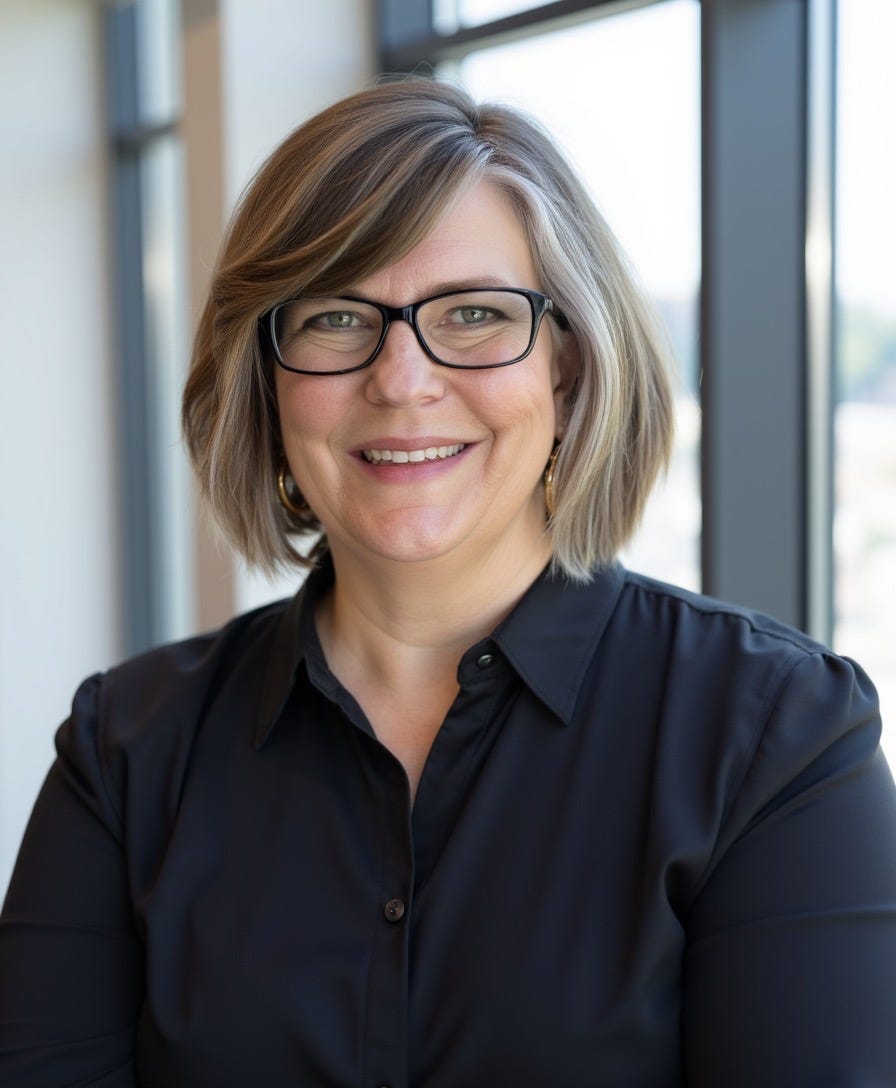
Jennifer Ernst was Co-founder and CEO of Tivic Health (now Valion Bio)
How do reimbursement and the way physicians get paid shape what actually works?
This is where it gets interesting. Subscriptions are not well supported in the reimbursement pathways. Companies that went out with a digital prescription model, which is basically a subscription, really struggled at the start. It is almost as if you need a different product design to meet reimbursement targets for a non-invasive device, things like a replaceable component, or a six month prescription that gets re-prescribed.
Then there is the question of how physicians get paid. If I am counting on an ENT to refer someone, but doing so knocks out a surgical candidate, you are not going to get that referral. In the prescription world a lot of doctors make money as featured speakers and through continuing education and support structures with pharma. Device companies have to learn from that. What caught my attention with BIOTRONIK, in the interview you did, was the point about implanters. Someone asked a room full of them whether they knew if a device was on or off, and nobody raised their hand. The remote monitoring piece is something physicians can actually bill for. Cala Health built that into their model. Some visits are about fitting and adjusting, and then there is continuous monitoring, adjusting parameters — and those are now billable services that did not exist ten years ago when I started Tivic.
Tivic ended up somewhere nobody could have predicted. Walk us through the vagus nerve work and the pivot.
By 2020 we were working to extract more value from the first product, and we also had access to work done in clinics with very reliable results. We did in-house experimentation, validated it, and took it to the Feinstein Institute for vagus nerve stimulation. If I have one heartbreaking piece of the Tivic story, it is that this work is now locked up and probably will not be pursued. We saw profound results from a cervical stimulation. There is secret sauce I cannot give away, but it gave us a two times increase in heart rate variability within twenty minutes of treatment. It changed brain wave activity, took people out of the states associated with epilepsy and into calm in the gamma areas. I was hoping to take that into a non-invasive product, something that could ride the wave around SetPoint and Microtransponder (now Mobia Medical).
But I was running a public company, so I had to look hard at how long it would take to get to market and what the funding environment would be for that kind of asset. This vagus work is really neuroimmunology, an immunomodulating function, and the company had built a base in that space. Then I came across a phase three immune-modulating drug, with a BARDA contract bar and line of sight into the national stockpile.
Thinking about what was in the best interest of shareholders, a speculative non-invasive device is probably better suited to a startup than to a public company, and a phase three drug was the responsible choice. So the last stage was turning the public vehicle into a biopharmaceutical asset. I literally woke up one morning after the licensing transaction and realised I was now the CEO of a phase three biopharma company. How could we have predicted that ten years ago? It is a great drug, with real application in oncology, discussions underway with BARDA and with Ukraine for treatment of acute radiation syndrome, and a path as a competitor to the GCSF drugs.
What is your status with Tivic now?
They call on me if they need something, sometimes literally to find the key for a file cabinet. I am still in communication, and we talk about opportunities that could come out of the vagus work. We handed the reins to someone who has done seventeen drugs, built biopharmaceutical plants and launched multiple product categories — so it was the right time. Ten years is a long time. If anyone is thinking they will build a company and flip it, plan to take at least a few months off afterwards.
“There is a trillion-dollar industry built around the chemistry of the body. I believe there is a trillion-dollar industry that will be built around the electrical side.”
If you were building a company today, what changes would you make?
What is really interesting to me now is what it would mean to build a company in an AI-native way. Think about everything we are discussing, decoding signals, finding connections across a stack of research papers, keeping two or three scientists current on the state of the art. Now imagine every single part of a company built AI-native. It could operate fast in so many dimensions at once. I was talking with a CEO recently who came into a position without realising how heavy the cash burn was, and he had to become an AI expert and force it through the company to extend his runway. From a headcount perspective the story is not only about replacing people. It is about what you can build from scratch with far less headcount and expenditure.
Where does the neurotech market go from here?
Years ago at PARC, a couple of visionaries observed that the computing revolution, and the AI revolution they could see coming, would likely be a footnote to the biologics revolution. We have already seen that in drug discovery. I think we will see it in bioelectronics too, because we are talking about mining the electrical signals of the body and being able to characterise and understand them precisely.
The thing I do not want us to miss is the lesson from computing, that distributed networks are more efficient. Client server is not always best. Edge node computing usually is, and the body has edge node computing built into its peripheral nerves. So if I look ten years forward and ask what I will be talking about that people think is crazy today, I think it is peripheral nerve stimulation and non-invasive approaches.
When I started Tivic, non-invasive was treated as pseudoscience. The deep core neurologists thought you had to go into the brain stem to do anything. We know that is not true now. Looking further out, we will see device interventions interlinked with molecular and pharmaceutical ones, and devices characterised as well as drugs are today.
The body is an electrochemical system. There is a trillion-dollar industry built around the chemistry. I believe there is a trillion-dollar industry that will be built around the electrical side, and the big question is how we marry the two up to solve the fundamental health issues that plague us as our systems age. As we are building models, they have to include the neural networks, the connectivity, the electrical signals firing and triggering chemical expression. As this progresses, there is real opportunity to accelerate clinical trials, get more meaningful discovery cycles, and accelerate time to patient, if the regulatory and payer systems can keep up. That may continue to be the logjam.
Interview by **Chay Carter for [NeuroTechX](https://neurotechx.com/)’s Content Laboratory**.
Chay Carter has 20 years of recruitment experience across London, New York, and Los Angeles. Since 2020, he has specialised in life sciences recruitment, with a growing focus on neurotechnology. In 2025, he founded Carter Sciences to support early-stage companies in neurotech and related fields with flexible, cost-conscious hiring strategies.
메타데이터
- post_id
- a4b616ecd129
- slug
- the-body-is-an-electrochemical-system-we-only-built-half-the-industry-a4b616ecd129
- url
- https://medium.com/neurotechx/the-body-is-an-electrochemical-system-we-only-built-half-the-industry-a4b616ecd129
- canonical_url
- https://medium.com/neurotechx/the-body-is-an-electrochemical-system-we-only-built-half-the-industry-a4b616ecd129
- author_url
- https://medium.com/@neurotechx
- status
- ok
- fetched_at
- 2026-06-13 07:35:29