Robinhood Built a Blockchain for Wall Street. Crypto Responded With a Cat.
Inside the most ironic chain launch in recent memory, and what the chaos actually reveals about where onchain finance is headed.
Robinhood Built a Blockchain for Wall Street. Crypto Responded With a Cat.
Inside the most ironic chain launch in recent memory, and what the chaos actually reveals about where onchain finance is headed.
Image From Pinterest
On July 1, 2026, Robinhood did something no major retail brokerage had ever done. It launched its own public blockchain.
Not a white label partnership. Not a staking product riding someone else’s rails. Its own Layer 2 network, built on Arbitrum’s technology, settling to Ethereum, designed from the ground up to bring tokenized stocks, bonds, and real-world assets into a permissionless financial system available to users in more than 120 countries.
The pitch was serious. The infrastructure was serious. The partners were serious. Uniswap. Chainlink. Morpho. BitGo. Alchemy. The event where it was unveiled, held in London and branded “The World Is Flat,” was attended by serious people talking about serious things: the future of 24/7 equity markets, decentralized lending, AI-native finance, and the global democratization of investing.
Then crypto showed up.
Within one week, a cat themed memecoin called CASHCAT had climbed to nearly $150 million in market capitalization. One trader turned an $800 position into over $1 million. Daily transactions on the chain jumped 133% in a single day. Pump.fun, Solana’s infamous memecoin launchpad, announced it had added support for Robinhood Chain tokens. At peak mania, over 16,000 new tokens were being minted on the chain in a single 24-hour window.
The CEO of Robinhood, Vlad Tenev, had told CNBC on July 2 that “assets without utility do not serve a lasting purpose.” Six days later, as CASHCAT climbed, he posted on X that while his company was building the chain to be the best for real-world assets, it “works great for memes too.” He then followed the CASHCAT token’s account.
It is one of the most honest, accidental, and revealing moments in crypto’s recent history. And it tells you everything you need to know about the tension at the center of onchain finance right now.
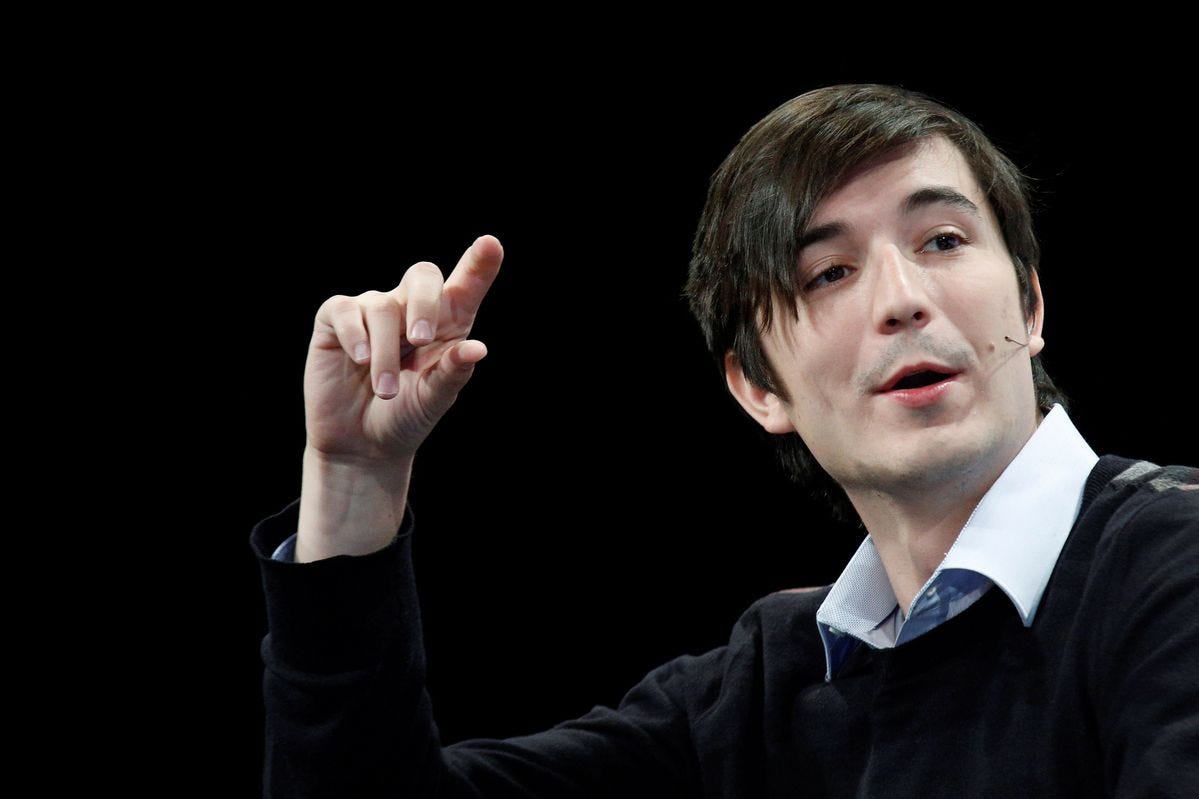
Vlad Tenev (CEO of Robinhood)
What Robinhood Actually Built
Before getting to the chaos, it’s worth understanding what Robinhood actually shipped, because it’s considerably more substantial than the meme cycle suggests.
Robinhood Chain is a permissionless, EVM-compatible Layer 2 network built on Arbitrum Orbit. That means it inherits Ethereum’s security while running faster and cheaper. The native gas token is ETH. Fees run fractions of a cent per transaction. Chainlink serves as the oracle layer for real world price feeds and cross-chain communication. BitGo handles custody infrastructure. Alchemy provides developer tooling.
At launch, Robinhood deployed Stock Tokens, which are onchain versions of equities including Nvidia, Apple, and Google, available through the Robinhood Wallet in over 120 countries outside the United States. These are not the same product as the company’s earlier EU-only derivative tokens. The new generation are structured as tokenized debt instruments redeemable for cash through authorized participant providers, with plans to enable redemption for the underlying securities directly in the future. They can be traded 24/7 on Robinhood Chain, deposited into lending pools, or used as collateral across DeFi applications, including on Uniswap, Rialto, and the decentralized exchange Lighter.
Alongside the chain, Robinhood launched Robinhood Earn, its first decentralized lending product, offering eligible U.S. users an estimated 7% annual percentage yield on USDG stablecoins, facilitated by the Morpho lending protocol. USDG, the stablecoin Robinhood helped co-found through the Paxos-led Global Dollar consortium, sits as the primary stable asset on the chain with around $200 million in market cap at the time of writing.
Robinhood also launched agentic trading infrastructure for crypto, extending the AI agent framework it had already introduced for equities in May. Eligible users can connect AI models to Robinhood’s trading tools, with the agents able to analyze markets and execute strategies under defined parameters. Ten percent of net protocol fees from the chain are routed back to the Arbitrum ecosystem, with 8% directed to its tokenholder-controlled treasury.
This is a real product stack. Not a whitepaper. Not a testnet. A functioning Layer 2 with day-one DeFi integrations, a live stablecoin, tokenized equities, a lending product, and an AI trading layer. Robinhood also announced plans to launch crypto trading in the UK, completed its expansion into Canada through the acquisition of WonderFi, and secured a capital markets services license from the Monetary Authority of Singapore.
A 28-million-user brokerage just became a blockchain operator. That’s the correct frame for understanding what happened on July 1.
What Actually Happened on the Chain
Now here’s where it gets uncomfortable.
As of July 13, 2026, roughly two weeks after launch, Robinhood Chain had attracted approximately $312 million in total value locked, 3.6 million daily transactions, and 800,000 lifetime active wallet addresses. Its DEX volume on a single day hit $563.9 million on Uniswap alone, a figure that Uniswap founder Hayden Adams confirmed publicly beat every other chain except Ethereum mainnet that day.
These are genuinely impressive numbers for a two-week-old network.
Here is the breakdown that matters: of the $312 million in TVL, the real-world assets this chain was built to serve account for approximately $12.8 million. That’s around 4% of total locked value. The rest is stablecoins, roughly $200 million of which is USDG, memecoins, and Morpho’s lending pools driven predominantly by speculative depositors chasing yield rather than institutional equity exposure.
The DEX volume isn’t coming from people trading tokenized Apple shares at 2am. It’s coming from CASHCAT. And from the ecosystem of Robinhood-themed copycat tokens that CASHCAT spawned: Cash Dog in Hood, Little John, Hoodrat, Arrow, and thousands of others. A Dune Analytics dashboard built by on-chain researcher Adam_tehc showed CASHCAT accounting for roughly 79% of aggregate market cap and 74% of volume among the top 25 Robinhood Chain memecoins at peak activity.
CASHCAT itself is built on lore. Vlad Tenev and his co-founder Baiju Bhatt briefly named their startup CashCat before settling on Robinhood, a name tied in company history to Bhatt’s love of cats. An anonymous developer found this buried in a New Yorker profile and turned it into a $150 million token before the chain was 10 days old. Pump.fun then enabled trading of Robinhood Chain tokens directly without bridging, pouring Solana’s retail memecoin audience into the new chain overnight.
Tenev’s rhetorical arc across those two weeks is worth noting. On July 2, he was publicly dismissive of assets without utility. On July 8, he was following a memecoin’s Twitter account. This isn’t hypocrisy so much as it is the market communicating something he couldn’t ignore: permissionless infrastructure doesn’t wait for your roadmap.
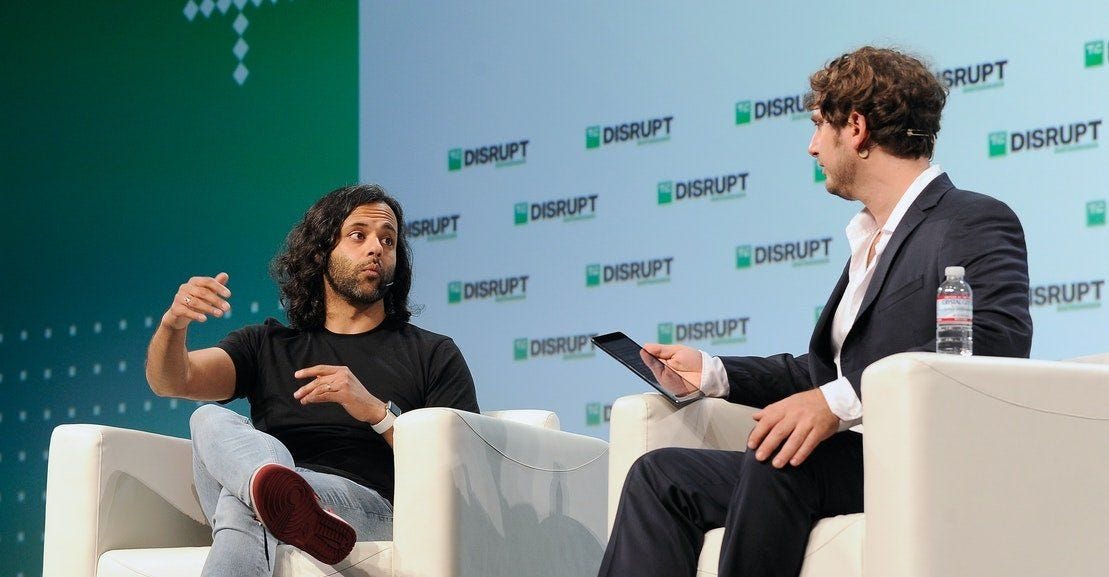
Vlad Tenev and his co-founder Baiju Bhatt
The Tension at the Center of This Story
There is a version of what’s happening on Robinhood Chain that looks like failure. The company built a regulated financial platform and retail crypto immediately turned it into a casino. The chain’s stated purpose, tokenized real-world assets accessible to a global user base, is currently a rounding error compared to the speculative trading volume around a cat with a fistful of cash.
That version is too simple. But so is the bullish counter-narrative that “this is just how chains bootstrap.”
Here’s the honest read.
Memecoins have historically served as onboarding events for new chains. They attract wallets, generate activity, create the appearance of a living ecosystem, and lower the activation energy for builders who want to deploy on infrastructure that already has users. Solana benefited from this pattern. Base benefited from it. The activity itself isn’t meaningless even when the tokens are.
What actually matters is conversion. A memecoin trader is not the same person as a retail investor who wants to hold tokenized Nvidia shares and earn yield on them at 2am from Lagos or Jakarta. The 800,000 wallet addresses on Robinhood Chain right now are not automatically a pipeline of equity-token users. If CASHCAT fades, and statistically speaking, a 2026 academic study found that 5.15% of memecoins across major chains stopped trading entirely within 24 hours of launch, most of the speculative crowd will rotate to wherever the next new chain launches and runs a similar cycle. Memecoin traders are not loyal to infrastructure. They’re loyal to momentum.
What Robinhood is actually betting on is a different kind of user: the 28 million people already in its app, who already trust it with their brokerage accounts, who already understand what Apple stock is, and who might be willing to hold a tokenized version of it on a chain they access through the same wallet they use to buy DOGE. The conversion path Robinhood needs is from its existing app users to its chain, not from memecoin degens to equity investors.
That conversion hasn’t happened yet, because it’s too early. The RWA market cap on Robinhood Chain sitting at $12.8 million two weeks after launch is not a failure, it’s simply the wrong metric for measuring what this chain is really about in year one. The right metric is how many Robinhood Wallet users are interacting with Stock Tokens six months from now, after the memecoin noise settles.
The Competitive Landscape Nobody’s Talking About Clearly
Robinhood Chain enters a crowded but structurally interesting market.
Coinbase’s Base is the most direct comparison. It’s an Ethereum Layer 2 built on the OP Stack, also backed by a major regulated retail brand, also launched with a wave of memecoin activity before settling into a more diverse DeFi ecosystem. Base now consistently ranks among the top chains by DEX volume and developer activity, two years after launch. Robinhood’s play is structurally similar but with one meaningful difference: Robinhood’s distribution channel is equity investors, not crypto natives. The audience it’s trying to activate has fundamentally different financial behavior than the audience that found Base through DeFi.
Stripe’s Tempo is another data point. Payments infrastructure built proprietary blockchain rails rather than deploying on an existing chain. That’s a different category of bet, but the same instinct: major fintech players have decided that renting someone else’s rails is a worse long-term position than owning your own.
The Mantle-xStocks play, bringing tokenized equities to a DeFi ecosystem through issuer partnerships, is a direct competitor to what Robinhood is doing with its Stock Tokens, and it got to market earlier through a third-party issuer model. The difference is that Mantle has no direct relationship with 28 million retail brokerage users. Robinhood does. Distribution is the moat, and it’s the only moat in this race that is genuinely difficult to replicate.
Then there’s the AI angle. Robinhood built the chain to be explicitly AI-native from day one, meaning AI agents are treated as first-class users alongside humans. The agent framework can analyze markets, build strategies, and execute trades autonomously within parameters set by the user. Robinhood already opened stock trading to AI agents in late May 2026, and extending that to crypto and tokenized equities on-chain closes a loop that most competitors haven’t even started building toward. If agentic finance becomes a mainstream behavior, the chain that made it easiest to deploy agents with access to real financial assets is in a structurally advantaged position. [Inference, based on current adoption trajectory of AI trading tools]
The Structural Problem That Isn’t Being Asked
Here’s the question the cheerleading coverage doesn’t ask: what happens to the Stock Token model under redemption pressure?
Robinhood’s Stock Tokens are structured as tokenized debt instruments redeemable for cash through authorized participant providers. Plans exist to enable direct redemption for underlying securities in the future, but that’s not the current mechanic. What this means in practice is that if a large number of users attempt to redeem simultaneously during a market stress event, the pathway out of the token runs through a counterparty process, not a direct custodial claim on shares.
This is a design consideration that matters enormously to anyone thinking seriously about holding meaningful exposure in tokenized equities. It doesn’t make the product worthless. It does mean the product’s risk profile during stress events is different from holding shares in a standard brokerage account, and that distinction deserves more prominent disclosure than it’s currently getting in coverage that’s largely focused on the launch excitement.
The Chainlink oracle infrastructure mitigates price manipulation risk, which is real and important. The BitGo custody arrangement provides some structural assurance around the underlying collateral. But the precise redemption mechanics, who the authorized participants are, what their capacity constraints look like, and how redemptions function when volumes spike are questions that should be answered publicly before this product scales to the audience Robinhood is pointing it at.
What Comes Next
The next 90 days on Robinhood Chain will tell you far more than the launch week numbers did. Here’s what to watch.
The memecoin cycle will either fade or stabilize. If it fades, watch what TVL does in the absence of speculative activity. If the DeFi lending pools, stablecoin balances, and Stock Token market cap hold or grow without the speculative noise, that’s a meaningful signal that durable users are finding the chain. If they collapse with the meme cycle, Robinhood has a bootstrapping problem that its brand alone won’t solve.
Watch the UK launch. Robinhood announced crypto trading in the UK is coming soon, and the UK represents one of the most important non-US markets for a tokenized equity pitch. Retail investors with established brokerage behavior and an appetite for 24/7 trading are a perfect target demographic. How quickly Robinhood converts UK app users to Chain users is an early indicator of whether the distribution moat is real.
Watch the AI agent adoption curve. Robinhood opened its stock platform to AI agents in May. Extending that to the chain for tokenized equities and crypto positions is the most structurally interesting product bet in the ecosystem right now. If eligible U.S. users start deploying agents that manage portfolios across both traditional and tokenized assets on a single chain, Robinhood has built something no one else currently has.
And watch the RWA TVL number. Not the headline TVL that includes stablecoins and lending activity. The specific tokenized equity and real-world asset market cap, sitting at $12.8 million today. If that number grows to $100 million in six months through organic Robinhood Wallet user adoption rather than DeFi yield farming incentives, the bet has started working. If it doesn’t move, the chain is a liquidity venue looking for a purpose.
The Larger Story
Robinhood Chain is not just a product launch. It’s a signal about where the industry is heading, and the signal is this: the distinction between a brokerage and a blockchain is collapsing.
The companies that built the infrastructure for one generation of investing, centralized, regulated, account-based, are building the infrastructure for the next one, permissionless, composable, agentic, global. They’re not doing it because they believe in the ideology of decentralization. They’re doing it because the financial products their users want, trading at 3am, holding yield-bearing stablecoins, getting equity exposure without geographic restrictions, are native to blockchain infrastructure in a way they are not native to a traditional brokerage backend.
Coinbase saw this first with Base. Robinhood is now making the same bet with different distribution. Stripe is making a payments version of the same bet with Tempo.
The cat token is a distraction. A funny, financially dangerous, culturally inevitable distraction that tells you something true about human behavior and how new infrastructure gets discovered. But it is not the story.
The story is that one of the world’s largest retail brokerages, with 28 million users across 38 countries, just made onchain finance its primary infrastructure bet. And it did so with serious partners, a working DeFi stack, AI agent integration, and a stablecoin it co-founded.
The chain is two weeks old. The memecoin traders will leave. The question is what they leave behind.
All figures cited reflect on-chain data and reporting from CoinDesk, Forbes, Fortune, and Motley Fool as of July 13–15, 2026. The Stock Token redemption mechanics described are based on Robinhood’s public disclosures and may be subject to change as the product develops. Nothing in this piece constitutes financial advice.
메타데이터
- post_id
- a4b9ea7127ba
- slug
- robinhood-built-a-blockchain-for-wall-street-crypto-responded-with-a-cat-a4b9ea7127ba
- url
- https://medium.com/@Daveweb3space/robinhood-built-a-blockchain-for-wall-street-crypto-responded-with-a-cat-a4b9ea7127ba
- canonical_url
- https://medium.com/@Daveweb3space/robinhood-built-a-blockchain-for-wall-street-crypto-responded-with-a-cat-a4b9ea7127ba
- author_url
- https://medium.com/@Daveweb3space
- status
- ok
- fetched_at
- 2026-07-20 05:50:45




