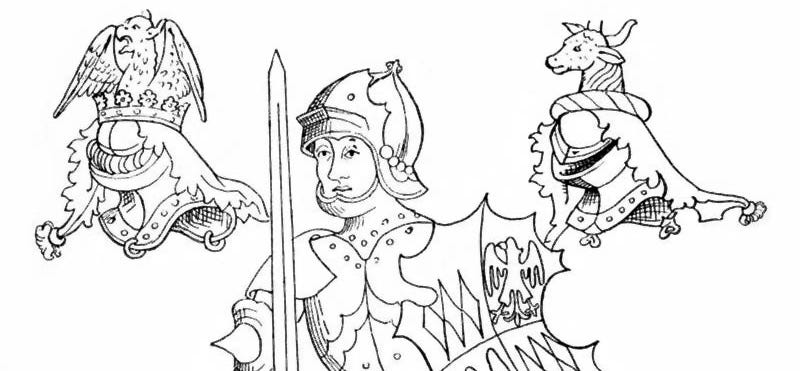
History’s Most Villainous Villains
Part IV — George Plantagenet, Duke of Clarence
History’s Most Villainous Villains
Part IV — George Plantagenet, Duke of Clarence
Introduction
History loves to remember its heroes; Henry V and the Battle of Agincourt, William Wallace and the Scottish resistance, Joan of Arc and the Hundred Years War.
But I have always found the stories of villains to be the most fascinating — and contemporary media is a testament to this sentiment.
How many antagonists can you think of who are far more intriguing, captivating and ultimately more exciting than their protagonist?
There’s The Joker, Darth Vader, Hannibal Lector, Voldemort, Sauron, Vecna…the list is endless.
And so is the list of interesting — and outright outrageous — villains of history.
For this series, I have cherry-picked a few players from across Medieval and Renaissance (and even Modern Age) history to uncover what made them so bad, but what made them so enduringly alluring…
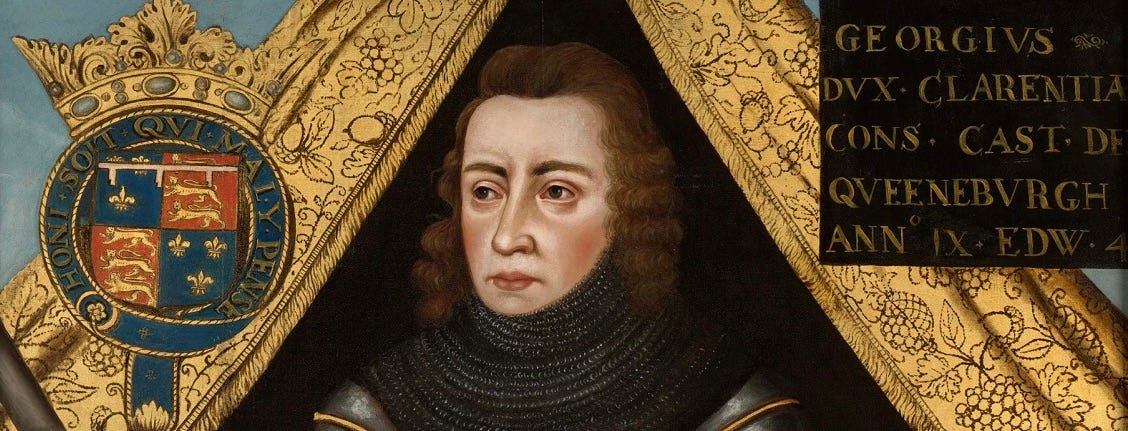
George Plantagenet, Duke of Clarence
Now, I always thought I had an interesting dynamic with my siblings, but this next villain takes the cake.
George Plantagenet was born on 21 October 1449 to the powerful Richard, Duke of York and his wife, Cecily Neville. By the time of his birth, his father was already making a play for the throne by challenging the Lancastrian King, Henry VI.

King Henry VI
As I discussed in my last article on Richard Neville, Henry was not a proficient ruler — many concluded he did not have the stomach for it and would have been more suited to a life of religious servitude. He was reserved, pious and eager to avoid war and bloodshed — which I think is actually pretty damn considerate of a King.
This meant, however, that Henry V’s hard work in France during the Hundred Year’s War was soon undone through his son’s regime. And this angered prominent men across the realm, including the Duke of York.
Eventually, the Duke was killed in battle and his eldest son — Edward, Earl of March — decisively beat the Lancastrians and deposed Henry VI, becoming King Edward IV on 4 March 1461.
With this, George was made the Duke of Clarence and Lord Lieutenant of Ireland — but he could not be satisfied.
Richard Neville, 16th Earl of Warwick, took George under his wing, sensing the Duke was unhappy with his lot in life and beginning to sour towards his brother, the King. He plotted to marry George to his eldest daughter, Isabel Neville, despite the King refusing the match.
But George and Isabel flipped Edward the bird and got hitched anyway, in Calais on 11 July 1469, flagrantly disobeying their King and affirming their position against him, with the encouragement of Warwick.

George, Duke of Clarence and Isabel Neville
Clarence and Warwick aligned themselves with Henry VI’s wife, Queen Margaret of Anjou, causing Edward IV to strip his brother of his office of Lord Lieutenant. This kind of familial betrayal was what kicked off the Wars of the Roses in the first place — but the Sons of York were meant to be a united force against their Lancastrian foes. This open rebellion was a public fuck you to Edward and shattered the strength of their house.
Isabel was soon pregnant, and George insisted they flee across the Channel to France to join Warwick. This journey was doomed for George, Isabel and their unborn child. Isabel went into labour prematurely on 17 April 1470, giving birth to a baby that would die only days later. The gender and name of their firstborn remain unknown.
But George’s misery would not last long as Henry VI would name Clarence his heir, after his own son, Edward of Westminster.
To solidify this appointment, rumour began circling that Edward IV was actually a bastard and not the true-born son of Richard of York (I wonder who started that?!). It is even said that Edward and George’s mother, Cecily, confirmed these rumours in an attempt to see Clarence become King. I thought parents weren’t supposed to have favourites?! Calling my Dad right now.

Cecily Neville, mother of Edward, George and Richard
But George would soon wake up and smell the coffee when Warwick married his youngest daughter, Anne, to Edward of Westminster. Warwick had no real desire to make George King — he merely wanted his blood on the throne and was willing to do whatever it took to achieve this.
George quickly noped out of that situation and reunited with his brother, who graciously welcomed his brother home, much to Queen Elizabeth Woodville’s dismay.
You see, when Clarence and Warwick had their first little spat and rose up against Edward IV, they actually defeated his forces at the Battle of Edgecote. While the King managed to escape, the Queen’s father, Lord Rivers, and her brother, John Woodville, were captured and murdered.
This sent shockwaves through the Woodville contingent, who had become the most powerful family in the country — something Warwick and Clarence resented and sought to destroy.
And while the King was prepared to forgive his brother to keep the peace, the Queen would never forget — though she would be sated for a time when the Earl of Warwick made a second attempt to depose Edward and was killed in the process.
Justice had been served for one of the murderers, now she only had to sit back, be patient, and watch her arrogant and careless brother-in-law sign his own death warrant…
George and Isabel went on to have went on to have three children — Margaret, Edward and Richard.
Richard was born on 5 October 1476, and his mother died less than three months later.
This loss sent George into a spiral and his actions after Isabel’s death would seal his fate.
Things are about to get wild.
The general consensus is that the Duchess of Clarence died of either consumption or childbed fever — something that was very commonplace at the time. Childbirth was one of the most dangerous events of a woman’s life, and even the rich women of court could not escape it.
Research suggests that the maternal mortality rate in the Middle Ages was around only 1.2%, and a study of 102 aristocratic Englishwomen found that about 1 in 20 women died in childbirth.
So yeah, it was to be expected during this age — no matter your title, status and bank balance. But try telling Mr Clarence that.
Modern popular media has portrayed George accusing his sister-in-law, Queen Elizabeth Woodville, of murdering Isabel through witchcraft. And while I can forgive Philippa Gregory for taking a few artistic liberties, it is important to stick to the absolute facts of the case since it culminated in the senseless death of a complete innocent.

Queen Elizbeth Woodville
George’s erratic mind and paranoia led him to believe his wife had been poisoned by one of her ladies-in-waiting, Ankarette Twynyho. In April 1477, he took it upon himself to arrest Ankarette, forcing her to stand before a mock jury Clarence had bullied into submission. They found her guilty of murder by poisoning and she was immediately hanged. Edward IV pardoned her the following year — a clear sign his brother’s actions were illegal and without the Crown’s consent.
Clarence slipped deeper into insanity. He resented everyone for everything he did not have but believed he was entitled to. Shortly after his wife's death, George put himself forward as a suitor to Mary of Burgundy, but again, the King rejected this petition. George threw a right royal tantrum and left court. His relationship with Edward would never recover.
In retaliation, the Duke of Clarence supposedly made his servants swear loyalty to him, dispersing them throughout the country to create unrest so the common folk would rebel against their King. George accused his brother of planning to disinherit him, even going so far as to state Edward was using witchcraft to poison his subjects. I want whatever drugs he was taking, thank you.
But — and it’s a pretty big but — it gets worse.
George planned to have a “strange child” pose as his son so that he could send his own away to Ireland or Flander and gather forces to invade England and depose Edward.
He also claimed he had a document signed by Henry VI, confirming Clarence as his heir in the event of his death, and the death of his son. Truly grasping at straws with that one mate.
The straw that did finally break the camel's back was when George’s astronomer, John Stacey, confessed under torture that he had “imagined and compassed” the death of the King through “black arts” at the behest of Clarence.
Once Edward discovered his own brother had been predicting and plotting his downfall, he could no longer find it in his heart to forgive.

King Edward IV
Stacey and another of George’s co-conspirators, Thomas Burdett, were subsequently convicted of treason and hanged, drawn and quartered at Tyburn.
Now, you would think that at this point, the fear of God had been put through George, but no. That is grossly overestimating George’s humility and ability to shut the fuck up and sit the hell down. Instead of falling back and laying low to avoid the heat of Edward’s wrath, he did the exact fucking opposite.
Clarence had some Lancastrian rando called John Goddard burst into Parliament to read out the declarations of innocence made by Stacey and Burdett before their deaths. It’s unclear what George’s intentions were here — was he hoping he would paint Edward as a tyrant? A murderer? Did he wish to sully his reputation on a public scale? Whatever the motive, the Duke fulfilled an obvious desire he had been carrying his whole life — the desire to humiliate his older brother for having the one title he could never possess: King.
After this, Edward summoned Clarence to Windsor.
Here, George received the dressing down of his life, before the King accused him of treason, and ordered his immediate arrest.
I would love to know how George reacted to this. I imagine him to be stunned that Edward had finally snapped and was willing to imprison a member of his own family. After all, think about everything the King let Clarence and Warwick get away with. George was probably convinced a pardon would be on its way to him imminently.
But he couldn’t have been more wrong.
Clarence was swiftly taken to the Tower and put on trial. The King even prosecuted his brother himself, and ordered Parliament to pass a bill of attainder against George. He declared the Duke was guilty of “unnatural, loathly treasons”.
Of course, Parliament did as they were told. George was convicted and condemned to death.
But if the Duke of Clarence was going to go down, he was going to go down in style.
Legend has it that George was granted the privilege of choosing his own manner of death. Now, he was never going to opt for being hanged, drawn and quartered. Nor would he want to be burned at the stake or hacked to death with an axe.
Some people — ie. me — would have probably selected beheading à la Anne Boleyn — a skilled swordsman decapitating the head in one swift and painless stroke of the sword.
But no, Clarence wanted to demonstrate he was as dumb as he was dramatic.
He chose to be drowned in, wait for it…
…a barrel of Malmsey wine insert crying laughing emoji

George’s death by wine
This bizarre and one-of-a-kind execution took place privately in the Boweyer Tower at the Tower of London on 18 February 1478.
Who knows if this tale is true, but it is one of those fantastical and iconic moments in history that I want to believe in. Given George’s character and his penchant for continuously causing utter outrage, I don’t think it’s a stretch of the imagination to conclude he really did choose to spend his final moments of life being drowned in wine. That’s the dream, right?
Sadly, George and Isabel’s children, Richard and Margaret — would go on to suffer similar fates, both being executed by Tudor Kings Henry VII and Henry VIII, respectively.
There would be no happy ending for the Clarence family, but George’s ending remains as tantalising as ever.
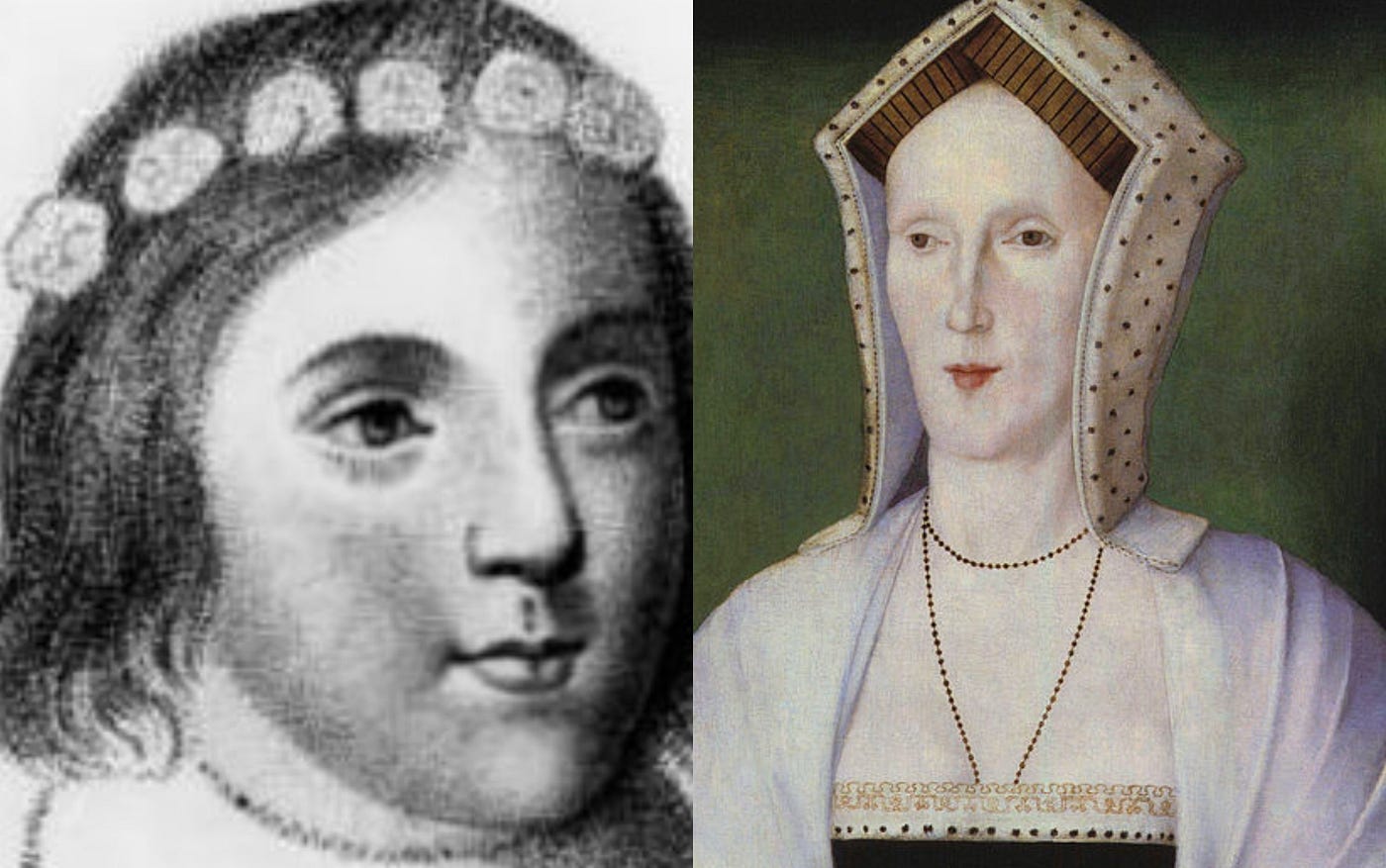
George and Isabel’s children, Edward and Margaret
메타데이터
- post_id
- a4c2f2027deb
- slug
- historys-most-villainous-villains-a4c2f2027deb
- url
- https://medium.com/@melissarosebrownlee/historys-most-villainous-villains-a4c2f2027deb
- canonical_url
- https://medium.com/@melissarosebrownlee/historys-most-villainous-villains-a4c2f2027deb
- author_url
- https://medium.com/@melissarosebrownlee
- status
- ok
- fetched_at
- 2026-09-03 02:43:03