When Loyalty at Work Disguises Itself as Fear
I called it commitment. It was survival.
Career
When Loyalty at Work Disguises Itself as Fear
I called it commitment. It was survival.
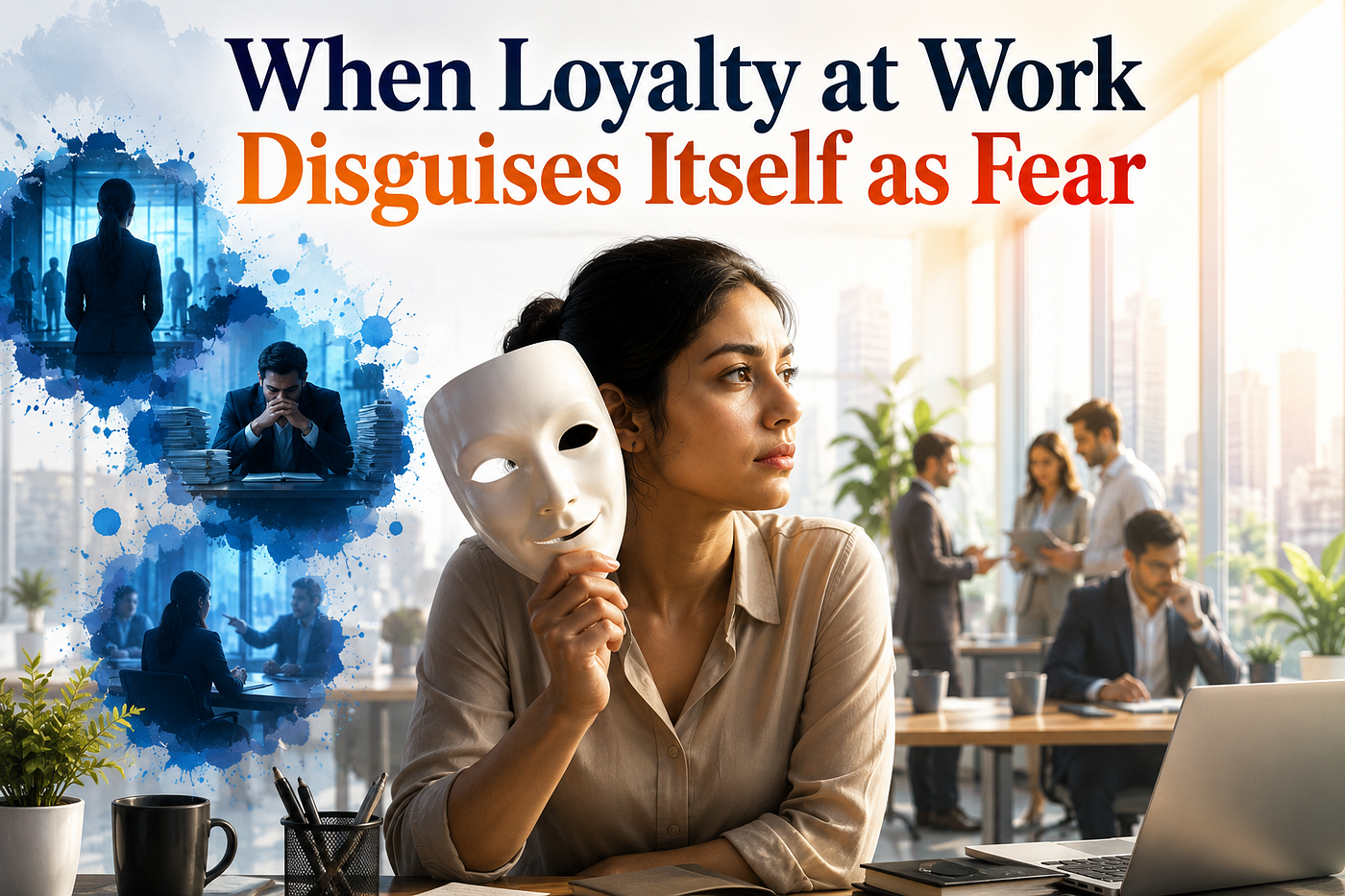
created by the author using AI
I used to describe myself as fiercely loyal at work.
I would stay late to finish tasks that were not even my own. I would defend decisions that I didn’t actually agree with. I was never a job hopper, and never even kept an email from a recruiter for longer than a day in my inbox.
I told myself this was character. I thought this was what good professional work ethics looked like: show up, stay committed, don’t cause trouble.
It took me a long time to admit it was something else.
The Manager I Never Questioned
For three consecutive years, I have witnessed a manager taking credit for his colleagues’ achievements. It happened three times; each time, I would invent an excuse for his behavior. Perhaps he has done more than appeared. Perhaps the individual was overstating his contribution.
I did not speak out about it.
Not because I believed my own excuses. I made them because saying something felt like opening a door I could never close again.
I called my silence loyalty.
Loyalty to the team. Loyalty to “not making waves.” Loyalty to a workplace that had, on paper, been good to me.
Back then, I thought I understood **work ethics in the workplace** better than most people. I didn’t realize yet that real ethics sometimes asks for more than punctuality and a quiet mouth.
Loyalty isn’t supposed to make you lie to yourself first. But mine did.
What Fear Wears to the Office
Here’s something no onboarding session tells you. No handbook says it either. Not even a work ethics training video covers this: fear at work rarely looks like fear. It wears a costume.
It shows up as “I don’t want to be that person.”
It shows up as “it’s not really my place.”
It shows up as “I need this job right now.”
And most often, it shows up as loyalty — because loyalty sounds like a virtue, and fear sounds like a weakness.
I didn’t stay silent out of respect for my boss. I stayed silent out of fear — fear of the ramifications of telling the truth — losing my good reputation, ruining a friendship, maybe even my job. I gave myself an out by labeling it loyalty when really I was just afraid.
This is why it was so difficult to detect. You cannot resolve a fear that you have convinced yourself is a virtue. No amount of training prepares you for this realization. It can only come through experiencing your fear for yourself.
The Cost of Calling It Something Else
Mislabeling fear as loyalty isn’t just dishonest. It has a cost.
Every time I stayed quiet and called it loyalty, the bad behavior I was protecting got to continue. The colleagues who lost credit for their work never got it back. The culture that let one person take what wasn’t his stayed exactly the same — because nobody said anything.
I wasn’t protecting the team. I was protecting my own comfort. I just gave it a better name.
That’s what stayed with me the longest. Not that I was afraid — but that my fear had a price, and I wasn’t the only one paying it. This, I think, is the real importance of work ethics that nobody talks about enough. It’s not just about showing up on time or hitting deadlines. It’s about telling the truth even when staying quiet is easier and safer.
Learning the Difference
Sometimes it’s hard to distinguish between loyalty and fear when it’s happening. There are times when being silent would be the smarter move. Not all differences require a showdown. Not all problems in the workplace are my issues to solve.
These days, however, before choosing silence, I pose myself another question. Instead of asking whether this is loyalty, I wonder who exactly benefits from that silence.
If the honest answer is just me, I’ve learned to be suspicious of whatever I’m calling it.
I’ve come to see honesty as one of the most underrated work ethic skills there is — right up there with reliability and showing up on time. Except nobody puts it on a performance review. You can’t test for it in an interview either. You mostly find out you have it, or don’t, in the moment it actually costs you something.
I still value steadiness at work. I still don’t want to burn things down over every disagreement. But I no longer let that steadiness go unquestioned.
Sometimes the most loyal thing I can do — for my colleagues, for myself, for the work — is stop being so afraid to say what I actually see.
메타데이터
- post_id
- a4c83fe89300
- slug
- when-loyalty-at-work-disguises-itself-as-fear-a4c83fe89300
- url
- https://medium.com/thoughtfultini/when-loyalty-at-work-disguises-itself-as-fear-a4c83fe89300
- canonical_url
- https://medium.com/thoughtfultini/when-loyalty-at-work-disguises-itself-as-fear-a4c83fe89300
- author_url
- https://medium.com/@eliana
- status
- ok
- fetched_at
- 2026-07-16 04:42:14