The Metaphysics of Iranian Civilization
Consciousness, Asha, and the Regenerative Mind of a Civilization
The Metaphysics of Iranian Civilization
Consciousness, Asha, and the Regenerative Mind of a Civilization

The Regenerative Mind of Iranian Civilization
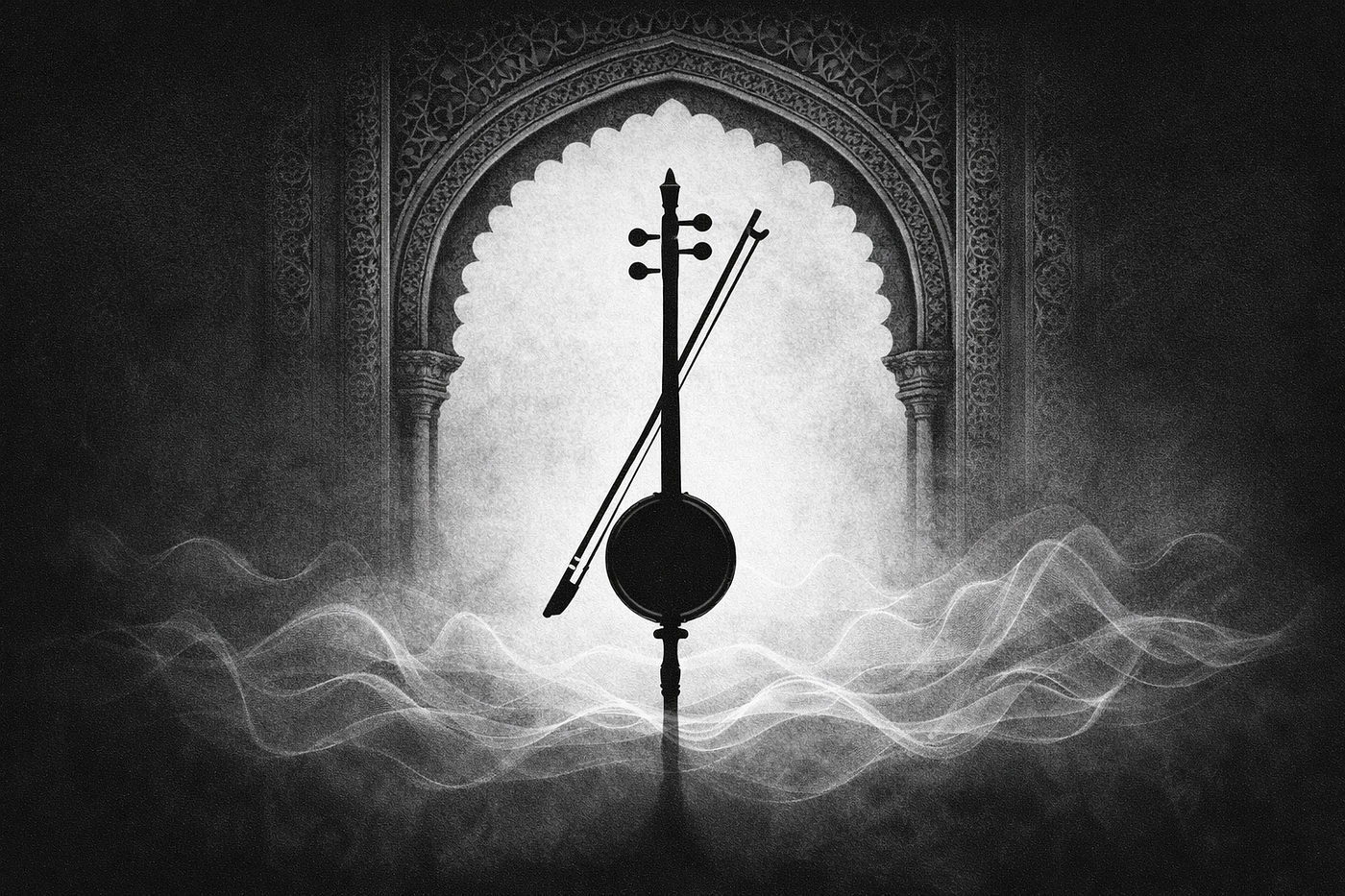
A symbolic visualization of Iranian civilization as a living continuum of consciousness, memory, philosophy, and renewal — connecting Zarathustra, Asha, Persian metaphysics, poetry, and the enduring human search for truth, meaning, and civilizational regeneration across history.
Introduction: The Deeper Historical Question
Some civilizations disappear after conquest. Others fragment beyond recognition. Some lose their language, memory, cosmology, or civilizational continuity.
Yet Iranian civilization repeatedly survived catastrophes that might have permanently dissolved many other civilizations.
Iran survived:
- the conquest of the Persian Empire by Alexander III of Macedon,
- centuries of war with the Roman–Persian Wars,
- the Arab-Islamic conquest,
- Seljuq domination,
- Mongol devastation,
- Timurid destruction,
- colonial pressure,
- and modern geopolitical upheaval.
Empires collapsed. Dynasties disappeared. Religions transformed. Political systems changed.
Yet something recognizable as Iranian civilization repeatedly regenerated itself.
The question therefore becomes:
What exactly survived?
And perhaps even more profoundly:
What underlying force repeatedly enabled Iranian civilization to regenerate after historical collapse?
This essay proposes that Iranian civilization may possess an unusually deep relationship with:
- consciousness,
- truth,
- ethical order,
- meaning,
- and civilizational self-awareness.
Its regenerative capacity may not have emerged from military power alone, nor merely from geography or politics.
Rather, Iranian civilization appears repeatedly oriented toward:
the sacredness of mind itself.
This essay explores the possibility that Iranian civilization survived because it preserved a long-duration metaphysics of consciousness — a civilizational orientation linking:
- mind,
- truth,
- cosmic order,
- ethical responsibility,
- and existential meaning.

The Metaphysics of Iranian Civilization A visual framework illustrating the relationship between consciousness, Asha, civilizational identity, crisis, regeneration, and the possibility of a Fifth Iranian Renaissance.
I. Zarathustra and the Revolution of Consciousness
Zarathustra may represent one of the earliest great revolutions in human consciousness.
The originality of Zarathustra was not merely theological.
It was ethical, cognitive, and existential.
The Gathic worldview introduced several extraordinary ideas:
- moral choice,
- individual responsibility,
- truth-seeking,
- ethical participation in cosmic order,
- and conscious alignment with reality.
Human beings were no longer merely subjects of fate or ritual.
They became participants in the moral structure of existence itself.
This was revolutionary.
The human mind acquired cosmic significance.
Thinking became ethically consequential.
Consciousness itself became part of the structure of reality.
This transformation may have profoundly shaped the deeper trajectory of Iranian civilization.
II. Asha and the Idea of Cosmic Alignment
At the center of early Iranian metaphysics stands the concept of Asha.
Asha is difficult to translate precisely because it simultaneously contains:
- truth,
- order,
- harmony,
- justice,
- reality,
- and proper alignment with existence.
Asha suggests that reality possesses intelligible structure.
The cosmos is not pure chaos.
Existence contains moral and rational order.
Human consciousness therefore has the responsibility to align itself with truth.
This idea has parallels in other civilizations:
- Logos in Greek philosophy,
- Tao in Chinese thought,
- Dharma in Indian traditions.
Yet the Iranian formulation uniquely connected:
- truth,
- ethics,
- consciousness,
- and cosmic participation.
In such a worldview:
thinking itself becomes sacred participation in reality.
This may help explain why Iranian civilization repeatedly generated:
- philosophy,
- metaphysics,
- poetry,
- and intellectual inquiry.
Civilizations that treat reality as intelligible often cultivate deeper traditions of reflection.

Asha and Cosmic Alignment
A visual representation of Asha — the ancient Iranian principle of truth, harmony, justice, and cosmic order — illustrating the belief that human consciousness achieves its highest form when aligned with the moral and intelligible structure of existence.

The Civilizational Consciousness Model
A conceptual systems map illustrating how consciousness, meaning, ethical order, memory, philosophy, adaptation, and Asha interact dynamically to generate civilizational resilience, regeneration, and long-term cultural continuity.
III. Vohu Manah and the Sacredness of Mind
Closely connected to Asha is the concept of Vohu Manah.
Vohu Manah is often translated as:
- Good Mind,
- Good Consciousness,
- or Benevolent Thought.
This concept may represent one of the earliest civilizational affirmations of the sacred importance of consciousness itself.
The mind is not merely a survival mechanism.
It becomes:
- an ethical faculty,
- a spiritual instrument,
- and a bridge between human beings and cosmic truth.
This is an extraordinarily sophisticated civilizational orientation.
Few ancient civilizations elevated reflective consciousness to such a central metaphysical position.
In Iranian civilization, thought itself acquired moral prestige.
The civilization repeatedly honored:
- philosophers,
- poets,
- sages,
- mystics,
- and seekers of wisdom.
This pattern continued through:
- Persian metaphysics,
- Islamic philosophy,
- illuminationist traditions,
- and mystical poetry.
The recurring civilizational message appears to be:
to live fully is to awaken consciousness.

Vohu Manah: Consciousness as Civilizational Energy
A symbolic interpretation of Vohu Manah — the “Good Mind” in the Iranian metaphysical tradition — representing consciousness as a sacred civilizational force through which wisdom, ethical thought, creativity, and reflective awareness become sources of renewal and human advancement.
IV. Persian Civilization as a Meaning-Making System
Iranian civilization repeatedly survived because it continuously regenerated meaning.
Political systems changed repeatedly, yet Persian civilization preserved continuity through:
- language,
- poetry,
- memory,
- symbolism,
- and philosophical imagination.
The Persian language itself became a civilizational memory system.
Figures such as:
- Ferdowsi,
- Rumi,
- Hafez,
- and Suhrawardi
did not merely produce literature.
They preserved civilizational consciousness.
Poetry became:
- philosophy,
- existential inquiry,
- metaphysics,
- and collective memory.
Persian civilization survived because it continued narrating itself across centuries of transformation.
This is crucial.
Many civilizations preserved political power temporarily.
Iran preserved meaning.
V. Bridge Civilizations and Adaptive Consciousness
Geography also played a major role in shaping Iranian consciousness.
Iran historically existed at the intersection of:
- East and West,
- nomadic and urban worlds,
- India and Mesopotamia,
- Central Asia and the Mediterranean.
Bridge civilizations are repeatedly exposed to difference.
Difference stimulates cognition.
Such civilizations often develop:
- adaptive intelligence,
- synthesis capacity,
- multilingualism,
- and philosophical flexibility.
Iranian civilization repeatedly functioned not as an isolated world, but as a civilizational processor.
It absorbed:
- Greek philosophy,
- Indian mathematics,
- Mesopotamian science,
- Islamic theology,
- Turkic political systems,
- and modern European thought.
Yet it repeatedly transformed external influences into distinctively Iranian forms.
Its regenerative capacity may therefore partly emerge from:
adaptive synthesis rather than rigid preservation.
VI. Crisis, Collapse, and Regeneration
Another recurring pattern is equally important.
Many Iranian awakenings emerged after periods of severe crisis.
The Arab conquest, Mongol devastation, constitutional crisis, and modern upheavals all triggered periods of profound self-reflection.
This suggests that Iranian civilization may possess a unique relationship between:
- suffering,
- introspection,
- and renewal.
Civilizations sometimes think most deeply when survival itself becomes uncertain.
Periods of collapse force civilizations to ask:
- Who are we?
- What must survive?
- What gives meaning to existence?
- What remains after power disappears?
Iranian civilization repeatedly responded to catastrophe not merely with resistance, but with intellectual and spiritual reorganization.
This is one of the defining characteristics of regenerative civilizations.
VI-A. The Crisis of Modern Iranian Identity
The Iranian Constitutional Revolution initiated more than political reform.
It marked the beginning of an intense civilizational encounter between Iran and modern Western civilization.
This encounter transformed Iranian society:
- intellectually,
- politically,
- technologically,
- economically,
- psychologically,
- and culturally.
For the first time in centuries, Iran entered into direct and sustained comparison with the modern industrial West.
This comparison exposed:
- technological limitations,
- institutional weaknesses,
- military vulnerability,
- economic dependency,
- and uneven modernization.
Modernization therefore produced a double effect:
- aspiration,
- but also, civilizational anxiety.
Iran increasingly became conscious not only of the achievements of modern civilization, but also of its own historical decline relative to Europe’s scientific and industrial rise.
This generated profound psychological tension.
Modern Iranian society became fragmented into competing visions:
- secular nationalism,
- constitutional liberalism,
- Marxism,
- technocratic modernization,
- political Islam,
- anti-colonialism,
- and traditionalism.
Each attempted to answer the same underlying question:
How can Iran modernize without losing itself?
At the same time, a major rediscovery of pre-Islamic Iran began to emerge.
Ancient Persia, Cyrus the Great, Persepolis, Zoroastrian symbolism, and Persian historical memory re-entered public consciousness.
Yet this revival was often more historical and symbolic than deeply philosophical.
Modern Iranian nationalism successfully revived:
- historical pride,
- archaeological consciousness,
- and ancient identity,
but it did not fully reconstruct a modern indigenous civilizational philosophy rooted in:
- Asha,
- Ashavan,
- Vohu Manah,
- or the deeper metaphysical structures of pre-Islamic Iranian thought.
This created a major asymmetry.
Islamic civilization in Iran already possessed:
- institutions,
- seminaries,
- clergy networks,
- philosophical continuity,
- educational systems,
- and organized transmission of worldview.
Institutions such as the Qom Seminary functioned not merely as religious centers, but as enduring civilizational infrastructures.
By contrast, the revival of pre-Islamic Iranian consciousness lacked:
- institutional continuity,
- mass educational infrastructure,
- accessible metaphysical language,
- and coherent political philosophy rooted in indigenous Iranian worldview.
As a result, the modern Iranian renaissance remained structurally incomplete.
It revived:
memory more successfully than metaphysics, and symbolism more successfully than civilizational consciousness.
The Constitutional and Pahlavi eras may therefore be understood not as failed renaissances, but as:
unfinished renaissances.
Their central questions remained unresolved:
- How can Iran modernize without imitation?
- How can it preserve continuity without stagnation?
- How can pre-Islamic and Islamic civilizational layers coexist creatively?
- How can science, spirituality, and indigenous consciousness be synthesized?
These unresolved tensions ultimately contributed to the revolutionary crisis of 1979.
The Iranian Revolution emerged not merely from politics alone, but from accumulated:
- resentment,
- fragmentation,
- uneven modernization,
- identity crisis,
- and unresolved civilizational contradictions.
The modern Iranian crisis therefore became not merely political or economic.
It became existential and civilizational.

Iran: The Layered Civilizational Identity
A visual exploration of Iran’s layered civilizational identity, illustrating the dynamic interaction between pre-Islamic Persian heritage, Islamic civilization, modern nationalism, Western modernity, and contemporary global influences in the ongoing formation of Iranian consciousness.

The Unfinished Renaissance (1906–1979)
A visualization of Iran’s modern constitutional and modernization era as an unfinished renaissance — a period marked by rapid transformation, Western engagement, identity fragmentation, technological acceleration, and unresolved tensions between tradition, modernity, nationalism, and civilizational continuity.
VII. Civilizational Consciousness and the Fifth Renaissance
The modern Iranian condition presents a profound historical question.
Can a civilization experiencing fragmentation, exhaustion, polarization, and uncertainty reactivate its deeper civilizational consciousness?
History suggests that Iranian civilization repeatedly renewed itself through:
- openness,
- translation,
- philosophical inquiry,
- synthesis,
- and reconnection with meaning.
A future renaissance would therefore likely require more than political transformation alone.
It would require:
- cognitive renewal,
- educational revitalization,
- philosophical courage,
- scientific engagement,
- institutional creativity,
- and a renewed relationship between consciousness and civilization.
Perhaps the deeper challenge facing Iran today is not simply political or economic.
It may be existential.
Modern civilizations often suffer not only from material crisis, but from:
- fragmentation of meaning,
- collapse of long-term imagination,
- and disconnection between knowledge and wisdom.
If Iranian civilization possesses a unique historical relationship with consciousness itself, then another renaissance may depend upon rediscovering that relationship in contemporary form.
Not through nostalgia.
Not through rigid traditionalism.
But through creative synthesis.

Toward a Fifth Renaissance
A visionary representation of Iran’s possible future renaissance, where pre-Islamic heritage, Islamic intellectual tradition, modern science, and global civilization converge into a new synthesis of consciousness, meaning, ethics, and creativity — pointing toward a renewed civilizational awakening.
VIII. Conclusion: The Regenerative Mind of Civilization
Perhaps civilizations survive not merely through military strength or political systems.
Perhaps they survive through their relationship with meaning itself.
Iranian civilization repeatedly demonstrated an unusual capacity for:
- adaptive regeneration,
- philosophical synthesis,
- preservation of memory,
- and reactivation of intellectual life after collapse.
This regenerative capacity may partly emerge from a long civilizational tradition that treated:
- consciousness,
- truth,
- ethical order,
- and reflective thought
as sacred dimensions of existence.
From Zarathustra’s ethical revolution to Persian metaphysics and poetry, Iranian civilization repeatedly cultivated the idea that:
human beings participate consciously in the structure of reality.
That idea may have become one of the deepest sources of Iranian civilizational endurance.
The future therefore may not depend solely on recovering political power or economic development.
It may depend upon recovering:
- civilizational imagination,
- meaningful inquiry,
- ethical consciousness,
- and the courage to think again.
For perhaps the deepest lesson of Iranian history is this:
Civilizations renew themselves when they rediscover not only how to survive — but why to live, why to think, and how to create meaning across time.
메타데이터
- post_id
- a52b58db80f9
- slug
- the-metaphysics-of-iranian-civilization-a52b58db80f9
- url
- https://medium.com/@david_ramezani/the-metaphysics-of-iranian-civilization-a52b58db80f9
- canonical_url
- https://medium.com/@david_ramezani/the-metaphysics-of-iranian-civilization-a52b58db80f9
- author_url
- https://medium.com/@david_ramezani
- status
- ok
- fetched_at
- 2026-06-15 20:49:13