I stop using “__init__.py” Until I Discovered Its Hidden Powers
You ever stumble upon a mysterious __init__.py file in someone’s Python project, open it… and find nothing? You stare at it like:
I stop using “init.py” Until I Discovered Its Hidden Powers
You ever stumble upon a mysterious __init__.py file in someone’s Python project, open it… and find nothing? You stare at it like:
“Bro, are you even doing anything here?”
But wait. This humble-looking file has quite the backstory. Let me tell you a tale of how it used to be the gatekeeper of all packages in Pythonland…
Little init.py why you exist?
⏳ Life Before Python 3.3 — When __init__.py Was the VIP Pass
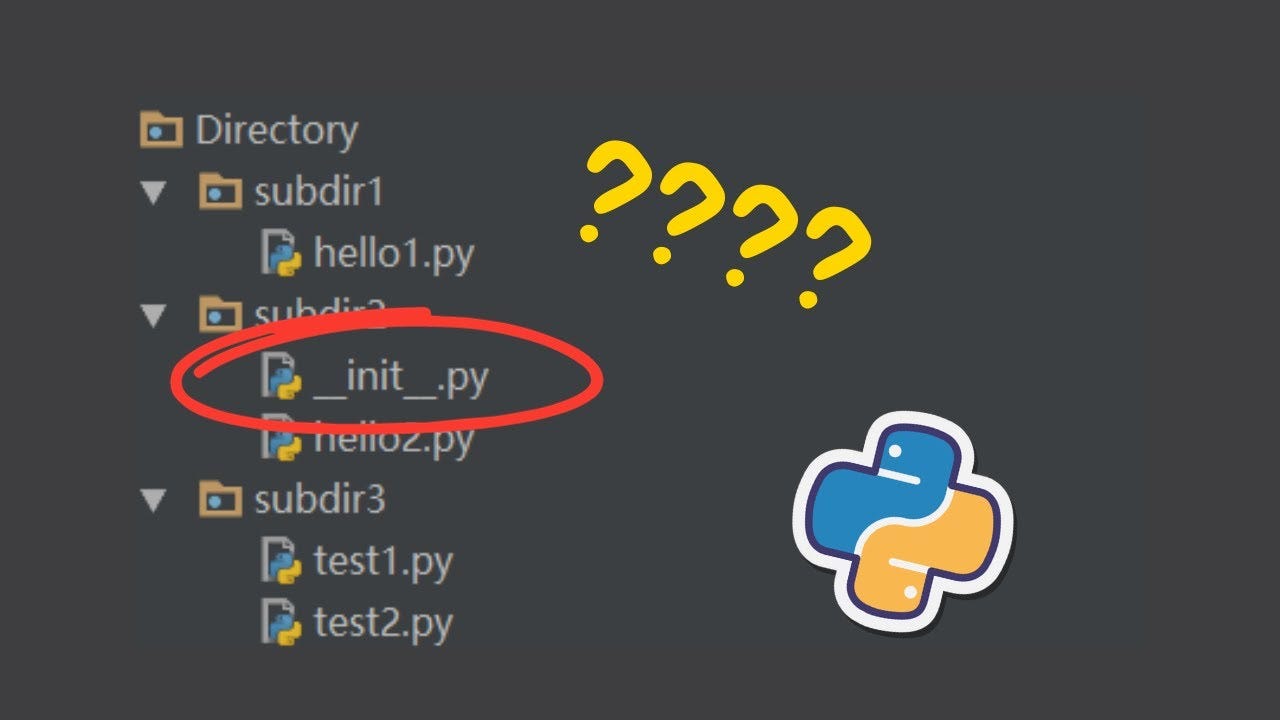
Back in the good ol’ days (pre-Python 3.3), if you had a folder in your project and wanted to treat it like a Python package, you had to include an __init__.py file.
If it wasn’t there? Python would look at your folder and say:
“Oh, cute. A normal folder. Move along.”
No VIP access. No importing. Just a sad, lonely directory.
Wait… What Even Is a Package?
- A normal directory is just a folder with some files. Python doesn’t care about it.
- A package is a special kind of directory that Python treats like a module, thanks to — you guessed it —
__init__.py.
In simple terms:
normal_folder/       --> nothing special
my_package/          --> becomes magical with __init__.py
Python 3.3: Enters the Age of Namespace Packages
Then came Python 3.3, waving its magic wand with PEP 420, introducing something called namespace packages.
Basically, it said:
“You don’t need an
__init__.pyanymore to make a package. Just start importing!”
At First, I Stopped Using __init__.py
I mean, why not? Python told me I didn’t need it anymore. So I yeeted it out of my folders faster than a memory leak in a game jam project.
But as time passed, and I .append()ed more experience to my brain RAM, I noticed something strange...
People were still using it. A lot.
So I Dug Deeper — And Guess What?
That “empty” __init__.py was pulling more weight than I thought.
Let’s talk about the real benefits of __init__.py in modern Python — explained in lemn terms 🍋 (easy and juicy).
Benefit 1: Auto-Connect to a Database on Import
Let’s say you’re working on a Flask app or FastAPI project.
Wouldn’t it be nice if, just by importing your db package, it automatically connects to the database?
Like walking into a coffee shop and your favorite drink is already being made. ☕
Here’s how __init__.py can do that:
🗂 Structure:
my_app/
├── __init__.py
└── db/
    ├── __init__.py
    └── connector.py
connector.py
def connect():
    print("Connecting to PostgreSQL...")
return {"status": "connected", "engine": "PostgreSQL"}db/init.py
from .connector import connect

# Run automatically when package is imported
connection = connect()
Usage in app:
from my_app import db

print(db.connection)
Output:
Connecting to PostgreSQL...
{'status': 'connected', 'engine': 'PostgreSQL'}
Just by importing db, the connection logic is handled. No extra setup calls needed. Clean, modular, and Pythonic.
Benefit 2: Create a Clean API for Your Package
Let’s say you built a data processing library called datamagic.
It has multiple modules like cleaning.py, analysis.py, and visuals.py.
Without __init__.py, your users will have to import like this:
from datamagic.cleaning import clean_data
from datamagic.analysis import analyze
from datamagic.visuals import plot_results
Let’s fix that.
🗂Structure:
datamagic/
├── __init__.py
├── cleaning.py
├── analysis.py
└── visuals.py
_init__.py file looks like
# datamagic/__init__.py

from .cleaning import clean_data
from .analysis import analyze
from .visuals import plot_results

__all__ = ["clean_data", "analyze", "plot_results"]
Now users can:
from datamagic import clean_data, analyze, plot_resultsCleaner. Easier. More fun than a dark-mode theme.
Need meme at this point
Benefit 3: Re-export Classes From Deeply Nested Modules
Suppose you’re building a plugin system or a microservice framework where everything is deeply nested.
Instead of making users write:
from myframework.services.core.auth.jwt_handler import TokenManagerLet them just write:
from myframework import TokenManagerHere’s how:
myframework/__init__.py

from .services.core.auth.jwt_handler import TokenManager
That’s it. Now TokenManager is one import away — no need to dive into your directory jungle.
It’s like giving your users autocomplete superpowers. ✨
Benefit 4: Registering Plugins Dynamically
Imagine you’re building a CLI tool that supports plugins.
Each plugin is a submodule like:
plugins/
├── __init__.py
├── aws.py
└── gcp.py
You can use __init__.py to auto-register all plugins on import.
# plugins/__init__.py

import os
import importlib

plugin_registry = {}

for filename in os.listdir(os.path.dirname(__file__)):
    if filename.endswith(".py") and filename != "__init__.py":
        module_name = filename[:-3]
        module = importlib.import_module(f".{module_name}", package=__name__)
        plugin_registry[module_name] = module
Now your app can:
from plugins import plugin_registry

plugin_registry['aws'].deploy()
Dynamic, scalable, and clean. Your future self will thank you.
🏁 Final Words
At first, I stopped using __init__.py because Python said I could.
But then I .extend()ed my real-world experience — and realized it’s not about what Python allows.
It’s about what makes your codebase clean, scalable, and a joy to use.
So next time you see a lonely __init__.py, remember:
He may be quiet, but he’s doing a heck of a job behind the scenes. Don’t ignore the real MVP of your package. 🐍👊
메타데이터
- post_id
- a532ea01acdf
- slug
- i-stop-using-init-py-until-i-discovered-its-hidden-powers-a532ea01acdf
- url
- https://medium.com/@Shiv-D-Coder/i-stop-using-init-py-until-i-discovered-its-hidden-powers-a532ea01acdf
- canonical_url
- https://medium.com/@Shiv-D-Coder/i-stop-using-init-py-until-i-discovered-its-hidden-powers-a532ea01acdf
- author_url
- https://medium.com/@Shiv-D-Coder
- status
- ok
- fetched_at
- 2026-06-25 16:53:31