The Big Ball of Mud: Understanding the Most Dangerous Anti-Pattern in Software Engineering
The Big Ball of Mud: Understanding the Most Dangerous Anti-Pattern in Software Engineering
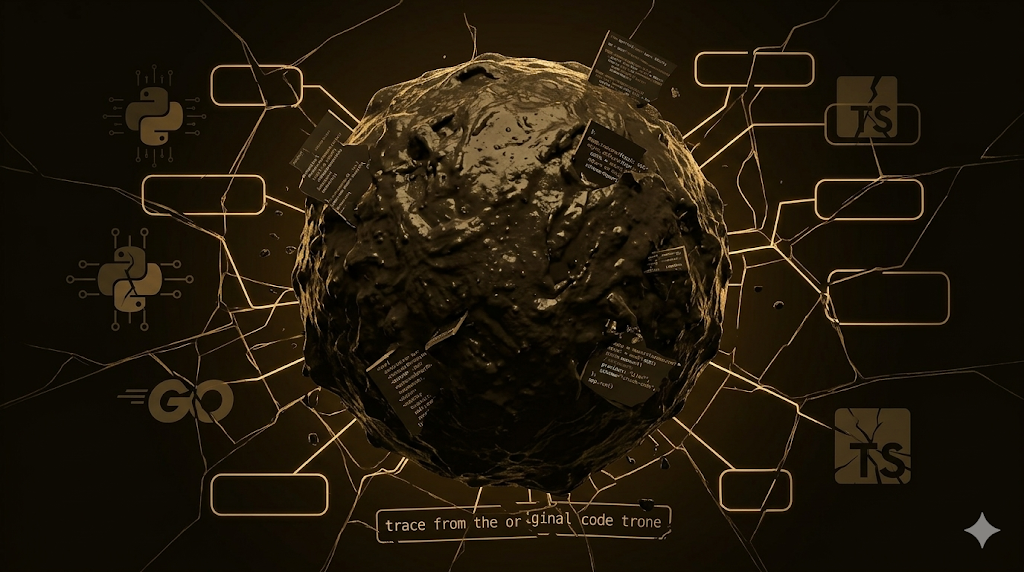
There is a term in software engineering that sounds almost comical the first time it is encountered: the Big Ball of Mud. The name conjures an image that feels too casual, too informal for a serious engineering discipline. But behind the humor sits one of the most destructive and widespread conditions in the history of software development, one that has derailed projects, exhausted engineering teams, paralyzed organizations, and quietly killed products that once showed enormous promise.
Understanding what a Big Ball of Mud is, how systems arrive at this state, what the real consequences look like in practice, and how thoughtful architecture prevents it from forming in the first place is not an academic exercise. It is one of the most practical things any software professional can invest time in learning.
What Is the Big Ball of Mud?
The term was formally introduced by Brian Foote and Joseph Yoder in their 1997 paper of the same name, presented at the Pattern Languages of Programs conference. Foote and Yoder defined it as “a haphazardly structured, sprawling, sloppy, duct-tape-and-baling-wire, spaghetti-code jungle.” The definition has aged remarkably well.
In architectural terms, a Big Ball of Mud is an anti-pattern , the opposite of a design pattern. Where a design pattern describes a proven, reusable solution to a recurring problem, an anti-pattern describes a recurring approach that appears to solve a problem in the short term but reliably produces negative consequences over time.
The Big Ball of Mud describes a system that lacks any meaningful architectural structure. Components are not organized into coherent layers or modules. The boundaries between different parts of the system are absent, blurred, or routinely ignored. Dependencies between different sections of the codebase grow organically in every direction, creating a web of interconnections that no single person fully understands and no diagram can accurately capture.
The defining characteristic of a system in this state is what engineers sometimes call the “action at a distance” problem: a change made in one part of the codebase causes an unexpected failure in a completely unrelated part, for reasons that are not obvious and require significant investigation to trace. The system has become so tightly coupled, so internally entangled, that it behaves less like a designed structure and more like a single, indivisible mass of logic where everything depends on everything else.
How Systems Reach This State
The important and counterintuitive truth about the Big Ball of Mud is that it is almost never the result of incompetent engineers making consistently poor decisions. Most systems that end up in this condition were built by capable people responding rationally to the pressures they faced at the time. The anti-pattern emerges not from individual failures but from the accumulation of individually reasonable compromises made under consistently unreasonable conditions.
The Pressure to Ship Features Quickly
The most common driver is the pressure to deliver new features faster than the underlying architecture can comfortably support. Product timelines, competitive dynamics, investor expectations, and stakeholder demands all push in the same direction: ship now, clean up later. The architectural shortcut that buys two weeks of development time feels like a reasonable trade in the moment. When that trade is made dozens of times across months or years, the accumulated debt transforms the codebase into something structurally unsound.
The engineering term for this accumulation is technical debt, a metaphor coined by Ward Cunningham. Like financial debt, technical debt carries interest. The cost of working with a poorly structured codebase grows over time: every new feature takes longer to implement because the engineer must first understand and navigate the existing tangle, every bug fix risks introducing new bugs because the code is so coupled that touching one thing disturbs another, and every architectural improvement becomes more expensive because the mess has grown larger.
Technical Debt Without a Repayment Plan
Not all technical debt is catastrophic. Sometimes it is a deliberate and legitimate choice: accept a structural shortcut to meet a critical deadline, with a clear plan to refactor once the pressure eases. The problem is that the pressure rarely eases, and the plan to refactor rarely gets executed. The debt compounds without being repaid, and what began as a calculated trade-off becomes a structural liability that the team carries indefinitely.
Systems that accumulate technical debt without any systematic effort to address it tend toward the Big Ball of Mud for a simple reason: the debt makes it harder and riskier to do the refactoring that would prevent further deterioration. The worse the architecture gets, the more dangerous and expensive it becomes to improve it, which means the worse it gets. This feedback loop is one of the most insidious dynamics in software development.
Requirements That Change Faster Than the Architecture Adapts
Software requirements change. This is not a failure of planning or communication. It is simply the nature of building products in environments where user needs evolve, markets shift, and organizational priorities respond to information that was not available when the architecture was originally designed.
The architectural danger arises when requirements change radically and repeatedly without a corresponding investment in redesigning the underlying structure to accommodate those changes cleanly. A system built to serve one set of requirements, extended and patched to serve a different set, then extended and patched again to serve another, tends to accumulate structural assumptions that no longer reflect the current reality of what the system actually needs to do. The result is a codebase that bears the archaeological record of every major pivot and product decision, with layers of old logic sitting alongside new logic, connected in ways that were never intended and cannot easily be undone.
Team Turnover and Absent Documentation
Software architecture lives primarily in the minds of the people who built it. When those people leave a project and are not replaced by clear documentation, architectural guidelines, or institutional knowledge transfer, the system’s structure becomes increasingly opaque to the engineers who inherit it.
New engineers joining a project without architectural guidance tend to follow the path of least resistance: they add code where it seems to fit, follow patterns that already exist in the codebase even when those patterns are poor ones, and avoid touching areas they do not understand. This is not negligence. It is a rational response to uncertainty. But the cumulative effect is that the system grows in ways that no one has deliberately designed, driven by the gravity of existing patterns rather than by intentional architectural decisions.
High team turnover without knowledge transfer is one of the fastest routes to a Big Ball of Mud, because each generation of engineers inherits a system they did not design, adds to it without full understanding, and leaves before the next generation fully understands what was added.
The Deceptive Early Success
One of the most important things to understand about the Big Ball of Mud is that it often works, at least initially. A system without a coherent architecture can still deliver business value. It can serve users, process transactions, generate revenue, and satisfy stakeholders for months or even years before its structural problems become debilitating.
This early success is part of what makes the anti-pattern so persistent. If poorly structured systems failed immediately, the market would quickly learn not to build them. But because they frequently succeed in the short term, the lesson that organizations draw is that architectural investment is unnecessary or excessive. The system works, so the architecture must be good enough.
The reckoning comes gradually and then suddenly. The early phase, in which features can be added relatively quickly and bugs can be fixed without too much collateral damage, gives way to a middle phase where velocity begins to slow. Tasks that should take days take weeks. Bug fixes introduce new bugs. Engineers spend more time reading and understanding existing code than writing new code. The system requires an increasing number of people to maintain a decreasing rate of progress.
In the late phase, the system has become genuinely hostile to change. Major new features are effectively impossible without either a complete rewrite or a massive, risky refactoring effort. The team spends the majority of its time in maintenance mode, fighting fires and managing incidents rather than building toward any positive vision. Instead of the engineering team driving the product forward, the product is being held hostage by its own codebase.
Research consistently supports this trajectory. Studies of software maintenance costs suggest that in severely degraded codebases, 80% to 90% of engineering time goes toward understanding and working around existing code, with only a small fraction available for new development. The Big Ball of Mud does not just slow teams down. It can effectively end the innovative capacity of an engineering organization.
The Principles That Prevent It
Prevention requires accepting a premise that some organizations resist: good architectural design is not a luxury or an academic indulgence. It is a long-term investment with a measurable return. Systems built on clear architectural principles are faster to develop against over time, cheaper to maintain, and more resilient to the requirements changes that are inevitable in any real-world product.
SOLID Principles as a Foundation
The SOLID principles, formulated by Robert C. Martin, provide a foundation for writing code that resists the deterioration toward a Big Ball of Mud at the class and module level.
The Single Responsibility Principle holds that each module or class should have one reason to change , one clear job it is responsible for doing. When a class accumulates responsibilities that do not belong together, it becomes a magnet for unrelated dependencies and a source of unexpected coupling.
The Open-Closed Principle holds that software entities should be open for extension but closed for modification , meaning that adding new behavior should not require changing existing, working code. This principle, when applied consistently, prevents the pattern where every new requirement means editing code that is already in production and has already been tested.
The Liskov Substitution Principle, Dependency Inversion Principle, and Interface Segregation Principle collectively address how components should relate to each other: through abstractions rather than concrete implementations, through minimal and specific interfaces rather than broad ones, and in ways that preserve substitutability and flexibility.
These principles do not guarantee a good architecture on their own, but their consistent application prevents many of the local-level coupling and cohesion problems that aggregate into architectural disorder at scale.
Clean Architecture and Explicit Boundaries
At the system level, approaches like Clean Architecture, Hexagonal Architecture, and Domain-Driven Design provide frameworks for organizing a system into layers with explicit, enforced boundaries. The core idea in all of these approaches is the same: the business logic at the center of the system should be independent of the infrastructure details at its edges. The database, the web framework, the external APIs, and the delivery mechanisms should depend on the core domain, not the other way around.
This separation ensures that changes to infrastructure details , switching databases, adding a new API endpoint, adopting a new framework , do not require changes to the business logic, and that changes to the business logic do not require restructuring the infrastructure. Each layer has a clear responsibility and a defined interface through which it communicates with adjacent layers.
When these boundaries are respected consistently, the system develops a structure that can be understood, extended, and maintained. When they are ignored, the system collapses inward and the boundaries dissolve.
Refactoring as a Continuous Practice
Refactoring , the practice of improving the internal structure of existing code without changing its external behavior , is the primary tool for managing technical debt before it accumulates to dangerous levels. Teams that treat refactoring as a continuous, routine activity rather than a large infrequent project are far more likely to maintain architectural coherence over time.
The critical enabling condition for safe refactoring is comprehensive automated test coverage. Without tests, refactoring is dangerous: changing the structure of code without changing its behavior is only verifiable if there is a reliable way to confirm that the behavior has not changed. With tests, refactoring becomes a manageable and continuous activity that keeps the codebase clean without requiring heroic, high-risk restructuring efforts.
A practical approach is the “boy scout rule,” a principle associated with Robert C. Martin: always leave the code a little cleaner than it was when it was found. Applied consistently across a team, this principle means that the codebase improves incrementally over time through the normal course of development, rather than deteriorating until a crisis demands an expensive cleanup.
Code Reviews and Architectural Governance
Architectural principles have no value if they are not enforced in practice. Code reviews are the most effective mechanism for catching architectural violations before they are merged into the main codebase and before they accumulate into patterns that become difficult to reverse.
Effective architectural governance through code review means not just reviewing individual changes in isolation but evaluating them in the context of the system’s intended structure. Does this change respect the layer boundaries? Does this new dependency introduce coupling that should not exist? Does this class now have more than one reason to change? These questions, asked consistently and collaboratively, prevent the slow erosion of architectural intent that characterizes the early stages of Big Ball of Mud formation.
Recognizing the Warning Signs
Understanding the warning signs that a system is moving toward a Big Ball of Mud state is as important as knowing how to prevent it from forming. Early intervention is dramatically cheaper than late remediation.
The most reliable warning signs include a growing reluctance among engineers to touch certain parts of the codebase, often described informally as “haunted” modules that everyone knows are fragile. Another is a pattern of bug fixes that consistently introduce new bugs in adjacent areas, suggesting that the code is more tightly coupled than it appears. A third is an increasing ratio of time spent reading and understanding existing code versus writing new code.
At the organizational level, warning signs include velocity that decreases consistently over time despite team growth, increasing incident rates, and an inability to estimate development tasks reliably because the unpredictable interactions between components make the scope of any change impossible to determine in advance.
Conclusion
The Big Ball of Mud is one of the most honest terms in software engineering. It describes, without euphemism, what happens to systems that are built under pressure without architectural discipline, allowed to accumulate technical debt without repayment, and handed from team to team without documentation or structural clarity. The result is a system that once served its purpose but has become its own worst obstacle.
The path away from it is not glamorous. It requires consistent application of design principles, disciplined refactoring, clear architectural boundaries, and the organizational willingness to treat technical quality as a genuine investment rather than a cost to be minimized. But for any team that wants to build software that remains maintainable, extensible, and innovative over the long term, that investment is not optional. It is the difference between a system that the team controls and a system that controls the team.
메타데이터
- post_id
- a5762148b34f
- slug
- the-big-ball-of-mud-understanding-the-most-dangerous-anti-pattern-in-software-engineering-a5762148b34f
- url
- https://medium.com/techsync/the-big-ball-of-mud-understanding-the-most-dangerous-anti-pattern-in-software-engineering-a5762148b34f
- canonical_url
- https://medium.com/techsync/the-big-ball-of-mud-understanding-the-most-dangerous-anti-pattern-in-software-engineering-a5762148b34f
- author_url
- https://medium.com/@eng.fadishaar
- status
- ok
- fetched_at
- 2026-06-10 13:10:15