Piles and Pilonidal Sinus: Understanding the Difference, Symptoms, Causes and Treatment Options
Many people confuse Piles and Pilonidal Sinus because both conditions occur around the lower body and often cause pain while sitting…
Piles and Pilonidal Sinus: Understanding the Difference, Symptoms, Causes and Treatment Options
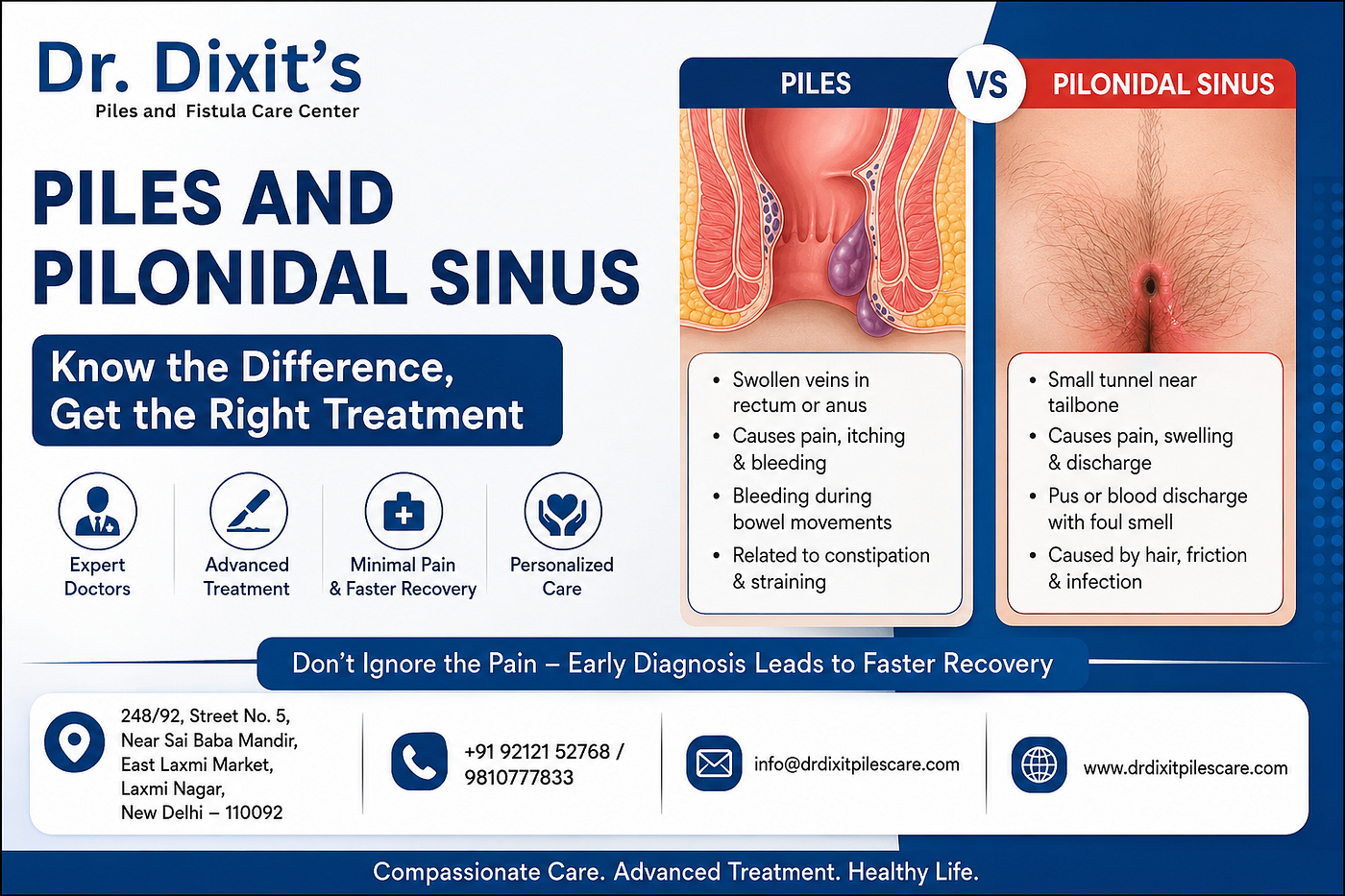
Many people confuse **Piles and Pilonidal Sinus** because both conditions occur around the lower body and often cause pain while sitting. However, these are completely different medical conditions with different causes, symptoms, and treatments.
Understanding the difference can help you seek the right treatment early and avoid unnecessary complications.
What Are Piles?
Piles, also called Hemorrhoids, are swollen and inflamed veins in the rectum or anus. They develop due to increased pressure in the lower rectum and can occur internally or externally.
Common Causes of Piles
- Chronic constipation
- Straining during bowel movements
- Pregnancy
- Obesity
- Low-fiber diet
- Sitting for long periods
- Heavy lifting
Symptoms of Piles
- Bleeding during bowel movements
- Itching around the anus
- Pain during passing stool
- Swelling around the anal area
- Mucus discharge
- Lump near the anus
What Is Pilonidal Sinus?
A **Pilonidal Sinus** is a small tunnel or cavity that develops in the skin near the tailbone, usually at the top of the buttock cleft. It commonly contains hair, debris, and dead skin cells and may become infected over time.
Unlike piles, it is not related to the rectum or bowel movements.
Common Causes of Pilonidal Sinus
- Ingrown hair
- Excessive body hair
- Prolonged sitting
- Friction and pressure
- Obesity
- Poor hygiene
- Family history
Symptoms of Pilonidal Sinus
- Pain near the tailbone
- Swelling above the buttocks
- Pus or blood discharge
- Bad smell from discharge
- Fever during infection
- Difficulty sitting comfortably
Pilonidal sinus often affects young adults, office workers, drivers, and individuals who sit for long hours.
How to Know Whether It Is Piles or Pilonidal Sinus
Ask yourself these questions:
Does the pain increase during bowel movements?
If yes, piles are more likely.
Is the pain located near the tailbone?
This strongly suggests pilonidal sinus.
Is there bleeding while passing stool?
This usually indicates piles.
Is there pus discharge with a bad smell?
This is more typical of pilonidal sinus.
Is sitting becoming painful?
Pilonidal sinus is often responsible for severe sitting discomfort.
Why People Commonly Confuse These Conditions
Both diseases can:
- Cause pain while sitting
- Produce swelling near the buttocks
- Lead to embarrassment and delayed treatment
- Require surgical treatment in advanced stages
However, the underlying disease process is completely different.
Which Condition Is More Serious?
Both conditions can become serious if ignored.
Untreated Piles Can Lead To:
- Severe bleeding
- Prolapsed hemorrhoids
- Anemia
- Thrombosed piles
Untreated Pilonidal Sinus Can Lead To:
- Recurrent infections
- Multiple sinus tracts
- Chronic abscess formation
- Difficulty walking and sitting
Pilonidal sinus usually has a higher recurrence rate if not treated properly.
Modern Treatment Options for Piles
Treatment depends on severity and may include:
- High-fiber diet
- Stool softeners
- Medications
- Rubber band ligation
- Infrared coagulation
- Stapler surgery
Most patients recover quickly with minimally invasive procedures.
Modern Treatment Options for Pilonidal Sinus
Treatment options include:
- Incision and drainage
- Hair removal therapy
- Excision surgery
- Flap procedures
piles treatment is increasingly preferred due to reduced pain, less bleeding, and faster recovery.
Prevention Tips for Both Conditions
To Prevent Piles
- Eat a high-fiber diet
- Drink plenty of water
- Avoid straining during bowel movements
- Exercise regularly
- Avoid prolonged sitting on the toilet
To Prevent Pilonidal Sinus
- Maintain proper hygiene
- Remove excess hair around the area
- Avoid sitting for long periods
- Maintain healthy body weight
- Wear loose clothing
When Should You Visit a Doctor?
Seek medical help immediately if you experience:
- Persistent rectal bleeding
- Severe pain while sitting
- Fever with swelling
- Pus discharge
- Recurrent infections
- A painful lump near the anus or tailbone
Early diagnosis can prevent surgery and improve recovery outcomes.
Looking for Expert Treatment?
If you are confused between Piles and Pilonidal Sinus, obtaining an accurate diagnosis from experienced specialists is crucial. The experts at Dr Dixit Piles Care provide advanced diagnosis and modern treatment options designed for faster recovery and minimal discomfort.
Conclusion
Although Piles and Pilonidal Sinus may appear similar because both cause discomfort in the lower body, they are entirely different conditions. Piles affect swollen veins in the anus or rectum, whereas pilonidal sinus develops near the tailbone due to trapped hair and infection.
Recognizing the location of pain, type of discharge, and associated symptoms can help identify the condition early and ensure proper treatment.
If you notice persistent symptoms, bleeding, swelling, or pain while sitting, consult specialists at Dr Dixit Piles Care for accurate diagnosis and personalized treatment before complications arise.
Frequently Asked Questions
1. Is pilonidal sinus the same as piles?
No. Piles are swollen veins in the rectum or anus, while pilonidal sinus is an infected tunnel or cavity near the tailbone caused by trapped hair and debris.
2. Can piles cause tailbone pain?
No. Tailbone pain is more commonly associated with pilonidal sinus rather than hemorrhoids.
3. Which is more painful, piles or pilonidal sinus?
Pain varies by severity, but infected pilonidal sinus often causes severe pain while sitting and walking.
4. Can pilonidal sinus heal without surgery?
Mild cases may improve temporarily, but recurrent or infected pilonidal sinus usually requires medical treatment or surgery.
5. Does pilonidal sinus cause bleeding during bowel movements?
No. Bleeding during bowel movements is more commonly associated with piles.
6. Can prolonged sitting cause both piles and pilonidal sinus?
Yes. Long periods of sitting increase pressure on the anal region and tailbone area, increasing the risk of both conditions.
메타데이터
- post_id
- a59574ab153d
- slug
- piles-and-pilonidal-sinus-understanding-the-difference-symptoms-causes-and-treatment-options-a59574ab153d
- url
- https://medium.com/@drdixitspilesandfistulacarece/piles-and-pilonidal-sinus-understanding-the-difference-symptoms-causes-and-treatment-options-a59574ab153d
- canonical_url
- https://medium.com/@drdixitspilesandfistulacarece/piles-and-pilonidal-sinus-understanding-the-difference-symptoms-causes-and-treatment-options-a59574ab153d
- author_url
- https://medium.com/@drdixitspilesandfistulacarece
- status
- ok
- fetched_at
- 2026-07-07 06:24:42