Why Helium Leak Detection Should Be Part of Your CCI Strategy?
Container Closure Integrity (CCI) ensures that packaging systems remain properly sealed, helping preserve the sterility and safety of…
Why Helium Leak Detection Should Be Part of Your CCI Strategy?

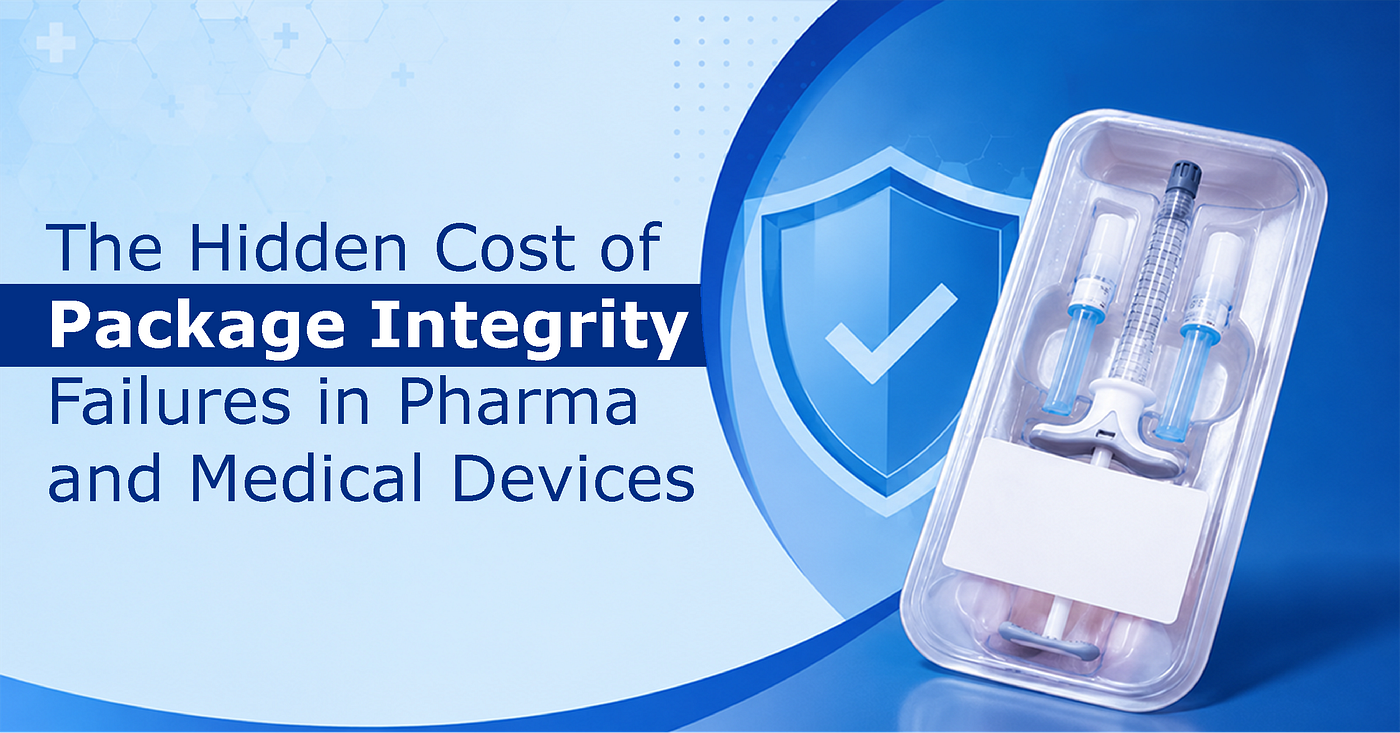
Container Closure Integrity (CCI) ensures that packaging systems remain properly sealed, helping preserve the sterility and safety of pharmaceutical and medical device products. Regulatory expectations and industry standards emphasize the need for reliable, scientifically sound test methods capable of detecting leaks that could compromise product integrity. Within this framework, Helium Leak Testing has emerged as a highly sensitive and quantitative approach that complements and strengthens an overall CCI strategy. By using helium as a tracer gas, manufacturers can achieve precise, repeatable, and defensible integrity verification across a wide range of packaging formats and lifecycle stages.
Limitations of Probabilistic CCI Testing Methods
Traditional CCI test methods, such as dye ingress and microbial ingress, are still used but have clear limitations:
- They may miss very small leaks that can still compromise sterility.
- Results depend on visual checks, which can vary between operators.
- Testing often damages the package, leading to product loss.
- Regulatory guidance now favors more reliable, measurable deterministic test methods.
Why Helium Is an Ideal Tracer Gas ?
Helium is well suited for leak detection for many reasons:
- Its small size allows it to escape through tiny leaks.
- Its low presence in air makes leak detection more accurate.
- Sensitive instruments measure helium precisely, providing reliable results.
- Early leak detection helps maintain package integrity and product safety.
Applications Across the Product Lifecycle
Helium leak testing can be used throughout the product lifecycle. During research and development, it helps evaluate package designs and materials. In later stages, it supports validation, stability studies, and routine quality checks. Because helium testing provides measurable data, it is useful for decision-making in both clinical and commercial manufacturing. It can be applied to many packaging types, including vials, syringes, cartridges, and flexible packaging.
Integration of Helium Leak Detection with SIMS 1915+ Technology
The SIMS 1915+ is an advanced helium-based leak detection system for pharmaceutical and medical device packaging. It offers greater sensitivity and accuracy than traditional dye or bubble tests. Packages are filled with helium, and any escaping gas is detected using a sensitive spectrometer, ensuring consistent and repeatable results.
SIMS 1915+ supports package development, validation, production setup, and routine monitoring. It works with many package formats such as vials, syringes, blister packs, foil pouches, bottles, and medical devices. Optional low- and ultra-low temperature testing allows packages to be evaluated under real storage conditions for vaccines and biologics.
Conclusion
A comprehensive CCI strategy must balance sensitivity, reliability, and practicality across the product lifecycle. While traditional test methods continue to play a role, their limitations highlight the need for more advanced, deterministic solutions. Helium CCI Testing offers a proven, quantitative approach that enhances leak detection capability, supports regulatory expectations, and provides meaningful data for risk-based decision-making. By incorporating helium leak detection into a broader CCI framework, manufacturers can improve confidence in package integrity and better protect product quality and patient safety.
메타데이터
- post_id
- a5995dace7e5
- slug
- why-helium-leak-detection-should-be-part-of-your-cci-strategy-a5995dace7e5
- url
- https://medium.com/@pti.ccit/why-helium-leak-detection-should-be-part-of-your-cci-strategy-a5995dace7e5
- canonical_url
- https://medium.com/@pti.ccit/why-helium-leak-detection-should-be-part-of-your-cci-strategy-a5995dace7e5
- author_url
- https://medium.com/@pti.ccit
- status
- ok
- fetched_at
- 2026-06-25 12:15:08