Redesigning the Delivery System for Out-of-Home Network Integration
Home delivery is hitting a wall, as shrinking margins push carriers to bundle volumes. The logistics industry’s instinct has been to solve…
Redesigning the Delivery System for Out-of-Home Network Integration
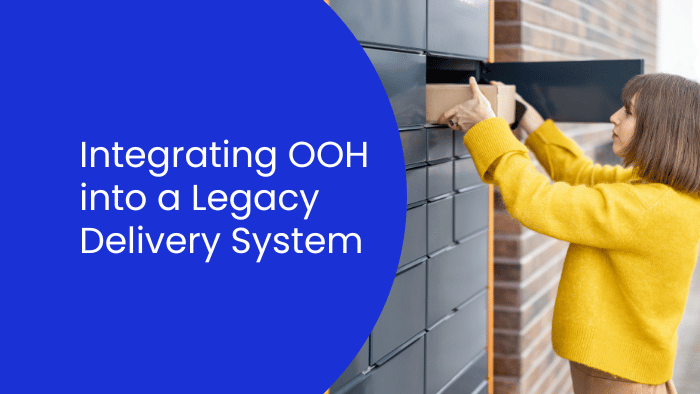
Home delivery is hitting a wall, as shrinking margins push carriers to bundle volumes. The logistics industry’s instinct has been to solve the last mile cost problem with expanding their Out-of-Home (OOH) infrastructure: build more lockers, expand PUDO networks, push recipients toward out-of-home delivery as the default. However, merely building this infrastructure will not make last mile delivery cheaper. To increase productivity, the delivery system needs a redesign.
“The industry is currently investing heavily in new delivery structures, but that alone does not guarantee success. The decisive factor will be which models are accepted by customers and can also be operated profitably.”
— Rico Back, former CEO of GLS and Royal Mail Source: SKR Advisors
This article proposes a delivery orchestration model that combines home and out-of-home deliveries to provide an excellent customer experience while retaining efficiency and being mindful of costs at the final stage of delivery.
Why the Delivery System Needs a Redesign
Older delivery stacks often depend on address-centric workflows, static delivery routes, and minimal real-time network intelligence, which makes OOH harder to slot in cleanly. The practical risk is bolting lockers onto an old system without changing the underlying route planning, which can leave you with extra complexity but not enough cost reduction. It is important that carriers factor in parcel lockers and pick up points in their delivery route planning and optimization.
3 Problems with Disconnected Locker-First Strategies
Dropping 500 parcels at a single locker bank is transformatively cheaper per stop than 500 individual home deliveries. However, when carriers treat OOH networks as an isolated silo separate from their core routing, they run into three structural roadblocks:
- Rigid Delivery Systems vs. Fluid Customer Preferences: Consumer preferences change by situation. A bulky order needs to go home; a time-sensitive package belongs in a locker on the commute; a work delivery goes to the office. If your routing system can’t adapt to these shifting needs on the fly, consumers feel forced, resulting in a poor experience they pass back to the retailer.
- Increased Cost of Home Deliveries: Shifting volume to static lockers thins out your home delivery routes. Fewer home stops mean the fixed costs of the driver and vehicle are spread across fewer packages — skyrocketing the unit cost of the remaining home deliveries. Without integrated routing to balance both, locker growth destroys home delivery economics.
- Lack of Digital Maturity: Smart orchestration assumes carriers have access to real-time OOH data — live locker capacity, opening hours, and availability. In many logistics companies, this data layer is missing. Bridging the gap between the locker and route planning plus real-time optimization is the single biggest opportunity in the last mile today.
A solution to these problems with OOH delivery is to co-route them so you capture the cost advantages of consolidated locker drops while maintaining the density of your home routes.
What an Orchestrated Delivery Process Looks Like
To understand what this integrated approach looks like in practice, let’s look at a typical mid-morning scenario playing out on a dense urban route.
- The Context: A driver is twelve stops into their daily route, navigating a tight schedule. Simultaneously, a recipient sees their delivery ETA narrow on their tracking app and realizes they will be out of the house when the driver arrives.
- The Smart Intervention: Instead of facing a guaranteed failed delivery, the recipient opens the app to redirect the package. They aren’t shown a generic list of every locker in the city. Instead, the backend system filters and displays a curated selection of OOH locations already integrated into that driver’s active path. The recipient selects a locker just two minutes from their office.
- The Real-Time Execution: The moment the selection is made, the routing engine recalculates. The locker stop is injected seamlessly into the driver’s remaining sequence — not as a costly detour, but as a natural next step within the geographic cluster the driver is already working through.
- The Multi-Transaction Efficiency: When the driver pulls up to the locker bank, the system maximizes the stop. The driver drops off the redirected parcel, unloads three other pre-assigned OOH deliveries, and retrieves two returns lodged by other customers. One stop, multiple transactions, zero wasted time.

The Advantages of Delivery Orchestration Factoring in OOH Infrastructure
OOH delivery helps depots reduce costs by increasing the stop factor — a few locker stops can handle 300+ packages, compared to 80–120 stops on a home delivery route. This efficiency reduces fuel consumption, labor costs, and overall delivery time, making operations more cost-effective. Smartly integrating the OOH network into the delivery system has clear advantages:
- For the Carrier: No redelivery costs, a route that ran exactly to plan, and a unit cost that reflects OOH efficiency rather than a failed home delivery attempt.
- For the Driver: A clean, predictable sequence with precise navigation and no manual backtracking and a shorter service time.
- For the Recipient: A package securely collected via a quick QR code scan on their walk home from work.
How to make the Delivery Processes Flexible
Achieving operational agility requires a single, unified routing intelligence layer that bridges driver guidance, recipient experience, and real-time OOH infrastructure status.
- **Intelligent Route Planning **What it does: Builds balanced routes based on volume forecasts. Is able to filter OOH stops and create dedicated locker routes. Why it matters: Maximizes route density before the driver leaves the depot.
- **Dynamic Route Optimization **What it does: Continuously monitors route progress, factoring in real-time changes like traffic, live parcel rerouting, as well as incoming jobs and automatically adapts the route to the most efficient path. Why it matters: Keeps the route flexible, efficient, and predictable even though changes occur.
- **Route-Compatible UX **What it does: Shows consumers OOH options when the driver is already on their route. Why it matters: Protects network density while offering genuine choice.
- **Two-Way Locker Tasks **What it does: Blends drop-offs and return pick-ups into a single stop. Why it matters: Maximizes the profitability of every single halt.
The ability to dynamically adjust last-mile deliveries is becoming a critical differentiator in the OOH landscape, helping logistics providers transform legacy delivery networks into truly flexible last-mile systems.
Optimizing the Last Mile for Lockers
The key to making OOH work isn’t just installing more lockers, it’s driving more volume into them and ensuring that home delivery remains cost-efficient. Engaging consignees through real-time tracking and last-minute parcel redirects can balance the system by increasing locker utilization, optimizing routes, and preventing delivery failures.
OOH delivery has potential — but without smarter orchestration, it risks creating as many inefficiencies as it solves.
Learn how delivery companies can level up their delivery systems and orchestrate their last mile.
메타데이터
- post_id
- a5a4e6e46382
- slug
- redesigning-the-delivery-system-for-out-of-home-network-integration-a5a4e6e46382
- url
- https://medium.com/@bettermile/redesigning-the-delivery-system-for-out-of-home-network-integration-a5a4e6e46382
- canonical_url
- https://medium.com/@bettermile/redesigning-the-delivery-system-for-out-of-home-network-integration-a5a4e6e46382
- author_url
- https://medium.com/@bettermile
- status
- ok
- fetched_at
- 2026-08-02 10:42:44