The US plans to close 27 GW of coal-fired power plants by the end of 2028
According to the U.S. Energy Information Administration (EIA), total installed coal-fired power capacity in the U.S. will decline from 172…
The US plans to close 27 GW of coal-fired power plants by the end of 2028
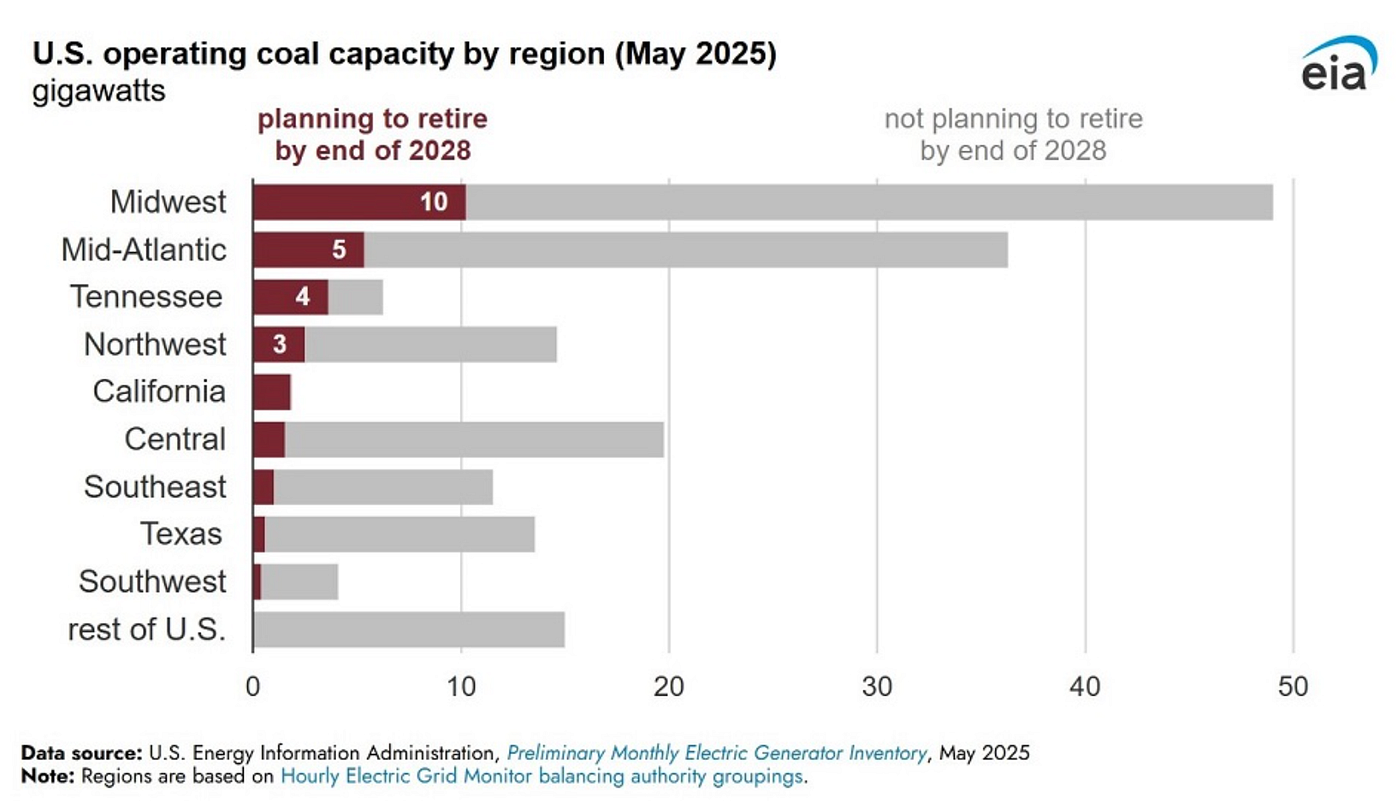
According to the U.S. Energy Information Administration (EIA), total installed coal-fired power capacity in the U.S. will decline from 172 gigawatts (GW) in May 2025 to 145 GW by the end of 2028. (For comparison, in mid-2018, coal-fired generation capacity in the U.S. was 246 GW.)
The data is contained in the preliminary monthly generator inventory report and is based on information provided to the regulator by power plant owners and operators.
Regionally, 58% of the coal capacity planned for retirement is in the Midwest and Mid-Atlantic regions.
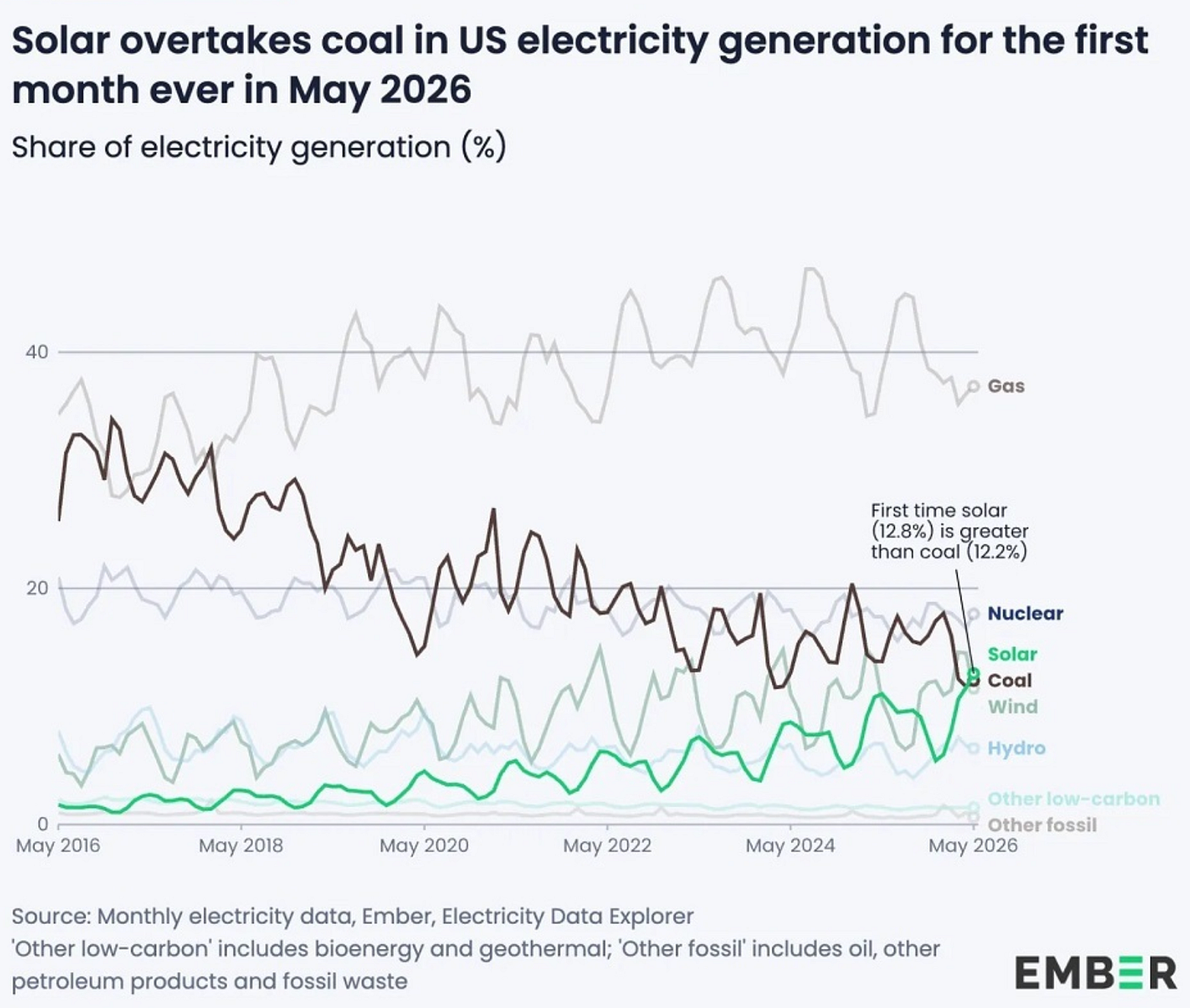
Coal consumption in the U.S. electricity sector has declined from its peak in the late 2000s due to increased competition from other electricity sources, especially natural gas and renewables. Moreover, coal-fired power plants are subject to emissions regulations that require them to install additional equipment, change processes, or shut down production.
The EIA notes that coal plant owners’ plans may change “as operators respond to changing environmental and other policies and electricity market dynamics.”
For example, Talen Energy, in collaboration with PJM Interconnection and others, recently agreed to delay the retirement of its Brandon Shores coal-fired power plant in Maryland until 2029. Talen Energy had previously planned to retire the facility in June 2025. Similarly, in May 2025, the U.S. Department of Energy ordered a 90-day delay in the planned retirement of Consumers Energy’s J.H. Campbell Power Plant in Michigan.
Potential regulatory changes add uncertainty to decisions about whether to retire or keep power plants running. In particular, the US Environmental Protection Agency (EPA) is reviewing a number of regulations that could impact coal-fired power plants. For example, in April 2024, EPA issued new guidelines to limit thermal power plant discharges (ELGs), which limit the discharge of toxic metals and other pollutants in coal-fired power plant wastewater. These stricter limits are set to go into effect in 2028, but EPA is currently reviewing the standards.
In April, US President Donald Trump signed an Executive Order “To Restore America’s Beautiful, Clean Coal Industry.” Among other things, it granted 47 companies a two-year waiver from the stricter mercury and air toxics standards (MATS) set by the EPA last year. The waiver runs from July 8, 2027, to July 8, 2029. Many coal plants installed pollution control systems in the past decade to meet MATS requirements.
Trump promised to save “beautiful clean coal” during his first term (2017–2020). As a result, more coal plants were closed in those four years than during Obama’s previous four years (2013–2016) and than during Biden’s term (2021–2024). Today, as we see, the rapid closure of coal plants in the US continues, but the relaxation of environmental regulations may slow the pace of their retirement.
New coal plants are not being built in the US.
메타데이터
- post_id
- a5d2b0a06d92
- slug
- the-us-plans-to-close-27-gw-of-coal-fired-power-plants-by-the-end-of-2028-a5d2b0a06d92
- url
- https://medium.com/@erofeev.yury/the-us-plans-to-close-27-gw-of-coal-fired-power-plants-by-the-end-of-2028-a5d2b0a06d92
- canonical_url
- https://medium.com/@erofeev.yury/the-us-plans-to-close-27-gw-of-coal-fired-power-plants-by-the-end-of-2028-a5d2b0a06d92
- author_url
- https://medium.com/@erofeev.yury
- status
- ok
- fetched_at
- 2026-06-27 07:40:21