Do Poems Have to Make Sense?
… and if not, who gets to write poems that don’t?
The Line Break
Do Poems Have to Make Sense?
… and if not, who gets to write poems that don’t?
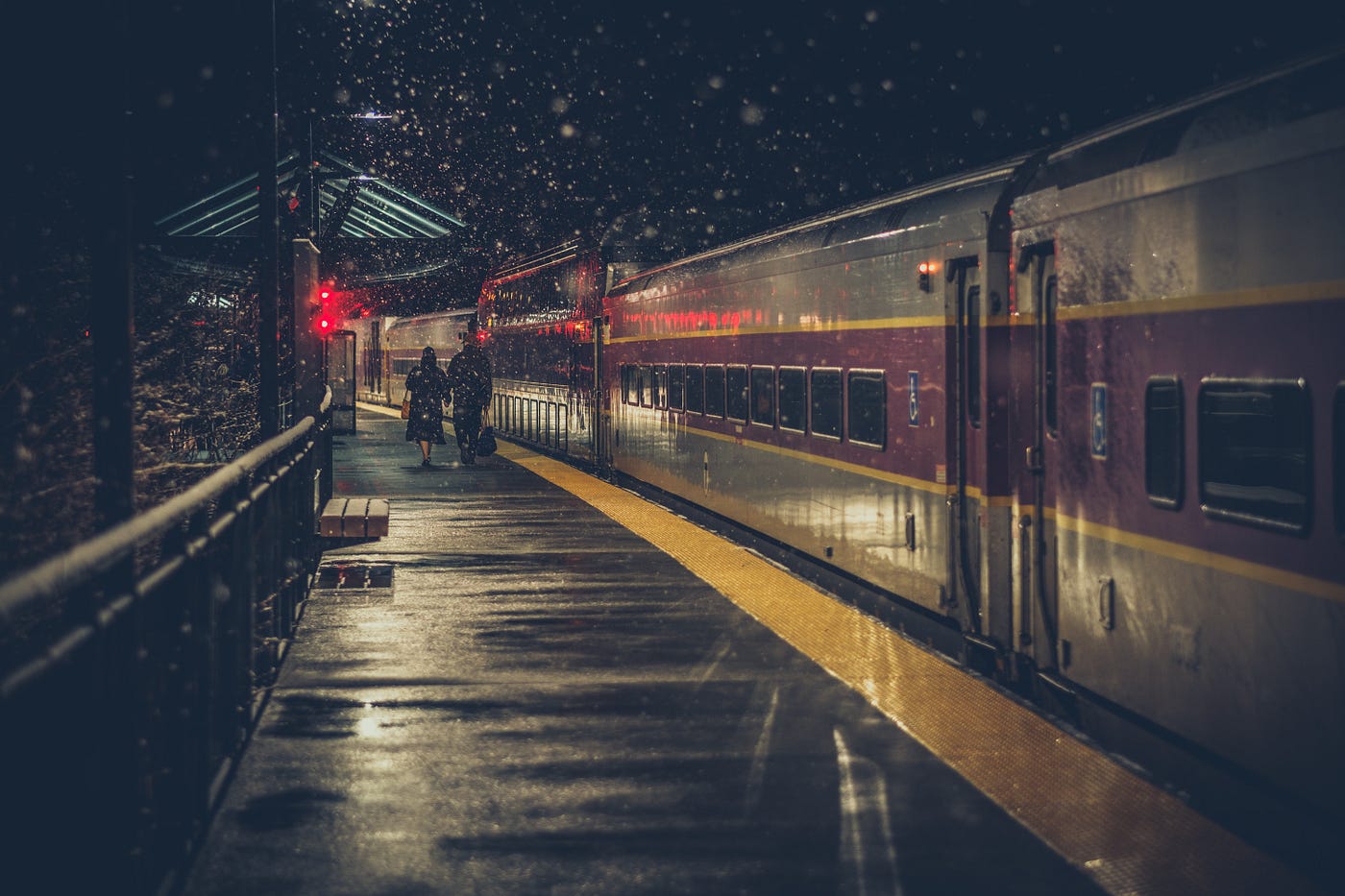
Photo by Jon Tyson on Unsplash
Update: Hi Reader! I’m now publishing new essays, writing prompts, and updated lists of poetry publishing opportunities on my Substack, Effing the Ineffable. Subscribe for free!
The other day, I was chatting with a friend who doesn’t read poetry. She asked how my writing is going lately, and I said frustratingly: sometimes I feel like I’m improving, other times I’m sure everything I write is complete shit.
She asked me: What makes a good poem?
And I replied: It’s art. It depends who you ask, right?
Later, I thought I should’ve at least told her what makes a poem good to me: Musical language. Harmony between form and content. An element of surprise — something I haven’t read before. Relatability. Humor. Jarring honesty.
Sometimes there’s a je ne sais quoi that resists easy description — as in this eponymous (named after the author) poem I stumbled upon via Instagram a few weeks ago by Molly Brodak. Sadly, Brodak passed away in 2020.
I can’t find the proper source for the poem (does anyone know what book it’s from? Google didn’t help; I’m assuming it’s in a chapbook). I hope it’s okay I share it here.
Molly Brodak
I am a good man. The amount of fear I am ok with is insane. I love many people who don’t love me. I don’t actually know if that is true. This is love. It is a mass of ice melting. I can’t hold it and I have nowhere to put it down.
I had the immediate urge to re-read the poem and study more carefully how we move from “good man” to this beautiful block of ice metaphor. I kept reading it over and over again, I loved it so much.
It makes sense — in the way that I can follow it from one “thought” to the next. It’s like some kind of twisted Rupi Kaur, short but not sweet. Searing, surprising.
I wanted to read more like it, so I bought Brodak’s two full-length books of poetry, The Cipher (2020) and A Little Middle of the Night (2010).
And don’t get me wrong—I enjoyed reading them both. Brodak has a musical and mysterious poetic voice that I know I’ll be returning to in the future.
However, I was surprised at the heavy use of abstraction and non-sequitur. Unlike the poem “Molly Brodak”, I couldn’t understand what many of her other poems are “about”; how the disparate ideas could be held together to make meaning.
Of course, many talented poets are challenging to read in this way. But it got me thinking, should I be able to understand most poems? And if so, is it up to me to make sure that happens, or the poet?
Obscurity in poetry
Whole movements, such as Dada in the early 20th century, have been formed around surprising and unconventional uses of language, often abstracting traditional narrative into compositions of language formed on the basis of sound, the feelings evoked by the words, or some mystery formula never revealed to the readers.
When I was younger, I thought it was me problem when I couldn’t detangle a poem — that a reference was going over my head or that I simply hadn’t studied or lived life enough. But plenty of poems are hard nuts to crack for people of all smarts and experience levels.
It’s hard to talk about poems we don’t understand– whether we like them or not
When I started taking more workshops, I was looking forward to having such poems decoded in front of my eyes. I wanted to learn how to understand any poem, step-by-step. I wanted the secret techniques to drawing the line through the “truth” of the poem.
What I found was that my instructors don’t have a secret strategy, because there isn’t one. Even though all my instructors have been published poets and college-level instructors or professors, they also didn’t understand the narrative of many poems we came across as a group.
We’re all just guessing. It may seem obvious but if you’ve internalized the idea that you’re less of a “natural” at poetry, it can seem like everyone is seeing something you’re not.
When often, feedback on obscure poems is exactly what you’d expect: say more here. What’s happening?
When it comes down to the actual readers of poetry I’ve been sat down in a room with (virtual or in-person) there’s an undeniable preference for at least a little clarity on the world or activities within a poem. It’s hard to relate to a piece or find harmony between form and content if you can’t pin down what a poem is really about.
Who gets to write poems that don’t make sense?
There’s a double standard wherein more esteemed writers and artists are given the benefit of the doubt — the assumption that because they made something, it has value. If you can’t see it, you’re not looking hard enough. Or looking in the right light. Or with the right values.
Those without that preconceived trust, on the other hand, have to convince every single person that consumes their art that it’s valuable — even if it’s weird, asks for a significant time investment to understand, or requires a viewer to follow it out on a limb.
We all start as the latter.
I had a long poem workshopped once that was considered a little too unclear — the biggest feedback I received was to clarify the poem’s “story “. I made it clearer and submitted the poem (among others) to a contest.
Then the other day, I received this feedback with the rejection:
“The narrative voice in these is a little too into explaining things for my taste; I wanted more subtlety or more work to do myself.”
As you can see, the preferred level of subtlety is subjective. As I told my friend: It’s art.
I would still call Molly Brodak’s poems good, enjoyable reading. I also can’t really understand them. What do I know?
Would I have enjoyed them as much without the preface of the first poem I read and loved?
Would I have enjoyed them as much without awareness of her as a published and respected voice?
So much of what a reader takes away from a poem stems from our preconceived notions. There’s not much to do but enjoy it — and don’t read too much into what other people dislike.
메타데이터
- post_id
- a5d8d2361728
- slug
- do-poems-have-to-make-sense-a5d8d2361728
- url
- https://writingcooperative.com/do-poems-have-to-make-sense-a5d8d2361728
- canonical_url
- https://writingcooperative.com/do-poems-have-to-make-sense-a5d8d2361728
- author_url
- https://medium.com/@gingerayla
- status
- ok
- fetched_at
- 2026-07-31 11:41:28