Cultivating tomorrow’s entrepreneurs: Practical lessons from India’s grassroots startup initiatives
Turning academic research into a successful industrial startup can be tough. Learn how India’s grassroots initiatives, incubation hubs, and
Cultivating tomorrow’s entrepreneurs: Practical lessons from India’s grassroots startup initiatives

Turning instructional research into an industrial startup can be difficult for students in developing nations. This article presents a sensible, educational manual based on India’s grassroots startup work, explaining how researchers can take advantage of incubation, funding schemes and government handholding to build market-ready companies.
According to a typical African proverb, “If you need to go fast, go by yourself. If you want to go, swim together.” For many years, researchers in low-medium-cost countries (LMICs) believed that their paper was finished the moment it was published in a journal We celebrated the records, archived the documents, and moved on to the following. However, real sustainable development happens when we take our crude studies out of the library and flip them into practical answers that solve real-world issues. This process is known as commercialization — turning an idea into a perfect market-created startup. As a mentor associated with several Government of India initiatives, which include Startup India, MeitY Startup Hub, and the National Skills Development Corporation (NSDC), I have actually witnessed a big change. India has developed into one of the international’s most colorful startup hubs through intentional path-building from research lab to marketplace. In this presentation, I will proportion practical, instructional training to India’s grassroots journey These classes can help researchers throughout the Global South use dependent frameworks to showcase their intellectual assets in potential businesses.
Understanding the incubation framework: Moving from Lab to Market:
Moving from lab to market An incubator is not just a workplace area. It’s a protective setting where an early-stage idea is nurtured into a real commercial enterprise. In India, institutional hubs like IIT Bombay and IIT Madras have a distance between instructional theory and business reality.
For a researcher, a university incubator gives 3 important pillars:
• Technical Infrastructure: Access to high-sacrifice check-out labs and gadgets that a male or female researcher can by no means come up with the funds for on their own.
• Business hand-holding: Legal assistance in signing the venture, recording patents, and shaping equity.
• Peer Mentoring: Connecting with fellow innovators who are dealing with the exact same structurally demanding situations.
Practical tip for early-career researchers — ECRs: Don’t wait until your research is fully finished now before they can speak to the incubator. Engage early with entrepreneurial brackets. Look for a regional or cross-border virtual incubator if your nearest university lacks a physical centre.
Navigating Funding Schemes: Grant Writing vs. Equity:
Grant writing versus equity One of the most significant barriers for researchers in the Global South is capital. Many great ideas die when they lose seed investment. India has addressed this through developing funding levels for dependent authorities through bodies such as BIRAC (for biotechnology) and the Ministry of Electronics and Information Technology (MeitY).
As a researcher, you need to understand the difference between the types of cash:
-
Grants (non-dilutive investment): This is cash given to you using governments or international organizations to show your idea. You do not distribute any assets in your business enterprise.
-
Equity (seed and venture capital): This consists of cash paid by non-public traders. In exchange, they own a percentage of your commercial venture. In India’s model, grassroots innovators are recommended to use grants from authorities to build their Prototype (Proof of Concept). Once the model works within the real global, private capital is introduced to scale the productive chain to the supply chain.
The Power of Government Handholding:
A startup cannot thrive if it is buried far beneath complex rules. Government hand holding is approaching increasing regulations to smooth the younger student’s transition to commercial enterprise ownership. Officials from India’s Startup India platform (and through tools like the Bhaskar portal) act as facilitators. It gives tax breaks, quick overseen patent exams, and comfortable norms for public procurement. This enables micro, small and medium organizations (MSMEs) to promote their innovative products to authorities at once. Moreover, vocational education through Skill India and NSDC International is aligned with current business desires. It guarantees that after the startup starts offevolved to grow, there is a trained, young workforce ready to address specialized duties in production, better farming, or virtual services.
A Real-World Example: Turning Engineering into Enterprise:
Turning engineering into an enterprise Consider the adventure of a junior engineering team in a Tier-2 Indian city. They developed low-fee, automated welding diagnostic tools in the course of their university path.
Beyond this project may undoubtedly be a thesis on the shelf. Instead, they entered a local startup cluster. Through the hand-holding of the authorities, they acquired a small novelty furnish to create a working version. They were matched with a senior commercial mentor who helped them refine the machine to meet global needs, containing Bureau of Indian Standards (BIS), American Welding Society (AWS) recommendations. Today that uncooked university study is a registered organization creating neighbouring jobs, promoting regional exports and solving real trade protection.
Conclusion: In It Together for a Developed Tomorrow:
In It Together for a Developed Tomorrow Building a startup environment within the Global South is a collective effort. It requires the wisdom of the researcher, the joy of the mentor, and the structural support of the authorities. The youth-driven version of India shows that we create sustainable financial growth by establishing clear pathways for investment, incubation and talent improvement.
The message for early career researchers across low- and middle-income countries is clear: your research charges beyond the printed page. By leveraging neighborhood networks, applying for regional innovation proposals, and embracing an entrepreneurial attitude, you can turn your instructional approaches into answers that press for community improvement and neighborhood self-sufficiency.
Author Bio and Post Description:
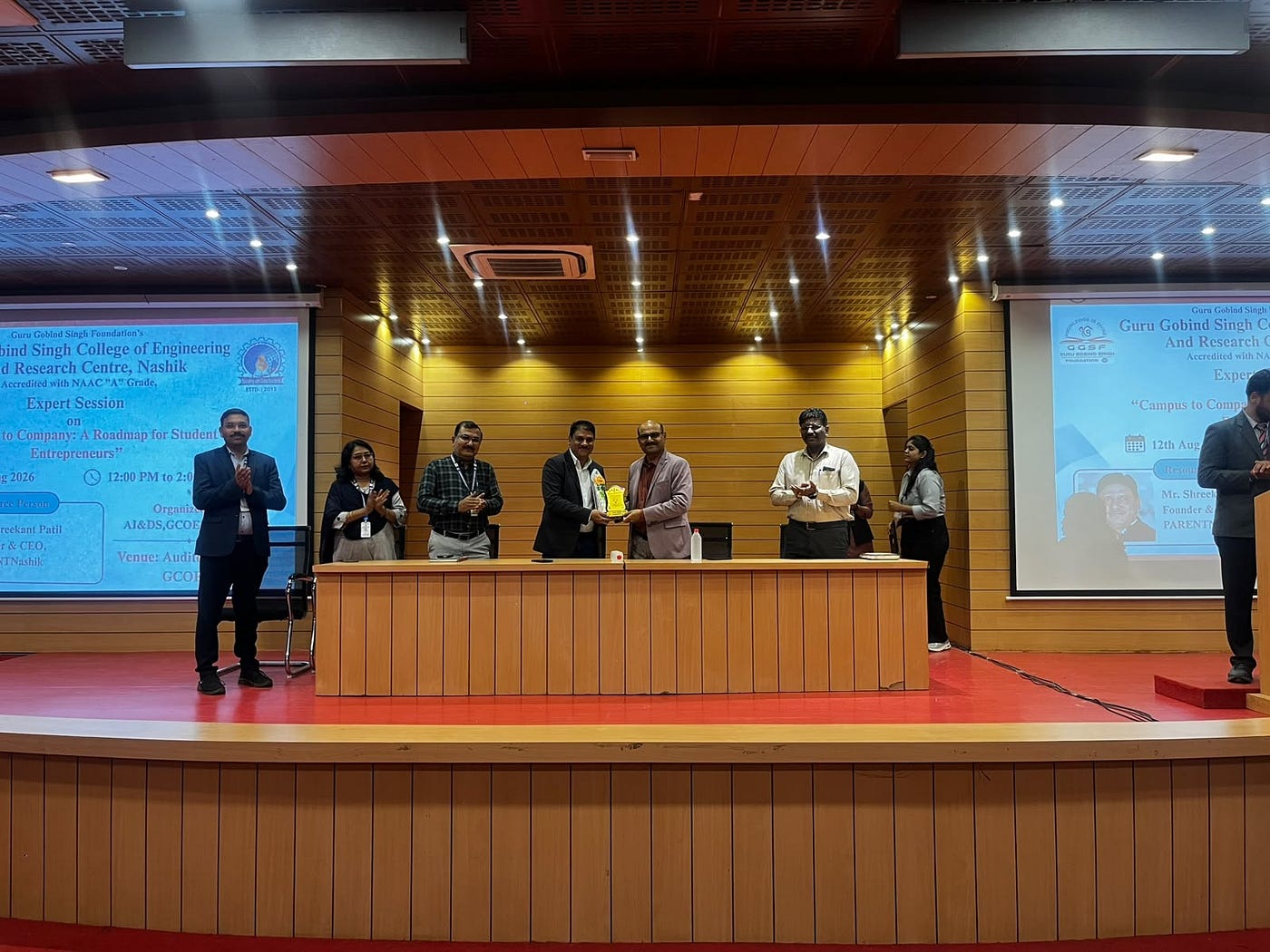
**CEng. Shreekant Patil**, is a business researcher, chartered engineer, and legit mentor for Startup India and MeitY Startup Hub. He serves as a Master Trainer for NSDC, signatory at world bank group’s IFC-GLC and is deeply dedicated to empowering global southern entrepreneurs through ZED, LEAN, and sustainable business certifications.
StartupIndia #ShreekantPatil #Mentor #MasterTrainer #NSDC #SkillIndia #Grassroots_startups #Entrepreneurship #Research_commercialization #Incubation #Seedfunding #GlobalSouth #India #Students #LabtoMarket #research
메타데이터
- post_id
- a5f0f2560fdc
- slug
- cultivating-tomorrows-entrepreneurs-practical-lessons-from-india-s-grassroots-startup-initiatives-a5f0f2560fdc
- url
- https://medium.com/@shreekant-patil-mentor/cultivating-tomorrows-entrepreneurs-practical-lessons-from-india-s-grassroots-startup-initiatives-a5f0f2560fdc
- canonical_url
- https://medium.com/@shreekant-patil-mentor/cultivating-tomorrows-entrepreneurs-practical-lessons-from-india-s-grassroots-startup-initiatives-a5f0f2560fdc
- author_url
- https://medium.com/@shreekant-patil-mentor
- status
- ok
- fetched_at
- 2026-08-21 11:43:12