The Vital Role of Human Resource Planning in Modern Organizations
In today’s fast-paced and competitive business world, Human Resource (HR) planning plays a crucial role in ensuring that organizations have…
The Vital Role of Human Resource Planning in Modern Organizations
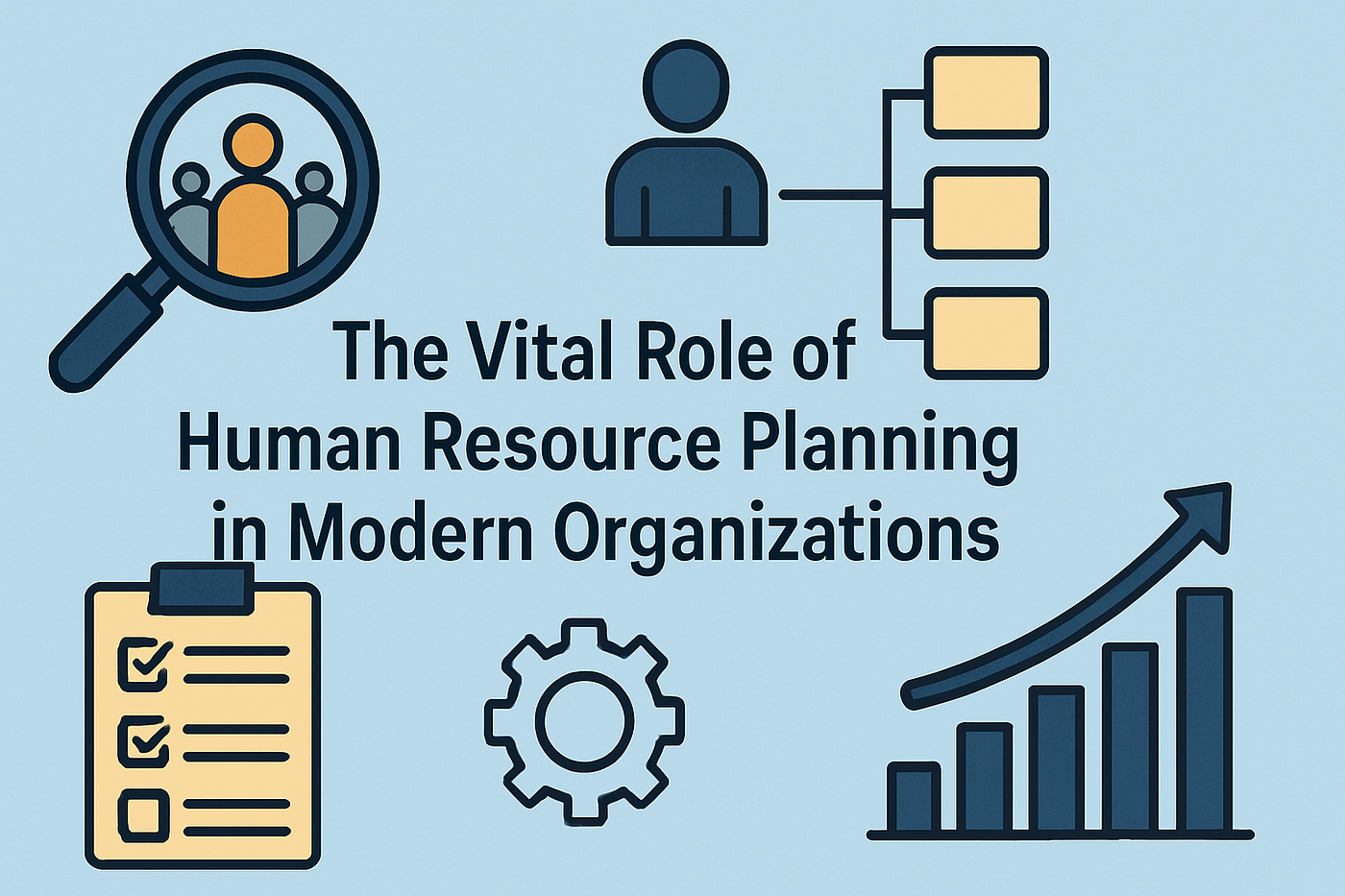
In today’s fast-paced and competitive business world, Human Resource (HR) planning plays a crucial role in ensuring that organizations have the right people, with the right skills, at the right time. It is not merely about filling vacancies — it’s about aligning the workforce strategy with business objectives to drive long-term growth and sustainability.
Whether you’re managing a startup or a large enterprise, understanding the components of HR planning and how they interact with various internal and external factors is essential for success.
What is Human Resource Planning?
Human Resource Planning is a systematic process of forecasting future HR needs and ensuring the availability of competent personnel. It involves analyzing current human resources, predicting future demands, and bridging any gaps through effective recruitment, training, and development strategies.
This process becomes even more important when businesses are navigating digital transformation, rapid expansion, or organizational restructuring.
Forecasting Demand for Human Resources
A core aspect of HR planning is forecasting the demand for human resources. This involves anticipating future workforce needs based on organizational goals, industry trends, and technological advancements.
If you want to explore this in more depth, check out this full guide on Forecasting Demand for Human Resources, which breaks down the techniques and methods used to project staffing needs accurately.
Types of Human Resource Planning
HR planning isn’t one-size-fits-all. Depending on your organization’s size, industry, and growth phase, there are different types of planning to consider — strategic, tactical, operational, and contingency planning, to name a few.
Our Comprehensive Guide to Types of Human Resource Planning provides a detailed breakdown of these categories, helping you choose the right approach for your specific business context.
External Factors That Impact HR Planning
No organization operates in a vacuum. External factors such as labor market trends, economic conditions, government policies, and technological changes significantly influence HR strategies.
Understanding how these external dynamics affect your workforce can help you adapt more quickly and build a resilient HR strategy. Learn more from our article on External Factors Influencing Human Resource Planning.
The Role of Digital Transformation in HR and Budget Planning
Incorporating digital tools and data analytics into HR planning enhances accuracy and agility. With digital transformation, companies can forecast talent needs, analyze employee performance, and optimize budget allocation more efficiently.
Discover how digital transformation supports effective HR budget strategies in our post on Strategic Digital Transformation in Budget Planning.
Final Thoughts
Human Resource Planning is more than just an administrative task — it’s a strategic function that enables businesses to thrive in an ever-evolving market. By understanding your workforce needs, anticipating future demands, and aligning HR practices with business goals, you position your organization for sustained success.
Stay proactive, stay informed, and let HR planning be your blueprint for a smarter, more agile workforce.
메타데이터
- post_id
- a5f2fdc4a236
- slug
- the-vital-role-of-human-resource-planning-in-modern-organizations-a5f2fdc4a236
- url
- https://medium.com/@kumaravinash891/the-vital-role-of-human-resource-planning-in-modern-organizations-a5f2fdc4a236
- canonical_url
- https://medium.com/@kumaravinash891/the-vital-role-of-human-resource-planning-in-modern-organizations-a5f2fdc4a236
- author_url
- https://medium.com/@kumaravinash891
- status
- ok
- fetched_at
- 2026-07-15 18:51:36


