The difference between a groundhog, prairie dog, beaver, otter, weasel, badger, ferret, marten, and…
Furry, brown, relatively small, burrowing mammals! What did we see? Sometimes you are driving around and see an animal by the side of the…
The difference between a groundhog, prairie dog, beaver, otter, weasel, badger, ferret, marten, and wolverine
Furry, brown, relatively small, burrowing mammals! What did we see? Sometimes you are driving around and see an animal by the side of the road, but it’s hard to identify it.
Photo by D W on Unsplash
A groundhog (also called woodchuck) is a rodent that lives in fields and the edge of forests, where it feasts on grasses, clover, and gardens. It burrows underground, and you may see it guarding its home. It has short legs, a chunky body, brown fur, and a short tail. Usually, it’s solitary, unlike prairie dogs. If found in a group they will be called a “colony” or a “coterie.” They are about 16 to 26 inches in length total, including a tail of 3 to 7 in, and weigh between 4 lb 7 oz and 13 lb 14 oz.
Photo by Zosia Szopka on Unsplash
Prairie dogs are also in the rodent family. They like to live in the grasslands (prairies) of North America. They are smaller than groundhogs, and a bit lighter tan, with a short tail. There are five recognized species of prairie dog: black-tailed, white-tailed, Gunnison’s, Utah, and Mexican prairie dogs. Measuring between 12 and 16 inches long, including the short tail, they can weigh between 1 and 3 lbs. They eat grass, roots, and seeds, and enjoy living in colonies; they are highly social, with their “towns” featuring complex burrow systems. A group of prairie dogs is commonly called a coterie.
Photo by Francesco Ungaro on Unsplash
On the other hand, beavers, while still in the rodent category, are much larger (up to 60 lbs), have a flat paddle tail, and webbed feet. They use their orange teeth to eat bark, twigs, and aquatic plants near rivers, ponds, and lakes. They live in family groups, and are known for building dams and lodges. While their body length is 31–47 inches long, their total length, including their tails, can be up to 4.3 feet, with the tail being between 10 and 20 inches long. A group of beavers is commonly called a “colony” or a “family.”
Photo by Daniel Olaleye on Unsplash
Otters are a bit different, being a carnivorous mammal, and not a rodent, but rather, a part of the weasel family. They call rivers, lakes, and coastal waters their home. Their sleek, long bodies have thick waterproof fur, and they have a long tail. They tend to eat fish, frogs, and crustaceans. Being very playful and social, they are often found in family groups. Otters typically range from 2 to 5.9 feet in length, and can weigh between 2.2 and 99.2 lbs. For example, there is the giant otter which may weigh 32 lbs, the Asian small-clawed otter, up to 24 lbs, and the sea otter, which weighs between 30 and 99 lbs).
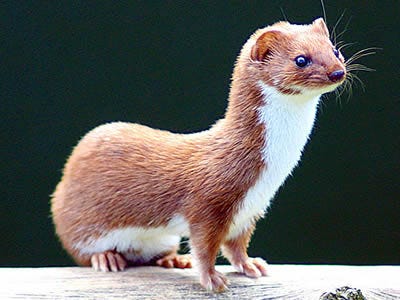
Weasals are in the same family as otters, mustelidae. They are brown on top and white underneath, and carnivorous; they eat small mammals (mice, voles, rabbits), birds and bird eggs, frogs and lizards, and even insects occasionally. Weasals are about 4.3–10.2 inches long and can weigh 0.9–8.8 ounces.
Ferrets are also in this same family. Generally, ferrets are about 18–24 inches long (including tail), and 1–4 pounds (males being larger than females), with long, flexible, and slender bodies. Their fur can range from sable, albino, cinnamon, black, white, to silver. Sometimes kept as pets, they can live about 6–10 years. They can run backward as easily as forward! They’re known for being extremely playful and curious, having a “war dance” (hopping and twisting when excited), and being very intelligent and mischievous. Even so, they sleep 14–18 hours a day. They are social animals, preferring to live in pairs or groups. Ferrets are obligate carnivores, meaning they must eat meat. Needing a high-protein, high-fat diet, they do not eat grains, fruits, or vegetables. A poor diet can cause serious health problems. A group of ferrets is called a “business” and ferrets are more playful and social than most of their wild relatives.
European Polecats were the ancestors of domestic ferrets. Habitat: Forests, meadows, wetlands, farms, and semi-desert areas. Range: Across Europe (excluding Ireland/Scandinavia), Western Asia, and North Africa.
Photo by Alexandre Daoust on Unsplash
Minks are small, sleek mammals known for their semi-aquatic lifestyle and glossy fur. They belong to the mustelid family, which also includes weasels, ferrets, otters, badgers, and wolverines. Agile predators with long, slender bodies, they have short legs and partially webbed feet. Their dense fur is usually dark brown to nearly black, with a small white patch often found on the chin or throat. Minks live near rivers, streams, lakes, ponds, marshes, and wetlands. They can swim up to 100 feet underwater. They make dens in riverbanks, hollow logs, rock crevices, or abandoned burrows. Minks are found in North America, Europe, and parts of Asia, depending on the species. They are carnivores; they eat fish, frogs, salamanders, crayfish, and small mammals (like mice and voles) along with birds and eggs. Mostly solitary and territorial, they are active day or night (crepuscular to nocturnal).
Photo by Vincent van Zalinge on Unsplash
Badgers are sturdy, ground-dwelling mammals best known for their digging ability and bold personalities. They belong to the mustelidae family as well. There’s the American badger (North America), European badger (Europe & parts of Asia), and honey badger (ratel) (Africa, Middle East, India — most aggressive). They live in grasslands, forests, farmland, and scrublands, preferring soft soil for digging underground tunnel systems called setts. Badgers have distinctive facial markings (especially black-and-white stripes). They are between 20 and 35 inches long and weigh 15 to 30 pounds. Badgers are omnivores, eating earthworms, insects and grubs, small mammals, roots, berries, fruit, and occasionally eggs or carrion. Mostly nocturnal, they are typically solitary (except European badgers, which may live in groups). They have a fierce reputation; honey badgers are known to stand up to predators like lions and snakes.

Martens are sleek, tree-loving mammals known for their agility and intelligence. They’re part of the same animal family as badgers and ferrets, but they’re built for climbing rather than digging. There are about 8–9 species, including: Pine marten (Europe), American marten (North America), Sable (Eurasia — prized for fur), Stone marten (Europe & Central Asia), Japanese marten. Martens live in forests and woodlands (especially coniferous forests) and so are found in North America, Europe, and Asia. They have long, slender bodies, bushy tails, and sharp, curved claws for climbing. They are 18–28 inches in length (including tail), and weigh 1–4 pounds. Martens are omnivorous, consuming small mammals (squirrels, mice), birds and eggs, insects, berries and fruit, and occasionally fish or carrion. They are mostly nocturnal or crepuscular, and solitary animals. They live in tree hollows, abandoned squirrel nests, rock crevices, and occasionally ground dens.
Photo by Hans Veth on Unsplash
Wolverines are the largest and fiercest members of the weasel family (mustelidae), the genus is Gulo (Latin for “glutton”). Its closest relatives are martens and fishers. Dwelling in northern wilderness regions, they can be found in Alaska & northern Canada, Scandinavia, Russia & Siberia. They prefer cold, remote habitats like boreal forests, the tundra, and mountain regions. Wolverines need huge territories—often hundreds of square miles, as they are opportunistic carnivores and scavengers, eating: caribou, deer (often scavenged), snowshoe hares, rodents, birds & eggs, fish, and carrion left by wolves or bears. They have exceptionally strong jaws that can crush frozen meat and bones. They have a stocky, muscular body with thick, dark brown fur with pale side stripes. They can weigh 20–55 lbs and are about 26–42 inches in length (plus bushy tail). Solitary and territorial, they’re fearless and aggressive when threatened. They are primarily nocturnal or crepuscular.
메타데이터
- post_id
- a5fa82a63706
- slug
- the-difference-between-a-groundhog-prairie-dog-beaver-otter-weasel-badger-ferret-marten-and-a5fa82a63706
- url
- https://medium.com/@hillary.beth.trivette/the-difference-between-a-groundhog-prairie-dog-beaver-otter-weasel-badger-ferret-marten-and-a5fa82a63706
- canonical_url
- https://medium.com/@hillary.beth.trivette/the-difference-between-a-groundhog-prairie-dog-beaver-otter-weasel-badger-ferret-marten-and-a5fa82a63706
- author_url
- https://medium.com/@hillary.beth.trivette
- status
- ok
- fetched_at
- 2026-07-13 14:59:43