7. Finding My Footing in Connecticut
My new beginning in New England was nothing like I had imagined.
7. Finding My Footing in Connecticut
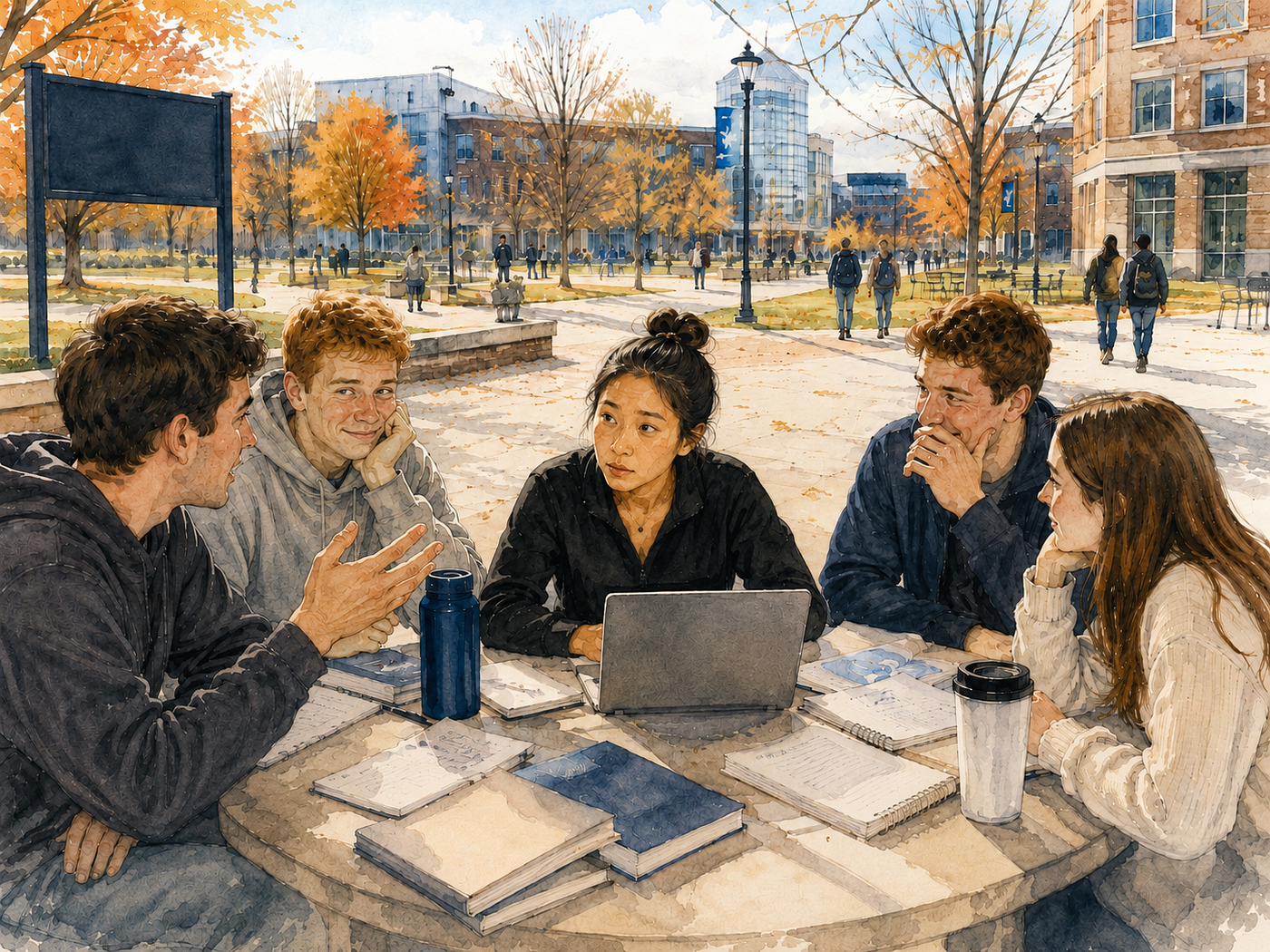
My new beginning in New England was nothing like I had imagined.
Connecticut was colder than I expected.
And it wasn’t just the weather. I couldn’t find the same warmth or easygoing spirit I had felt in California. People seemed a little more reserved, and the atmosphere felt a little more distant.
Only a few days earlier, I had been thrilled by the thought of a new challenge. But once I arrived in Connecticut, that excitement began to fade.
Classes would begin in a week.
Most students had not yet returned, and the campus was quiet. During the day, I wandered around the unfamiliar grounds by myself. At night, the surroundings would sink into near-total darkness.
This was not the American campus life I had imagined.
Why am I here?
The question kept coming back.
I missed my parents in Korea.
I missed my mom. I missed the friends I had made in California. I missed San Diego’s sun and the ocean more than I could say.
I felt as though I had taken one wrong step and somehow ended up somewhere I wasn’t supposed to be.
Did I make a mistake coming here?
My mind went blank.
I dropped my luggage in the middle of my dorm room and left it there, unpacked, for days.
I simply sat there in a daze.
One thought kept circling in my head.
Is there any way I can go back to California?
But I had neither the time nor the money to leave myself with many options.
So I made a deal with myself.
Give it one week. Go to class, see how it feels. If it still seems wrong, find another way.
A week later, the semester began.
I went to orientation.
The room was filled mostly with white American students. International students made up perhaps ten percent of the class, mostly from Asia and Europe.
There was only one other Korean student besides me.
Just knowing there was one person I could speak Korean with gave me a small sense of comfort.
Then I met a student from Thailand.
She stood out immediately.
Her English was fluent, and she seemed completely at ease with her American classmates. I assumed she must have lived in the United States for years.
She hadn’t.
She had been in America for only a year.
Even more surprisingly, she told me that before coming to the United States, she had barely been able to speak English at all.
I was stunned.
I thought back to my time in California, when I had stayed close to Koreans and other Asian friends because it was comfortable. I had become complacent. I had not pushed myself hard enough to improve my English.
Then she said something I would remember for years.
“I want to make the most of it. I hate missing opportunities.”
There was something bold and fearless in the way she said it.
It shook me awake.
This is not the time to complain that Connecticut is cold and lonely.
Once I changed my perspective, everything began to look different.
The fact that there were so few Koreans around suddenly felt like a good thing. The lack of nightlife and distractions felt like an advantage.
I had come here for a reason.
Now I was in an environment that left me little choice but to focus.
All I had to do was work hard and reach the goal I had set for myself.
She was striking too — slim and long-limbed, with delicate features and the proportions of a model.
But what stayed with me most was her attitude.
Her determination to make the most of wherever she was.
Her refusal to let an opportunity pass her by.
She became a powerful source of motivation for me.
But changing my mindset did not make reality any easier.
My English was nowhere near ready.
Still, I had to sit through lectures in English.
I had to submit assignments.
I had to hold my own in discussions with my classmates and work on group projects with them.
It was brutal.
Around that time, old Korean sayings I had heard growing up suddenly began to make sense in a way they never had before.
It’s do or die.
Even when the sky falls, there is always a way out.
Whenever things felt unbearable, I repeated those words to myself.
The truth was, trying to outperform the American students felt almost impossible.
So I stopped measuring myself against them.
Instead, I began asking myself a different question.
What can I actually do?
My measure of a good day became very simple.
Could I face my parents back home and feel proud of how I had lived today?
If they saw me now, would they pat me on the back and say, “Well done”?
That became my guide.
The hardest part often came near the end of class.
After lectures, our group members would stay behind to discuss assignments.
As the end of class approached, I became intensely anxious.
Here we go again. I’m going to look like an idiot who can’t get a word out.
It took me time to organize my thoughts in English.
By the time I had finally formed a sentence in my head, the others had already moved on to the next topic.
Sometimes I opened my mouth only to realize that the conversation had already left me behind.
Other times, I simply stared at someone, trying to piece together what they had just said.
I felt trapped inside my own head — unable to say what I wanted to say and unable to catch everything I was hearing.
Somehow, I dragged myself through one day after another.
Two friends helped me survive that period.
One was Kay, a member of my study group.
The other was Dan, a student one year ahead of me.
Dan was generous with advice about the program and school life. At times, he treated me like family.
With Kay and Dan’s help, I slowly began to find my footing.
And when I finally made it through my first semester, I realized something had changed.
I can do this.
That experience gave me a kind of confidence I had never had before.
I began to believe that no matter how difficult life became, I could somehow find a way through it.
Looking back, that semester may have been one of the most formative periods of my life.
Even now, when I feel myself becoming too comfortable or complacent, I sometimes deliberately put myself in situations that challenge me.
To me, being cornered does not simply mean being trapped.
It means being challenged.
It means having a problem to solve.
And when I work through one difficult task after another and finally emerge on the other side, I often find that I have become a little stronger along the way.
I love that feeling.
There are few things in life more rewarding than realizing that I have grown, even a little, from the person I was yesterday.
So I spent that first semester in a constant struggle.
I struggled with English.
I struggled with the coursework.
And even when my classmates barely responded, I kept trying to talk to them and make friends.
At the time, spending too much time with Korean students felt like a luxury I could not afford.
Other than phone calls with my mom, I almost never spoke Korean.
I remembered reading somewhere that the brain has limited room for language, and that when one language moves in, another begins to move out.
At the time, I almost wanted to forget Korean.
I wanted my mind to be filled entirely with English.
That was how desperate I was.
Looking back, when I first arrived in Connecticut, all I wanted was to find a way back to California.
A few months later, I no longer wanted to escape.
Instead, I wanted to see how much I could endure —
and how much I could change.
메타데이터
- post_id
- a605c7dee0c1
- slug
- 7-finding-my-footing-in-connecticut-a605c7dee0c1
- url
- https://medium.com/@applenyc323/7-finding-my-footing-in-connecticut-a605c7dee0c1
- canonical_url
- https://medium.com/@applenyc323/7-finding-my-footing-in-connecticut-a605c7dee0c1
- author_url
- https://medium.com/@applenyc323
- status
- ok
- fetched_at
- 2026-08-04 12:15:17



