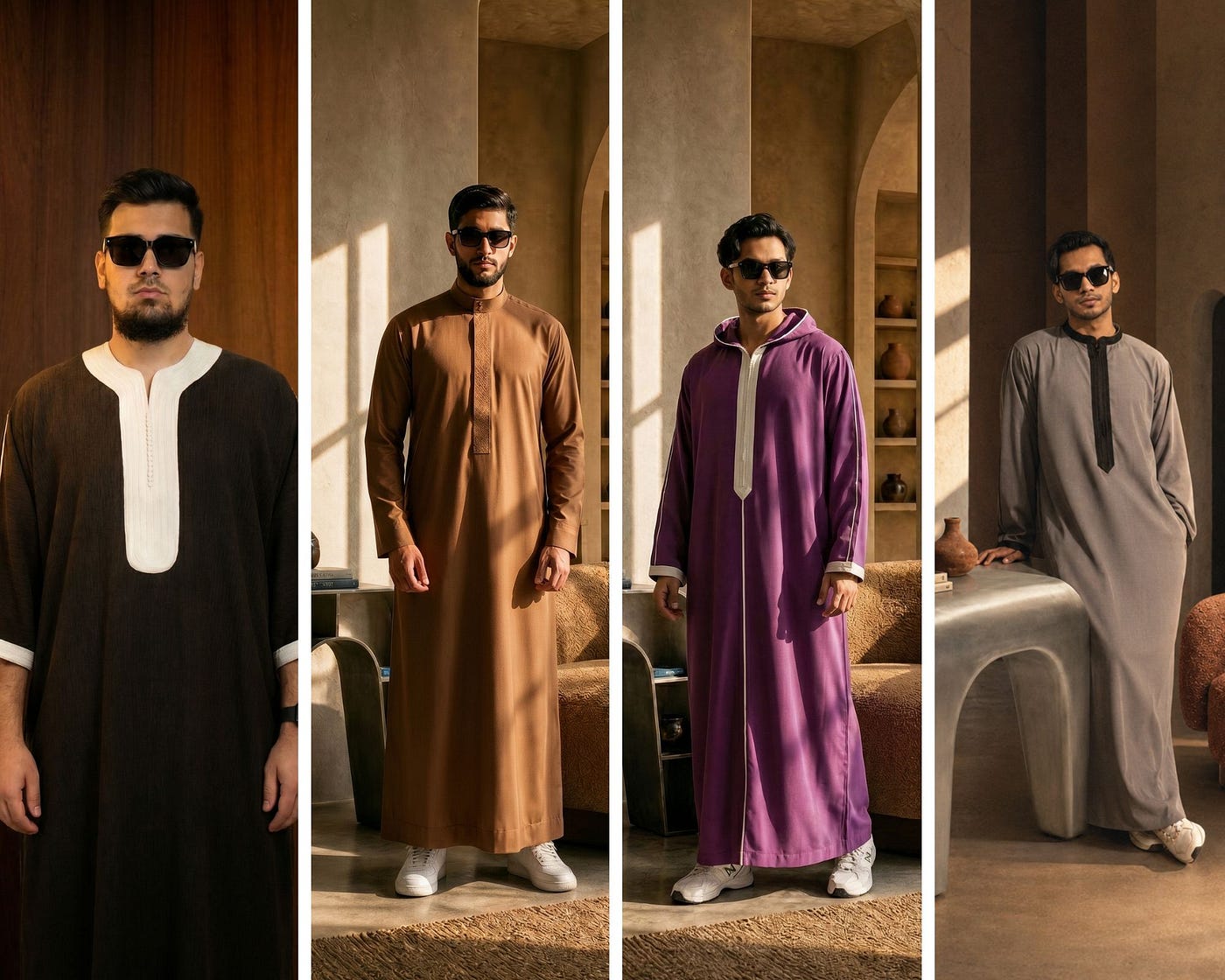
What Is an Omani Thobe And Why Muslim Men in the West Are Choosing It
Walk into a large masjid on Eid morning and you will notice something.
What Is an Omani Thobe And Why Muslim Men in the West Are Choosing It

Walk into a large masjid on Eid morning and you will notice something.
Alongside the clean white Saudi thobes and the hooded Moroccan djellabas, there is a garment that carries itself differently. Longer. Looser. A tassel hanging from the neckline. Subtle embroidery at the collar and cuffs. No buttons running down the chest. Just a quiet, composed presence.
That is the Omani thobe.
And if you have been sleeping on it, this guide will change that.
What Is an Omani Thobe?
The Omani thobe — also called a dishdasha or kandura in Oman — is a full-length, loose-fitting robe worn by Muslim men. Like all thobes, it covers from shoulder to ankle. But its silhouette, details, and cultural roots set it apart from every other regional style.
The defining features are:
The tassel. Called a sharakh or furakha, it hangs from the neckline — typically to one side. It is not purely decorative. Traditionally, it was infused with perfume or attar, carrying fragrance through the day. Today it remains the most recognisable marker of Omani dress.
The collarless neckline. Where Saudi thobes have a structured Mandarin collar and button placket, the Omani thobe has a round, open neckline — clean and uninterrupted. No buttons running down the chest. The silhouette is unbroken from shoulder to hem.
The embroidery. Fine stitching at the collar, cuffs, and sometimes the hem. Not heavy or showy — restrained and deliberate. The kind of detail that reads as quality when you are close enough to notice it.
The fit. Looser than a Saudi thobe. More generous through the chest and sleeves. Built for comfort over long periods — long prayers, long gatherings, long days.
How It Differs From Other Thobes
Brothers often ask how the Omani thobe compares to what they already know.
The Saudi thobe is structured, minimal, and streamlined. Collar and buttons down the chest. Slightly tailored fit. It is the international default — the style most North American Muslims picture when they hear “thobe.”
The Emirati thobe (kandura) shares the collarless design with the Omani but places the tassel at the centre front rather than to the side. The Emirati cut tends to be slightly more fitted through the torso and is closely associated with UAE dress culture.
The Omani thobe sits between those two worlds — looser than the Emirati, more detailed than the Saudi. The side tassel is its own. The embroidery is its own. The overall impression is of a garment that has been worn with care for a long time, by people who understood that clothing is not separate from character.
When to Wear It
Eid. This is the Omani thobe’s strongest occasion. The embroidery and tassel detail read as festive without being loud. White or off-white for Eid al-Fitr. Dove grey or peach cream for a slightly more distinctive look that still reads clean and composed.
Jumu’ah. The collarless design and relaxed fit make it one of the most comfortable thobes for the full duration of Friday prayer — sitting, standing, making ruku, staying after for conversation.
Nikah and walimah. The level of detail on a quality Omani thobe carries formal occasions naturally. No additional embellishment needed. The garment already speaks.
Daily wear. A wrinkle-resistant Omani thobe in a neutral colour — white, grey, or cream — worn through a regular day. From Fajr to Isha without needing to change or press anything.
What to Look for When Buying
Fabric. This is where it matters most. A quality Omani thobe should stay crisp through a full day of wear — through prayers, through gatherings, through the drive home. Look for wrinkle-resistant fabric composition. Spun polyester blends hold their structure well and require no ironing between wears — which matters more than brothers usually admit before they own one.
Colour. White is the foundation. But Omani thobes come in a wider colour range than Saudi styles — grey, cream, peach, and muted earth tones are all culturally consistent with Omani dress traditions. If you want something that stands out on Eid without being loud, grey or peach cream in a clean Omani cut is a strong choice.
Sizing. The Omani thobe runs loose by design, but the shoulder seam should still sit at your actual shoulder. Find a brand that provides measurements in inches and centimetres. The right fit is relaxed, not oversized.
Shipping. If you are in the USA, check whether the brand ships duties-included. Customs charges added at delivery can add $20–40 to an order you thought was settled.
For brothers in Canada and the USA, Furqanwear’s Omani thobes come in White, Black, Dove Grey, and Peach Cream — wrinkle-free, machine washable, sizes XS to 3XL, with duties-included shipping to the USA and free shipping across Canada.
If you want a deeper look at the history, styling, and regional context of this garment, this Omani thobe guide covers it in full.
Wear it with intention. That is the whole point.
메타데이터
- post_id
- a60f04a24da9
- slug
- what-is-an-omani-thobe-and-why-muslim-men-in-the-west-are-choosing-it-a60f04a24da9
- url
- https://medium.com/@jessimesad232/what-is-an-omani-thobe-and-why-muslim-men-in-the-west-are-choosing-it-a60f04a24da9
- canonical_url
- https://medium.com/@jessimesad232/what-is-an-omani-thobe-and-why-muslim-men-in-the-west-are-choosing-it-a60f04a24da9
- author_url
- https://medium.com/@jessimesad232
- status
- ok
- fetched_at
- 2026-07-14 21:26:34