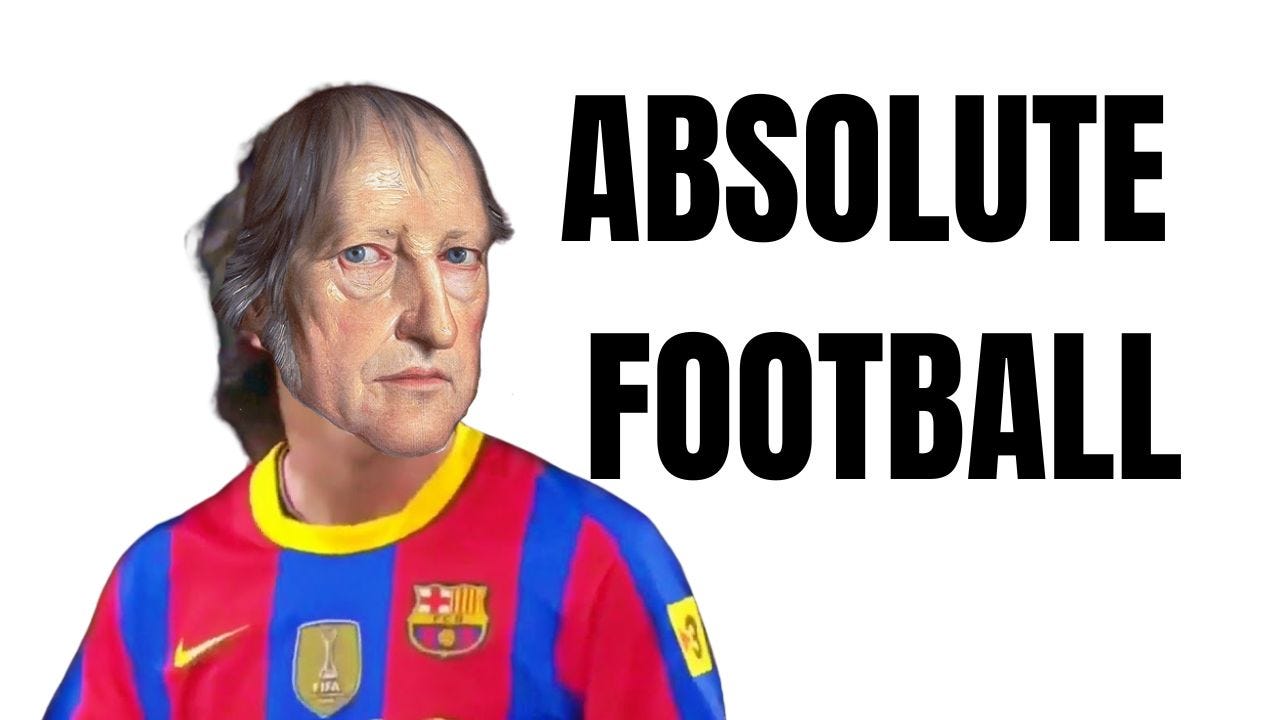
Neymar Jr.’s Post-Modern Calf
On “Paradinhas,” simulations, the price of the panopticon, hyperreality, and the Body-without-Organs of the boy from Vila
Neymar Jr.’s Post-Modern Calf
On “Paradinhas,” simulations, the price of the panopticon, hyperreality, and the Body-without-Organs of the boy from Vila
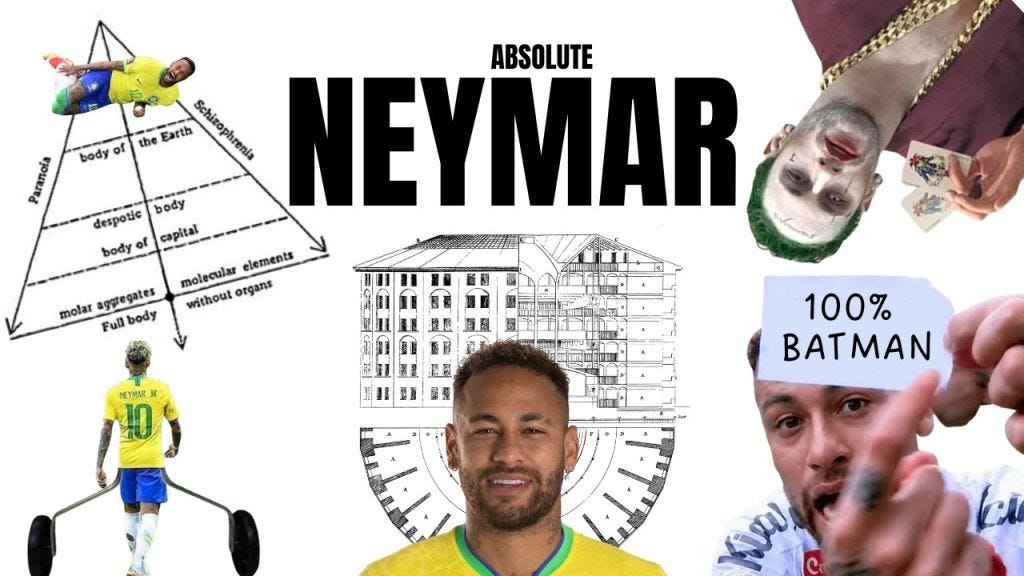
During the Trojan War, Achilles met his ruin and tragic end when he was struck in the heel. After taking an arrow to his weak point, there wasn’t much the great Greek hero could do but die poisoned. The Greeks managed to win the war, but the costs were too great. So great that the battle inspired the great classical Greek poems written by Homer.
I begin this text talking about Achilles and the Greeks because in Brazil of 2026, we also have a tragic hero: Neymar Jr.
The difference between the boy from Vila and the Greek hero is that, while Achilles is fated to die once his heel is injured, Neymar, after injuring his calf (perhaps the most important muscle for a football player), seems bigger, more alive, and stronger than ever.
To understand how this is possible, however, we need to go back a few years and analyze the figure of the boy Ney since his debut in football.
I was born in 1994. Ney was born in 1992. I saw Neymar Jr. explode onto the scene in my youth. I remember it all well. It was around 2009, 2010. He was a skinny kid playing for Santos with a Mohawk that every young person my age wanted to copy (and that all the older folks made sure to mock).
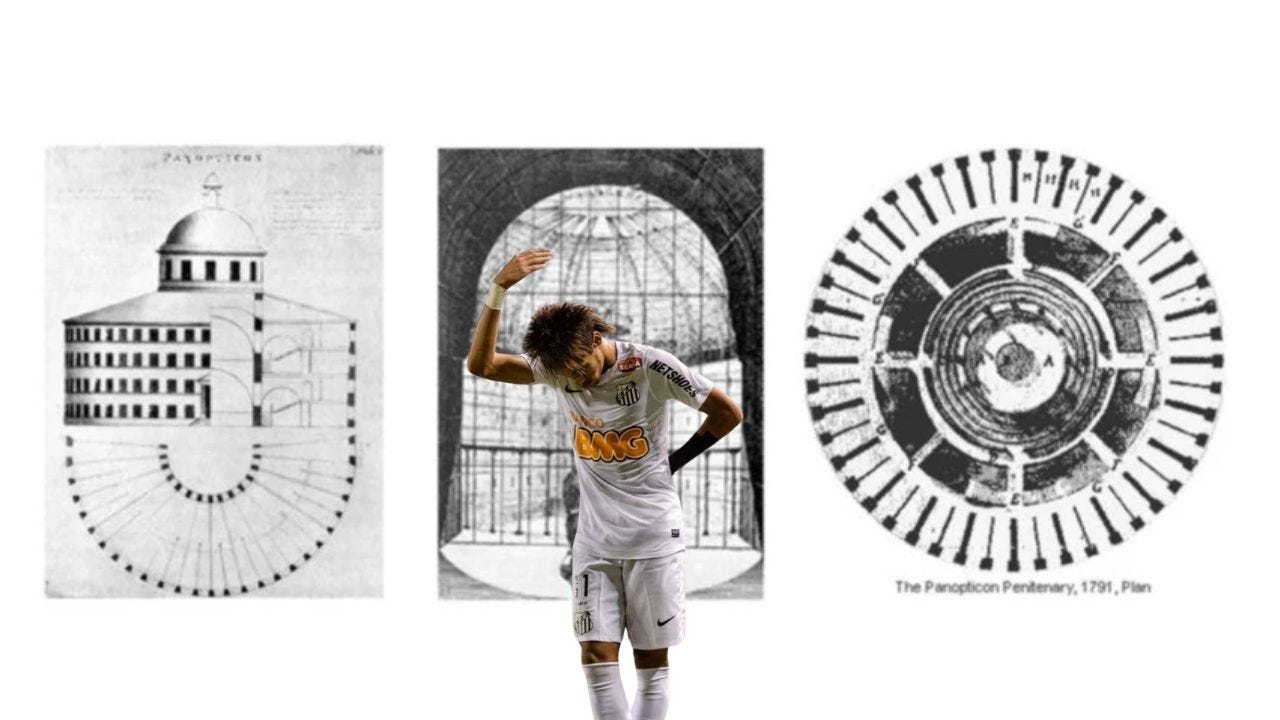
Despite his unusual look, he was very good. An extraordinary player, who dribbled, fell, got up, and scored humiliating goals against opposing teams.
Sometimes his moves were so disconcerting that I remember the older folks, despite admiring the kid’s skill, couldn’t hide their disgust. It was as if Neymar Jr. created a great existential discomfort just by existing, one they couldn’t even name. The problem seemed to be that he was too good, but in the wrong way.
The football my father and the generations before me knew was different, much more focused on hard marking, respect for the hierarchy of the locker room, for the stars who decided the game, but who bowed their heads to the elders, the coaching staff, and tradition. There were controversial figures, of course, like Romário, for example, who spoke his mind and wore the number 11 shirt because he considered himself greater than King Pelé, who wore number 10.
Still, there was something about Neymar’s figure that bothered them greatly.
I remember a specific episode in 2011, while still at Santos, when Neymar argued with coach Dorival Jr. On that occasion, he didn’t accept being substituted and argued with the coach in front of the cameras. He threw a tantrum. The response to this episode was intense. Renê Simões uttered the phrase that would go down in history: “We are creating a monster.”
Simões wasn’t entirely wrong. I think we really were creating a monster. Only that monster, in that case, wasn’t just Neymar Jr., but football itself, which was transforming and struggling to be born. I’m talking about a football that no longer bowed to old hierarchies, a football in which the player, very young, already knew his market value, already had press advisors, and already negotiated his own image. I’m talking about post-modern football, even if no one used that word.
My parents and uncles didn’t know or understand this football. They thought Neymar was “stubborn,” “cocky,” “ill-mannered.” And maybe he was all those things, but the truth is that he was also playing a game they didn’t understand, one played not just with the ball at your feet, but with your own image, with the internet, with controversy, with the systematic refusal of any reductionism.
The “monster” Renê Simões saw on the horizon was, in reality, the new protagonist of the sport: an athlete who doesn’t ask permission to enter history. As Ney himself would say on his Twitter, “the bold one has arrived.”
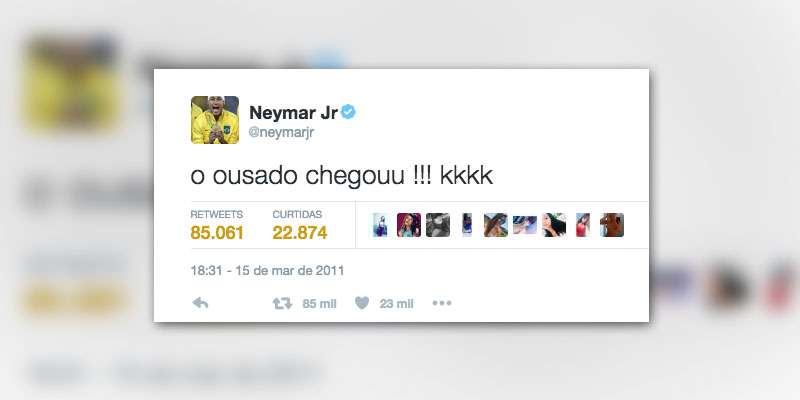
Classic Neymar tweet saing "the bold one has arrived".
For if there is one gesture that defines the post-modern Neymar even before he existed as a concept, that gesture is the “paradinha” (the little stop). For those who don’t remember or didn’t follow football in the early 2010s, an explanation is in order.
Back then, when Neymar was about to take a penalty, he would fake a kick, stop, not kick, see which side the goalkeeper chose, and only then shoot to the opposite side. It was a simple but deadly technique, an abuse. The problem is that, despite being deadly, this move is also considered immoral. For Ney himself, however, it always seemed more amoral than anything else. It was a mental game.
Regardless, the controversy surrounding this attitude was immediate. Football purists, the “roots football” crowd, said the “paradinha” was “unethical,” “disrespectful to the goalkeeper,” and not “real football.” There was some reason in all this. The “paradinha” indeed gives an undue advantage to the taker. So much so that FIFA itself banned it before the 2010 World Cup in South Africa.
[embed]Exapmple of de "paradinha".
What’s interesting about this whole situation, however, isn’t the fairness of the rule or the rule itself, but what Neymar Jr. did when he saw the possibility of abusing the game’s rules. Neymar didn’t ask if he could or not, if it was unethical or not. He simply saw a loophole in the rules and acted on it, as any good athlete or good player would.
Despite the lack of ethical commitment and respect towards goalkeepers, that’s what a good player does. If a good player finds a loophole that gives him an advantage, he will use it. And that’s what the football purists don’t understand about the post-modern football that Neymar Jr. helped inaugurate.However, the “paradinha” isn’t the only post-modern move that Neymar Jr. mastered and, above all, used to build his career.
There’s another, deeper, more controversial, and, for my analysis, even more fundamental to understanding the injured calf of 2026. I’m talking here about simulation.
As any good football fan knows, Neymar Jr. is an expert simulator. On the field, on several occasions, when suffering a foul or harder contact, he falls to the ground and rolls. He exaggerates the play, the impact. In his understanding (he has admitted this in his documentaries), this is a way to protect himself and ensure the referee makes the right decision in his favor. Like the “paradinha,” simulating and exaggerating fouls isn’t a specific technical skill like a trivela kick, but another part of the mental game in post-modern sports.
The problem is that, at various times and for many people, Neymar overdoes it. He goes too far. This earned him the reputation of a diver. Like the boy who cried wolf, no one believes him anymore. This places him in a position very similar to post-truth. Is he really injured or is he exaggerating? It doesn’t matter anymore, because his simulation becomes a meme, becomes news articles, discussions among fans, and, ultimately, just another subject in the flow of hyperreal information. What matters, at the end of the day, is that all this even generates interesting statistics, like the one made by RTS Sports in 2018, which showed that he spent almost 14 minutes of the entire championship rolling on the pitches of the World Cup in Russia.
The big issue is that, when questioned about it, Neymar is honest and sincere in his response. There’s no cynicism. He states that he does it to protect himself. Simulating, for him, is a defensive strategy that reduces the chance of suffering a serious injury. The argument makes sense: if the player throws himself and exaggerates the contact, the opponent thinks twice before making the next tackle, and he avoids getting hit. Depending on the score, this is also a way to waste time for his team.
What makes Neymar a tragic figure, like Achilles, however, is that this justification has a very clear origin. In 2014, during the World Cup in Brazil, in the round of 16 match against Colombia, Juan Camilo Zúñiga kneed Neymar in the back, fracturing one of his vertebrae. On that occasion, the player was centimeters away from being paraplegic. In other words, people can complain, can make fun, make memes and more memes, but this practice, regardless of how ethical or fair it is, has a very clear and justified origin.
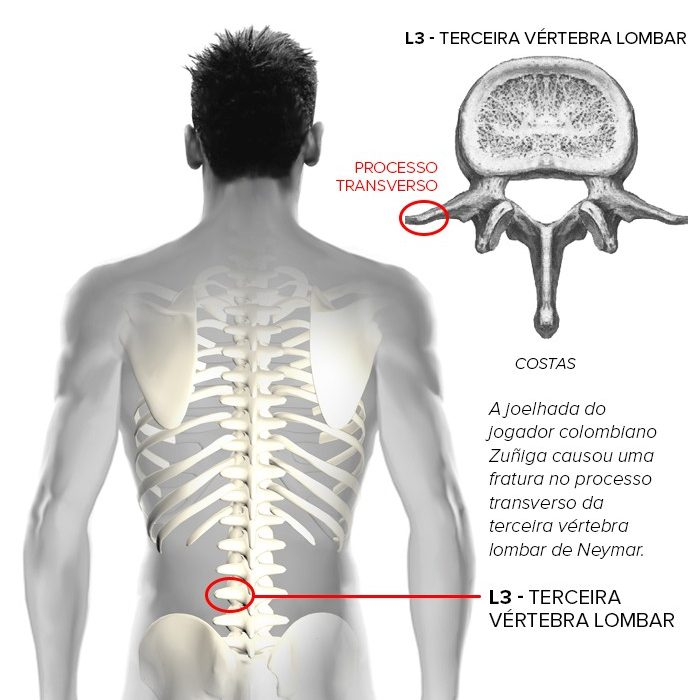
Neymar’s back injury, 2014.
Simulation, from this perspective, reveals an ambiguity: at the same time that it is, yes, a kind of cheating and unsportsmanlike move, it is also a desperate gesture of a paranoid athlete who has looked at his own finitude up close and doesn’t want to see it again. In other words, he pretends it hurts so that it doesn’t actually hurt.
It is here that the thought of Jean Baudrillard becomes indispensable.
For Baudrillard, we live in the era of the hyperreal, that is, in a world where the image of the event not only represents reality but completely replaces it. The map becomes more important than the territory. Simulation, in this context, is not a “falsification” of reality, but an intensified version that makes it more real than the original itself. Neymar, even if he doesn’t know the name of the French philosopher, understood this in practice. He knows, in his body and instinct, that the foul he shows he suffered is worth much more than the foul he actually suffered. What matters, at the end of the day, is not the hit the opponent gave, but the hit the referee sees and, above all, the hit that television broadcasts.
In other words, Neymar isn’t just playing against eleven opponents, but also against the camera, against VAR, against the replay, and fundamentally against public opinion. He performs on two stages simultaneously: the football field and the media field. The 14 minutes rolling on the ground in 2018, therefore, can be seen as a hyperreal performance of pain, as an attempt to produce an image so strong that it couldn’t be ignored. It didn’t work. He became a meme.
However, the fact that many fans, commentators, and even fellow professionals see this as unethical also doesn’t affect him. For him, it’s simply part of the game. A game that purists don’t understand because they are still stuck in a romantic idea of sport where the body and the territory matter more than the map. Neymar, the post-modern one, already knows that the map always wins the game of seduction.
But if simulation is the post-modern gesture Neymar performs on the field, off it there is another equally symptomatic movement: his relationship with the internet. Here, the post-modern Neymar reveals himself as a hyperconnected subject, addicted to social networks, who performs his own life in real-time and who understood, before many, that exposure is not a risk, but an asset to be exploited.
It’s hard to reconstruct today, in 2026, the impact Neymar caused on social media in the early 2010s. At that time, Twitter was still an emerging platform in Brazil and Orkut reigned. And it was on Orkut that one of the most emblematic episodes of pre-world fame Neymar occurred. In a tweet (he was already using Twitter back then, a sign that he always understood technology), Neymar recommended that his fans be careful using Orkut, as there was a profile impersonating him. He wrote: “Hey guys, be careful, there’s a ‘SpongeBob Orkut’ impersonating me… I don’t have Orkut!”
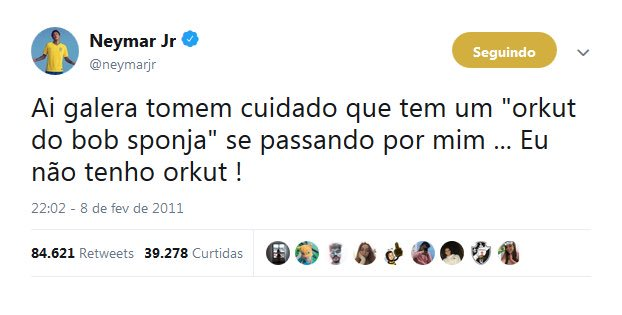
Another classic Neymar tweet. Translation: "Hey guys, be careful, there’s a ‘SpongeBob Orkut’ impersonating me… I don’t have Orkut!"
This story is, at the same time, very funny, yet also symptomatic. Neymar himself, even back then, knew that his image circulated without his control. He couldn’t stop someone from creating a fake SpongeBob profile with his name, just as he couldn’t stop the newspapers from writing about him or fans from cursing him on the internet. He was, from an early age, a body being observed, watched, disciplined, and constantly commented on. The difference is that, instead of hiding from this gaze, Neymar made the opposite move and threw himself headfirst into the panopticon.
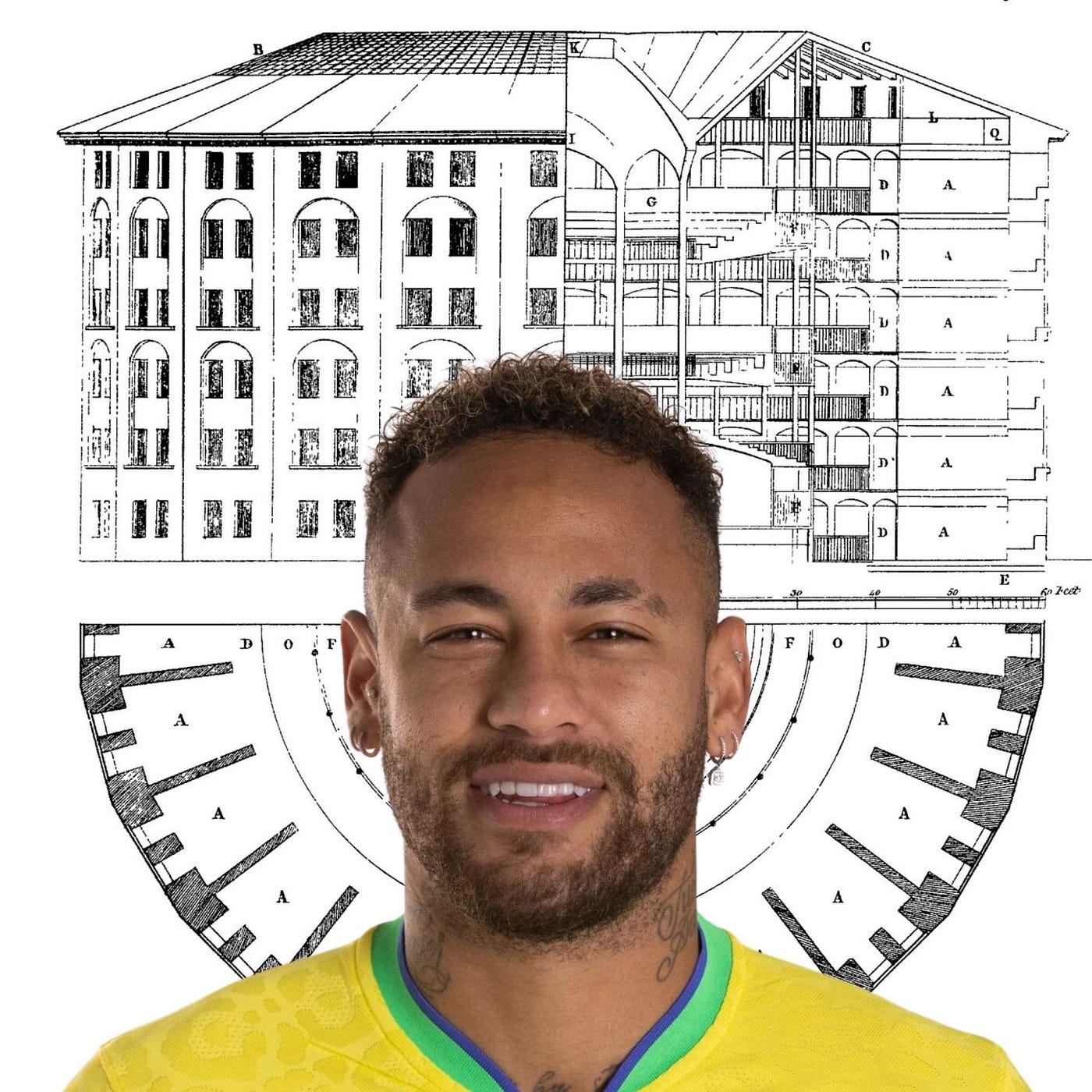
The Korean philosopher Byung-Chul Han, in his writings on the Society of Transparency, warns us that contemporary surveillance no longer works like Foucault’s panopticon, that is, in a disciplinary manner, with a central tower that watches everyone without ever being seen. Today, we expose ourselves voluntarily. We post our vacations, our opinions, our bodies at the gym, and even our plate of food. In this sense, we are not watched, but we watch ourselves. Neymar took this logic to the extreme. His press office isn’t just there to control his image, but to produce it incessantly. He posts his training, posts the injury, posts the X-ray, posts his son, posts the party, posts the car, posts the Joker, posts his Batmobile, a poker game, and ends the day’s stories with a Blaze ad.
In other words, cases like the calf injury that brought him back to the center of debate in 2026 are always experienced in his own body, but also on Instagram and social media. Both his injury and his call-up are consumed as images before any game even happens. Neymar, injured, produces more content than most healthy players. He is, in this sense, an athlete who transcends the act of playing football and is, above all, a producer of media reality.
All this creates a curious situation. The same Neymar who, on the field, simulates pain to survive, on the internet simulates life to stay relevant. The distinction between the real and the simulated, between the body that plays and the body that is watched, between the calf that hurts and the calf that goes viral, becomes increasingly tenuous, to the point that, in 2026, it no longer makes a difference. What matters is that he is there, called up, generating micro-debates.
Neymar understood, with his practical intelligence, that power in the 21st century comes not only from being good at what you do, but from being seen doing it and, above all, from being seen existing. He is a body-vehicle, a walking satellite dish that captures and transmits all the affects of contemporary Brazil. Love, hate, shame, hope, jokes, memes, commotion. Everything that exists passes through Neymar da Silva Santos Júnior.
That is why, dear reader, Neymar’s injured calf has become more important than the healthy calf of any other player. Because the healthy calf runs, but the injured calf generates debate. In the hyperreal world we live in, generating debate is the only thing that really matters.
So far, however, I’ve spoken of a Neymar who plays, who took “paradinhas,” who simulated fouls, who argued with coaches, and who posted on Twitter. I’ve spoken a lot about a present Neymar, albeit controversial. But there is another Neymar. A Neymar who doesn’t play. And this Neymar, paradoxically, is even more powerful. I’m talking about two figures that contemporary football culture has created: the virtual Neymar and the hypothetical Neymar.
The virtual Neymar is the one who inhabits video games. In EAFC (formerly FIFA), he is one of the highest-rated players. His calf there never gets injured. He can play 80 games a season without feeling pain, without needing physiotherapy, and without ever missing a decisive moment for the team. The Neymar of the video game runs, dribbles, scores free kicks, and never (never) rolls on the ground for fourteen minutes. It’s pure performance. It’s what the real Neymar could be if his body didn’t fail. This, in itself, is already strange. A real athlete being compared (and often surpassed) by his own digital copy. But things get even weirder when we introduce the hypothetical Neymar.
The hypothetical Neymar is a creature of social media, a meme that has gained body and voice. It’s the Neymar who chose to go to Real Madrid to face Messi instead of going to Barcelona and becoming his best friend. It’s the Neymar who didn’t get injured in 2014, who didn’t go to PSG in 2017, who never fought with the fans, who is focused and dedicated like CR7. The hypothetical Neymar would have won ten Ballons d’Or, would be better than Pelé, better than Messi, and better than any other player. The hypothetical Neymar never lost a final and, more importantly, never missed a World Cup game.
The curious thing is that the hypothetical Neymar doesn’t exist anywhere. It’s pure simulacrum. A map without territory. Still, he is invoked in every bar discussion, every Instagram comment, and every YouTuber’s live stream. “If Neymar hadn’t gotten injured…” is a phrase that has followed Brazilians since 2014.
The real Neymar, the one who is there, limping controversially, is always measured in the shadow of this hypothetical Neymar. And he loses. And he always will lose. The real Neymar never has been and never will be as good as the hypothetical Neymar, because the hypothetical Neymar doesn’t need to play, only to be simulated in the video game. The real Neymar, on the other hand, gets a red card to go to his sister’s birthday, is frequently injured during parties he would like to attend. In other words, the flesh-and-blood Neymar will always be worse than the digital Neymar because he exists beyond football.
This takes us back to the post-modernism and post-structuralism of Neymar Jr. More specifically, it takes us to Gilles Deleuze, Félix Guattari, and the notion of the Body without Organs (BwO).
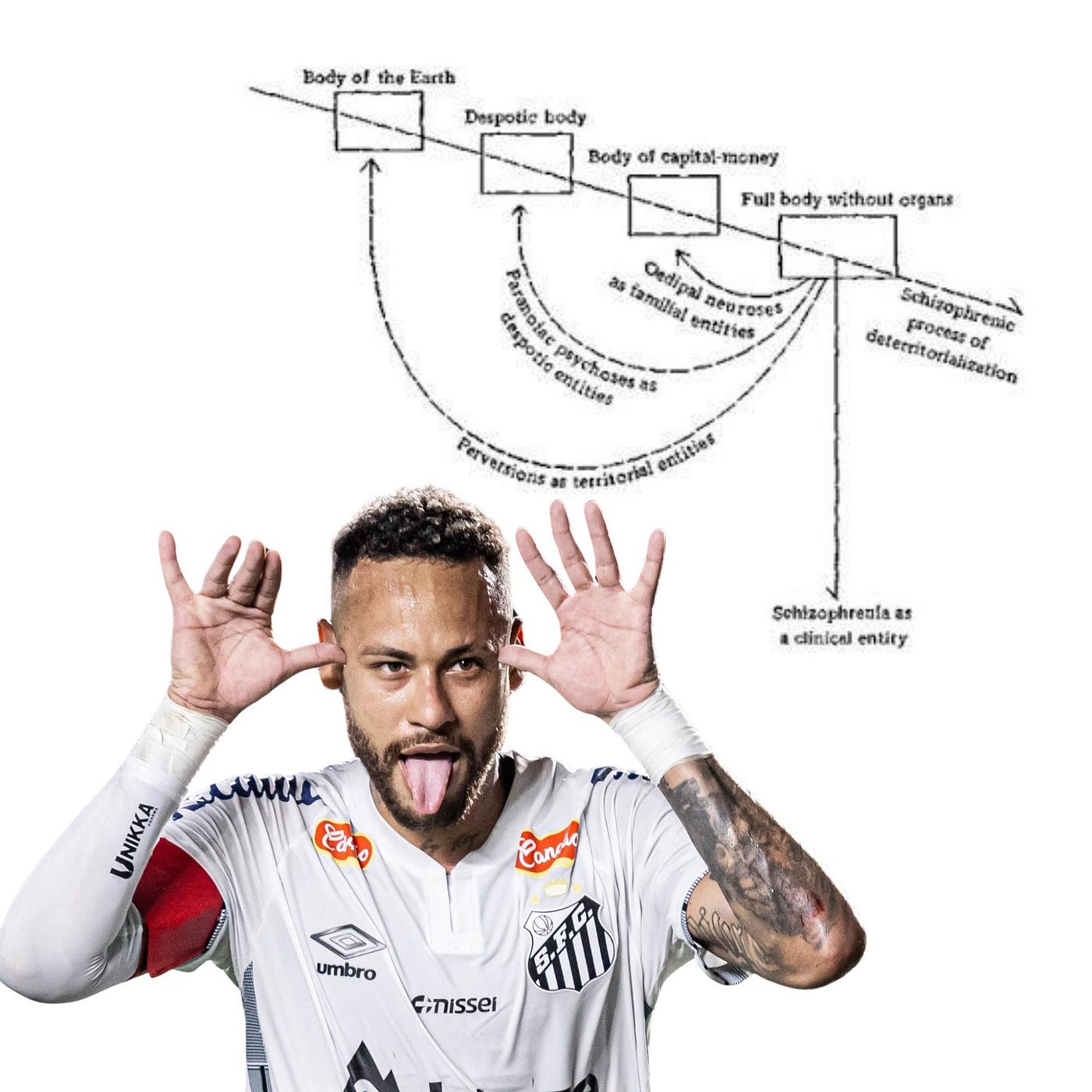
For Deleuze and Guattari, a Body without Organs is what remains of the body without the organism. Unlike normal organs, which have very mechanical and specific functions, the Body without Organs generates intensities, produces affects that can be described as pure unrealized potency. However, there are different types of Bodies without Organs (BwO), such as the BwO of the earth, the despotic BwO, or the BwO of capital. Neymar’s injured calf (which doesn’t run but goes viral; which doesn’t produce game but produces debate) is much closer to the BwO of capital than any other, because his biological body failed, but his media-body, deterritorialized, has never been so potent. In the end, Neymar’s calf in 2026 works like Schrödinger’s cat: it is both injured and not injured at the same time. Every source says something different, every exam reveals a different result, and, at the end of the day, clinical truth matters less than the superposition of realities that keeps the debate alive.
Even with an injured calf, Neymar can occupy a spot on the national team’s bench, because he still has the capacity to generate expectation (hype) about exactly when he will enter the field, sell more shirts, make the fans shout his name, etc. All this because Neymar’s biological body failed, but Neymar’s Body without Organs, that is, his image, his name, his brand, the controversy, the hypothetical Neymar, etc., all of this has never been stronger. The definitive proof of this is the call-up.
As far as I know, in the history of Brazilian football, only one player was called up for a World Cup while visibly injured: Zico, in 1986. But Zico was the star of his generation, loved unconditionally. Neymar in 2026, on the contrary, is also loved, but with many reservations, resentments, memes, and curses.
This shows the extent of his power in the Foucauldian sense. His mere existence, even injured, was enough for the coaching staff, the CBF, the sponsors, and the fans (at least part of them) to demand his name on the list. It is power, because, as Foucault would say, power is not something one has, but something one exercises, whether consciously or not. Neymar doesn’t need to ask to be called up, because the system already knows that calling him up is the only possible decision given a series of external pressures.
Now, does Neymar himself realize how powerful he is? I don’t think so. I think he overestimates himself in some things and underestimates himself in others. The point is that the power he exercises is independent of that awareness. He is powerful because the world around him makes him powerful. The fans ask for it, the media asks for it, the sponsors ask for it, the system asks for it. In this context, Neymar just needs to continue existing (and, preferably, existing in a way that generates debate).
We finally arrive at some “minor” details of Neymar’s personality (because, as we’ve seen throughout this text, he is someone with a lot of personality).
Neymar has a Batman Bible and a Batmobile. His Netflix documentary calls him “Perfect Chaos.” Although he is a fan of the bat-man, he actually identifies more with the Joker, with the villain, and this is not accidental. The Joker, in comics and cinema, is the figure of irrational chaos, who doesn’t want to win, but just to mess things up, who wants to burn the rules and show that everything we call order and progress is, in reality, an illusion.
Neymar, on the field, does something very similar to the Joker. He doesn’t respect the locker room hierarchy, doesn’t follow the manual of the “humble star,” and doesn’t ask permission. He does the “paradinha,” simulates fouls, argues with coaches, cries, laughs, posts, deletes, and backtracks if necessary. He messes things up. He is the chaos that the opposing defense can’t tame. He is the Joker player. But here’s where the most uncomfortable and critical part of this essay comes in.
Neymar is no saint. He has problematic opinions. In 2022, he openly supported the “PEC das Praias,” which would allow the privatization of shoreline land, which, in practice, could lead to the privatization of entire beaches. He has flirted with Bolsonarism, climate denialism, and shallow meritocracy discourses that completely ignore the reality of the country that formed him. He is, in many aspects, a symbol of a certain Brazil that went wrong: the Brazil of “every man for himself,” of “I deserve it because I worked for it,” of “envy is what pursues me.”
But reducing such choices to mere symptoms of a supposed individual “paranoia” would be a mistake. They also reveal a class alignment and material interests that cannot be dissolved by a psychological key, no matter how sophisticated. And so it is, because post-modernity, as I have been trying to show in this article, demands complexity; Neymar, in turn, is complex.
It is at this point that the philosophy of Deleuze and Guattari offers us a final key, perhaps the most accurate of all, to dismantle (and reassemble) the Neymar Jr. phenomenon. For Deleuze and Guattari, there are two fundamental poles in the functioning of desire and the social: the paranoid and the schizophrenic.
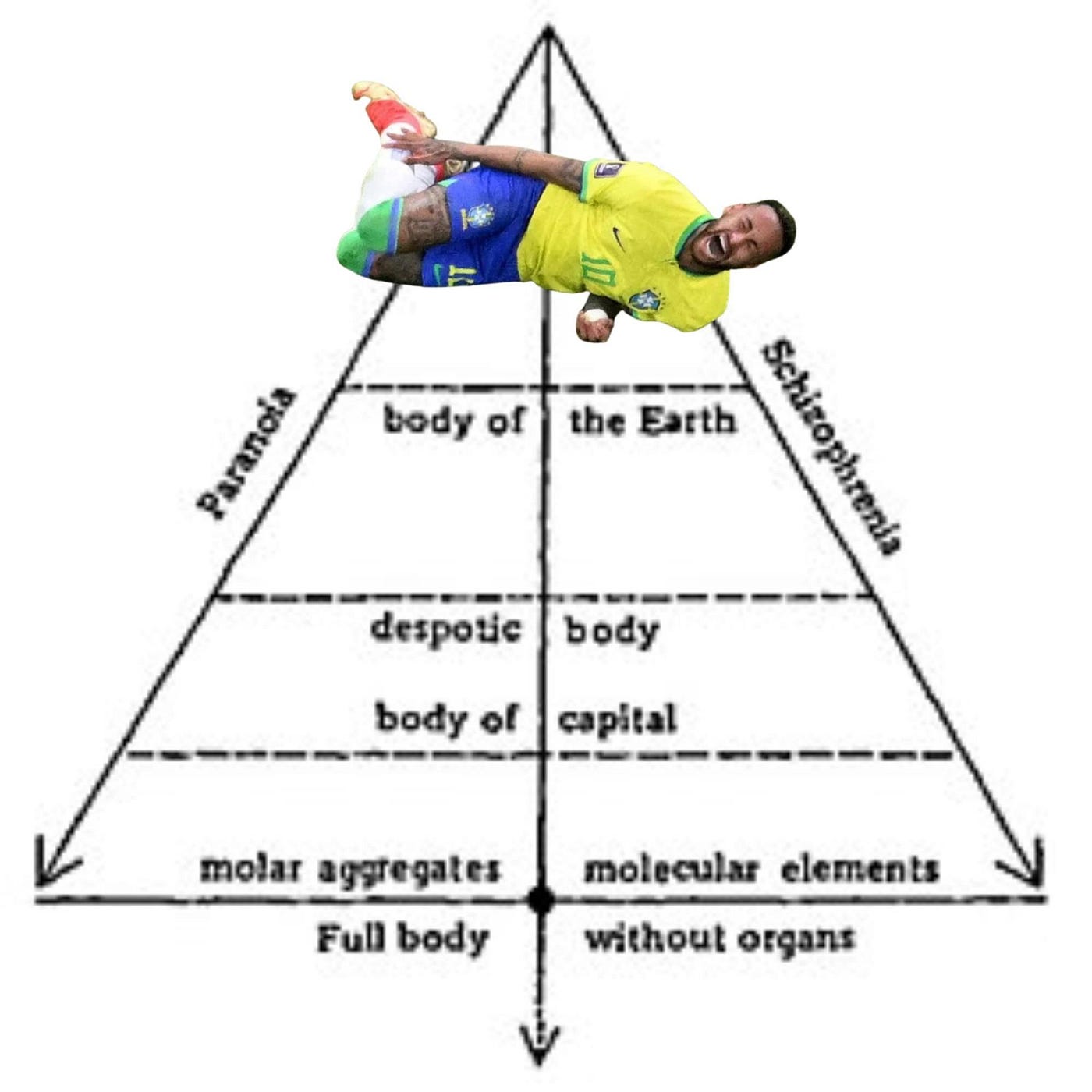
The paranoid pole is that of the center, the territory, hierarchy, and fixed meaning. It is the subject who interprets the world as persecution, who sees enemies everywhere, who tries to control flows, image, contracts, family, money. The paranoid wants to give meaning to everything. He builds walls and aligns himself with orders (political, moral, and paternal) because he needs solid ground under his feet.
The schizophrenic pole, on the contrary, is that of deterritorialization. It is the one who escapes, who doesn’t settle, who invents new lines of flight. The schizophrenic doesn’t cling to hierarchies. He connects what shouldn’t be connected. He is the Joker who loves Batman. The schizophrenic is, ultimately, brilliant, because he sees what others don’t.
I think it’s fair to say that Neymar Jr. represents these two poles at the same time. He is paranoid when he talks about envy and persecution, when he surrounds himself with security guards and advisors, and when he interprets any and all criticism as a plot against his success. He is also paranoid when he aligns himself with the far-right, when he flirts with denialism and shallow meritocracy.
All these movements are, deep down, profoundly paranoid, because they need an external enemy to justify their existence. However, more than that, he is paranoid when he lets his father dictate the direction of his career, his comings and goings, his dubious political alliances, and the billion-dollar contracts that isolated him from the football he loved.
He is paranoid when he tries to be what he is not, that is, the exemplary leader, the traditional family man, the serious businessman, and the right-wing politician. By performing these roles with visible, almost painful effort, as if he’s always on the verge of losing his composure, he is the definition of a paranoid being. But Neymar’s genius (what made him the phenomenon I saw explode in 2011) comes from the other pole: from schizophrenia.
Neymar is profoundly schizophrenic when he steps onto the field and invents a dribble no one imagined, when he does the “paradinha” and pushes the game’s rules to their limit, when he simulates a foul and, in the midst of the simulation, believes in it, when he posts the X-ray on Instagram, when he dresses up as the Joker and says, without irony, that he is “Perfect Chaos.” Neymar is schizophrenic when he dares. Daring, for Deleuze and Guattari, is always a schizophrenic movement, a line of flight that breaks with established territory. But beware: this same “daring” is also perfectly capturable by the market.
Off the field, the schizophrenic Neymar (the brilliant, free, creative boy who enchanted the world) was gradually captured by the paranoid Neymar, by his father, by the countless contracts and political alliances, to the point where paranoia returned to the field. The boy Ney was captured by the need to be taken seriously as a “brand” and by the desire to please everyone (or, at least, not to displease those who control his money). And here, I confess, there’s something personal. I see myself, in a way, in Neymar. Not in Neymar the player, I never was that, not even close (I was always very bad at sports). But in Neymar, who is a fan of both Batman and the Joker at the same time, even if that’s contradictory, and in Neymar Júnior, in Ney the son, who has a complicated relationship with his parents.
I say this because, looking from the outside, it seems that since his move to Barcelona, through the controversial departure to PSG and then to Al Hilal, and even the support for Bolsonaro and the defense of beach privatization, all of this seems to pass through the affection of his parents. I don’t know if Neymar would like to be different. Probably not. Maybe he is exactly where he wants to be. But I, Victor, a spectator of his career since 2009, sometimes wish he were more schizophrenic and less paranoid. I wish he would deterritorialize his own life, that he would use the same daring he used in the “paradinha” to say “no” to those who want to control him, that he would allow himself to be, off the field, as interesting and as free as he is on the field. Neymar can still be a nicer, more coherent, less contradictory human being. Or at least more openly contradictory, but without the paranoia of wanting to prove himself all the time.
Maybe that will never happen. Maybe Neymar will continue flirting with the far-right and absurd agendas. Maybe he will never understand the extent of the privilege he had. Despite all this, I hope he recovers well from his calf injury and that he can play something in this World Cup, even if it’s just one half during the group stage. After all, Carlo Ancelotti has already made it clear that he is called up, period. There’s no way to un-call him. So let him be useful. Let him do something beautiful. Let him give us, Brazilians who still hold the boy of 2011 in our memory, one last flash. Let the real Neymar, for at least one moment, surpass the hypothetical Neymar. Let his body without organs (this body without a calf) produce positive affects and effects on the national team.
I say all this because some kind of affect and effect he will produce. It’s inevitable. The question is knowing whether these effects and affects will be the push needed for the Hexa or just another chapter in the long tragedy that is this latest trophy drought for the Brazilian National Team. In either case, the 2026 World Cup will show us whether this calf is an Achilles’ heel or its opposite, that is, the exact point where fragility turns into power. The ancient Greeks had no name for this. We Brazilians, in the hyperreal era of post-modern football, are about to find out.
What we can know for sure is that, regardless of the result, the great winner of the 2026 World Cup is named Neymar da Silva Santos Jr.
This text was originally published in Portuguese on my personal blog and in English on The Brazilian Mutt. Thank you for reading it! If you like what you read, don’t forget to share and subscribe for more! Obraços!
메타데이터
- post_id
- a62e7d49cab1
- slug
- neymar-jr-s-post-modern-calf-a62e7d49cab1
- url
- https://medium.com/@victorsteuck/neymar-jr-s-post-modern-calf-a62e7d49cab1
- canonical_url
- https://medium.com/@victorsteuck/neymar-jr-s-post-modern-calf-a62e7d49cab1
- author_url
- https://medium.com/@victorsteuck
- status
- ok
- fetched_at
- 2026-06-09 15:37:30