Why Filipinos Are Paying to Learn While Drinking: The Rise of the Experience Economy in the…
For years, businesses competed by selling better products or better services. Today, they’re increasingly competing on something much…
Why Filipinos Are Paying to Learn While Drinking: The Rise of the Experience Economy in the Philippines
For years, businesses competed by selling better products or better services. Today, they’re increasingly competing on something much harder to replicate: memorable experiences.
In the Philippines, that shift is becoming more visible. A growing number of professionals are choosing to spend their evenings not at loud bars or crowded clubs but at intimate events where they can listen to industry experts, ask thoughtful questions, meet new people — and yes, enjoy a drink along the way.
This isn’t simply another networking trend. It’s a glimpse into the country’s next chapter in the experience economy.
Learning Becomes the New Night Out
One of the more interesting concepts gaining traction is “learn while drinking,” an idea championed by a startup.
Instead of lengthy seminars or formal conferences, attendees participate in carefully curated live sessions featuring respected speakers discussing business, technology, investing, creativity, leadership, and personal growth.
The atmosphere is intentionally relaxed.
A drink becomes a conversation starter — not the main attraction.
The value comes from the ideas exchanged, the people met, and the community built.
For many millennials and young professionals, that’s proving to be far more meaningful than another ordinary night out.
Why Experiences Are Winning
Consumer preferences have changed dramatically over the last decade.
People increasingly value experiences they can remember over possessions they quickly forget.
The pandemic accelerated this shift.
After years of remote work, virtual meetings, and endless online content, many professionals discovered something surprising: convenience doesn’t always satisfy the human need for genuine connection.
The result is a growing appetite for curated, in-person experiences that combine education, entertainment, and authentic conversations.
The Loneliness Problem Nobody Talks About
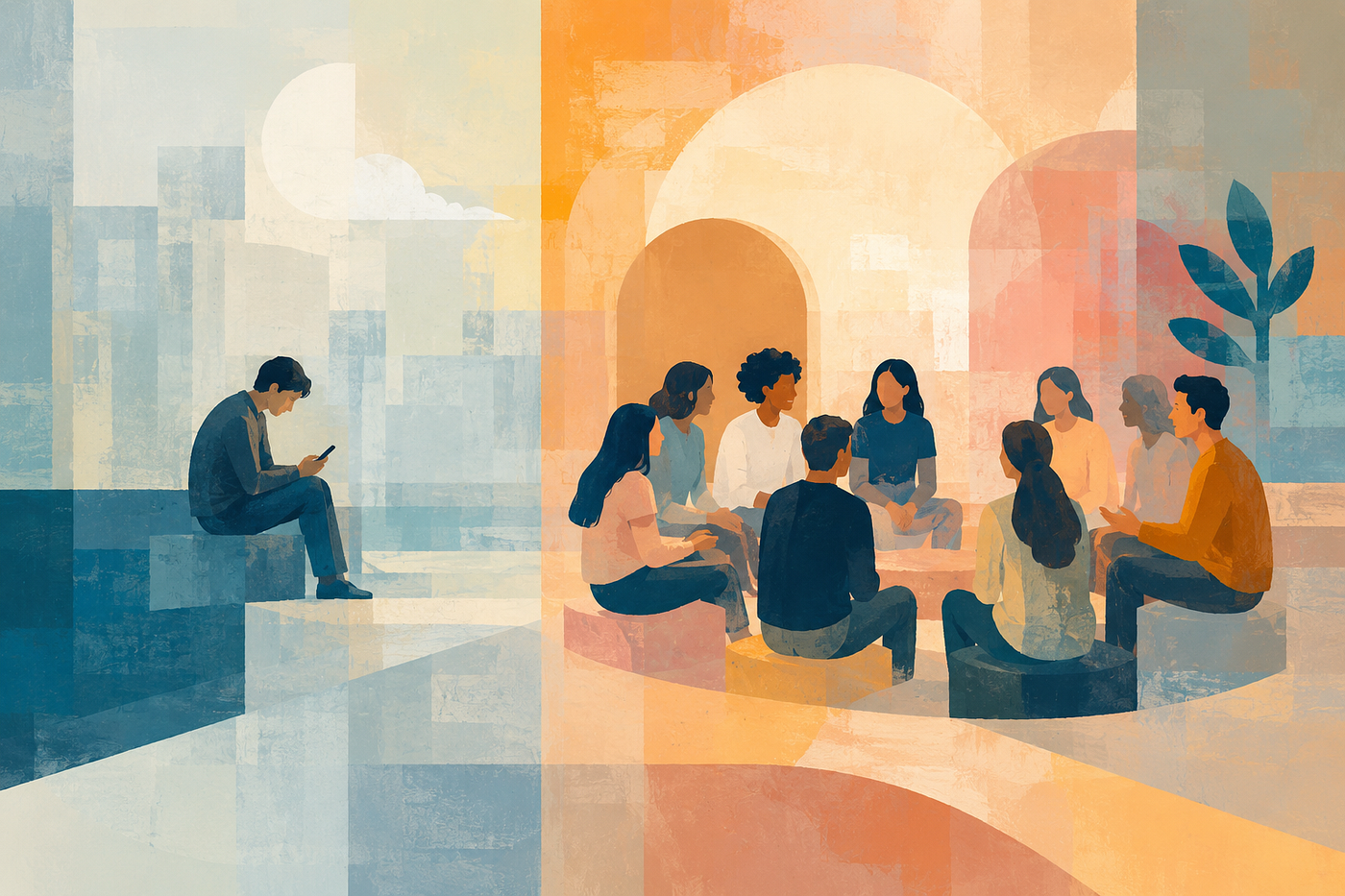
Despite being more digitally connected than ever, many people feel increasingly isolated.
Social media creates visibility but not necessarily belonging.
Video calls keep teams productive but rarely build lasting friendships.
That’s where curated communities begin to fill an important gap.
Instead of gathering hundreds of anonymous attendees, these events intentionally remain small — often between 25 and 90 participants — to encourage meaningful conversations rather than superficial interactions.
The size isn’t a limitation.
It’s part of the product.
Short Talks, Longer Conversations
One reason these events work is their format.
Rather than overwhelming audiences with multi-hour lectures, speakers deliver concise, focused presentations lasting roughly twenty minutes.
They’re followed by an equally engaging question-and-answer session.
Scheduled breaks encourage attendees to continue discussions, exchange ideas, and expand their professional networks.
It’s structured enough to provide value yet flexible enough to create genuine human interactions.
In many ways, the networking happens between the sessions rather than during them.
Technology Isn’t the Enemy
Interestingly, this movement isn’t positioning itself against technology.
Instead, it complements it.
Online platforms remain excellent for discovering information.
Artificial intelligence can summarize books, generate ideas, and answer questions within seconds.
But algorithms cannot fully replace spontaneous conversations, shared laughter, unexpected introductions, or the chemistry that develops when people occupy the same physical space.
The internet scales knowledge.
Real-life experiences build relationships.
Both have a place.
Curating the Right People Matters
Not every speaker belongs on stage.
Successful experience-driven events invest heavily in curation.
Expertise certainly matters, but so does authenticity.
A knowledgeable speaker who cannot engage an audience rarely creates memorable experiences.
Likewise, charisma without credibility quickly loses trust.
Finding the right balance is what transforms an ordinary event into one people recommend to friends.
What Businesses Should Learn
The implications extend beyond startups organizing public events.
Companies facing employee disengagement or declining retention may need to rethink internal gatherings.
Traditional town halls often focus on delivering information.
Experiential events focus on creating participation.
Employees are more likely to remember discussions they actively contribute to than presentations they simply watch.
Organizations don’t necessarily need alcohol to recreate this effect.
They need better storytelling, stronger facilitation, more interaction, and opportunities for employees to genuinely connect.
The Future of the Philippine Experience Economy

The Philippine experience economy is still in its early stages, but its momentum is difficult to ignore.
Consumers are becoming more intentional with how they spend both their money and their time.
They’re seeking experiences that educate, inspire, and create lasting relationships.
For entrepreneurs, this represents a growing opportunity.
For companies, it’s a reminder that culture cannot be downloaded.
And for individuals, it suggests that perhaps the most valuable investment isn’t another online course or another night scrolling through social media.
Sometimes, it’s simply showing up, sharing ideas, meeting strangers who become collaborators — and learning something new over a drink.
As experiences become the new currency of connection, the businesses that understand how to create them may define the next generation of growth in the Philippines.
Thanks for reading!
If this piece made you think, follow Ink & Reason on Medium for thoughtful essays on law, politics, personal finance, and the ideas that shape everyday life.
메타데이터
- post_id
- a645eb85fd24
- slug
- why-filipinos-are-paying-to-learn-while-drinking-the-rise-of-the-experience-economy-in-the-a645eb85fd24
- url
- https://medium.com/@inkandreason/why-filipinos-are-paying-to-learn-while-drinking-the-rise-of-the-experience-economy-in-the-a645eb85fd24
- canonical_url
- https://medium.com/@inkandreason/why-filipinos-are-paying-to-learn-while-drinking-the-rise-of-the-experience-economy-in-the-a645eb85fd24
- author_url
- https://medium.com/@inkandreason
- status
- ok
- fetched_at
- 2026-07-28 11:53:03




