I played pickleball every day for 30 days. Here’s what happened.
I expected to get better at pickleball. I didn’t expect it to change everything else.
I played pickleball every day for 30 days. Here’s what happened.

I expected to get better at pickleball. I didn’t expect it to change everything else.
I want to be honest about how this started.
It wasn’t a wellness experiment. It wasn’t a content strategy. It wasn’t because I had some burning passion for pickleball that needed to be honored.
It was a bet.
My colleague a 54-year-old former tennis player who’d recently discovered pickleball with the intensity of a religious conversion told me the sport would “rewire how I think about competition.” I told him that sounded like something a cult member would say. He bet me I couldn’t play every single day for 30 days without becoming, in his words, “genuinely obsessed.”
I took the bet because I was confident I would win.
I was wrong.
This is the honest account of what happened across 30 days of daily pickleball the physical changes, the mental shifts, the embarrassing losses, the unexpected breakthroughs, and the one moment around Day 19 that I didn’t see coming and still haven’t fully processed.
Before We Start: Who I Was on Day Zero
Some context matters here.
I am reasonably athletic. I played recreational tennis through my twenties, ran half-marathons in my early thirties, and currently do enough to feel like I’m maintaining rather than declining. I am 38 years old. My hand-eye coordination is above average. I have a competitive streak that my wife describes as “a lot.”
I had played pickleball exactly twice before this experiment once at a company event where nobody knew the rules, and once with my neighbor whose paddle I borrowed and whose style I’d describe as “enthusiastic but unguided.”
I was a beginner. Not a complete blank slate, but close.
My equipment on Day 1: a borrowed no-brand paddle that weighed approximately the same as a small car, a single yellow ball, and zero understanding of why the kitchen line existed.
Week One: Everything Hurts and Nothing Makes Sense
Days 1–7
The first thing I learned about pickleball is that it is not tennis. I knew this intellectually. I did not know it in my body, which spent the first week trying to play tennis on a smaller court with a shorter paddle and getting punished every single time.
My forehand was violent and uncontrolled. My backhand was worse. I kept approaching the net like I was serving a volley in tennis rushing in on any short ball, swinging hard, watching the ball sail six inches long or die in the net. My first week opponent (a retired schoolteacher named Margaret who described herself as “intermediate at best”) beat me 11–2, 11–3, and 11–1 across three sessions.
Margaret was not smug about this. That almost made it worse.
The physical toll was real and unexpected. Pickleball is not a cardiovascular grind the way running is, but it works muscles you forget you have. The lateral shuffle the constant side-to-side movement to stay in position torched my hip flexors in a way no amount of running had. My forearm ached from gripping too tightly. My lower back was unhappy about the bent-knee ready position that every instructional video insisted was non-negotiable.
By Day 4 I was losing badly but starting to understand why I was losing badly, which felt like progress.
By Day 7 I had learned three things:
- The kitchen rule is not arbitrary. It is the entire game.
- Hitting hard is almost always the wrong decision.
- My borrowed paddle was genuinely terrible and I needed to fix that.
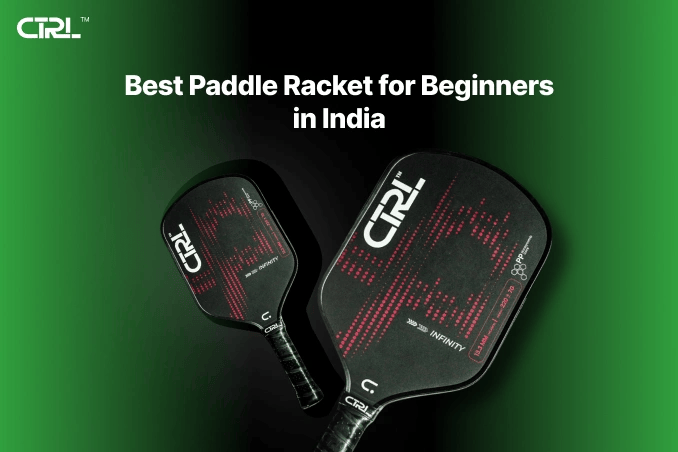
On Day 7 I ordered a CTRL™ Infinity. Not because I’d done extensive research, but because a player at the courts I’d started visiting a woman who moved with the unhurried efficiency of someone who had been playing for years had one and agreed to let me try it mid-session.
The difference was immediate. The ball came off with actual feel. I could sense where on the face I’d made contact. The kitchen dinks that had been flying unpredictably started landing with intention. It wasn’t magic. But it was information the kind of feedback that lets you adjust.
I didn’t win more games that day. But I understood why I was losing in a way I hadn’t before.
Week Two: The First Dangerous Thought
Days 8–14
My CTRL Infinity arrived on Day 9. I had been playing every morning at 7am at a public court near my house one of three courts that had been converted from tennis in a park renovation the previous year. At 7am there are always people there. This told me something about pickleball’s hold on people that I wasn’t ready to fully acknowledge yet.
Week two is when the game started to make sense.
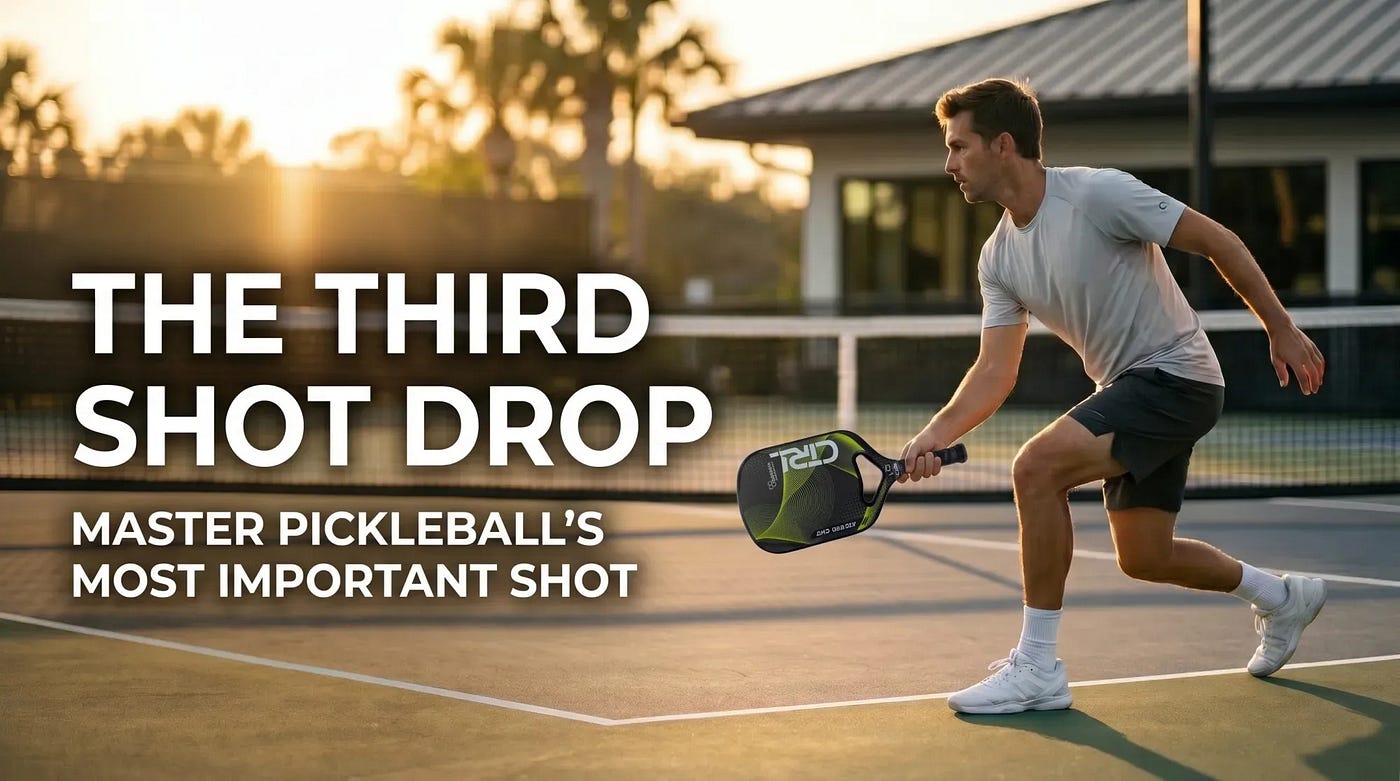
The pivot moment was understanding the third shot drop a soft, arcing shot that lands in the kitchen and neutralizes your opponent’s position at the net. I’d heard about it in Week 1 but couldn’t execute it. In Week 2, I drilled it deliberately for the first 20 minutes of each session. Landing it is an act of restraint that felt completely unnatural. You are holding back when your instinct says attack. You are playing soft when the ball is asking to be hit hard.
The first time I executed a clean third shot drop in a real rally watched it arc, kiss the kitchen line, and die before my opponent could do anything useful with it — was Day 11. I remember it specifically. Not because I won the point (I didn’t; they reset and I panicked and drove it long), but because I felt the shot work in exactly the way it was supposed to.
That feeling is, I now understand, at least 40% of why people get obsessed with pickleball.
Week two was also when I started noticing the social architecture of the sport. Pickleball courts have a culture. People rotate. Strangers play together without introduction. There is a ritual of paddle stacking you put your paddle at the end of a row to signal you want to play next that I figured out by watching for three sessions before asking. Players of wildly different skill levels share courts without apparent resentment.
By Day 14 I had beaten Margaret once. She said “well done” in a tone that suggested she had let me.
I don’t think she let me.
Week Three: The Wall, Then the Window
Days 15–21
Week three was the hardest week.
I had improved enough to understand how far I had to go, which is a particular kind of discouraging. My dinks were consistent but predictable. My third shot drop worked maybe 60% of the time. I had developed a habit of crowding the kitchen line too aggressively getting there early but then poaching shots that weren’t mine and leaving my side of the court open.
Day 16 was my worst day. I lost six consecutive games to a rotating cast of opponents, including two games to a teenager who was visibly bored and scrolling his phone between points. This was not good for my self-image.
I almost skipped Day 17. I sat in my car outside the courts for four minutes with the engine running, seriously considering going home. I went in because the bet was still active and I am pathologically unable to concede.
Day 17 was fine. Nothing remarkable. I lost more than I won. I went home.
Day 18 I played someone who broke down my crowding habit in real time a measured, methodical player named David who would wait patiently for me to poach and then lob perfectly to the spot I’d vacated. After the third time I watched his lob land untouched, I asked him to explain what he was doing.
He spent fifteen minutes after our session walking me through court positioning. He drew a diagram on his phone. He did this for a stranger because, I was beginning to understand, this is simply what pickleball players do.
Day 19.
I’m going to describe Day 19 carefully because I’ve thought about it since.
I arrived at the courts at 7am. There were six people already playing. I stacked my paddle. I waited. I got called onto a court with three players I’d never met a couple in their mid-sixties and a younger woman who turned out to be their daughter visiting from another city.
We played for ninety minutes.
I was locked in in a way I hadn’t experienced before and haven’t fully replicated since. Every shot felt correct before it landed. My positioning was automatic I wasn’t thinking about where to stand, I was just there. I anticipated. I reset when I needed to reset and attacked when the ball rose. My partner (the father, whose name was Raj) and I won every game.
At one point, mid-rally, I had a clear thought: I am not thinking about anything except this.
I don’t mean I was focused. I mean my mind was genuinely, completely empty of everything that wasn’t the immediate moment. No work. No to-do lists. No ambient anxiety about nothing in particular. Just the ball and the court and the movement and the decision.
I have meditated on and off for five years and never once achieved what Day 19 handed me without trying.
I drove home and sat in the driveway for a while.
The cult member, it turned out, had been telling the truth.
Week Four: The Other Side
Days 22–30
After Day 19, something subtle shifted. The experiment stopped feeling like discipline and started feeling like something I was protecting.
I rearranged meetings around court time twice. I started watching pro pickleball on YouTube in the evenings not casually, but analytically, pausing to study positioning and third shot selection. I texted Raj to schedule a session outside of the random court rotation. I caught myself explaining the difference between a drive and a drop to my wife using a plate and a tennis ball, and the fact that she listened without leaving the room told me she’d noticed the shift too.
My game in Week 4 was not dramatically transformed from Week 2. Improvement in pickleball is not linear; it comes in sudden steps after long plateaus. But I was a genuinely different player than I’d been on Day 1.
Specific things I could do by Day 30 that I couldn’t do on Day 1:
- Execute a consistent third shot drop under pressure
- Identify and hold the kitchen line without over-committing
- Use a reset dink to neutralize a speed-up instead of panicking
- Read my opponent’s body language for early signals on shot selection
- Win against Margaret (twice, and I’m fairly confident neither was a gift)
My CTRL Infinity had become so familiar that I stopped thinking about the paddle entirely, which I’m told is the goal when the equipment disappears and it’s just you and the game.
On Day 30 I played four games. Won three. Came home. Told my colleague he had won the bet.
He said the bet was about whether I’d get obsessed, not whether I’d admit it.
He was right. I’m obsessed.
What 30 Days Actually Taught Me
I expected to write this section as a listicle. Five lessons, clean conclusions, tidy takeaways. But the 30-day experiment doesn’t resolve that neatly, because the most important things it taught me aren’t really about pickleball.
Deliberate daily practice accelerates everything. I improved more in 30 days of daily play than most recreational players improve in a full year of twice-weekly sessions. Not because I’m talented, but because frequency creates feedback loops that occasional play can’t replicate. You remember yesterday’s mistake today. You fix it. That compounding is real.
The right equipment is part of the learning environment. The borrowed paddle wasn’t just uncomfortable it was giving me inaccurate information about my shots. When a ball flies long, you need to know if that’s your technique or your paddle. The Infinity gave me that clarity early enough that it shaped how I learned. Gear doesn’t replace skill, but bad gear corrupts the feedback you need to build it.
Beginner’s discomfort is the most valuable asset in any skill. Week 1 felt humiliating. In hindsight, it was the most information-dense week of the 30. I didn’t know enough to have bad habits yet. Every loss taught me something directly. That window closes faster than you expect protect it instead of rushing past it.
The social design of pickleball is not accidental. The rotation system, the paddle stacking, the culture of explaining these aren’t just pleasant additions to the sport. They’re structural features that make the community self-sustaining. David spending fifteen minutes coaching a stranger he’d just met isn’t unusual in pickleball. It’s the norm. I genuinely don’t understand why more sports work this way, because it’s clearly superior.
Day 19 was real. I’ve tried to explain it as flow state or zone or whatever the sports psychology term is. But what it felt like was simpler than any of those labels: complete presence. The court was the only place I existed for ninety minutes. I’m not sure I knew I needed that until it happened.
Should You Try It?
Here’s my honest answer: yes, but manage your expectations about what you’re trying.
If you expect to be good quickly, you’ll be frustrated in Week 1 and you’ll quit. Pickleball has a learning curve that’s steeper than its accessibility suggests. The game is easy to play and genuinely difficult to play well.
If you go in expecting to learn something about the game, about how you respond to competition, about what it feels like to be a beginner at something again 30 days will give you more than you’re anticipating.
The bet I lost was the best bet I’ve ever lost.
The Gear I Used
I played Days 1–8 with a borrowed paddle I won’t name here because it deserves no publicity. From Day 9 onward I played exclusively with the CTRL™ Infinity high-friction fiberglass face, 13.3mm core, 220g. It became invisible in the best possible way. By Day 30 I didn’t think about it once per session.
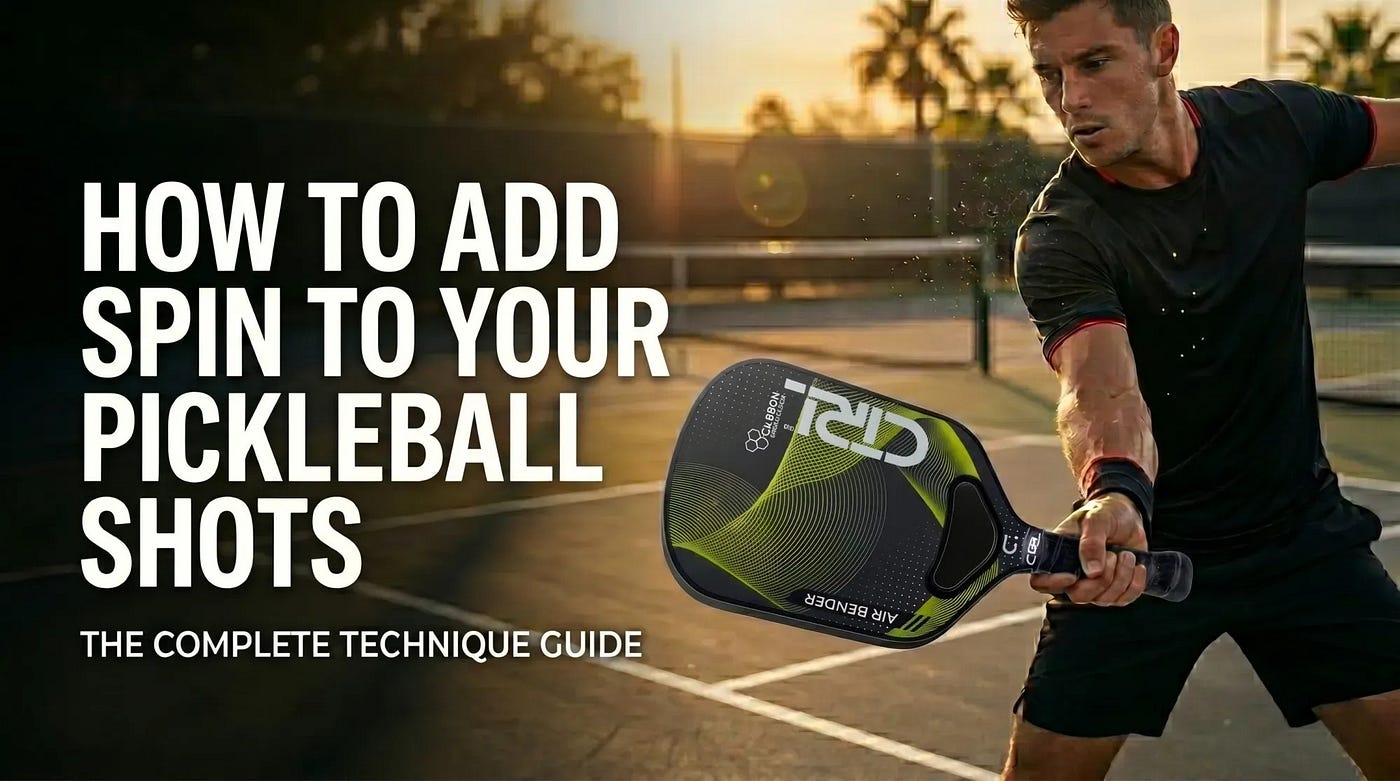
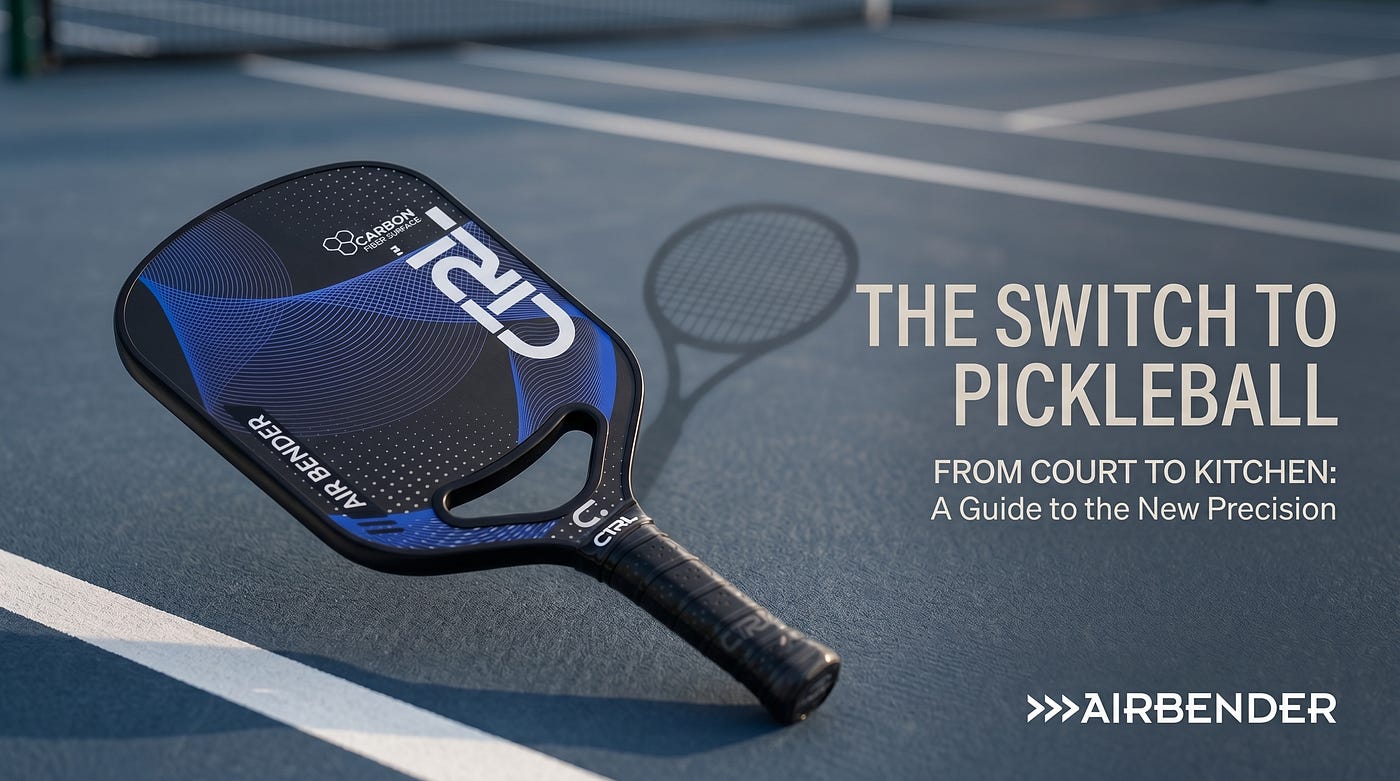
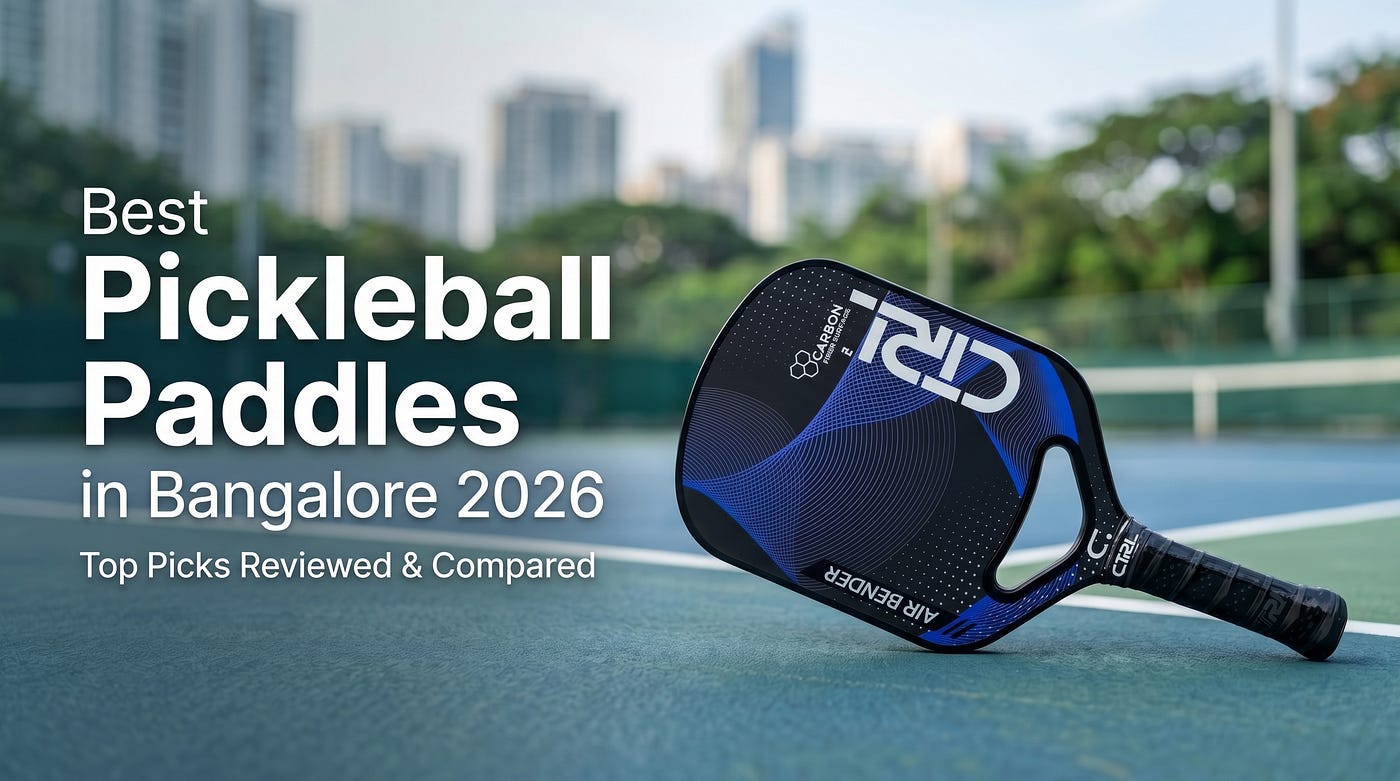
If you’re an intermediate or advanced player looking for something more aggressive, the CTRL™ Airbender aerodynamic edgeless frame, engineered for spin is what I’d be testing next if I were starting Week 5.
메타데이터
- post_id
- a64c4612e569
- slug
- i-played-pickleball-every-day-for-30-days-heres-what-happened-a64c4612e569
- url
- https://medium.com/ctrl-pickleball-paddle/i-played-pickleball-every-day-for-30-days-heres-what-happened-a64c4612e569
- canonical_url
- https://medium.com/ctrl-pickleball-paddle/i-played-pickleball-every-day-for-30-days-heres-what-happened-a64c4612e569
- author_url
- https://medium.com/@dakshgulati
- status
- ok
- fetched_at
- 2026-06-15 20:49:13