What Makes a Stroke Rehabilitation Program Successful for Patients?
A stroke is an incredibly profound, life-altering medical event that occurs with terrifying suddenness, instantly casting patients and…
What Makes a Stroke Rehabilitation Program Successful for Patients?
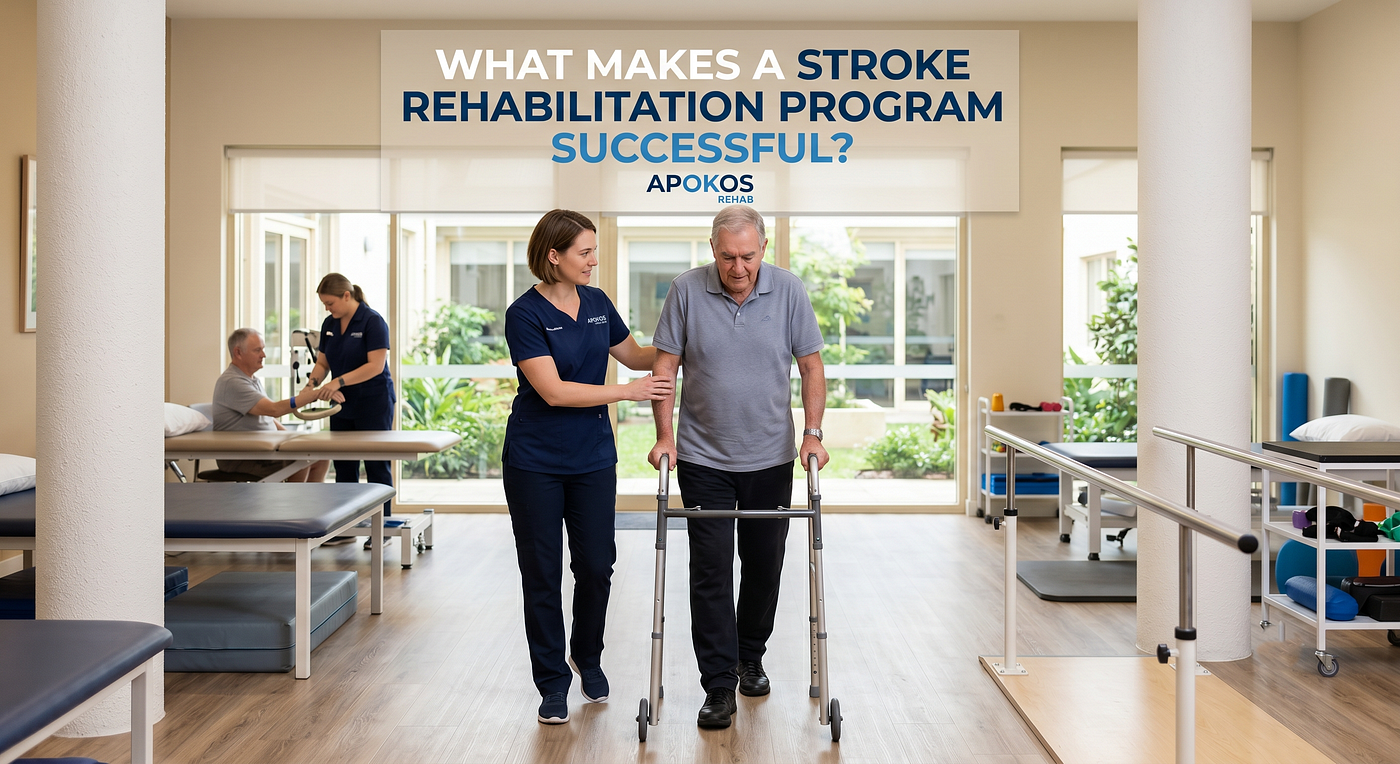
What Makes a Stroke Rehabilitation Program Successful for Patients
A stroke is an incredibly profound, life-altering medical event that occurs with terrifying suddenness, instantly casting patients and their families into an unfamiliar landscape of physical and emotional challenges. In the acute emergency setting, preserving life and minimizing initial brain damage are the primary victories. However, once medical stability is achieved within the hospital’s intensive care unit, the true, long-term journey toward comprehensive recovery commences. This long-term recovery journey is paved through structured, scientifically backed stroke rehabilitation — a highly specialized, multidisciplinary clinical process designed specifically to help stroke survivors regain lost motor skills, rebuild cognitive frameworks, establish independence, and gracefully adapt to a modified baseline of physiological functioning.
It is crucial to recognize that no two neurological recovery pathways are completely identical, and similarly, the quality and efficacy of institutional recovery frameworks vary considerably across healthcare facilities. For patients, families, and caregivers evaluating advanced care options, such as those provided at specialized centers like Apokos Rehab Center (https://apokosrehab.com/), understanding the exact underlying criteria of an effective intervention is vital. A truly successful rehabilitation framework is far more than a simple sequence of standard physical therapy sessions; rather, it is a highly sophisticated, beautifully integrated healthcare ecosystem. Below, we provide an expansive breakdown of the definitive, evidence-based pillars that make a comprehensive clinical program genuinely successful for its patients.
1. Immediate and Early Intervention Timelines
Within the domain of neurology, there is an absolute clinical maxim that governs all treatment protocols: “time is brain.” While this phrase is most frequently used to emphasize the importance of rapid thrombolytic therapies in the emergency room, it carries immense weight during the subacute recovery phase.
The human brain possesses a remarkable, mathematically elegant biological capacity known as neuroplasticity — the innate ability of the cerebral cortex to structurally reorganize its neural networks, form alternative synaptic connections, and bypass damaged gray matter following an ischemic or hemorrhagic injury. This window of neuroplasticity is at its highest physiological peak during the immediate weeks following a stroke.
A premier rehabilitation framework leverages this biological timeline by executing immediate, proactive interventions. Starting targeted physical, occupational, and speech therapies the moment a patient receives medical clearance is essential. This aggressive timeline prevents the development of secondary complications such as severe muscle atrophy, joint contractures, and learned non-use — a detrimental phenomenon where the brain completely forgets how to interact with a weakened limb. By capturing this critical window of heightened neural flexibility, clinicians can drastically optimize the overall trajectory of functional restoration.
2. Seamless Multidisciplinary Clinical Collaboration
The neuroanatomical damage caused by a stroke is rarely isolated; its consequences span physical hemiparesis, cognitive deficits, expressive aphasia, memory impairments, and deep psychological changes. Because these symptoms cross multiple functional boundaries, no single clinical specialty can guide a patient to full recovery. True success demands an expertly coordinated team of medical specialists operating in absolute harmony with one another.
This multidisciplinary framework brings together a broad spectrum of clinical expertise:
- Physical Therapists: Focus strictly on lower-extremity biomechanics, balance, and gait restoration.
- Occupational Therapists: Work concurrently to retrain the fine motor skills required for activities of daily living, such as feeding, dressing, and personal hygiene.
- Speech-Language Pathologists: Address communication disorders like aphasia while safely managing dysphagia (swallowing difficulties).
When these therapies are directed by a physiatrist (a rehabilitation physician) and supported by neuropsychologists and rehabilitation nurses, the patient receives full-spectrum care that treats the whole person rather than an isolated symptom profile.
“True success in stroke rehabilitation occurs when distinct medical disciplines stop operating in isolated silos and start working as a singular, cohesive ecosystem tailored explicitly to the patient’s real-world needs.”
3. Deep Customization and Adaptive Personalization
Every single stroke is an entirely unique clinical presentation. The specific cerebral artery involved, the overall volume of affected brain tissue, and the patient’s pre-existing baseline health profile all combine to create a distinct set of symptoms. Consequently, standardized, rigid protocols are fundamentally insufficient for modern neurorehabilitation.
The hallmark of a high-tier clinical program is the absolute personalization of every therapy regimen. Upon a patient’s admission to a specialized center, comprehensive baseline assessments must be meticulously conducted to map out precise functional, cognitive, and physical deficits. Successful plans utilize these baselines to build collaborative, realistic, and highly dynamic short-term and long-term goals. Whether a patient’s primary personal objective is to walk unassisted across a room, return to full-time professional employment, or simply swallow food safely without a nasogastric tube, the clinical plan must match their personal desires and physical realities exactly.
4. High-Intensity Training and Task-Specific Repetition
Re-educating the human brain and forging new neural pathways demands an immense, concentrated volume of behavioral repetition. For the motor cortex to effectively bypass damaged neural networks and build alternative pathways to command a paretic limb, the patient must engage in intensive, focused, and purposeful practice. Modern clinical research strongly proves that general, unspecific movements are far less effective than task-specific training.
Successful stroke rehabilitation programs prioritize functional activities that mirror real-world movements. Instead of performing abstract exercises, patients practice meaningful tasks, such as repeatedly reaching for a standard kitchen cup, manipulating door handles, or practicing stepping mechanics over simulated home thresholds. When this intense repetition is integrated with cutting-edge medical technologies — such as robotic-assisted gait trainers, functional electrical stimulation (FES), and immersive virtual reality systems — the rate of neuroplastic adaptation accelerates dramatically, leading to permanent functional outcomes.
5. Dedicated Psychological, Cognitive, and Emotional Support
The sudden, unexpected loss of physical independence is an incredibly traumatic emotional event. Clinical literature indicates that post-stroke depression (PSD) affects a remarkably large percentage of stroke survivors during their recovery. This profound emotional despondency can rapidly destroy a patient’s internal motivation, making it exceptionally difficult for them to participate actively in intensive physical therapies.
A truly complete rehabilitation program treats emotional and psychological health with the same urgency as physical deficits. Integrating clinical neuropsychologists, counseling sessions, and peer support networks directly into the daily schedule ensures that patients have the psychological framework required to handle the inevitable frustrations of physical recovery. When a patient’s emotional well-being is actively supported, their internal drive thrives, which directly correlates with improved physical outcomes and faster milestone achievements.
6. Comprehensive Caregiver Integration and Post-Discharge Strategy
The true measure of a stroke rehabilitation program’s success is not merely how well a patient performs within the controlled, supportive environment of a specialized clinic, but how effectively they sustain those functional gains at home. Long-term recovery is heavily dependent on the quality of life established after formal discharge. Therefore, a premier program integrates family members and primary caregivers into the clinical environment early in the recovery process.
By providing extensive, hands-on caregiver training, teaching proper transfer techniques, and advising on home safety modifications, the rehabilitation team guarantees a secure transition back to domestic life. Furthermore, an explicit, seamless post-discharge strategy — comprising structured outpatient clinical visits, home-health physical therapy, and modern telerehabilitation options — acts as a vital safety net. This continuum of care ensures that the hard-won milestones achieved during inpatient rehabilitation are permanently maintained and built upon for years to come.
The Apokos Philosophy of Lifelong Independence
Ultimately, an excellent recovery program is defined by its core capacity to restore not just functional movement, but genuine human dignity, personal autonomy, and long-term hope to survivors. It requires an intentional, evidence-based blend of advanced neuroscience, highly structured clinical discipline, and deeply empathetic human care. By selecting a rehabilitation program founded entirely upon these six essential pillars, stroke survivors are placed in the ultimate environment to rewrite their futures, systematically overcome physical boundaries, and confidently reclaim the independent lives they deserve.
메타데이터
- post_id
- a64cbb48edff
- slug
- what-makes-a-stroke-rehabilitation-program-successful-for-patients-a64cbb48edff
- url
- https://medium.com/@marketing.apokos/what-makes-a-stroke-rehabilitation-program-successful-for-patients-a64cbb48edff
- canonical_url
- https://medium.com/@marketing.apokos/what-makes-a-stroke-rehabilitation-program-successful-for-patients-a64cbb48edff
- author_url
- https://medium.com/@marketing.apokos
- status
- ok
- fetched_at
- 2026-06-12 22:02:08