How to Build a Habitable Planet
A guide to the physical and astronomical conditions that makes a Planet habitable.
How to Build a Habitable Planet
A guide to the physical and astronomical conditions that makes a Planet habitable.
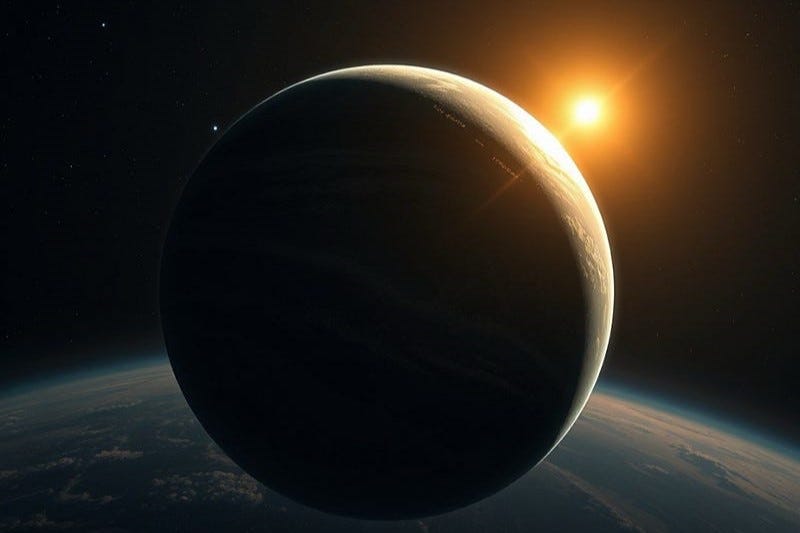
We have all heard the “Goldilocks” story: a planet needs to be just right — not too hot, not too cold — to be habitable. But if you were actually tasked with building a habitable world from scratch, you would quickly realize that distance from a star is only the first page of the manual.
What makes a planet truly habitable is far more complex than its orbital position alone. A world capable of supporting life as we know it must maintain liquid water, a stable atmosphere, and a climate that can remain hospitable for billions of years.
Achieving that requires the coordinated behavior of a planet’s star, atmosphere, interior, and orbital dynamics — a coupled system where physics, chemistry, and geology work in tandem.
Drawing on foundational work by researchers such as Stephen H. Dole, James F. Kasting, and David C. Catling, we will move beyond the simplified “Goldilocks” analogy and into the actual machinery that makes a planet habitable.
Welcome to the ultimate cosmic construction guide.
What “Habitable” Actually Means
Before we begin constructing a habitable world, we need to define what, exactly, we are trying to build.
In planetary science, a habitable planet is a world that can sustain liquid water at or near its surface over geological timescales. More than that, it is a world capable of maintaining environmental stability long enough for life to emerge and evolve.
NASA’s working criteria frame it this way: a habitable world needs an extended region of liquid water, conditions that support the formation of complex organic molecules, and accessible energy sources to drive metabolism.
Taken together, a habitable planet is not just a place with the right ingredients. It is a system where processes are constantly running.
This idea is central to David C. Catling’s work: a habitable world must exist in a state of chemical disequilibrium. There must be a gradient — differences in temperature, pressure, or chemical potential — that can be exploited to do work. Without them, even a planet rich in water and organics remains chemically stagnant. What you are building is not a static environment. It is one that is permanently, actively on.
Equally important is the element of time.
A planet that stays habitable for ten million years might support chemistry, but it is unlikely to develop anything beyond microbial beginnings. Evolution is a slow-motion game of adaptation. For complexity to emerge, stable conditions must persist not for millions, but for billions of years — long enough for processes to build on one another, for life to adapt, and for something lasting to take hold.
Habitability, then, is not only about the right conditions. It is about how long those conditions can persist.
We also need to acknowledge a bias embedded in this entire exercise. When we define habitability, we are — whether we intend to or not — extrapolating from the only example we have: Earth. Its chemistry, its atmosphere, its geological history. We are not describing all possible life-supporting worlds. We are describing the conditions under which life as we know it can emerge and persist.
And that is the key limitation.
Other possibilities exist. Subsurface oceans and alternative non-stellar energy sources suggest life could arise in environments very different from Earth’s surface. But that is not our goal here. We are building something we know works: a long-term, energy-driven, dynamically stable system.
And that stability does not begin with the planet itself.
It begins with the star you choose to place it next to.
Which brings us to your first real decision.
Step 1: Pick the Right Star
Every habitable planet begins with an inheritance that cannot be undone: the star it orbits.
A star is far more than a source of light. It defines the total energy budget of a planetary system, shapes long-term climate behavior, and sets the ultimate limits on how long life can persist. Every chemical reaction, every weather pattern, and every potential biological process on your world will be powered by this choice. If the stellar host is wrong, no amount of planetary fine-tuning can compensate.

Stellar mass, spectral class, and surface temperature define the starting conditions for habitability. Your choice of star is your most consequential design decision.
The first rule of stellar shopping is: mass is destiny.
A star’s mass determines both the intensity of its energy output and the duration of its lifespan. Choose a massive, high-luminosity star — an O- or B-type — and you will have plenty of energy, but your project will be over before it truly begins. These stars burn hot and bright, but they live fast and die young, often within a few hundred million years. That is far too short a window for complex biological evolution to take hold.
Remember: we are building a home, not a laboratory.
You need a star that can remain active for at least four to five billion years — long enough to give evolution the runway it needs. Smaller stars offer exactly that. They burn their fuel slowly and can remain stable for tens, or even hundreds, of billions of years.
At first glance, these ultra-long-lived low-mass stars seem like the obvious choice. But longevity does not automatically mean stability. In their early stages, many low-mass stars — particularly M-dwarfs, or red dwarfs — are highly active. They produce intense stellar flares and high-energy radiation capable of stripping the atmosphere right off your planet, or bathing its surface in lethal radiation before life ever has a chance to establish itself. A star that lives long but burns chaotically is no friend to the dynamically stable system you are trying to build.
What you need is a balance: a star that lives long enough for evolution to unfold, yet remains stable enough to preserve the planet’s atmosphere and climate over eons.
This is why G-type stars like our Sun — and the slightly smaller, longer-lived K-type stars — are often cited as the “gold standard” of stellar hosts. They provide relatively steady energy output over multi-billion-year timescales, offering both the time and the stability that complexity requires.
But the star you choose today will not stay the same.
Stars are not static. As they age, they gradually become more luminous. This means the energy reaching your planet will increase over time, even if its orbital distance remains unchanged. A world that begins with a temperate climate can, over billions of years, be pushed toward a runaway greenhouse state simply because its star grew brighter.
When you choose a star, you are not selecting a fixed set of conditions. You are choosing a thermal trajectory — a long-term trend your planet must be built to withstand.
There is one more variable to account for: metallicity — the abundance of elements heavier than hydrogen and helium in your star’s composition. A star that formed in a region of the galaxy poor in these heavier elements may simply lack the raw materials needed to build rocky planets. Silicon, iron, and magnesium are the structural backbone of terrestrial worlds. Without them, you are trying to construct a habitable planet from an incomplete parts list. Higher metallicity significantly raises the probability of forming planets with the chemical diversity required for complex geology and a rich atmosphere.
Simply put, you cannot build a habitable world if the necessary materials were never in the nebula to begin with.
So the goal is clear: you are not looking for the brightest star, or simply the longest-lived. You are looking for a stable, long-term energy source — one with a rich elemental inventory and a luminosity history your planet can survive.
Once you have made your stellar choice, the next challenge is positioning.
It is time to decide where your planet will orbit.
Step 2: Choose the Right Site — Your Planet’s Orbit
You are looking for a region around that star where incoming energy is just right to keep water in a liquid state at the surface. In planetary science, we call this region the Circumstellar Habitable Zone — or, more famously, the Goldilocks Zone.
The name sounds simple. The physics behind it is not.

Green bands represent the orbital distance from a star at which temperatures could allow liquid water on the surface of a planet. In our Solar System, Earth sits securely within the Sun’s HZ. Scorched Venus lies toward the inner edge, while frozen Mars lingers near the outer edge.
Finding the right orbit is a high-stakes calculation in radiation and thermodynamics. What you are really doing here is setting the thermal baseline for your entire world. Too much incoming radiation, and water cannot remain stable at the surface. Too little, and it freezes. Somewhere between those extremes lies a narrow range where liquid water becomes possible, but this zone is a moving target, defined by two catastrophic failure modes you must avoid at all costs:
On the inner edge: Runaway Greenhouse.
If your planet orbits too close to the star high surface temperatures will cause water to evaporate rapidly, flooding the atmosphere with water vapor — a potent greenhouse gas. This traps more heat, drives temperatures higher, and accelerates further evaporation. The cycle becomes self-reinforcing, and can eventually boil the oceans away entirely. Venus is the clearest example in our solar system of what happens when a planet crosses this threshold.
On the outer edge: Global Glaciation.
If your planet orbits too far from the star, temperatures drop until ice begins to encroach from the poles toward lower latitudes. This triggers what is known as the ice-albedo feedback: ice is highly reflective, so as it spreads, it bounces more incoming solar energy back into space, causing further cooling, which causes more ice, which causes more cooling.
Compounding this, falling temperatures can cause atmospheric carbon dioxide to condense out as dry ice. As CO₂ is removed from the atmosphere, the greenhouse effect weakens, stripping the planet of its ability to retain heat and accelerating the descent into cold. If these effects pass a critical threshold, the system locks into a self-reinforcing collapse. The planet enters a globally frozen state — what scientists call a snowball world.
The habitable zone, then, is not simply about being “in the right place.” It is about avoiding two very different ways to fail: runaway heating on one side, runaway freezing on the other. This balancing act between fire and ice defines the outer limits of surface habitability.
Even this, however, is not the complete picture.
Liquid water does not always require sunlight. Worlds like the icy moons of Jupiter and Saturn maintain subsurface oceans through internal heat — generated either by the gravitational compression of tidal forces from a nearby giant planet, or by the slow decay of radioactive elements deep in the interior. These environments exist well beyond the traditional habitable zone.
But that is not the system we are building here.
Our goal is a surface world with long-term, stable liquid water. Something closer to Earth.
There is one final complication: time.
As we established in Step 1, stars brighten as they age. The habitable zone does not stay fixed — it slowly migrates outward. An orbit that works today may no longer work a few billion years from now. So you are not just choosing a location that is viable in the present; you are choosing one that can remain viable as the entire system evolves. This means giving yourself margin — avoiding orbits too close to the inner edge, where increasing stellar luminosity could eventually push your planet into runaway greenhouse territory.
Once the orbital coordinates are locked in, you have set the environment your planet will operate within.
Now the harder part begins.
It is time to build the planet itself.
Step 3: Get the Planet Itself Right — Mass, Composition, and Interior
Now that you have chosen your star and locked in your orbital site, you are ready for the heart of the project.
A world is habitable only if it can build — and sustain — the right kind of physical environment beneath its sky. At this stage, habitability becomes a matter of planetary physics and geochemistry, and your planet must satisfy three fundamental design requirements: enough gravity to retain an atmosphere, the right bulk composition to support a solid surface and a reservoir of volatiles, and enough internal heat to remain geologically active over billions of years.
Let us work through each one.
Design Parameter 1: Mass — Set Your Gravity
Think of this as your planet’s gravity slider.
Planetary mass determines surface gravity, and surface gravity determines what your planet can hold onto over geological timescales. Get this wrong in either direction, and habitability becomes impossible.
If your planet is too small, its gravitational pull will be too weak to prevent atmospheric escape. Light gases — hydrogen and helium — leak into space almost immediately. Over time, even heavier, life-essential volatiles like water vapor and carbon dioxide can be gradually stripped away.
Mars is the cautionary example. Its lower mass and weaker gravity meant it could not hold onto a thick atmosphere. Its volatile inventory was slowly lost to space, transforming what may once have been a warmer, wetter world into a cold, dry planetary fossil.
If your planet is too large, you face the opposite problem: it becomes a trap. High-mass planets possess gravitational fields strong enough to capture and retain massive quantities of hydrogen and helium directly from the surrounding nebula during formation. Rather than a rocky, terrestrial world, your planet begins to resemble something closer to a mini-Neptune — a gas-rich body with a crushing atmosphere and no well-defined solid surface.
The sweet spot lies between these extremes: massive enough to retain a secondary atmosphere built from outgassed volatiles, but not so massive that it becomes gas-dominated.
Design Parameter 2: Composition — Choose Your Building Materials
A habitable planet is fundamentally a rocky one. Silicate minerals and metals separate during formation into a layered internal structure: a metallic core, a silicate mantle, and a thin crust.

The internal architecture of a rocky planet. It is the engine that drives everything above it.
This layering is not just structural; it is functional. A rotating, liquid metallic outer core acts as a dynamo, generating a global magnetic field. Think of this as your planet’s “deflector shield,” protecting the atmosphere from being eroded by high-energy particles streaming from your star. Without it, even the most carefully engineered atmosphere will not last.
But composition is not only about rocks. You also need to manage what planetary scientists call the volatile inventory — the chemical compounds that will eventually become your oceans and air. Water (H₂O), carbon dioxide (CO₂), nitrogen (N₂): these are the raw ingredients for liquid water, a functional atmosphere, and active surface chemistry. Without them, you have no surface environment worth speaking of.
Volatiles may arrive during the planet’s formation, locked inside the rocks and minerals that accrete together, or later through impacts from volatile-rich bodies — comets and asteroids. What matters is that your planet ends up with enough of the right materials, distributed in the right proportions.
Too few, and your world becomes arid and chemically inert. Too many, and you risk a dense, overwhelming atmosphere or a “water world” with no exposed land — environments where the interaction between surface and interior becomes severely limited, and long-term climate regulation breaks down.
Design Parameter 3: Internal Heat — Keep the Planet Alive
Here is something worth sitting with for a moment: the ground beneath your feet is moving.
Not quickly — nothing you would ever feel. But the rock deep inside Earth is in slow, continuous motion, driven by heat that has been leaking outward since the planet formed. That heat is the reason Earth has volcanoes, earthquakes, mountain ranges, and ocean floors that spread apart and sink back down over hundreds of millions of years. It is the reason Earth is geologically alive.
And geological life, it turns out, is not optional for habitability. It is foundational.
Your planet’s internal heat comes from two sources: residual energy from the planet’s violent formation — the heat of accretion and differentiation — and the slow radioactive decay of isotopes like uranium and thorium locked deep within the mantle. In some cases, tidal heating from a neighboring massive body can contribute as well.
This internal heat drives **mantle convection**: the slow, continuous churning of hot rock through the planet’s interior. And mantle convection, in turn, powers the surface geological systems that make your world dynamic.

Mantle convection currents: the slow circulation of heat from the planet’s interior that drives volcanism and plate tectonics at the surface.
Two key systems emerge from this internal engine
The first is volcanism. Through a process called outgassing, volcanoes deliver essential volatiles — water vapor, carbon dioxide, nitrogen — from the interior to the surface. This is how you build and continuously replenish your atmosphere. Without sustained volcanic activity, gases lost to space are never replaced, and the atmosphere enters a slow, terminal decline.
The second, and arguably more important, is plate tectonics — your planet’s global thermostat.
Plate tectonics drives the carbon-silicate cycle: a geochemical feedback mechanism that regulates atmospheric CO₂ over billions of years. When the planet warms, chemical weathering intensifies: rainfall and surface reactions draw CO₂ out of the atmosphere and lock it into rocks. Those carbon-rich rocks are then carried back into the mantle through **subduction**. When the planet cools, weathering slows, and volcanic activity gradually returns CO₂ to the atmosphere, restoring the greenhouse effect and warming the surface back up.
This is a long-term negative feedback loop — a self-correcting climate system that has kept Earth within habitable bounds for billions of years.
Without sufficient internal heat, a planet undergoes what you might call thermal death. Mantle convection slows. Volcanic activity ceases. The carbon cycle breaks down. And the planet loses its ability to regulate its own climate or replenish the materials that life depends on.
The Checkpoint
By the end of this step, your planet has a physical identity.
Mass gives it the gravitational authority to hold an atmosphere. Composition gives it the structural foundation, the magnetic protection, and the chemical raw materials for oceans and air. Internal heat gives it the geological vitality to keep cycling, replenishing, and regulating itself over the timescales that life requires.
Together, these three parameters determine whether your planet can operate as a self-regulating system.
But right now, it is a naked world — a solid, geologically active body exposed to the full force of stellar radiation and the vacuum of space. To make it truly habitable, you need to wrap it in a protective, dynamic layer.
That is what Step 4 is for; engineering the atmosphere — your planet’s primary climate engine and first line of defense.
Step 4: Build an Atmosphere
An atmosphere is far more than “air to breathe.” For a planet, it functions simultaneously as a pressure vessel, a thermal blanket, and a radiation shield.
Its most immediate role is making liquid water possible.

Atmospheric Pressure: The Foundation for Liquid Water
Before you can have oceans, you need pressure.
In the vacuum of space, liquid water cannot exist; it either freezes solid or boils away instantly. Your first task in building an atmosphere is to create enough weight needed to “press down” on the surface, to keep water stable as a liquid. Without sufficient atmospheric pressure, even a perfectly positioned planet in the habitable zone will lose its water.
Water’s state depends on both temperature and pressure. Step 2 handled temperature by placing your planet at the right orbital distance. Now the atmosphere must support that choice.
Surface pressure depends on two things: how much gas your planet has, and how effectively gravity can retain it. Both of those trace directly back to decisions made in Step 3 — your planet’s mass determines whether it can hold an atmosphere at all, while its volatile inventory and geological activity determine how much gas is available in the first place.
Pressure, in other words, is not something you add at this stage. It is the result of earlier design decisions compounding.
If the atmosphere is too thin, gases — including water vapor — escape more easily, and the planet gradually dries out. If it is sufficiently dense, the system stabilizes: liquid water persists at the surface, conditions remain consistent, and an active water cycle between oceans, clouds, and rainfall becomes possible.
You can see both ends of this spectrum in our Solar System.
Mars has too little atmospheric pressure to sustain stable liquid water today — even when surface temperatures allow melting, the water does not last. Venus, on the other hand, has an extraordinarily thick atmosphere and crushing surface pressure, but temperatures so extreme that liquid water is impossible regardless.
Do not aim for “thick” in a vague sense. Aim for enough pressure, produced by the right gases, sustained over time.
The Greenhouse Effect: Your Thermal Blanket
Once pressure is established, you need to control how much heat your planet retains.
Step 2 set the baseline: the amount of energy your planet receives from its star. Now you need to decide how much of that energy your planet keeps.
This is the role of greenhouse gases — carbon dioxide (CO₂), water vapor (H₂O), and methane (CH₄) among the most important. Your planet absorbs stellar energy and warms. It then releases that energy as outgoing infrared (heat) radiation. Greenhouse gases intercept some of that heat and redirect a portion of it back toward the surface, effectively slowing heat loss and keeping the planet warmer than it would otherwise be.
Without this layer, your planet cools too efficiently. Even within the habitable zone, liquid water becomes difficult to sustain.
But greenhouse gases are not something you install and forget. They require tuning.
Too little, and the planet loses heat too quickly — temperatures fall and water begins to freeze. Too much, and heat becomes trapped, temperatures climb, water evaporates, and you risk triggering the runaway greenhouse effect that turned Venus into an uninhabitable furnace.
Think of greenhouse gases as your climate control system. Your job is to calibrate them so your planet retains enough heat to stay habitable, without tipping into instability.
Climate Feedbacks: Ice-Albedo and the Carbon-Silicate Cycle
A climate system is never perfectly static. Once it is running, it responds to disturbances, and those responses can either restore balance or amplify themselves into something harder to correct.
The ice-albedo feedback
We encountered this mechanism briefly in Step 2, as one of the boundary failure modes of the habitable zone. Here, we are looking at it differently: not as a way a planet fails, but as part of its internal climate machinery.
To understand it, you first need to understand albedo — the fraction of incoming sunlight a surface reflects rather than absorbs.
Now imagine your planet cools slightly. As temperatures drop, ice and snow spread across the surface. Ice is highly reflective, so the planet absorbs less sunlight, retains less energy, cools further, and grows more ice. The initial change amplifies itself rather than correcting back toward balance. The same logic runs in reverse during warming: melting ice exposes darker surface, which absorbs more heat, which drives more melting.
This is a positive feedback loop. It does not stabilize — it accelerates in whichever direction the system is already moving.
This matters because it means your atmosphere must do more than set a comfortable average temperature. It must resist climate sliding toward extremes.
Greenhouse strength, cloud behavior, and how CO₂ responds to temperature shifts all determine whether your system tends to self-correct after a disturbance, or locks into a runaway.
The carbon–silicate cycle
If ice-albedo is a short-term amplifier, the carbon-silicate cycle is the long-term corrector.
We introduced its geological machinery in Step 3. Now we can see its atmospheric role clearly.
The principle is a bit elegant: your planet continuously moves carbon between the atmosphere, the surface, and the interior, and that movement responds to temperature.
When the planet is warm and liquid water is abundant, rainfall chemically breaks down silicate rocks at the surface. This process — **weathering **— draws CO₂ out of the atmosphere and locks it into minerals, which are eventually carried into ocean sediments. The warmer the planet, the more CO₂ is removed.
When the planet cools, weathering slows. CO₂ is no longer removed at the same rate and begins to accumulate. Because CO₂ is a greenhouse gas, this accumulation strengthens the greenhouse effect and warms the surface back up.
The result is a self-correcting loop:
Warm planet → increased weathering → CO₂ removed → cooling.
Cold planet → reduced weathering → CO₂ accumulates → warming.
But weathering alone cannot close the loop — continuous CO₂ removal would eventually empty the atmosphere. This is why Step 3 mattered: your planet’s interior must return carbon to the atmosphere. Volcanism does exactly that, releasing CO₂ from the mantle back into the air. So the full cycle runs in both directions:
Atmosphere → rocks and ocean sediments (weathering and burial) → mantle (subduction) → atmosphere (volcanism).
When both directions are active, your planet has a genuine self-correcting climate system — one capable of recovering from warming or cooling trends rather than locking into either extreme. If internal heat declines too early and volcanism weakens, the return pathway closes. CO₂ removal continues without replenishment, and the climate slowly drifts out of the habitable range.
This is why the carbon-silicate cycle is often described as a planet’s deep climate control. Where ice-albedo reacts quickly, this system holds the line over geological time. Together, they define whether a planet can remain stable long enough for life to take hold and persist.
Magnetic Field: Protecting Your Atmosphere
Finally, your atmosphere needs defense.
A well-constructed atmosphere is not isolated from its environment. It sits within a continuous stream of charged particles flowing outward from the star — the **stellar wind**. Over long timescales, this interaction erodes the upper atmosphere and gradually strips away the very gases that make the planet habitable.
To counter this, your planet needs a magnetic field.
Because you designed a molten, metallic core in Step 3, your planet can generate one naturally. As the conducting liquid in the outer core circulates, it produces a global magnetic field extending far into space — a **magnetosphere**.

Earth is surrounded by a giant magnetic bubble called the magnetosphere, which is is part of a dynamic, interconnected system that responds to solar, planetary, and interstellar conditions. Credit: NASA
The magnetosphere is like a diversion system. Rather than allowing charged particles to collide directly with the atmosphere, the magnetic field deflects them around the planet. This reduces atmospheric erosion and slows the loss of volatile gases over time.
There is a second effect as well.
It limits how much high-energy radiation interacts with the upper atmosphere and, indirectly, the surface environment. This helps preserve your atmospheric chemistry and reduce the long-term degradation caused by energetic particle bombardment.
This does not make your planet radiation-free. It simply means the atmosphere is no longer being continuously reshaped by direct stellar impact.
Mars, once again, is the clearest demonstration of what happens without this protection. As its core cooled and its magnetic field weakened, atmospheric erosion accelerated, making long-term retention progressively more difficult.
With a magnetic field in place, your atmosphere becomes stable enough to persist.
The Checkpoint
At this stage, your planet is no longer simply a rocky body in the right orbit.
It holds pressure enough to keep water liquid at the surface. It carries greenhouse gases calibrated to retain the right amount of heat. It runs climate feedbacks that push back against extremes. And it sits behind a magnetic field that protects all of it from the slow erosion of space weather.
In a very real sense, what you have been assembling is no longer just a planet.
It is becoming a habitable world.
Step 5: Stabilize the System — Orbits, Tilt, and Dynamics
By now, you have built a planet that can be habitable: the right star, the right orbit, a functioning atmosphere, and an active interior.
But habitability is not something you switch on and walk away from.
A well-designed world can drift out of balance if its motion through space becomes unstable.
Step 5 is your stabilization phase. This stage is about fine-tuning the system. This is where you ensure your planet’s movement, orientation, and gravitational environment do not wander into conditions that undo everything you have built.
Orbital Eccentricity: Controlling Temperature Swings
Start with the shape of your planet’s orbit.
Orbital eccentricity measures how stretched or elongated that orbit is. Ideally, it should be close to circular — that way, your planet receives a relatively steady supply of stellar energy throughout the year.

A circular orbit versus a highly elliptical one. The difference between a stable energy system and a planet that swings between intense heating and deep cold with every pass around its star
A highly elliptical orbit means your planet spends part of its year much closer to the star than average, and part of it much farther away. That translates directly into large swings in incoming energy — intense heating followed by deep cooling, cycling repeatedly. Small variations are manageable; your atmosphere can buffer them. But large eccentricities can repeatedly push your planet across critical thresholds — toward freezing, then back toward overheating — disrupting the long-term stability of liquid water.
The goal is not a perfect circle. It is moderation: an orbit stable enough that it does not constantly drag your planet between climatic extremes.
Axial Tilt: Seasons Without Chaos
Next, consider your planet’s axial tilt — the angle at which it leans as it orbits its star, also known as **obliquity**.
Tilt is what gives a planet seasons, and seasons, within a reasonable range, are not a problem. They can actually help distribute energy more evenly across the surface over the course of a year.

Earth’s axial tilt, the geometry behind seasons, day length variation, and the uneven distribution of solar energy from equator to poles.
But tilt carries a hidden requirement: it must remain stable over time.
If the tilt is too extreme, seasonal contrasts become severe enough to destabilize the climate. More critically, if the tilt wobbles chaotically under the influence of gravitational interactions, the climate never settles into a consistent long-term pattern. The real risk is not simply how tilted your planet is — it is whether that tilt wanders unpredictably over millions of years.
You are aiming for a planet with enough tilt to create seasonal structure, but not so much that it generates extremes; and whose tilt remains reliably stable over geological timescales. On Earth, the Moon plays a significant role in this — its gravitational influence helps suppress large chaotic variations in axial tilt, contributing to the relative climate consistency our planet has enjoyed over time.
Rotation Rate: Distributing Heat
Now consider how fast your planet spins.
Rotation controls how energy is distributed across the surface. A reasonably fast rotation spreads heat between the day and night sides, smoothing out temperature contrasts and supporting more uniform atmospheric circulation.
If your planet rotates too slowly, one side may experience prolonged heating while the other endures extended cold darkness. This can create extreme temperature gradients that strain the entire climate system. If it rotates quickly, atmospheric dynamics become more complex, but heat circulation between equator and poles becomes more efficient.
In the most extreme cases — particularly for planets orbiting close to smaller stars — a planet can become **tidally locked**, with one hemisphere permanently facing the star and the other in permanent darkness. That creates a very uneven climate, which your atmosphere must work harder to balance.
Your goal is a rotation rate that allows efficient heat redistribution, keeping the climate from fracturing into isolated extreme zones.
Gravitational Stability: Keeping the System Intact
Finally, zoom out.
Your planet does not exist in isolation. Other planets, large moons, and the overall architecture of the star system all exert gravitational influence. Over long timescales, those forces can reshape orbital eccentricity, modify axial tilt, or introduce slow chaotic variations in planetary motion.
This is where stability becomes a central habitability requirement.
A well-ordered planetary system — one where orbits and orientations remain predictable over billions of years — minimizes these disruptions and gives your planet the consistency it needs to sustain habitability. In some configurations, large neighboring planets or moons actively help: a sufficiently massive companion can stabilize a planet’s tilt and dampen long-term wobble.
But too much gravitational chaos, and your carefully placed planet may not stay where you placed it, or may find its orbital shape slowly deformed into something its atmosphere can no longer manage.
Gravitational stability, whether from a well-ordered system architecture or the presence of stabilizing companions, is what ensures Step 4’s climate system does not have to constantly reinvent itself under shifting boundary conditions.
The Checkpoint
At this point, you are no longer adding new components. You are ensuring that everything you have built continues to work together — not just now, but across billions of years of continuous motion and change.
A habitable planet is not defined by a single set of conditions. It is defined by the ability to maintain those conditions in the face of constant gravitational, rotational, and orbital pressure.
Once that stability is in place, your role as designer is largely complete.
You are ready to let it run.
Step 6: Let It Evolve
A planet is rarely finished. Even after you have laid the right structure, tuned the atmosphere, and stabilized the orbit, the world is still a living system governed by time. Geological activity unfolds on timescales far longer than any human observer can watch. Atmospheres change slowly, then suddenly, and sometimes flip into entirely new climate regimes.
That is why Step 6 is where habitability turns from a design problem into a history problem.
Planets are not born habitable — they become habitable. They earn that status through their evolution: through how their atmosphere and interior interact over millions to billions of years, and through whether the changes they undergo remain compatible with stable surface conditions.
Atmospheric Loss and Replenishment
One of the biggest forces shaping that evolution is atmospheric loss. Even if your planet has enough mass and the right protective features to retain an atmosphere initially, space weather and escape processes can steadily remove gas over time. Some loss is gradual — molecules leak away, especially lighter gases. Some is episodic — strong stellar activity can strip atmospheric layers or heat the upper atmosphere, accelerating escape.
Over long periods, this matters because the atmosphere is not just a thermal blanket. It is also a chemical reservoir. If key gases disappear too quickly, the climate engine you built in Step 4 has less to work with, and the planet’s ability to sustain liquid water slowly weakens.
Then there’s volcanic outgassing, which is the “replenishment” side of the same story. While atmosphere loss removes gases, sustained volcanism can add them back. Outgassing supplies carbon dioxide and water vapor, compounds that reshape atmospheric composition and influence both greenhouse strength and cloud formation. If volcanism continues steadily, your planet gets repeated opportunities to restore the conditions that support liquid water and climate stability. If it declines too early, the balance tips toward atmospheric depletion, and long-term habitability becomes increasingly difficult to maintain.
Climate Transitions
Planetary evolution also brings climate transitions: big shifts in the planet’s operating mode that arise from the feedbacks you have already built into the system.
Consider a planet gradually cooling. At some point, ice expands, albedo rises, and the system can tip into a globally ice-covered state — a snowball world. That sounds catastrophic, but the deeper point is that it can happen even on previously habitable planets, because complex climate systems can cross thresholds that are difficult or impossible to reverse from within.
Warming carries equivalent risks. If greenhouse forcing intensifies fast enough, water vapor increases, which strengthens the greenhouse effect further, which drives more warming — and the climate can drift into a state where surface conditions no longer support the stability that liquid water and life require.
What makes these transitions important for habitability is not whether they can happen in principle, but whether they are “recoverable.” A planet with a robust carbon cycle, sustained geological activity, and an atmosphere capable of meaningful gas exchange can sometimes pull back from extreme phases. But if the ability to cycle carbon is lost — or if atmospheric escape keeps removing the same components the planet would need to recover — then a transition can become a one-way door.
The Long View
Over the full age of a planetary system, habitability is a moving target.
The interior cools. The magnetic field may strengthen or weaken. Atmospheric composition shifts as chemical pathways change with temperature and radiation. Water distribution evolves — some locked in ice, some buried in the crust, some cycled through the surface, some lost to space entirely.
Habitability is not a snapshot of “is it in the range right now?” It is whether a planet spends enough time within ranges that allow stable oceans, persistent liquid environments, and the sustained chemical gradients that make biology possible.
This is where Step 6 earns its place in the whole process. It turns your earlier engineering into a durable outcome. The question is no longer simply: can this planet be habitable? It becomes: can this planet remain habitable long enough, survive its own changes, and evolve without crossing thresholds it cannot return from?
And that sets up the final, most important question of all.
If your planet continues evolving under those constraints — if the chemistry stabilizes, if the energy gradients persist, if the conditions hold — does it eventually reach the kind of sustained, dynamic equilibrium that life would need not just to start, but to keep going?
For God So Love the Earth…
Science has a way of stripping the romance out of creation, until you notice what it is really doing. It is showing how unlikely it is that a world like ours could exist at all. And then it becomes awe again.
Building a habitable planet is hard. Not just “hard to imagine” — hard to sustain.
Earth looks, in the best sense, like a near-impossible outcome: liquid oceans, an atmosphere with ozone protection, a magnetic field, plate tectonics, and a carbon-silicate cycle that kept the climate from unraveling for billions of years.
And then life enters, not as decoration, but as feedback. Life does not only live on a habitable planet; over time, it helps make the planet more livable. Oxygenation, a biosphere that actively reshapes the atmosphere, a coevolution of world and life — each carrying the other forward.
That is why habitable worlds are rare. Every step came with constraints, and there are many ways to fail: too small and you lose the air; too big and you become a different kind of world entirely; the wrong star, the wrong orbit, the wrong timing. And above all, timescale — because habitable conditions must persist long enough to matter.
Of all the configurations the universe could have produced, Earth did not merely meet the requirements.
It maintained them — again and again — for billions of years.
And perhaps that is what the wonder is pointing to: that habitability was not inevitable.
It was kept.
Author’s Note.
This article, like most things on this page, grew out of my own study notes on planetary science and astrobiology — me trying to understand something I found genuinely fascinating and writing my way through it until it made sense.
The scientific foundation draws primarily from people who have spent careers thinking carefully about these questions: Stephen H. Dole’s Habitable Planets for Man, the research of James F. Kasting and David C. Catling on planetary habitability and atmospheric evolution, and resources from NASA’s astrobiology program. Any errors in translation from their work to these pages are entirely my own.
Further Reading
Stephen H. Dole, Habitable Planets for Man (1964)
James F. Kasting, How to Find a Habitable Planet (2010)
David C. Catling, Astrobiology: A Very Short Introduction (2013)
NASA Astrobiology: *astrobiology .nasa.gov*
메타데이터
- post_id
- a6785e8d2313
- slug
- how-to-build-a-habitable-planet-a6785e8d2313
- url
- https://medium.com/@olamidebankole/how-to-build-a-habitable-planet-a6785e8d2313
- canonical_url
- https://medium.com/@olamidebankole/how-to-build-a-habitable-planet-a6785e8d2313
- author_url
- https://medium.com/@olamidebankole
- status
- ok
- fetched_at
- 2026-06-20 20:29:01