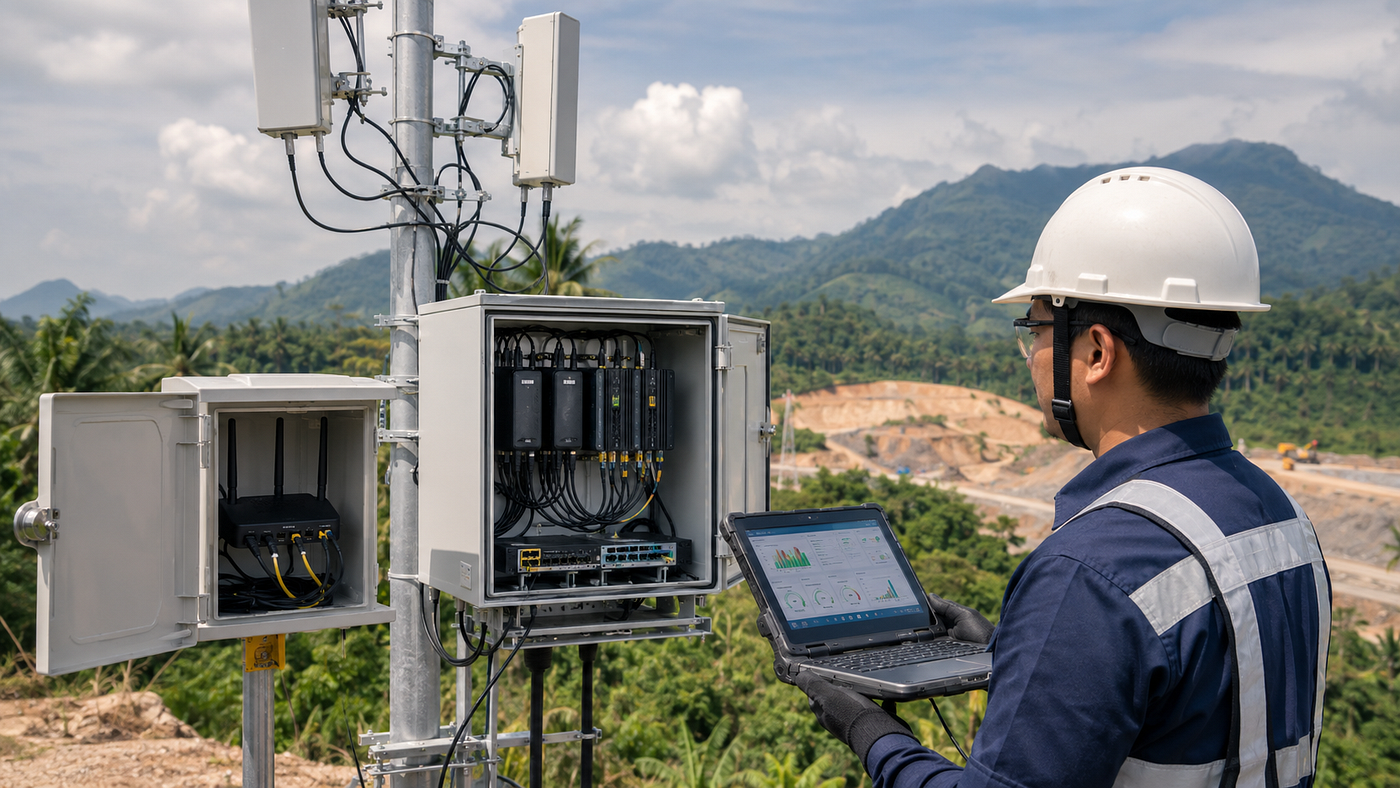
Failover Is Backup. Bonding Is a Strategy.
A simple explanation of why failover and ISP bonding solve different remote connectivity problems.
Failover Is Backup. Bonding Is a Strategy.
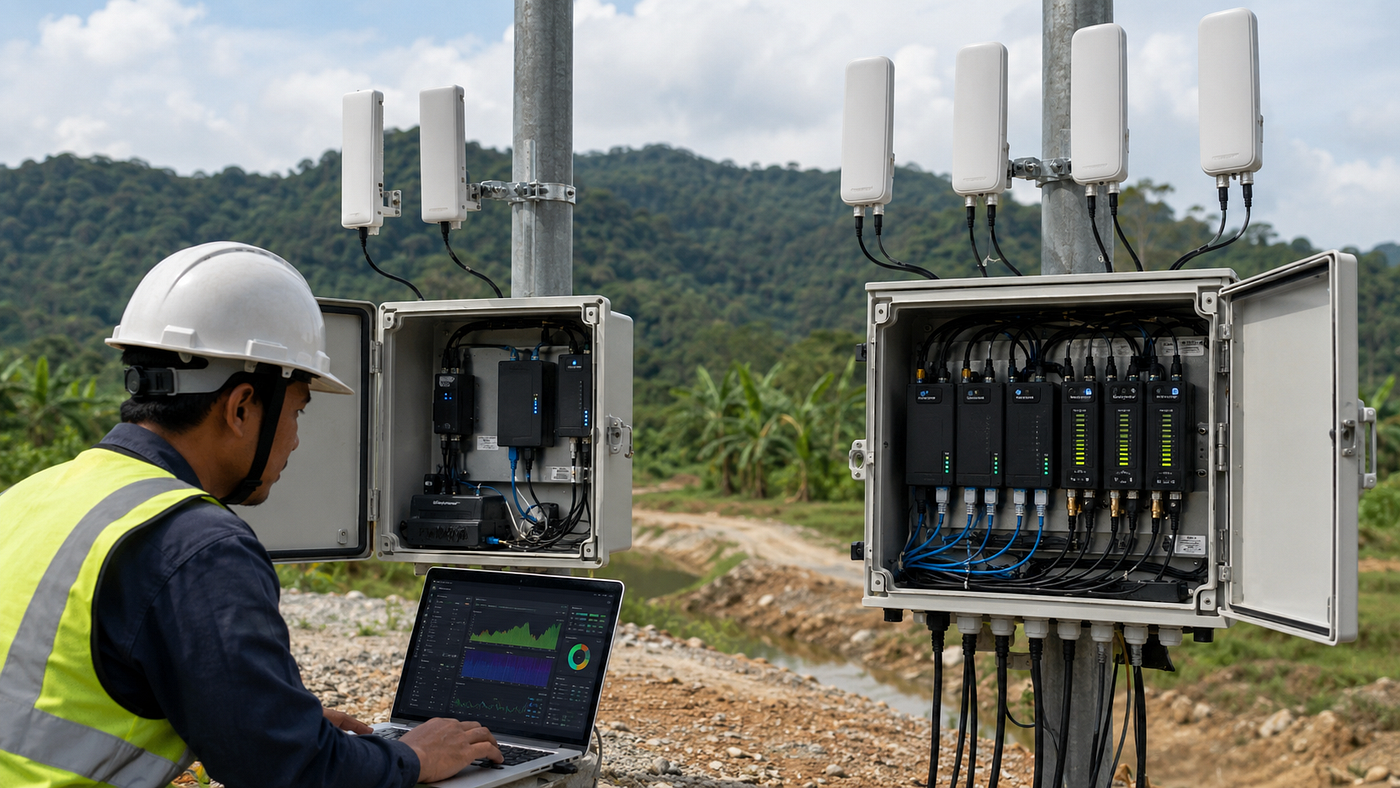
A simple explanation of why failover and ISP bonding solve different remote connectivity problems.
When a remote site depends on internet connectivity, the first question is often simple:
“What happens if the line goes down?”
That question usually leads to one answer: failover.
Failover is useful. It gives a site a backup path when the main connection fails.
But for many remote sites, backup alone may not be enough.
A site may need to support data collection, camera feeds, cloud apps, VPN access, VoIP, monitoring dashboards, or live video. In those situations, the issue is not only whether the connection has a backup.
The bigger question is whether the connectivity layer is designed to support the operation continuously.
That is where bonding becomes important.
Failover is backup.
Bonding is a strategy.
What failover does
Failover is a common network design.
The idea is simple.
The site uses one primary connection. If that connection fails, the system switches to another connection.
For example:
Primary SIM fails → backup SIM takes over.
This can be very useful for basic redundancy.
If one provider goes offline, the site still has another way to connect. For many simple applications, that may be enough.
Failover is suitable when the main concern is:
- avoiding total downtime
- keeping basic internet access available
- providing a backup route
- supporting low-demand applications
- reducing the risk of one connection failur
But failover usually treats the backup link as a standby path.
It waits for a problem before switching.
That is why failover is best understood as a backup mechanism.
The limitation of failover at remote sites
Remote sites can be unpredictable.
A connection may not fully fail. It may just become weak.
The signal may still exist, but the upload speed drops.
The router may still show connected, but the video feed freezes.
The site may still be online, but the dashboard becomes slow.
The link may work well in the morning, then degrade during congestion, rain, or changing field conditions.
In these cases, failover may not always solve the problem cleanly.
Why?
Because the main connection may not be completely dead.
It may simply be poor.
And a poor connection can still create real operational problems.
A camera feed can become unreliable. A data upload can be delayed. A remote dashboard can become difficult to access. A field team may need to restart equipment or switch manually. A cloud app may disconnect at the wrong time.
So the issue is not just link failure.
The issue is connection quality.
What bonding does differently
ISP bonding takes a different approach.
Instead of waiting for one connection to fail, bonding is designed to combine multiple internet connections into one working connectivity layer.
For example, a remote site may use multiple mobile broadband connections from different telco providers.
A bonded system can combine those connections so the site is not depending on only one provider at a time.
The goal is to improve:
- bandwidth availability
- network resilience
- provider diversity
- session stability
- remote access reliability
- support for more demanding applications
This is why bonding is not the same as failover.
Failover says:
“If this connection fails, use another one.”
Bonding says:
“Use multiple available connections as part of the operating path.”
That difference matters.
Why bonding matters for field operations
A remote site may not just need casual browsing.
It may need to run operational workloads.
For example:
- sending sensor or telemetry data
- uploading weather or environmental readings
- supporting a live camera feed
- enabling a drone video feed
- giving HQ browser access to site views
- keeping cloud apps connected
- supporting VPN or VoIP
- allowing remote teams to monitor site conditions
These workloads need more than just a backup SIM.
They need a connectivity design that considers bandwidth, stability, link quality, upload performance, and redundancy.
This is where bonding can become part of the site strategy.
Not every site needs bonding.
But for remote and critical sites where visibility, data flow, or live monitoring matters, bonding can be a practical way to reduce single-link dependency.
A simple way to compare failover and bonding
Think of failover like a spare tyre.
It is important. You want it available when the main tyre fails.
But it does not make the vehicle stronger while everything is still running.
Bonding is more like designing the vehicle with more traction and control from the start.
The point is not just to recover after failure.
The point is to make the operating path more resilient while the site is active.
For remote sites, that distinction is important.
A team may not want to discover connectivity weakness only after the camera feed has frozen, the dashboard has stopped updating, or the data upload has failed.
Why one telco may not be enough
Coverage varies by location.
One provider may be stronger at one site but weaker at another. A provider may perform well for download but poorly for upload. Another provider may be more stable during certain times of the day.
This is why remote connectivity should be designed around actual site conditions.
A single-SIM setup may work for some sites.
A failover setup may be enough for others.
But in more demanding environments, a multi-telco bonding approach can provide a stronger foundation.
The key is not to assume.
The right approach should be based on:
- site signal assessment
- required applications
- upload and download needs
- acceptable downtime
- video or data workload
- available providers
- antenna options
- power and enclosure constraints
- monitoring and support requirements
Remote connectivity is not just about buying a router.
It is about designing the field network around the job it needs to support.
Where bonding can be useful
ISP bonding can be useful in field scenarios such as:
- remote project sites
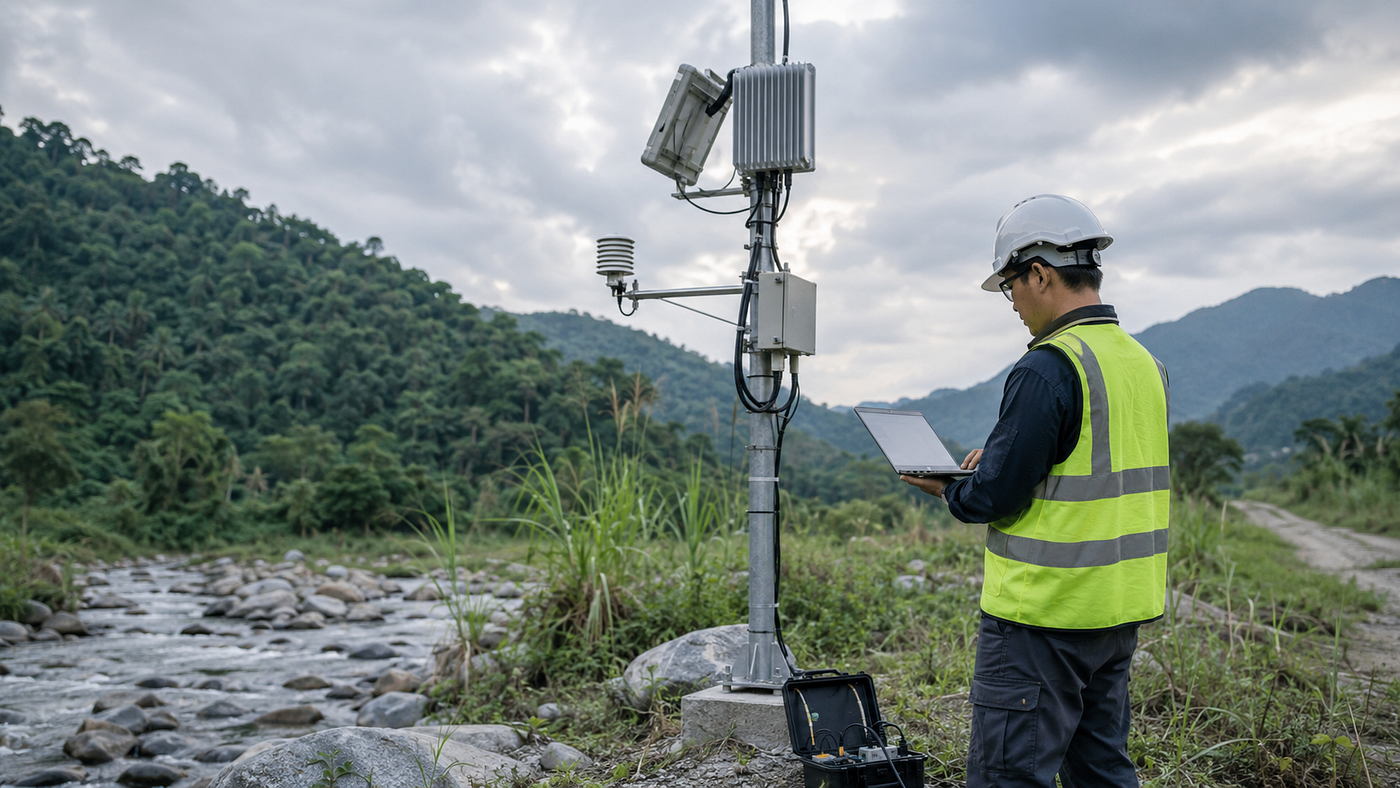
- weather and environmental monitoring locations
- data collection sites
- live camera monitoring
- drone operation support
- temporary field offices
- infrastructure sites
- flood-prone locations
- hard-to-reach operational areas
- sites with inconsistent mobile coverage
In these environments, the cost of unstable connectivity is not just technical inconvenience.
It can affect visibility, coordination, reporting, and confidence in the system.
Bonding still needs proper design
Bonding is not magic.
It still depends on the available network conditions at the site.
If all links are weak, poorly positioned, or badly configured, bonding alone will not solve everything.
A practical bonding setup may still require:
- site survey
- multi-provider testing
- router and modem configuration
- outdoor or directional antennas
- cable and enclosure planning
- bonding server or transport design
- acceptance testing
- monitoring and support
This is why bonding should be treated as a connectivity architecture, not just a box.
The system needs to be designed, installed, tested, and supported properly.
Konvertek by Ingenieum
Konvertek is Ingenieum Solutions’ multi-SIM ISP bonding system for remote connectivity.
It is designed for sites where normal single-SIM mobile internet or failover-only setups may not be enough.
Konvertek combines multiple telco connections into one bonded broadband connection, helping remote sites improve bandwidth availability, provider redundancy, and connectivity stability, subject to site conditions and available network coverage.
It can support use cases such as:
- remote data collection
- live camera feeds
- monitoring dashboards
- field connectivity
- temporary project sites
- weather and environmental monitoring
- drone-supported visibility
- remote operational access
Learn more about Ingenieum’s approach to failover vs ISP bonding here:
https://ingenieum.com.my/konvertek-multi-sim-isp-bonding/
The right question to ask
The question is not only:
“Do we have backup internet?”
The better question is:
“Is the connectivity layer strong enough to support the operation?”
For some sites, failover is enough.
For others, bonding may be the better strategy.
Remote sites need connectivity that matches the actual work being done at the site.
If the site only needs basic access, a simple backup may be fine.
But if the site needs reliable data flow, live video, dashboard access, cloud apps, or remote monitoring, the connectivity design needs to go beyond backup.
Because in field operations, staying connected is not just about recovering from failure.
It is about keeping the operation visible, accessible, and usable while the work is happening.
메타데이터
- post_id
- a67a21c2f058
- slug
- failover-is-backup-bonding-is-a-strategy-a67a21c2f058
- url
- https://medium.com/@ingenieum777/failover-is-backup-bonding-is-a-strategy-a67a21c2f058
- canonical_url
- https://medium.com/@ingenieum777/failover-is-backup-bonding-is-a-strategy-a67a21c2f058
- author_url
- https://medium.com/@ingenieum777
- status
- ok
- fetched_at
- 2026-08-10 15:58:38