Oh, those “Ls”
Century-plus-old, elevated transportation system keeps Windy City on the move
Oh, those “Ls”
Century-plus-old, elevated transportation system keeps Windy City on the move

Photo by Daniel Ziegener on Unsplash
I just watched a YouTube video of Chicago by former traffic engineer and urban planner Ray Delahanty.
He describes the country’s third most populated city as he rides on the “L” lines, which is short for elevated lines. Parts of the urban transportation system, especially around the downtown Loop, have been in place since 1892.
I first experienced the “Windy City” after my dad graduated from Iowa State University in Ames, Iowa, in 1951. My dad, mom and I moved to River Forest, Illinois, a Chicago suburb. After a couple of years living in an apartment on Lake Street, we moved farther west to our first house in Wheaton, Illinois.
My first brush with the Chicago area transportation system involved buses. I still remember my mom and I riding buses from River Forest to the Loop to Marshall Field’s, which was bought out by Macy’s in 2006. It was designated a National Historic Landmark in 1978 and a Chicago Landmark in 2005.
It got even better when we took commuter trains from Wheaton to the Loop. Run by the Chicago & Northwestern Railroad at the time, many of the trains had double-decker passenger cars, which I took advantage of as much as possible.
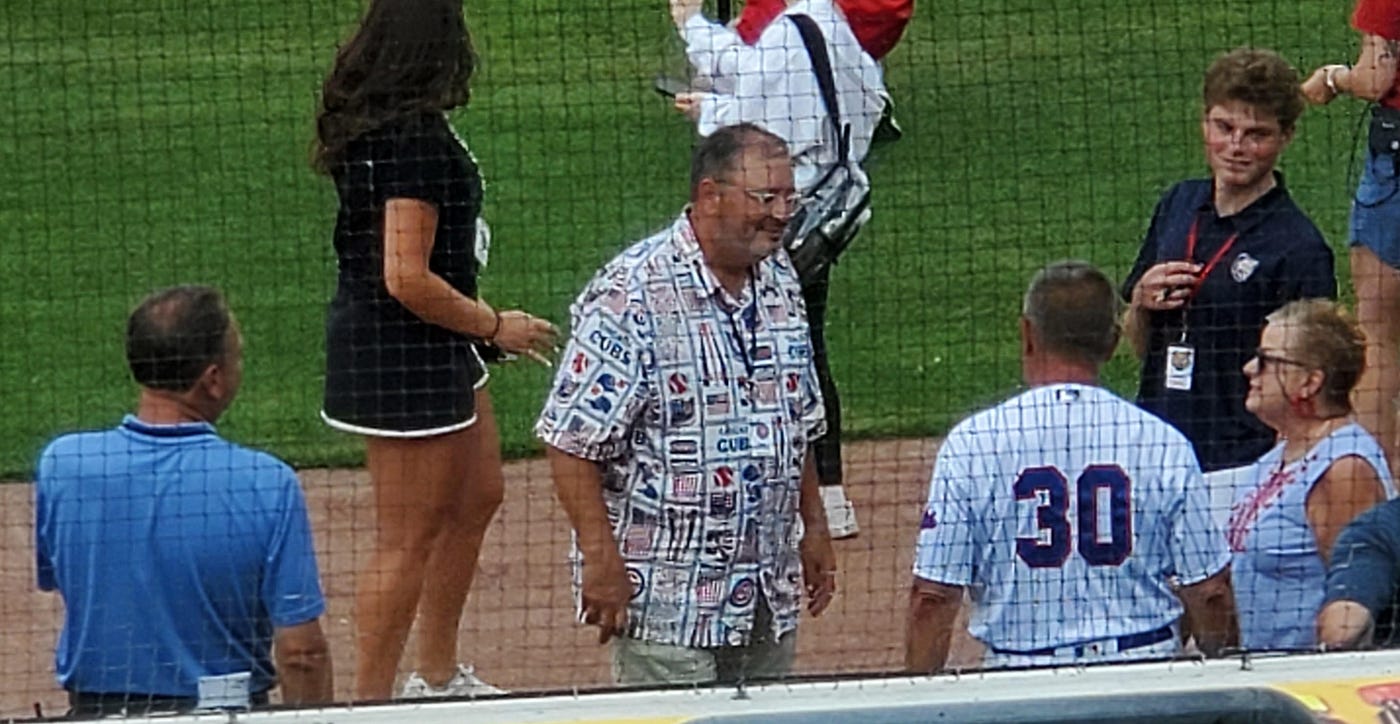
Although I never lived in the Chicago area again after 1961, Carl Sandburg’s “City of Big Shoulders” remained my favorite big city because of its professional sports, architecture and museums. My dad started taking me to Wrigley Field and Cubs games in the 1950s at the height of Mr. Cub Ernie Banks’s career as a shortstop; to old Chicago Stadium to see the arrival of Bobby Hull, the “Golden Jet”; and to Soldier Field to see the football Chicago Cardinals before they moved to St. Louis.
The Museum of Science and Industry had lots to see, too. I recall to this day going through a recreation of a coal mine and nudging my way through a German U-505 submarine that was captured by the U.S. Navy in 1944 during World War II.
Even when we came through suburban Chicago after moving away in ’61, I’d hook up with old friends and set up a trip into Chicago. We’d spend time at one of the city’s beaches along Lake Michigan or go to Old Town to see a wax museum or other sights.
I didn’t start using the “L” a lot until I started going from Macomb, Illinois, in west central Illinois to Chicago for Cubs games. The Illinois Zephyr left Macomb at approximately 7 a.m. and arrived at Union Station in Chicago around 10:30 a.m. That gave us plenty of time to catch the Red Line “L” (underground at that point) to the ballpark just west of the Addison Street stop.
The train back to Macomb left at approximately 6 p.m. So, I and my friend would try to get on the “L” at the Addison Street stop by 4:30 p.m. so we didn’t miss the Amtrak train to Macomb. Since then, I’ve seen reports that the Red Line is the least safe “L” line of them all, especially at night. I never rode the Red Line at night so I wouldn’t know. I recall one time, however, when a firecracker was set off in one of the cars of a “L” my family and I were riding in. We thought it was gunshot!

The 25-story, two-block-long MART, formerly the Merchandise Mart, once was the world’s largest commercial building. It opened in 1930 as a wholesale center for Marshall Field & Co. It now is a center for design, technology and trade shows. Photo by author.
The system of underground and elevated trains called the “L” at least makes Chicago manageable for almost 3 million people. Chicago also has a commuter rail system run by METRA that links the suburbs to the city. Six of Metra’s 11 routes begin and end at Union Station.
I had an uncle who lived in Wheaton for a while and took a commuter train from that suburb to and from his job in Chicago.
If I lived in Chicago, I’d probably only have a car to go outside the city and the suburban area. I’d use public transportation or walk. In addition, parking isn’t easy to find in many parts of Chicago and it’s expensive.
It’s worth noting that Chicago looks like a peaceful city throughout Delahanty’s YouTube video. Granted, he didn’t take the “L” at night when crime is more likely to happen. During my trips to Chicago, I was always aware of my surroundings and what part of town I was in. I’ve never had a problem going to a Cubs game during the day, walking down the “Miracle Mile” on Michigan Avenue during the day or early evening or strolling along the 1.25-mile riverwalk in the heart of the Loop. The park along the south bank of the Chicago River features boat rentals, public art and waterfront dining.
You can watch Delahanty’s CityNerd video about Chicago at https://www.msn.com/en-us/health/medical/they-warned-me-about-chicago-i-didn-t-listen/vi-AA21p04I?ocid=msedgdhp&pc=LCTS&cvid=6a0b6cec302442ad9dcc1cbd608b5f3d&ei=65.
Check out a big baseball extravaganza at Hoyt Sherman Place in Des Moines Wednesday, May 27. Iowa baseball historian and collector John Liepa will share many of the items in his vast collection of baseball memorabilia from noon to 5 p.m. and 8:15 to 9 p.m. Eight authors including myself will be on hand from noon to 5 p.m. John will present a program on Iowa baseball at 7 p.m. in the auditorium.
메타데이터
- post_id
- a697a4a01149
- slug
- oh-those-ls-a697a4a01149
- url
- https://medium.com/@supercub48/oh-those-ls-a697a4a01149
- canonical_url
- https://medium.com/@supercub48/oh-those-ls-a697a4a01149
- author_url
- https://medium.com/@supercub48
- status
- ok
- fetched_at
- 2026-06-09 15:37:30