Post-AI Habits: Are We Outsourcing Ourselves?
Imagine a loved one, like your partner or a friend, wrote you an apology text. Underneath the
Post-AI Habits: Are We Outsourcing Ourselves?
Imagine a loved one, like your partner or a friend, wrote you an apology text. Underneath the
apology, you see one extra sentence:
I can make this sound more emotional if you’d like.
They asked an AI chatbot to write the message, copied it without reading it, and pressed send. I heard this from a friend of a friend. We are no longer outsourcing information. We are outsourcing intention.
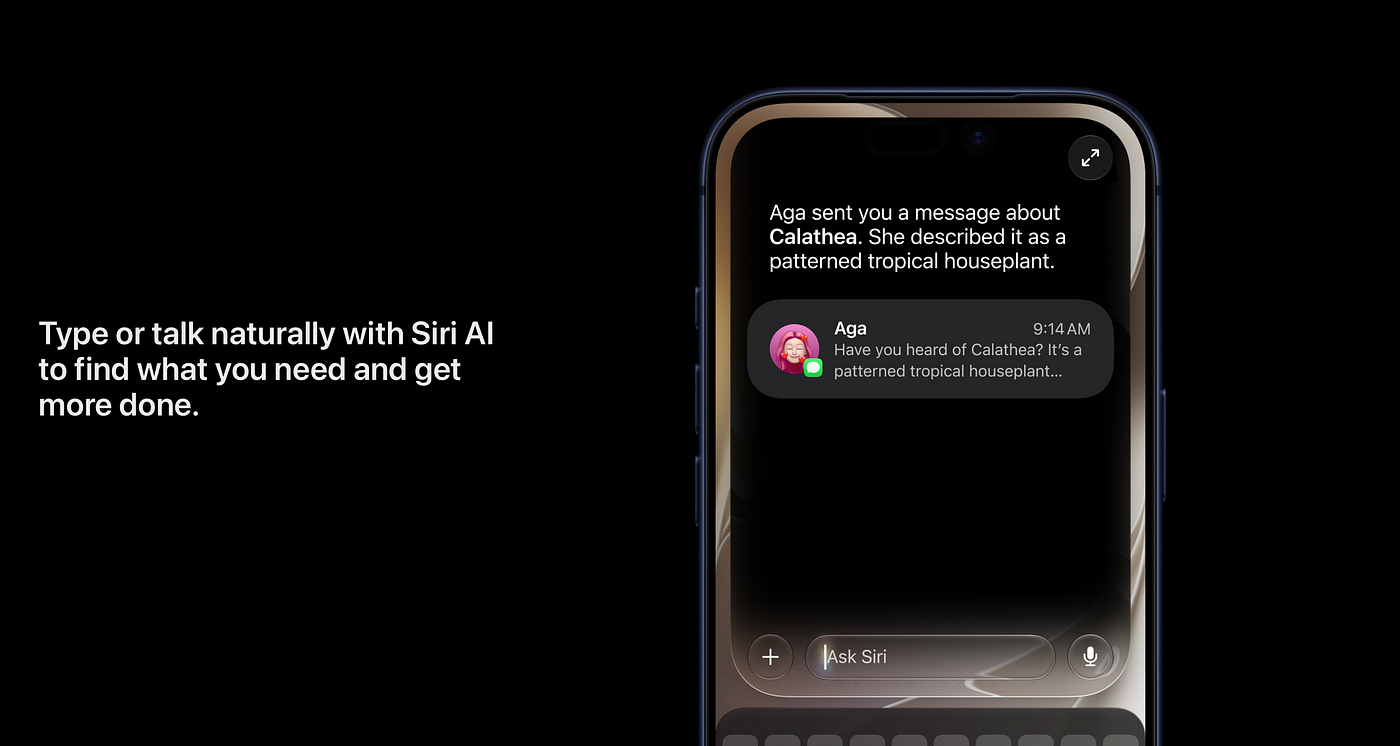
Source: Apple Intelligence
Communication without Composition

If your company uses Microsoft Teams, you might have noticed automated response options right after someone pings you. The same thing has been live on Gmail for years as well. Microsoft Teams already generates meeting transcripts, and soon it may summarize discussions for anyone who missed a meeting or simply lost focus. This may gradually weaken our note-taking habits. Communication is becoming automated, while memory is becoming externalized. What happens when convenience becomes our default mode of thinking?
Language Shapes Thought
Etymologist Adam Aleksic explores this idea in a recent TED Talk. Aleksic points to a possible explanation: some linguistic patterns may have been amplified through the model’s training process. Aleksic suggests that words like “delve” may be appearing more frequently in everyday speech since the rise of generative AI. This is no longer limited to written language or what we read online. AI-generated patterns are increasingly finding their way into our everyday conversations. Could AI language be replacing our natural language as well? As Aleksic mentions, we already know Elon Musk tweaks Grok’s way of speaking. If language shapes thought, we may also be unconsciously aligning ourselves with the values embedded in these systems. What makes this concerning is not the word itself, but the mechanism behind it: repeated exposure can shape collective perception.
[embed]
Reality vs Representation
Algorithms do not simply discover trends. They amplify them. TikTok does not show reality, but an optimized version of it. The distinction between an emerging trend and an artificially inflated one is becoming increasingly difficult to see. AI might not be neutral all the time. I once showed an exhibition invitation I received by email to ChatGPT. Because participation required a fee from the artists, the response was immediate:
“This is vanity publishing.”
The model didn’t just summarize the invitation. It framed it.

Source: Apple Intelligence
The Memory We Might No Longer Need
We might not need to take meeting notes one day. This may fundamentally reshape how we manage information in both our professional and personal lives. As AI begins to remember on our behalf, memory shifts from a human act to a system feature. Apple’s ecosystem is already moving in this direction, allowing people to automatically share their location and estimated arrival time with loved ones. I would consider it a form of affection if someone I care about remembered to text me when they left work. Our memory is slowly becoming externalized.
The Offline Countermovement
Source: Reddit
Digitalization is inevitable, but we might see analogue habits keeping their place when we look around as well. Journaling has recently been popular on social media, especially if you are interested in personal development or goal tracking. As a personal interest, I have been exploring how people use different journaling methods for both self-regulation and reflection. I noticed that journaling improved my focus and helped me transition into deeper reading.
Olympic skier EileenGu has spoken about how journaling helps her process emotions, organize thoughts, and improve mental clarity.
[embed]
Now that we mentioned reading, I have another interesting example to offer. Turkish tennis player Zeynep Sönmez has been seen reading paperback books between matches.
Source: CBO Olympics’ Facebook
Another athlete, Adam Runnalls, likes to set aside time for knitting, another example of how analogue rituals can coexist with high-performance environments. These examples suggest that analogue habits of public figures may become an important form of cognitive resistance in the post-AI era. The same dynamic may emerge in art and culture. As generative AI makes creative output abundant and inexpensive, human-made work could become increasingly associated with rarity, craftsmanship, and status. In a world flooded with infinite images, analogue practices such as painting, printmaking, ceramics, or handwritten journals may gain new cultural value precisely because they require time, effort, and physical presence. What was once considered ordinary could become a marker of discernment. Physical and offline presence might even become a status symbol.
The Future
Perhaps the future divide will not be between digital and analogue, but between content that is endlessly generated and experiences that remain human. Perhaps the post-AI era will not be defined by how intelligent our tools become, but by how much of ourselves we are willing to delegate to them. The question is no longer whether AI can think for us. The question is whether we will remember how to think without it.
Resources
[1] Adam Aleksic. Why Are People Starting to Sound Like ChatGPT? TED, 2025. Available at:
https://www.ted.com/talks/adam_aleksic_why_are_people_starting_to_sound_like_chatgpt
(ted.com)
[2] Microsoft. Intelligent meeting recap in Microsoft Teams. Available at: https://
support.microsoft.com/en-us/office/intelligent-recap-in-microsoft-teams-meetings-
c2e3a0fe-504f-4b2c-bf85–504938f110ef[3] Google. Smart Compose and Smart Reply in Gmail. Available at: https://support.google.com/
mail/answer/9116836
[4] Apple. Check in on iPhone User Guide. Available at: https://support.apple.com/guide/iphone/
use-check-in-iphc143bb7e9/ios
[5] Haensch, A.-C., Ball, S., Herklotz, M., & Kreuter, F. (2023). Seeing ChatGPT Through
Students’ Eyes: An Analysis of TikTok Data. arXiv. https://arxiv.org/abs/2303.05349 (arxiv.org)
[6] Shahriar, S., & Hayawi, K. (2023). Let’s Have a Chat! A Conversation with ChatGPT:
Technology, Applications, and Limitations. arXiv. https://arxiv.org/abs/2302.13817 (arxiv.org)
[7] Gu, Eileen. Interview excerpts on journaling and metacognition. GQ, 2022. Available at: https://
www.gq.com/story/eileen-gu-beijing-olympics (GQ)
[8] The Good Trade. What Is the Neuroscience Behind Journaling? 2026. Available at: https://
www.thegoodtrade.com/features/benefits-of-journaling/ (The Good Trade)
[9] Apple. Apple Intelligence Preview. Available at: https://www.apple.com/apple-intelligence/
메타데이터
- post_id
- a6a824f2c0e5
- slug
- post-ai-habits-are-we-outsourcing-ourselves-a6a824f2c0e5
- url
- https://medium.com/@didemdagbagli/post-ai-habits-are-we-outsourcing-ourselves-a6a824f2c0e5
- canonical_url
- https://medium.com/@didemdagbagli/post-ai-habits-are-we-outsourcing-ourselves-a6a824f2c0e5
- author_url
- https://medium.com/@didemdagbagli
- status
- ok
- fetched_at
- 2026-08-20 18:50:24




